REVIEW · WIELICZKA SALT MINE
From Krakow: Guided Wieliczka Salt Mine and Chapel Tour
Book on GetYourGuide →Operated by AT Cracow · Bookable on GetYourGuide
One thousand steps to a strange, salty world. This half-day outing from Krakow takes you into Wieliczka Salt Mine, where you’ll follow winding passages for about 3 kilometers and see St. Kinga’s chapel, one of the most famous underground religious spaces in Europe. The whole experience leans hard on scale and craft: miners shaped the world from salt long ago, and it’s still in use as a major Polish attraction.
I especially like two things about this tour. First, the hotel pickup makes it feel effortless, so you’re not wrestling with transport before you even start climbing down. Second, the guide keeps you moving through the mine’s highlights—St. Kinga’s chapel, salt-carved details, and the underground lakes—without you having to figure anything out.
One drawback to keep in mind: you descend and move around on a route with big stair demands and a lot of time underground. If you’re worried about tight spaces or have mobility limits, this is marked not suitable, and the mineshaft experience includes a staircase of about 700 steps. Also, one past review complained about an uncomfortable ride over in a small, warm car.
In This Review
- Key points before you go
- Krakow to Wieliczka: how the timing really works
- Walking 3 kilometers underground: stairs, temperature, and pacing
- The salt-carved route: what you actually see on the way
- St. Kinga’s chapel: the moment the tour earns its fame
- Where the mine fits: centuries of work and WWII planning
- Getting out again: elevator back up and the snack-and-shop stop
- Price and value: is $67 a good deal?
- Who this tour suits best (and who should rethink it)
- Booking checklist: small prep that makes the tour feel smoother
- Should you book this Wieliczka Salt Mine guided tour from Krakow?
- FAQ
- How long is the tour from Krakow to Wieliczka Salt Mine?
- What temperature should I expect underground?
- Are there stairs on this tour?
- Is the tour suitable for people with mobility impairments?
- Is there an English-speaking guide?
- Are pets allowed on the tour?
Key points before you go
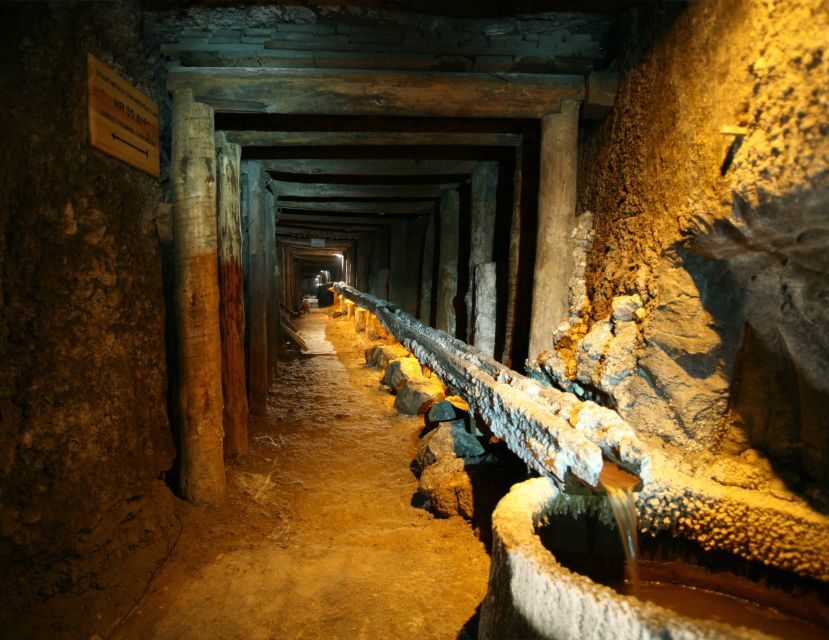
- 3 km of guided corridors with a fixed, story-led route through the working-mine history
- St. Kinga’s chapel with an altar and chandeliers carved from rock salt
- Underground lakes and sculptures that make the mine feel more like a living underground city
- About 2.5 hours underground at a cool 14–17 °C, so pack for a chill
- Hotel pickup plus skip-the-ticket-line entry saves time and mental effort
- 700-step staircase means solid shoes and a realistic pace
Krakow to Wieliczka: how the timing really works
This tour is built for a half day, and the schedule shows it. You’ll get picked up in Krakow, then you’re on the road to Wieliczka for about 45 minutes (the transfer is roughly 40 minutes). After that, you spend about 2.5 hours inside the mine with your live guide, then you ride back to Krakow about 45 minutes and finish at Starowiślna 65.
Pickup options in Krakow include several central stops such as Garbarska 2, Hotel Warszawski, Starowiślna 65, Józefa Dietla 97, Wielopole 2, and Lwowska 1. On the day before your tour, you’ll be told your exact pickup time after 5 pm, and you should plan to wait at your meeting point about 5 minutes early. That “early but not obsessively early” approach matters, because you want to avoid being left waiting while the vehicle has limited stops.
What I find practical here is that the tour doesn’t waste your energy before you reach the mine. Even if you’re staying outside the absolute city center, pickup options should still be workable as long as you can reach one of the designated points without a long detour.
You can also read our reviews of more guided tours in Wieliczka Salt Mine
Walking 3 kilometers underground: stairs, temperature, and pacing
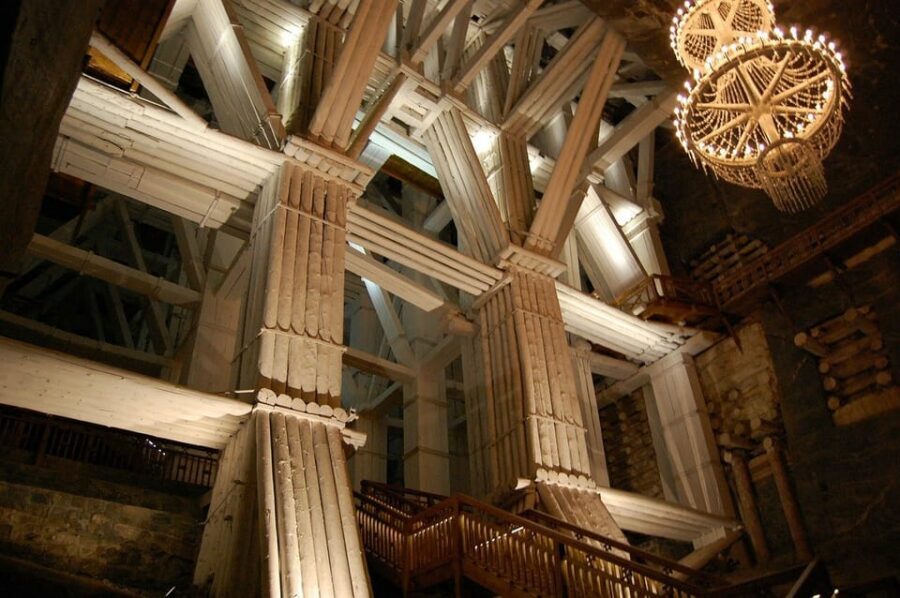
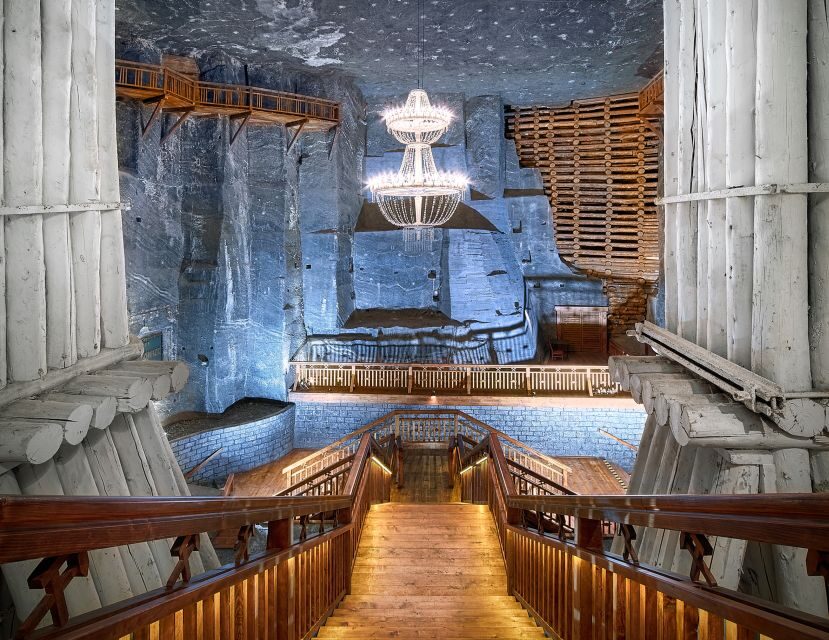
Once you start the descent, the mine goes from impressive brochure to real physical experience. Getting down to the mine level involves a staircase of about 700 steps. The tour description also mentions a wooden staircase for the descent, so expect a mix of steps and passageways that are not “smooth sightseeing walkways.” Bring that in your planning: slow down, hold railings when you can, and don’t treat it like a quick museum sprint.
Inside the mine, the temperature is typically 14–17 °C (57–62 °F). That cool air feels great if you’re coming from Krakow heat, but it also means you’ll want layers. I’d rather be slightly overdressed than shivering partway through your guided route.
Your guided part is about 2.5 hours, covering around 3 kilometers of corridors. That distance doesn’t sound huge until you add underground turns, pauses for explanations, and the fact that you’re walking on surfaces that can feel different from street-level sidewalks. A guided route is exactly why this works, though: the guide helps you understand what you’re seeing, from the logic of the miner’s work to why certain chambers matter.
You’ll also see how mining was done without modern heavy machinery, and without horses. That detail changes the way you look at the spaces. Instead of just “pretty salt rooms,” you start thinking about labor, planning, and how people made the mine function over centuries.
The salt-carved route: what you actually see on the way
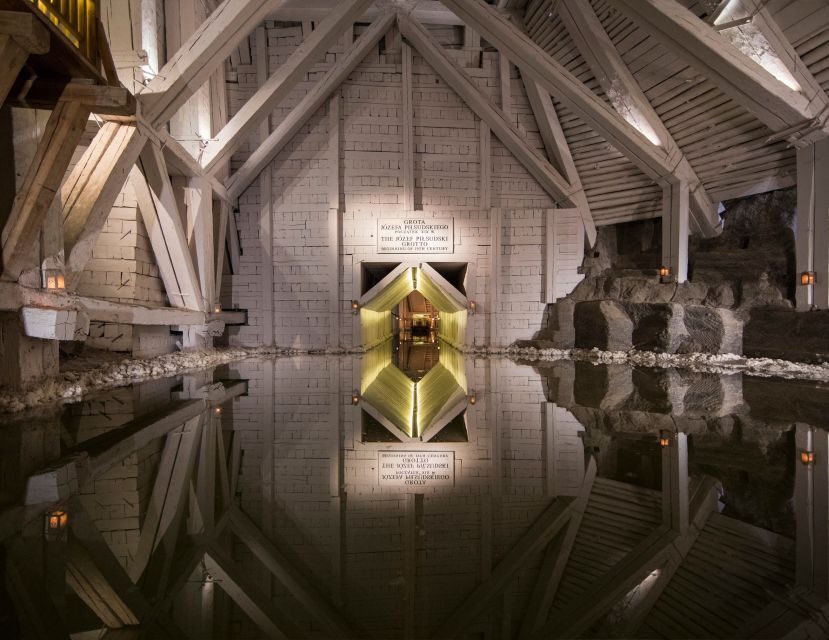
The best part of a guided mine visit is that you don’t just pass rooms—you connect them. Your guide leads you through a labyrinth of passages, and you cover enough ground that it feels like a full underground journey rather than a quick stop.
Expect a steady stream of highlights, including:
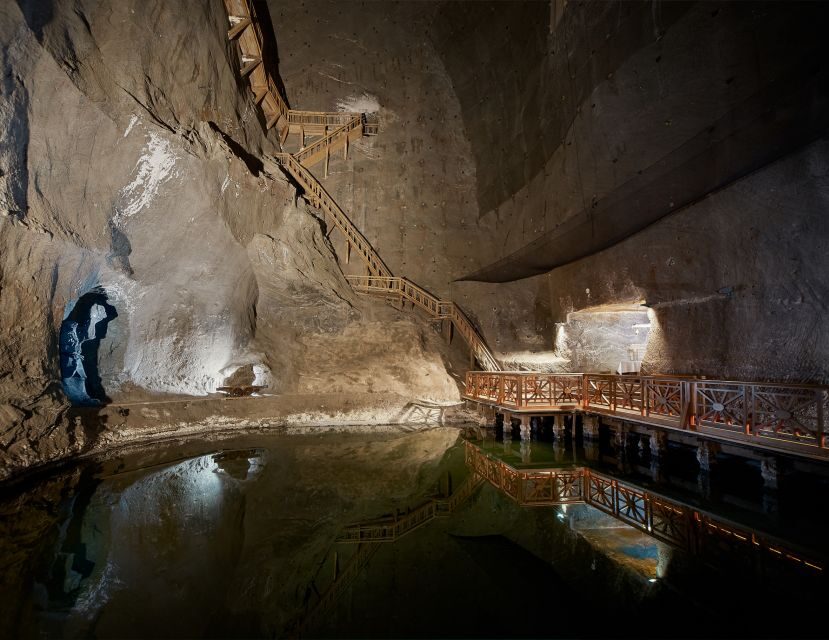
- Underground lakes, which add a weird calmness to the environment
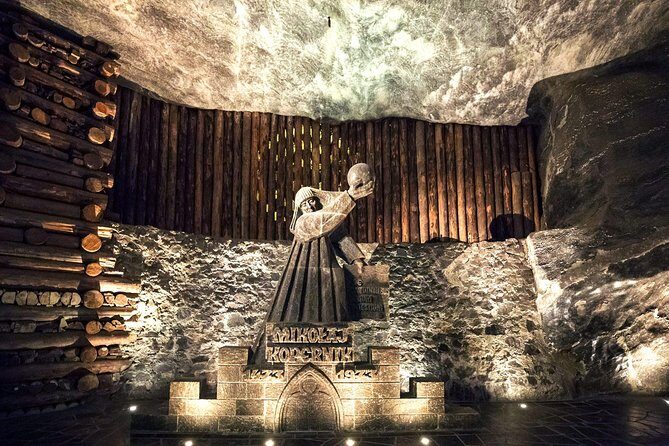
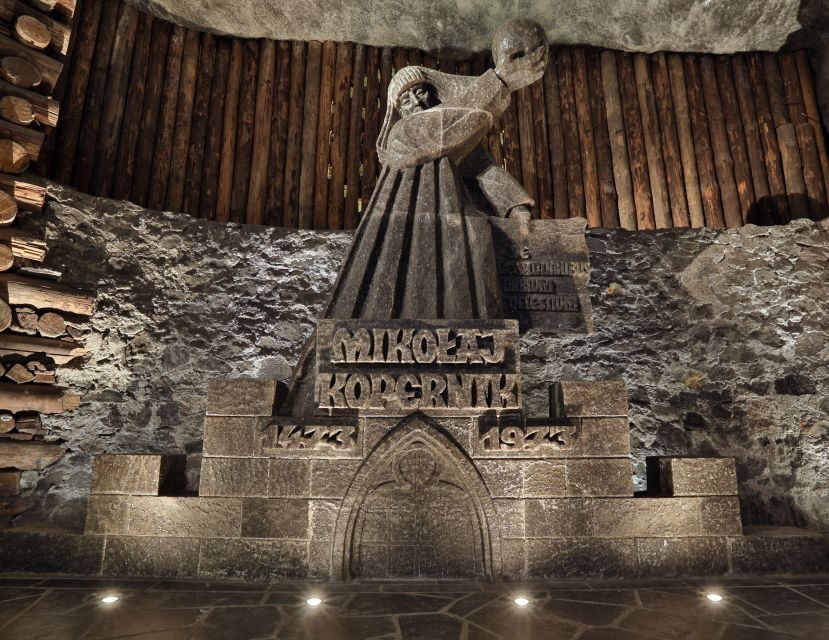
- Rock salt sculptures carved by the miners, so the walls feel like work as much as art
- The sense of a mine that is still shaped by its original purpose, not just staged for photos
This is also where the temperature becomes useful context. Cool air plus salt surfaces gives a distinct atmosphere. If you go in expecting a warm underground walk, you’ll probably notice the chill more than you planned, and it can affect your comfort. Plan for 14–17 °C and you’ll enjoy it more.
There’s also an important pacing note: because you’re following a guided route, you can’t simply linger wherever you want. If you love wandering off and reading every sign at your own speed, the guide structure will feel a bit fixed. Still, that same structure is why most first-timers get so much out of it.
St. Kinga’s chapel: the moment the tour earns its fame
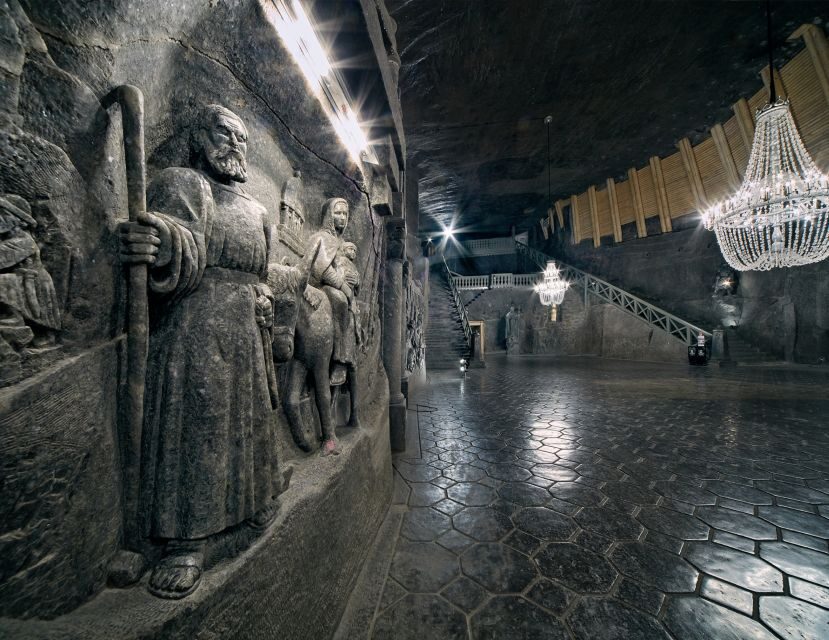
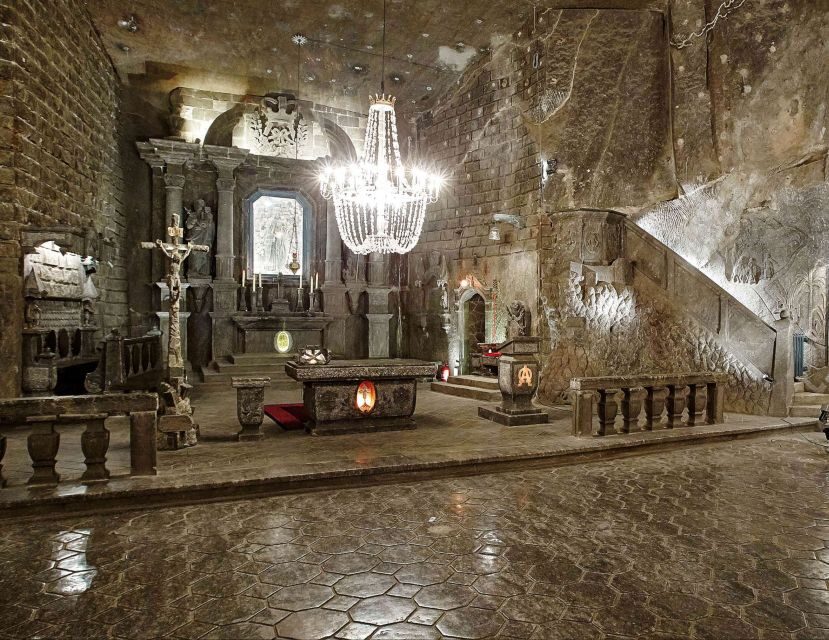
If you only remember one part, it should be St. Kinga’s chapel. It’s described as one of the most beautiful sections of the mine, and it matches the reputation: an underground church built into the salt itself, dedicated to St. Kinga, the patron saint of miners around Krakow.
What you’ll actually notice when you get there is the level of craft. The chapel features an altar and chandeliers carved out of rock salt. That’s not a minor detail. It changes the space from “underground room” to “underground monument.”
You’ll also see mineral textures and sculpted forms that make the environment feel almost architectural, like a cathedral built by hand over time. Even if you’re not religious, this is the kind of place that makes you pause. The mine becomes more than an industrial story—it becomes a human one.
And yes, the underground two lakes are tied into the same overall feeling of the chapel area. Together, they help explain why Wieliczka feels less like a dark tunnel and more like an organized underground landscape.
Where the mine fits: centuries of work and WWII planning
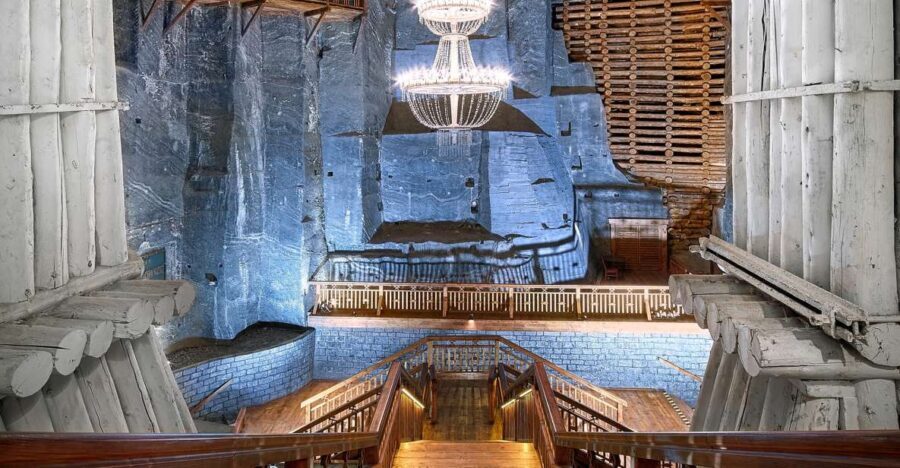
Wieliczka isn’t famous only because it’s photogenic. It’s famous because the story has layers.
The mine dates back over 700 years and has been a major attraction around Krakow for a long time. What I find most interesting is that this wasn’t only a medieval curiosity. In World War II, the Germans planned to set up an underground armament factory in the mines. That connection gives the spaces a more serious historical weight.
Add the UNESCO World Heritage status and it clicks into place. UNESCO doesn’t award that kind of label for random reasons; it’s usually tied to a combination of craftsmanship, cultural meaning, and preservation value. Here, the UNESCO listing helps you understand why the mine remains in focus for visitors year after year.
So when the guide tells you how miners worked without modern machinery—and how the corridors and chambers developed through human labor—you’re not just learning trivia. You’re watching history get preserved in the layout itself.
Getting out again: elevator back up and the snack-and-shop stop
After your underground walk and chapel highlight, the tour brings you back up to ground level. The description specifically notes that at the end of the tour you’ll take an elevator to the ground level. That part matters. After roughly 700 steps down, being able to ride up is a real comfort payoff.
Once you reach ground level, there’s time for practical recovery. You can grab a snack at the snack bar and shop for souvenirs. That’s one of those small details that makes a difference to your day, especially if you’re stacking this tour with other Krakow sights afterward.
There’s also an optional photograph fee, so if you plan to take lots of pictures, don’t assume everything is included. It’s marked as optional, which usually means you can make your own decision once you’re there.
Price and value: is $67 a good deal?
At about $67 per person for a 5-hour tour, this is priced like a guided “do it right” experience rather than a low-cost transfer plus self-guided ticket. The value comes from what’s bundled:
- Live tour guide (English)
- Wieliczka Salt Mine entry ticket
- Hotel pickup
- Skip-the-ticket-line entry
If you’ve ever tried to coordinate public transport, queue timing, and an official ticket around a popular site, you already know how quickly that can eat a half day. Here, you’re paying for convenience and guidance, and you’re also buying time efficiency.
The main tradeoff is that the comfort of the ride can vary. One review flagged an uncomfortable drive over with a small car, little leg room, and no air conditioning, making it hot and clammy. That doesn’t change the mine experience itself, but it does mean you should be prepared for the possibility of a tighter ride in the pickup vehicle.
Also note a small cost detail for certain travelers: student tickets are valid only with a student ID card on the day of the tour. If you don’t have one, you may need to pay an extra fee. That doesn’t change value for most people, but it can matter if you’re booking with student pricing.
Overall, I think this price makes sense if you want someone to guide you through the corridor story and chapel design. If you’re the type who likes DIY exploration with zero structure, you might find this cost harder to justify. For first-timers, though, it tends to feel efficient.
Who this tour suits best (and who should rethink it)
This is a standout pick if you:
- want a guided, high-impact introduction to the Wieliczka Salt Mine
- like big, well-known attractions with strong interpretive storytelling
- appreciate convenience like hotel pickup and a pre-planned route
- don’t mind stairs and a real underground walk
It’s probably not your best match if you:
- have mobility impairments, because it’s specifically marked not suitable
- have claustrophobia, since the mine involves corridors and enclosed spaces
- plan to bring pets, because pets are not allowed
If you’re in good walking shape and you can handle stair descent and a cool underground temperature, you’ll likely find the experience worth the effort. Think of it as part walk, part guided history lesson, and part awe moment in the chapel.
Booking checklist: small prep that makes the tour feel smoother
Even with hotel pickup doing the heavy lifting, you can make the day more comfortable with a few smart choices.
- Wear grippy shoes. You’re walking on a route with lots of steps and underground surfaces.
- Bring a layer for 14–17 °C underground. A light jacket or sweater can be the difference between enjoying the time and rushing to get back out.
- Plan your energy for the descent and pacing. About 700 steps is the headline, but your guided route also keeps you moving for around 2.5 hours.
- If you care about photos, remember there may be an optional photograph fee.
- Pick a pickup location that’s genuinely easy for you to reach without stress. You’ll be waiting around 5 minutes, but you don’t want a rushed start.
One more tip based on the timing: arrive at your pickup point a little early, but don’t overthink it. The tour is structured; you just want to be present when the vehicle shows up.
Should you book this Wieliczka Salt Mine guided tour from Krakow?
I’d book it if you want a clean, guided way to see the 3 km mine route, the salt-carved St. Kinga’s chapel, and the underground lakes without coordinating tickets or figuring out how to make the most of your time. The inclusion of hotel pickup and skip-the-ticket-line entry adds real day-of value, especially if you’re only in Krakow for a short stay.
I’d hesitate if you’re sensitive to discomfort in transport or if stairs and enclosed spaces are a challenge for you. The mine is cool, stair-heavy, and enclosed—exactly what makes it memorable, but also exactly what makes it not suitable for some people. If you’re worried about the drive, just mentally budget for a possibly tight vehicle.
Bottom line: for most first-time visitors, this is one of those tours where the price buys you less stress and more meaning—because someone else turns the mine into a story you can follow.
FAQ
How long is the tour from Krakow to Wieliczka Salt Mine?
The total experience lasts about 5 hours. The guided time inside the mine is approximately 2.5 hours, with about 45 minutes of travel each way.
What temperature should I expect underground?
Underground temperatures are typically between 14–17 °C (57–62 °F).
Are there stairs on this tour?
Yes. To reach the underground mines there is a staircase of about 700 steps.
Is the tour suitable for people with mobility impairments?
No. This tour is marked as not suitable for people with mobility impairments.
Is there an English-speaking guide?
Yes. The live tour guide is listed as English.
Are pets allowed on the tour?
No. Pets are not allowed.