REVIEW · KRAKOW
1 Hour Traditional Gondola Sightseeing Vistula River Cruise
Book on Viator →Operated by Aqua Fun Cruises Krakow · Bookable on Viator
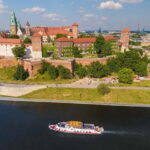
A one-hour river escape hits the spot. This cruise is a relaxed way to see Kraków from the water, gliding past bridges, old districts, and the bend that frames Wawel Hill. I really like the traditional wooden gondola feel—made in an old-style spruce or oak pattern—with audioguide commentary that helps you understand what you’re looking at.
The main drawback is simple: it’s a short ride, and some of the route is more urban riverfront than postcard-only views—so don’t expect every Kraków highlight to be right on the shoreline.
In This Review
- Key Things I’d Focus On
- Why a Wooden Gondola on the Vistula Feels Like Kraków’s Slow Lane
- Price and Value: Why $17.80 Works as a “Day Break”
- Getting On at Barka Mauretania: Where the Cruise Starts and Ends
- Kazimierz Departure: Bridges and the Church on the Rock
- Wawel Hill and the Royal Castle Bend: The View Most People Come For
- Dębnicki Bridge, Zwierzyniec, and Salwator: When the River Turns Greener
- Norbertan Sisters Monastery and Dębniki: Quiet Stone and Older Craft
- Manggha Center of Japanese Art and Podgórze: Art Meets River History
- Father Bernatek’s Footbridge and the Tadeusz Kantor Stop
- Practical Comfort Tips: Deck Views, Blankets, Rain, and That One Hour
- Should You Book This 1-Hour Vistula Gondola Cruise?
Key Things I’d Focus On
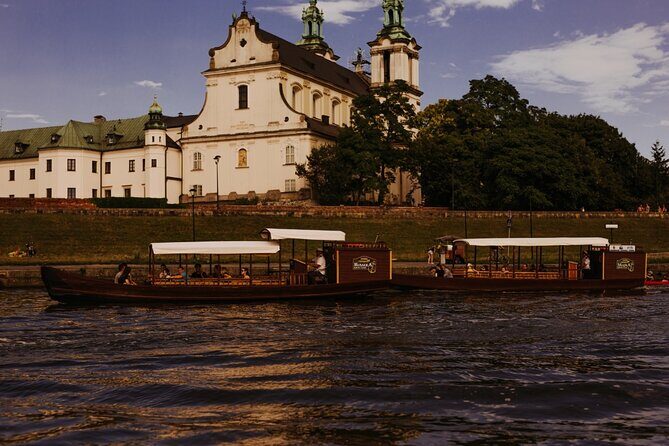
- Wooden gondola comfort: small boat setup with a traditional build and a calm pace
- Wawel from the water: a prime viewpoint where the castle dominates the river bend
- Old-town-to-Podgórze route: you pass key bridges and historic districts without walking
- Audioguide commentary: Polish-English narration that gives you context as you go
- Top-deck sightseeing: many seats on the upper deck make it easier to see over the rail
- Plan around the hour: the cruise is short, so pick this as your break, not your full sightseeing plan
Why a Wooden Gondola on the Vistula Feels Like Kraków’s Slow Lane
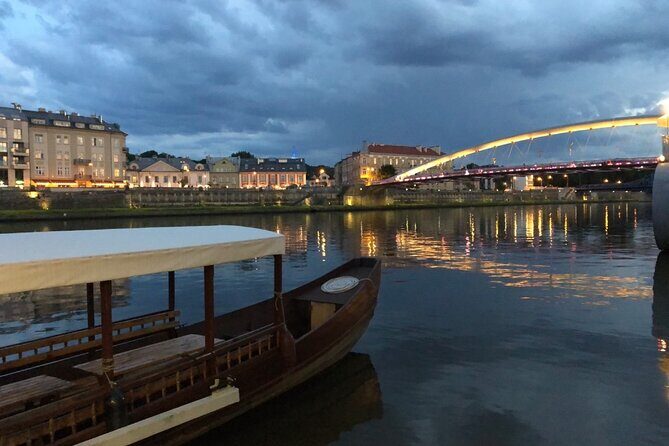
If you’ve been doing churches and courtyards all day, you’ll appreciate how different the river feels. This is not a fast sightseeing sprint. The ride stays gentle and you settle in while the Vistula does what rivers do: it keeps moving, and Kraków slides by in layers.
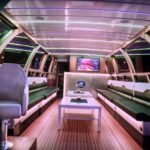
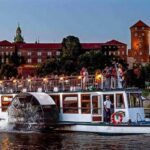
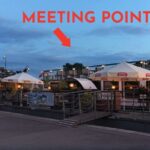
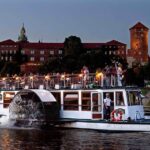
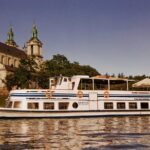
The standout part for me is the boat itself. You’re on a traditional 12-person wooden gondola-riverboat, built using historic patterns of spruce or oak wood, plus modern preservation and connection methods so it’s considered safe. That matters because you’re not just buying a view—you’re buying a specific kind of experience: warm wood, quiet motion, and a vibe that feels closer to a local river tradition than a modern theme-boat.
And you’ll get guidance along the way. The tour includes a Polish-English audioguide commentary made by experienced Kraków guides, so you’re not squinting at buildings and guessing what you’re seeing. The audio also makes the hour feel longer in the best way: you understand the landmarks while you glide past them.
You can also read our reviews of more boat tours in Krakow
Price and Value: Why $17.80 Works as a “Day Break”
At $17.80 per person for about 1 hour, this cruise works because it’s a low-effort way to add a high-reward viewpoint. Kraków is packed with major sights, but the ones most people remember aren’t always the ones you can reach quickly from the river.
Here, you’re paying for:
- A new perspective on places like Wawel Hill and the bridge-heavy river corridors
- A guided hour (audioguide included), so you get meaning, not just motion
- A comfortable format with a small boat size and a relaxing pace
It’s also good value because the route links areas you’d normally split across different walking plans. You start at Kazimierz and finish back at the same dock, while drifting through parts of Podgórze and the riverfront in between. That’s a lot of “where am I?” solved in one ticket.
Is it perfect? No. At least one common reality check: the ride is short. If your goal is to see only Kraków’s biggest attractions, you’ll mainly get the headliner moments near the castle bend, while other stretches are more about river life and historic riverbanks than about nonstop monuments.
Getting On at Barka Mauretania: Where the Cruise Starts and Ends
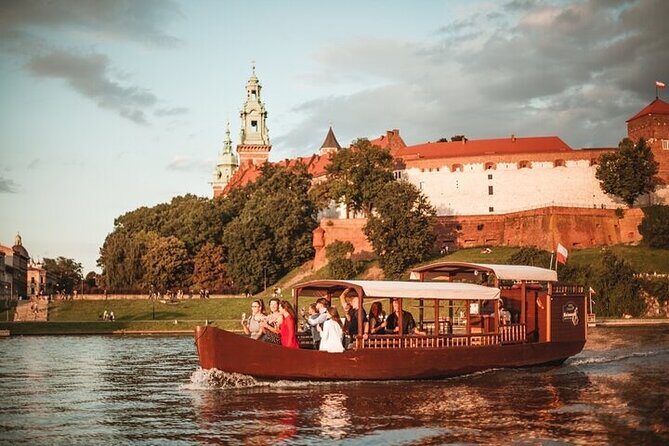
Your meeting point is Barka Mauretania, Bulwar Kurlandzki 137/7, 31-061 Kraków. That dock area is where you’ll board and where the tour ends—so you’re not dealing with a tricky “drop-off elsewhere” plan.
A few practical things help your hour go smoother:
- Use the time on land smartly. There’s no mention of a restroom on board, and one review specifically notes that there isn’t one available on the boat. Plan to use facilities at the dock before you board.
- Bring a drink if you want one. Coffee and drinks aren’t included, but you can take a coffee or cold drink with you because the cruise starts at/near Mauretania Barque, where drinks are served.
- Plan for the deck. Seating on the upper deck is often the best for views, and it’s worth aiming for an earlier queue during busy hours so you can get up top.
You’ll also use a mobile ticket, and the group size is capped at 24 travelers. That usually means a more manageable feel than the big tour boats, especially if the boats are split by capacity.
Kazimierz Departure: Bridges and the Church on the Rock
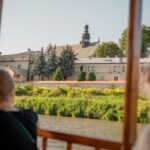
From the dock, you’re immediately in the thick of Kraków’s river geography. The route starts on the Kazimierz side and leads you past bridges and historic structures that connect neighborhoods.
Here’s what you can expect early on:
- The bridge connecting Kazimierz (Krakowska Street) with Podgórze: this is described as the oldest complete road bridge in Kraków over the Vistula that still stands today. It’s one of those moments where the river stops feeling like a divider and starts feeling like a connector.
- Church On the Rock (St. Michael and St. Stanislaus the Bishop and Martyr): you see this historic church from the river, plus it’s noted for the Three Millennium Altar in the church garden. From the water, the setting looks calmer and more grounded—less street clutter, more structure.
- Grunwaldzki Bridge: this one connects Old Town to Podgórze. If you’re watching for “what’s where,” this bridge helps anchor the map in your head. The tour description also notes water tram stops on both banks around this area, which helps you understand why the riverfront feels active even when you’re just cruising.
This early stretch is often where the cruise wins people over. You start getting orientation for Kraków’s layout: neighborhoods on opposite banks, bridges as landmarks, and the river as a sightseeing tool.
Wawel Hill and the Royal Castle Bend: The View Most People Come For
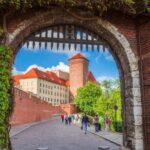
Soon enough, your eyes will lock onto Wawel Hill with the Royal Castle. This is the signature moment because Wawel sits in a bend of the Vistula and it’s described as the characteristic stronghold of Kraków.
From the river, Wawel tends to feel more “dominant” than it does from many city streets. The walls and massing read clearly at water level, and the river bend frames the castle rather than cutting past it.
A couple useful ways to enjoy this moment:
- Get your angle early. The best views happen as the boat lines up with the bend, so don’t wait until the last seconds.
- Listen to the audioguide prompt. The commentary helps you connect what you’re seeing to why it mattered, so the castle doesn’t become just another big building.
Also, a balanced reality check: this is where the cruise’s value peaks. Some parts of the route are more about the urban riverfront and architecture along the banks than about famous monuments right at the edge. If you care most about one “main scene,” this is your scene.
You can also read our reviews of more tours and experiences in Krakow


Dębnicki Bridge, Zwierzyniec, and Salwator: When the River Turns Greener
After the Wawel highlight, the cruise keeps moving through Kraków’s river-side districts and infrastructure. You’ll pass:
- Dębnicki Bridge: in its current form it was built in 1951, described as 157 m long and 19 m wide, supported on two spans. Even if you’re not a bridge person, this is interesting because it’s a visible slice of post-war city shaping.
- Zwierzyniec district: this stretch is said to be one of the greenest areas of Kraków, stretching between the Vistula and the Rudawa rivers. On a calm boat, “green” reads differently—more as open space and air than as a crowded park.
- Salwator: described as the area of the former Zwierzyniec village, where you can see the Kościuszko Mound. If you’ve visited the hill viewpoint areas by foot or taxi before, seeing it from the river helps you understand how the neighborhoods step up and out from the water.
Then the route continues toward a natural-feeling river segment:
- Rudawa River: noted as the Vistula’s left tributary and also one of Kraków’s drinking water sources. It’s a reminder that the river isn’t just for views—it’s part of how the city functions.
This section tends to balance the “urban” parts. If you want an hour that feels like you’re both sightseeing and breathing out a little, these green/tributary moments help.
Norbertan Sisters Monastery and Dębniki: Quiet Stone and Older Craft
As the cruise moves forward, you’ll see religious and historic sites along the riverbank. These aren’t necessarily loud stops, but they give the hour texture.
Key places here:
- Monastery of the Norbertan Sisters: the description highlights that the current look reflects major 17th-century reconstruction, associated with Ksenia Dorota Kątska. You’ll also learn the motto of the order: One heart, one soul in God. From the river, it can feel more still and introspective than it might on a street.
- Dębniki: described as located where the former village of Dębniki stood. The area is linked to craftsmen who made tannins for leather and dyes for fabric, living among oak forests. This is the kind of detail that makes the scenery feel grounded in real work, not just famous buildings.
This portion of the route rewards you if you enjoy when a sightseeing hour includes context. You’re not only passing landmarks—you’re getting a quick story about who lived where and what the riverside was used for.
Manggha Center of Japanese Art and Podgórze: Art Meets River History
Then comes a modern-but-not-random stop. Manggha Center of Japanese Art is described as a modern building shaped like a wave of the Vistula. The concept is tied to the idea of a house for Japanese art collections in Kraków.
Seeing it from the river is especially useful because the shape is easiest to register when you’re not walking up to it. You get the building’s silhouette and the “wave” idea reads better when the background is open water.
After that, the cruise shifts into Podgórze territory:
- Podgórze (right-bank Kraków): described as dating back to a city founded at the end of the 18th century, with flint deposits that supported settlement in the Paleolithic and Neolithic periods, plus Slavic settlement developing from the 7th century. That’s a lot of time for a one-hour ride, and the river route makes it feel plausible—history stacking up along a single shoreline.
This area is where you may start thinking: the cruise isn’t just a quick look at what’s pretty now. It’s also about how the Vistula shaped where people could live, work, and connect.
Father Bernatek’s Footbridge and the Tadeusz Kantor Stop
As you approach the finish loop back toward Kazimierz, two landmarks add a little extra emotion and theatre-world meaning.
First:
- Father Bernatek’s footbridge: a pedestrian and bicycle bridge over the Vistula, connecting Kazimierz and Podgórze. It’s described as built on the site of the former Podgórze Bridge, and it’s become known as a bridge of lovers. Even if you’re not into romantic legends, it’s a memorable visual marker because it’s lighter and more human-scaled than the road bridges.
Then:
- Museum of Tadeusz Kantor (in the former Podgórze power plant): this stop adds a cultural layer. It’s noted that one of the main tasks of Cricoteka is to promote Tadeusz Kantor’s work across theatre and visual arts. If you like art museums but don’t want to plan a full museum afternoon, this is an easy “taste” moment from the water.
Finally, you return:
- Kazimierz: the tour description notes that from the 14th century uprising into the early 19th century, Kazimierz was an independent city, and today it’s an area where Jewish and Christian cultures intertwine. On the boat, that can feel more like an atmosphere than a checklist.
- Back to the place where you started: you end at the same dock.
Practical Comfort Tips: Deck Views, Blankets, Rain, and That One Hour
This cruise earns its popularity when conditions cooperate, but it also works even when the weather doesn’t. Here’s how to set yourself up for an hour you’ll feel good about afterward.
1) Go for the top deck if you can.
One review calls out plenty of seats on the top deck and that it’s where you want to be. Another mentions a solid sound system. Translation: if you want clean views of Wawel and the bridges, don’t get stuck low.
2) Plan for no onboard restroom.
A review specifically warns that the restroom is not on the boat. It’s easy to miss until you need it, so use facilities at the dock before boarding.
3) Expect blankets and a smooth ride vibe.
Blankets are mentioned in a review, and multiple comments describe the ride as calm and relaxing. That fits the vibe of the wooden gondola: small-group, steady motion.
4) Bring a layer for evenings.
Even though the boat provides comfort items like blankets (per reviews), river air can feel cooler. If you’re choosing a later departure time, dress for it.
5) Rain usually isn’t a deal-breaker.
There’s at least one comment noting it rained but wasn’t a problem. The boat experience stays what it is: you’re protected compared to being outdoors on foot, but still see plenty.
6) If you can, consider a sunset timing.
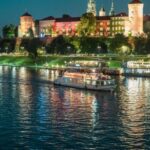
One review recommends a sunset cruise and notes that seeing sights in sunlight, at sunset, and at night feel different. This makes sense on the Vistula: bridges, Wawel, and riverfront buildings shift tone quickly as light changes.
Should You Book This 1-Hour Vistula Gondola Cruise?
I’d book it if you want a low-stress way to see Kraków’s major river landmarks in a single block of time. It’s especially good when you want:
- A break from nonstop walking
- A strong view of Wawel Hill without dealing with viewpoints and crowds on foot
- Small-boat comfort on a traditional wooden gondola
I wouldn’t make it your only Kraków plan if your goal is to tick off every major site. The route is partly urban riverfront, and the hour is short—so you’re here for the river perspective first, not for a complete sightseeing circuit.
If you like clear guidance, get ready to enjoy the Polish-English audioguide while the bridges and districts pass by in easy order. For many days in Kraków, that’s the sweet spot: enough time to feel relaxed, and enough views to make the rest of your trip land better.