REVIEW · KRAKOW
Krakow: City Sightseeing Tour Eco Electric Buggy Golf Cart
Book on GetYourGuide →Operated by GLUZINSKI CITY TOUR KRAKOW SP. Z.O.O · Bookable on GetYourGuide
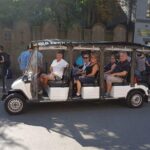
A cozy cart that teaches Krakow fast. This 90-minute electric buggy tour glides through Krakow’s medieval streets with a focus on the Jewish Quarter and the sites tied to Krakow’s wartime ghetto history. I love the heated ride in winter (blankets included), and I love that you get lots of real sights without paying for every step with sore legs. One thing to consider: the route is weighted toward Jewish history, so if you want a broad, balanced sampler of the whole city, you may still want a second walk or tour.
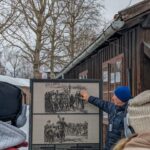
The best part is how the live guides bring the stops to life. I’ve seen guides like Roch, Natalia, Olivia, Jacob, Radek, and Philip pop up in recent groups, and the common thread is clear: they connect facts to places you can actually see. Stops are paced so you can take in streets and buildings from the cart, and some points include time to look around on foot. In winter, even short stops feel easier when your hands aren’t freezing inside an open-air bus-like setup.
Logistics are refreshingly simple. You meet at a local meeting point (it can vary by option), ride in an electric golf cart, and get both live guiding (English or Polish) and an audio guide for extra detail. The possible downside is small but real: luggage or large bags aren’t allowed, so travel light.
In This Review
- Key highlights that make this buggy tour worth it
- A 90-minute Krakow kickstart on an eco electric golf cart
- Jewish Quarter and ghetto sites: why the route is built this way
- From Planty Park to Skałka: the old-city preface before Kazimierz
- Kazimierz synagogue circuit: Wolnica, tempels, and old Jewish streets
- Ghetto-area landmarks: Heroes Square, Schindler, Pankiewicz, and the wall
- Timing and what to expect when you get off the buggy
- Who this tour fits best (and who might want something else)
- Practical stuff that affects your experience
- Should you book this Krakow electric buggy tour?
- FAQ
- How long is the Krakow City Sightseeing Tour by electric buggy cart?
- What does the tour cost?
- Is this tour comfortable in winter?
- Do I get an audio guide?
- What languages are available for the live tour guide?
- Are there many stops during the 90 minutes?
- Will I be able to get off the golf cart to see sites?
- Is hotel pickup included?
- Can I bring luggage or large bags?
- Can I cancel for a refund?
Key highlights that make this buggy tour worth it
- Heated comfort in winter: you ride warm, with weather protection and blankets.
- Jewish Quarter focus: Kazimierz and ghetto-area landmarks get the spotlight.
- A packed route in 90 minutes: more than two dozen named stops along one circuit.
- Church and synagogue viewing stops: you may get chances to look inside when timing allows.
- Guides who handle questions: guides like Natalia and Olivia are praised for clear explanations and humor.
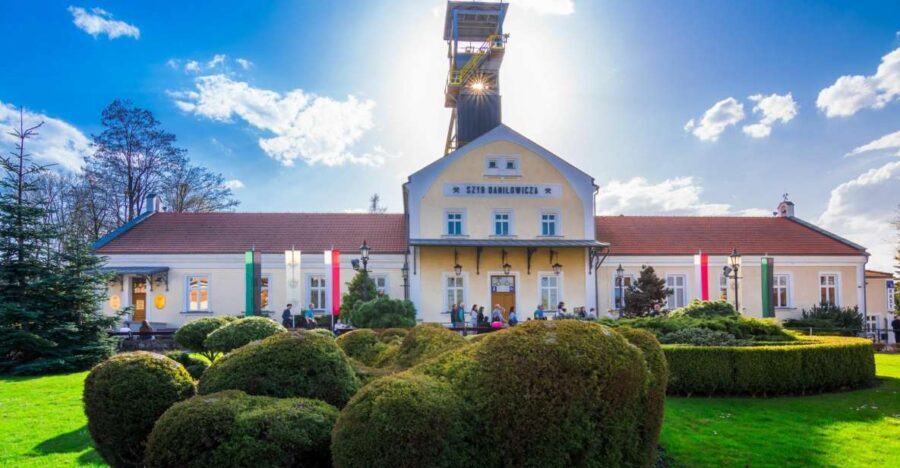
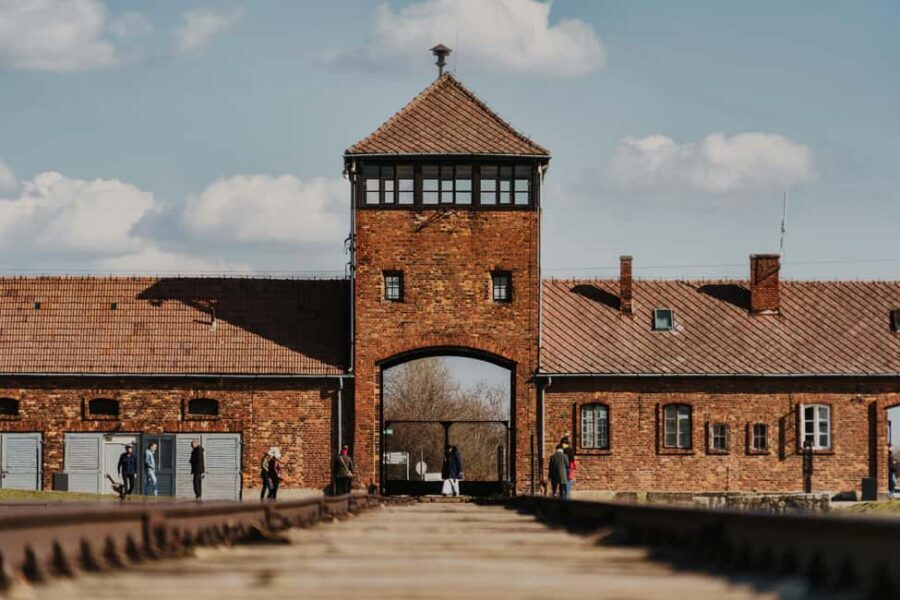
- Easy city orientation: great if you’re doing bigger days like Wieliczka or Auschwitz and want Krakow bearings first.
A 90-minute Krakow kickstart on an eco electric golf cart
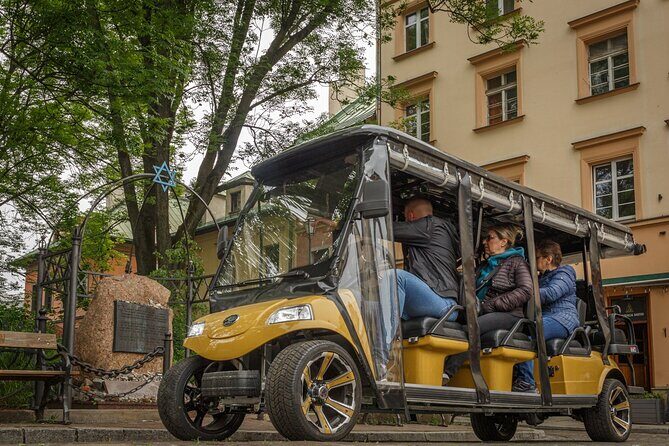
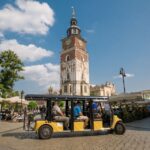
This tour is designed for people who want strong “first day in Krakow” energy without doing a hardcore walking loop. For 90 minutes, you cover a lot of ground by electric golf cart, which matters in a medieval city built for pedestrians, not for tourists trying to see everything between museum tickets and dinner reservations.
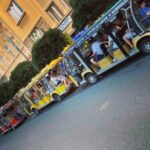
The cart setup is the reason this tour feels extra practical in cold weather. Multiple recent notes mention warmth even when temperatures are brutal, plus side coverage and blankets. That turns “I guess we’ll tough it out” into “we can actually enjoy the sights.” It also helps families: shorter legs can sit comfortably while you still get to experience old streets, not just stare at a map.
Price is where the value really shows. At about $13 per person for a guided circuit (transport + audio + driver included), you’re paying for access and time efficiency. You’re not buying one landmark—you’re buying the connections between landmarks: street layout, neighborhood character, and the story of how Krakow’s Jewish areas fit into the larger city.
You can also read our reviews of more city tours in Krakow
Jewish Quarter and ghetto sites: why the route is built this way
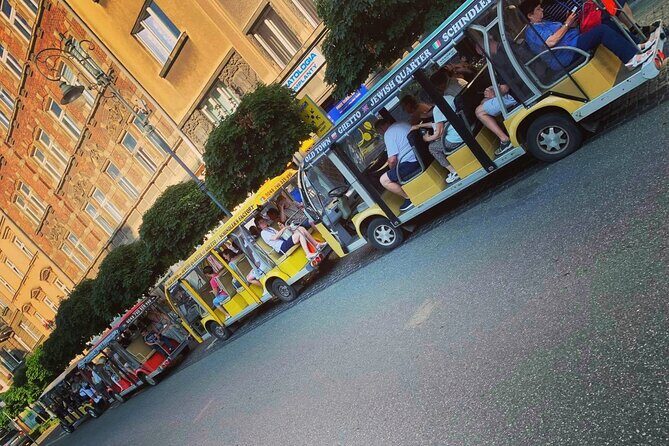
If you’re choosing this tour, you should know what it’s aiming to do. The experience is heavily centered on the Jewish Quarter (Kazimierz) and the former ghetto area (including Podgórze). That’s not a random choice—it’s where a lot of Krakow’s most important 20th-century history lives in visible form, and it’s also where you find a dense cluster of religious buildings and memorials.
Recent feedback calls out this focus pretty directly. One key theme: you’ll learn history that can be heavy, but presented in a way that stays readable and place-based. The tour also includes lighter moments—some guides are praised as funny, and the pace has enough rhythm that it doesn’t feel like nonstop lecturing.
Here’s the balanced way to think about it: you’ll leave knowing this part of Krakow better than if you just wandered around on your own with Google Maps. But if your dream is to hit everything from Wawel to shopping streets to random viewpoints, this won’t replace that. It’s best seen as one strong “chapter,” not the whole book.
From Planty Park to Skałka: the old-city preface before Kazimierz
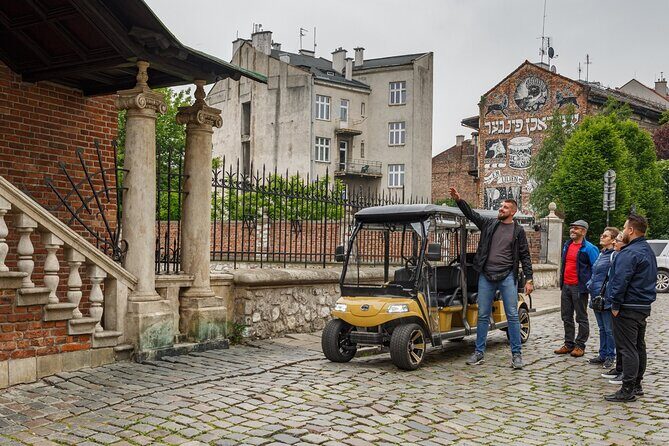
Your ride starts by setting the stage. One of the first named stops is Planty Park, a ring of green around the Old Town that acts like a breathing strip between centuries. Even if you don’t hop out there, seeing it from the cart helps you understand how Krakow’s medieval core is shaped.
From there, the tour keeps pointing you toward the story of Krakow itself, with a stop simply described as History Krakow. This matters because when you later hit Jewish Quarter sites and ghetto memorials, you’ll be able to connect “place names” to the bigger timeline of the city.
Then you move into church-and-street territory, including Skałka Church and Church of St. Catherine. These stops do two jobs:
- They give you a sense of Krakow’s Catholic architectural presence alongside the Jewish landmarks later.
- They also offer short moments to look up at facades and notice details you might miss if you were only chasing photos.
Another stop is Church of Corpus Christi, which is frequently singled out in feedback as especially striking. If you’re hoping to see church interiors, consider that some tours build in time for viewing during stops, but doors and access can depend on day/time. The good news: multiple notes mention getting off to view inside sites, so you might get your chance.
Kazimierz synagogue circuit: Wolnica, tempels, and old Jewish streets
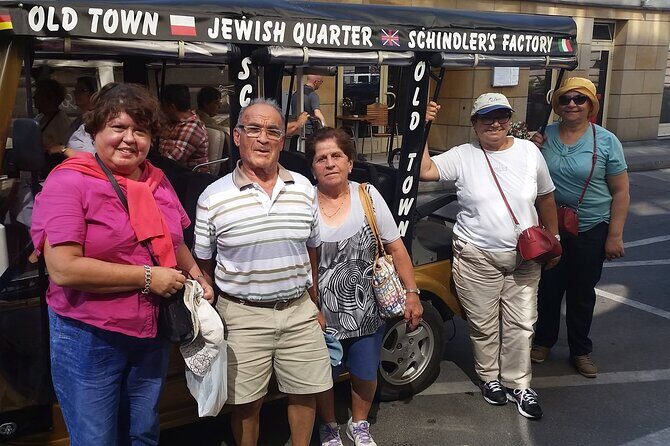
The Jewish Quarter portion gets concrete fast. You’ll pass through key areas such as Jewish Quarter (described as Kazimierz) and Wolnica Square, also known for the Jewish city hall (Wolnica Square – Jewish City Hall). This is where the neighborhoods start to feel like their own world—streets narrow, buildings cluster, and the story becomes visible in layout.
Then come the major synagogue stops. The tour lists several:
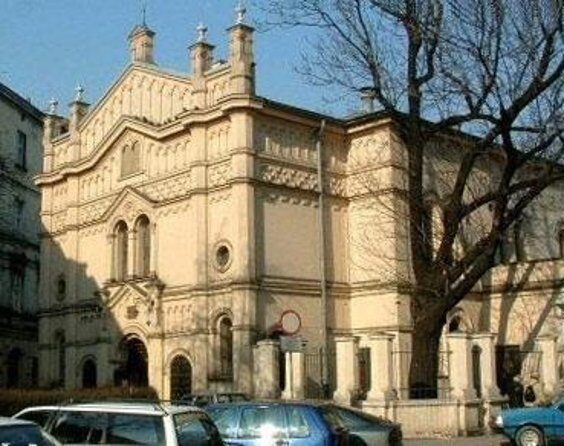
- Tempel Synagogue
- Kupa Synagogue
- Isaac Synagogue
- Old Synagogue
- Remuh Synagogue and old cemetery
It’s a lot of religious architecture in a short time, and that’s where audio help can pay off. The audio guide is included, with multiple languages available, and the live guide can add the human thread between buildings—who used them, what changed, and how the community is remembered.
You also get street-level detail that makes the history feel real:
- Ciemna Street (often associated with old Kazimierz lanes and daily movement)
- Old Jewish Shops
- Family House of Helena Rubinstein (a strong “small building, big story” stop)
Plus, there are multiple named stops tied to memorial and family remembrance:
- Memorial Stone of the Nissembaum Family Foundation
- Old Jewish Shops again reinforces the “life lived here” angle, not just buildings as objects
A good practical tip: bring patience for the emotional weight. Some synagogue and memorial content can hit hard, but the tour’s structure—cart, short stop, explanation—keeps it manageable.
Ghetto-area landmarks: Heroes Square, Schindler, Pankiewicz, and the wall
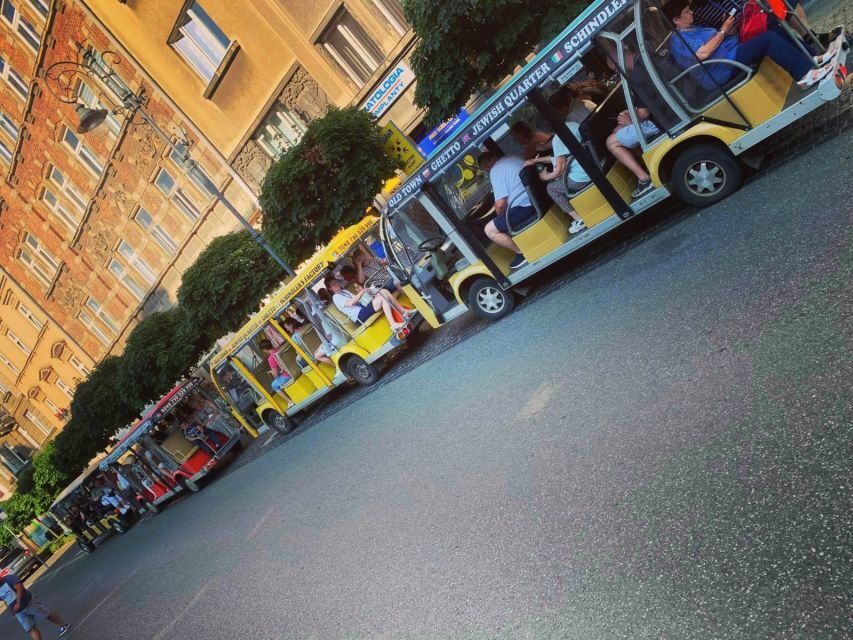
As the route shifts to the wartime story, you’ll encounter a cluster of stops that visitors often remember for a long time.
First, you’ll pass Former Ghetto and Ghetto Heroes Square. These places anchor the narrative in space: what was taken, what was forced, and what resilience looked like under impossible conditions.
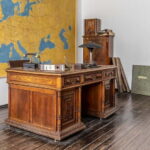
Then you get a landmark connected to one of the most famous survival narratives: Oskar Schindler’s stop, followed by Life in Ghetto. This sequence matters. You don’t just hear the name—you’re guided toward why it matters in the context of the neighborhood.
Another powerful stop is Pharmacy under the Eagle (Residence of Tadeusz Pankiewicz). This is one of those “small site, huge consequence” moments. Even if you don’t linger long, it gives you a concrete setting for the idea of help and resistance that took place in ordinary-seeming places.
The tour also includes:
- Ghetto Wall (the idea of boundaries you can still understand in physical terms)
- Ghetto Heroes Square again as the emotional counterpoint to the wall and forced separation
And to keep the experience from feeling like only one kind of tragedy, the tour also blends in the adjacent religious context, including Church of St. Joseph at the end of the listed route. That closing church stop can feel like a “now and after” transition—Krakow kept changing after the period you learn about.
Timing and what to expect when you get off the buggy
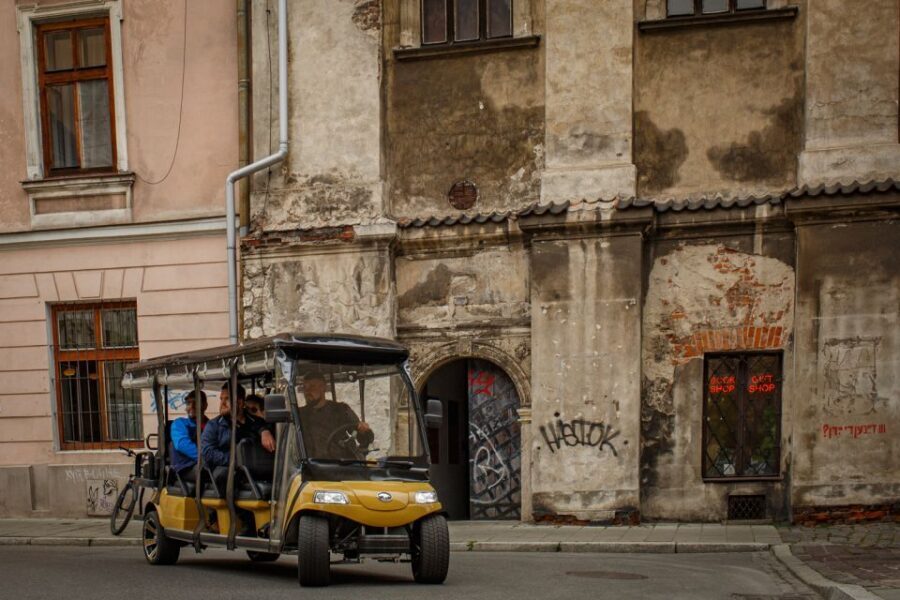
This tour runs 90 minutes, so the timing is structured. You’ll spend a lot of time on the buggy for transit and viewpoint-style viewing, with selected moments where you may get off to take photos or look at sites more closely.
In recent experiences, people noted that the buggy is warm in winter and that there are a few stops where you can view inside churches. That’s a helpful expectation to hold, but I wouldn’t assume every church is guaranteed interior access. If your priorities include church interiors, consider doing this earlier in your day so you’re less likely to hit closed doors.
Also, the cart’s comfort changes the whole feel. Instead of planning your day around stairs, you plan around story beats: park → churches → Kazimierz synagogues → ghetto memorials → Schindler/Pankiewicz sites → finish.
Who this tour fits best (and who might want something else)
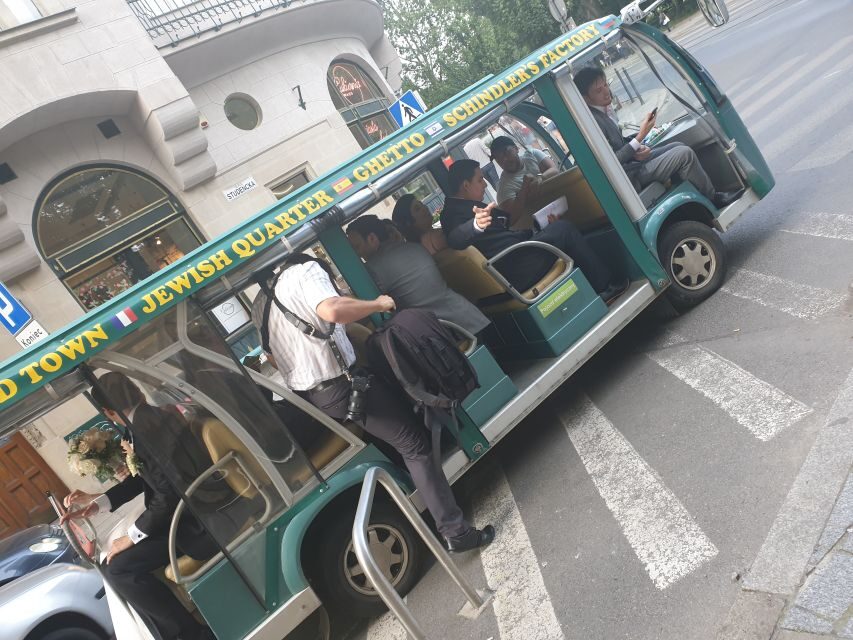
This is a strong match if you:
- Want to get your bearings fast in Krakow
- Have limited time (especially if you’re pairing Krakow with a longer day like Wieliczka or Auschwitz)
- Don’t want to cover old streets on foot in cold or rainy weather
- Travel with kids, teens, or older relatives who still want meaningful sightseeing
It’s also a good choice if you care about history, but prefer it taught through places you can see rather than only museum wall text. The tour includes both a live guide (English or Polish) and an audio guide across many languages, which helps you keep up even if you miss one moment.
If you’re primarily after a classic highlights sweep—big views, royal stops, lots of food streets—this route might feel too focused. In that case, treat it as a “necessary chapter” and plan a second activity to cover the rest of the city.
Practical stuff that affects your experience
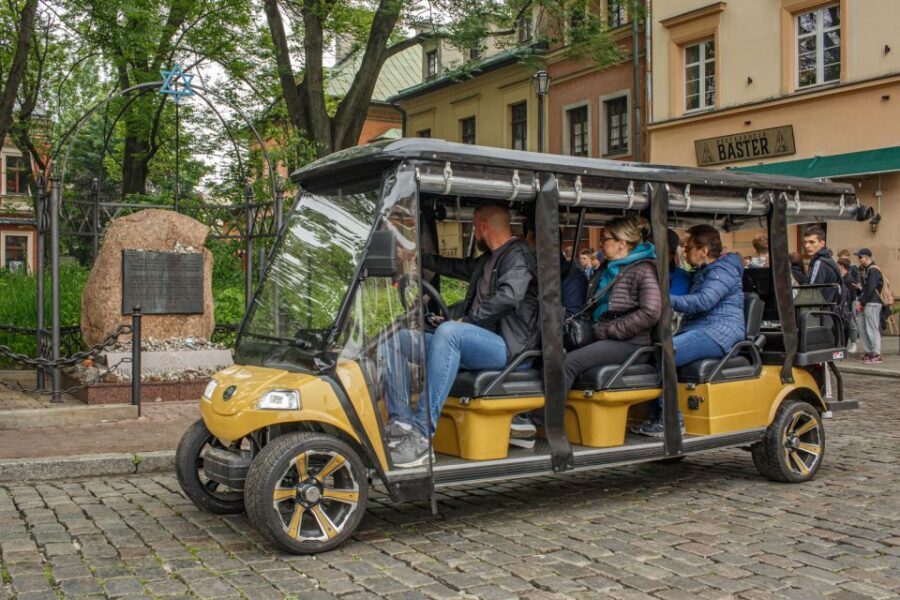
Here are the nuts-and-bolts that can make or break your day:
- Meet-up point can vary depending on the option you booked.
- Pickup is optional if you share your hotel or apartment address.
- You’ll have an audio guide plus a driver, with a live guide available in English or Polish.
- Skip-the-ticket-line is included (relevant if you’re prompted to use tickets for certain stops).
- No luggage or large bags are allowed, so keep your pack small. A day bag is fine; big stuff won’t work.
- This is described as family-friendly, and the heated vehicle makes it easier for different ages to handle the outing.
One more practical note: recent feedback highlights communication and problem-solving when timing gets messy. If you’re flying in or tight on connections, it’s worth knowing the operators have handled changes gracefully in the past.
Should you book this Krakow electric buggy tour?
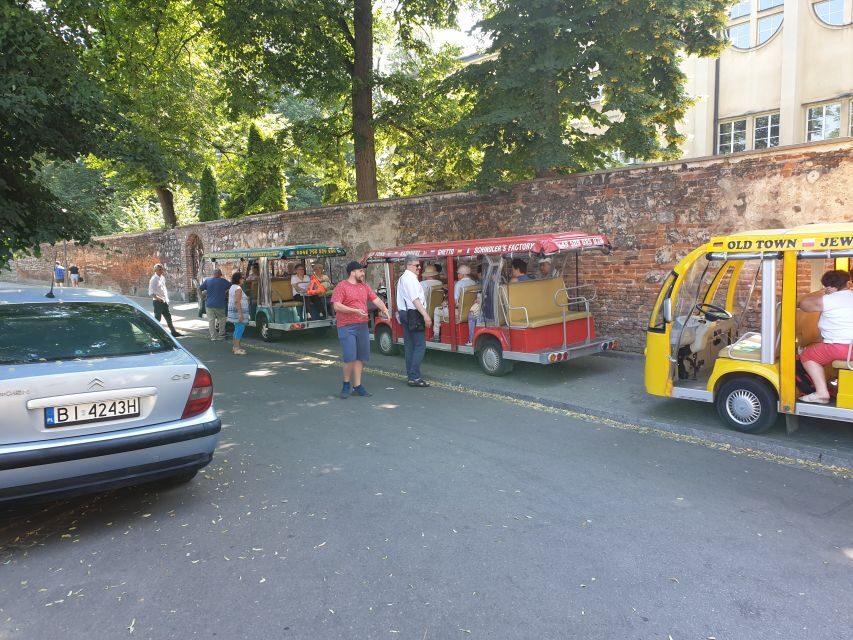
Yes, if you want a fast, warm, and guided way to understand Krakow’s Jewish Quarter and former ghetto sites. At $13 for 90 minutes with transportation, driver, and audio, the value is hard to beat—especially in winter when walking feels like a full-time job.
Book it especially if it’s near the start of your Krakow stay. It gives you neighborhood context that makes later self-guided wandering make sense. And if you like guides who can answer questions and keep things friendly (Roch, Natalia, Olivia, Jacob—names that keep showing up), you’re likely to enjoy the tone.
Skip or pair it if your must-see list is mainly general Old Town scenery. This tour is meant to teach you one big, important part of Krakow in depth, not to replace other sightseeing.
FAQ
How long is the Krakow City Sightseeing Tour by electric buggy cart?
It runs for 90 minutes.
What does the tour cost?
The price is listed at $13 per person.
Is this tour comfortable in winter?
Yes. In winter time, the vehicles are heated.
Do I get an audio guide?
Yes, an audio guide is included.
What languages are available for the live tour guide?
The live tour guide is available in English and Polish.
Are there many stops during the 90 minutes?
Yes. The tour includes over 24 places and landmarks.
Will I be able to get off the golf cart to see sites?
The tour includes stops where you can view places more closely, including some chances to look inside churches.
Is hotel pickup included?
Hotel pickup and drop-off are not included, but pickup is listed as optional if you provide your hotel/apartment address.
Can I bring luggage or large bags?
No. Luggage or large bags are not allowed.
Can I cancel for a refund?
Yes. Free cancellation is offered up to 24 hours in advance for a full refund.