REVIEW · KRAKOW
Jewish Quarter Kazimierz and Schindler’s Factory Guided Tour
Book on Viator →Operated by Intercrac Sp. z o.o. · Bookable on Viator
WWII history hits close here. This tour threads Krakow’s Jewish story through the centuries, then lands you in the wartime sights tied to Spielberg’s Schindler’s List and the Oscar Schindler’s Factory Museum. I especially like the way the Kazimierz walking part connects old streets to lived religion and community life, not just dates and names.
You’ll also get strong value from the pairing: a licensed guide leads the Kazimierz walk, and then you use fast-track entry for Schindler’s Factory. That combo saves time and helps you understand what you’re seeing as you move. One caution: the factory museum visit is time-limited, and you may wish you had more hours on your own after the guided portion ends.
In This Review
- Key highlights worth showing up for
- Entering Kazimierz on Szeroka Street
- Old Synagogue, Remuh Synagogue, and the cemetery stop
- Seeing the ghetto story without turning it into a movie set
- Spielberg’s Schindler’s List connection: where Podgorze fits in
- Oscar Schindler’s Factory Museum: what the guided part covers
- What you can expect inside the museum space
- The best way to handle the time limit
- Price and value: $71.20 for two major experiences
- Who should book this tour in Krakow
- Should you book this Kazimierz and Schindler’s Factory guided tour?
- FAQ
- How long is the Kazimierz and Schindler’s Factory guided tour?
- How much does the tour cost?
- Is the tour offered in English?
- Where does the tour start and end?
- What’s included in the tour price?
- Is food included?
- Do I need admission tickets for Kazimierz?
- Do I get to skip the line at Schindler’s Factory?
- How big is the group?
- Do I need to provide my full name for entry?
Key highlights worth showing up for
- Szeroka Street first: Old Synagogue museum stop on the historic main spine
- Remuh Synagogue and Cemetery: one of Poland’s most important Jewish religious sites
- Spielberg’s Schindler’s List Podgorze locations explained as you walk
- Schindler’s enamel factory museum: WWII exhibition tied to Kraków under Nazi Occupation
- Fast-track admission included to cut down the waiting time
- Small groups (max 25) with a single-language licensed guide
Entering Kazimierz on Szeroka Street
The tour starts at Szeroka 24 and moves you into Kazimierz, the part of Krakow where Jewish life has left visible tracks in streets, buildings, and daily rhythm. The walk begins on Szeroka Street, which is basically the neighborhood’s historical spine—synagogues, old townhouses, and the feeling that you’re stepping into a real place, not a theme set.
What I like most is that the guide doesn’t treat Kazimierz like a list of landmarks. You’re given the context first: how this community shaped Krakow before WWII, and how the atmosphere of the quarter ties to prayer, study, and ordinary life. You can follow the story more easily when you hear it in the same order you’ll see the places.
You’ll also notice the tour is designed for walking comfort and flow. The pace is structured for about 1 hour 30 minutes in Kazimierz, then you move on to the museum part of the day. That means you get the big beats without needing to plan every stop yourself.
You can also read our reviews of more guided tours in Krakow
Old Synagogue, Remuh Synagogue, and the cemetery stop
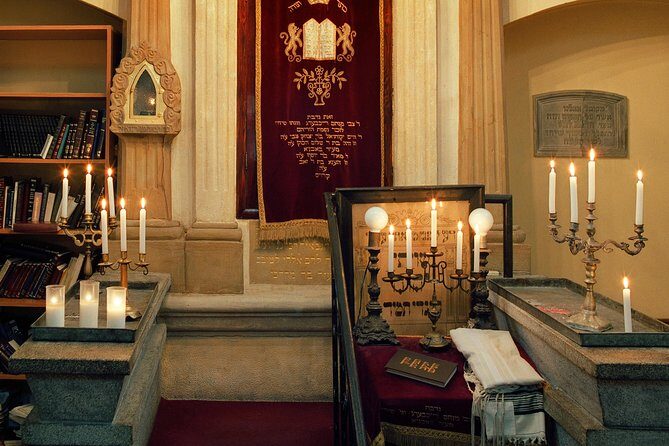
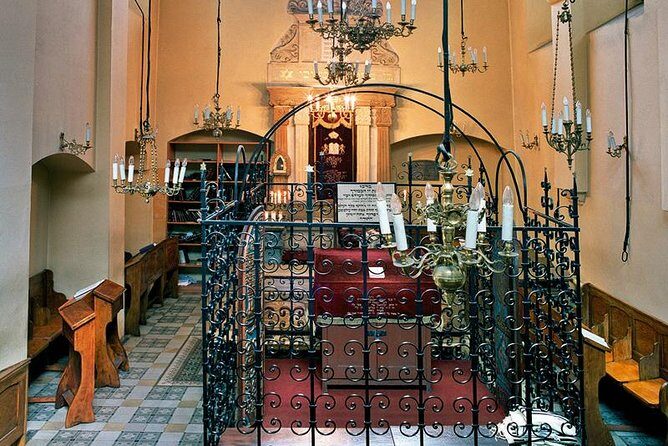
Kazimierz is strongest when you focus on the religious sites, because they’re the most tangible link to generations. The tour includes the Old Synagogue, noted as the oldest preserved synagogue in Poland, and it’s used today as a museum of Jewish history. Even if you only skim it, it helps you understand how the community preserved memory through institutions—not only through events.
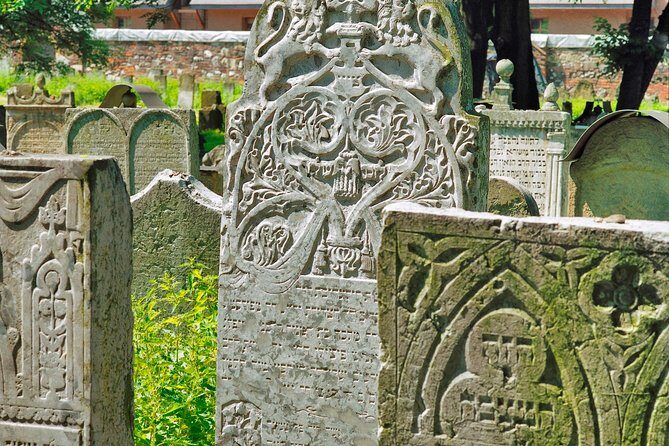
Next comes the Remuh Synagogue and Cemetery, one of the most important Jewish religious sites in the country. This is the kind of stop where a good guide makes a difference. With the right framing, you’ll start noticing details you might otherwise miss: how spaces are arranged, what the site signals about tradition, and why burial grounds matter so much in Jewish culture.
You’ll also pass the Kupa Synagogue (once associated with poorer residents) and the Tempel Synagogue (now used as an active center of cultural life). I like that mix. It shows Kazimierz wasn’t one single story of wealth or one single style of worship—it held different communities, needs, and levels of comfort.
Seeing the ghetto story without turning it into a movie set
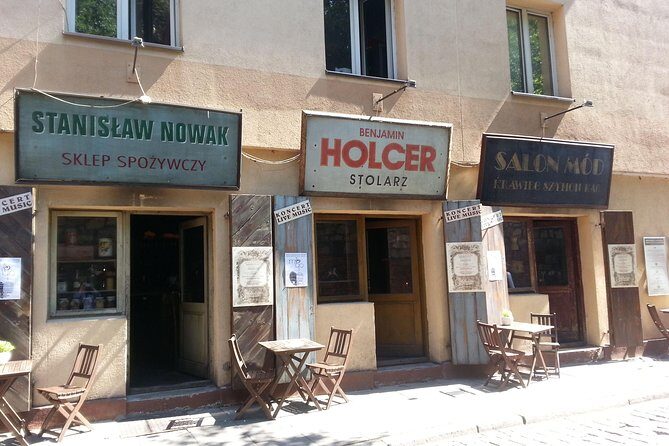
Kazimierz is also where WWII history becomes painfully concrete. The tour connects the centuries-long community to what happened under Nazi occupation, including how the Jewish population was herded into the ghetto system. You won’t just hear that in passing. The guide ties it to where you’re standing so the story lands with more weight.
One detail that helps: the route is not just about buildings. You’ll walk streets now marked by monuments and you’ll connect the visible landscape to the forced changes that took place during WWII. That’s often the biggest challenge on self-guided trips—people see plaques but don’t feel the chain of events. A guided walk helps you connect the dots.
If you’re the type who likes follow-up, take a moment at each stop to look around before you keep moving. Because the whole point of the walking portion is to help you remember where the story unfolded, not just what was said.
Spielberg’s Schindler’s List connection: where Podgorze fits in
One of the main reasons people book this tour is the link to Schindler’s List. You’ll learn why Steven Spielberg chose this area to depict the Jewish ghetto of Podgorze. The guide doesn’t treat it like trivia. They explain the filmmaking logic—how locations were used to represent the wartime world.
Here’s what you should do with this information: watch for how the neighborhood’s surviving structures create visual continuity. When you understand that the film is anchored to real streets, you start seeing why certain camera angles and settings feel believable. It also makes the story harder to brush off, because the backdrop is not imaginary.
In the guide’s hands, the Spielberg connection becomes more than a reference point. It becomes a tool to help you read the neighborhood. So when you see a street, you learn to ask: what might have been here then, and what can still be recognized today?
Oscar Schindler’s Factory Museum: what the guided part covers
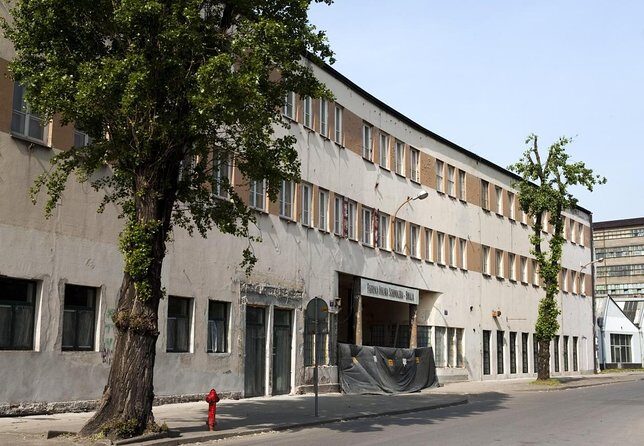
After Kazimierz, you head to Fabryka Emalia Oskara Schindlera—Schindler’s enamel factory building, now a museum. This is where the tour’s second half runs for about 1 hour 30 minutes, and it uses the museum’s immersive WWII layout. The exhibition is titled Kraków under Nazi Occupation 1939–1945, and the guide walks you through it with Schindler’s story as the thread.
I appreciate that the tour explains what Schindler did in practical terms. You’ll hear how Schindler employed Jewish workers and used his position to protect many from deportation. The museum highlights the scale of survival—more than a thousand men and women—and you’ll likely hear the term Schindlerjuden, tied to testimonies from those he saved.
One important reality check: the museum building no longer shows original production equipment. The factory function has been converted into exhibits, so you’re not doing a factory-machine tour. Some visitors expect more of the physical workplace; if that matters to you, set your expectations now and think of this as a guided museum storyline in the place where the work once happened.
What you can expect inside the museum space
The museum’s design uses narrow passageways and an immersive layout meant to recreate the feel of occupied Krakow. That’s effective, but it also means you should plan for a bit of close, indoor movement. If you like to take your time reading labels, you may want to note where you want to return once the guided portion ends.
As you walk through the exhibits, expect a focus on fear, uncertainty, and daily struggle under occupation—told through photographs, personal objects, and reconstructed streets. The guide’s job is to connect those items into a coherent narrative, so you understand the timeline and the stakes rather than treating each display as a separate fact.
Some people felt the factory part focused more on Krakow and the Jewish experience during WWII than on Schindler’s personal day-to-day. If you’re hoping for a biography-style tour of his factory operations, you might find yourself wanting extra context. Still, the museum itself is designed to carry that broader emotional and historical weight.
The best way to handle the time limit
This tour runs about 3 hours 30 minutes total. That’s a smart length for getting both neighborhoods and key sites without eating your whole day. It’s also the reason you’ll want a strategy for the museum.
Here’s my practical advice: during the guided portion, treat it as the map. Listen for the names and themes the guide emphasizes, because those are the things you can then look up further. After the tour ends in central Krakow (the listed end point is Lipowa 4), you can decide whether to circle back to specific rooms.
If you’re the kind of person who reads everything slowly, you might feel rushed in the museum. That matches what I’d expect from a guided time box. The fix is simple: use the tour for structure, then come back for breathing room on your own schedule.
Price and value: $71.20 for two major experiences
At $71.20 per person, you’re paying for two things that add up fast in Krakow: guided context plus fast-track museum entry. The Kazimierz segment is a walking tour with a licensed guide, which means you’re not left guessing what a synagogue or cemetery stop “means” historically.
On the factory side, you’re paying for that skip-the-line advantage and for guidance through an exhibition that’s easy to misunderstand if you just wander in. If you’ve ever done a Holocaust-era museum without context, you know how quickly things can blur. This tour is set up to prevent that blur.
Is it the cheapest option in town? No. But the format is efficient: you get a curated route through Kazimierz and then a guided museum visit with admission included for the museum segment. For first-timers, that efficiency can be worth real money.
Who should book this tour in Krakow
I think this tour suits you if you want a guided “through-line” from centuries of Jewish life to the rupture of WWII, with clear connections to surviving places. It also fits you if you care about the Spielberg connection and want it grounded in real streets, not just film references.
It’s also a good choice if you want a guided learning boost without committing to an all-day museum marathon. The total time is manageable, and the group limit (max 25) helps keep the experience from becoming chaotic.
For you, what might matter most: you’re walking a religious and memorial landscape. Wear comfortable shoes and expect the museum areas to be tighter in layout. Also consider that weather can affect comfort even if the tour runs in all conditions, so dress for standing and walking, not just for the forecast high.
Finally, if you bring questions, you’ll probably have a guide who can answer them clearly. Names mentioned in English groups include guides such as Margaret, Helena, Filipe, Magda, Barbara, Ziggy, and Joanna, and they’re repeatedly praised for story clarity and handling questions.
Should you book this Kazimierz and Schindler’s Factory guided tour?
Book it if you want a structured, moving introduction to Kazimierz and Schindler’s story in a single half-day, with fast-track entry to the museum and a route that helps you connect where you stand to what happened.
Skip it or adjust your expectations if you mainly want a long, unsupervised museum experience or a deep factory-operations tour of production spaces. This is a guided museum visit in a converted factory building, so the experience is about the exhibition and the wartime narrative—not about seeing old machinery or spending hours on your own reading everything.
If you book, do this: plan to return for extra time after the tour if the museum hits you. The guide gives you the first map; your second visit can be where the details stick.
FAQ
How long is the Kazimierz and Schindler’s Factory guided tour?
It lasts about 3 hours 30 minutes.
How much does the tour cost?
The price is $71.20 per person.
Is the tour offered in English?
Yes. The tour is offered in English.
Where does the tour start and end?
It starts at Szeroka 24, Kraków, and ends at Lipowa 4, Kraków.
What’s included in the tour price?
You get a walking tour through Kraków’s historic Kazimierz Jewish Quarter with a professional licensed guide, plus fast-track admission to Schindler’s Factory.
Is food included?
No. Food and drinks are not included unless specified.
Do I need admission tickets for Kazimierz?
The Kazimierz walking segment lists admission as free.
Do I get to skip the line at Schindler’s Factory?
Yes. Fast-track admission to Schindler’s Factory is included.
How big is the group?
Group size is limited to a maximum of 25 participants.
Do I need to provide my full name for entry?
Yes. The museum issues personalized tickets, and providing the full names of all participants at booking is mandatory.