REVIEW · KRAKOW
Auschwitz-Birkenau Guided Tour with Private Transport from Krakow
Book on Viator →Operated by My Krakow Driver · Bookable on Viator
One day in Poland that never leaves you. This guided Auschwitz-Birkenau visit matters because you don’t just travel there and look around. You ride in an air-conditioned vehicle with a driver who keeps the day moving, and you cover Auschwitz I and Auschwitz II-Birkenau for a fuller understanding instead of a single slice. I also like how the day is built to reduce small frictions: pickup, ticket help, and clear meet-ups.
A possible drawback: the content is intense, and the whole experience runs about 7–8 hours. You’ll want to be ready for a packed schedule and the emotional weight.
In This Review
- Key highlights to know before you go
- Getting to Auschwitz from Krakow with private comfort and a steady driver
- Pre-booked entry and meet-ups that keep you from wasting time
- Auschwitz I: where the camp system and early killings took shape
- Birkenau (Auschwitz II): understanding the scale of the extermination system
- Why doing both halves matters more than you think
- What the guide role adds to a place like this
- Price and value: what $104.23 buys you from Krakow
- Timing, pacing, and how to handle a long, intense day
- Who this Auschwitz-Birkenau tour fits best
- Should you book this Auschwitz-Birkenau tour from Krakow?
- FAQ
- How long is the Auschwitz-Birkenau guided tour from Krakow?
- What is the price per person?
- Is hotel pickup included?
- Is admission ticket included?
- What’s included in the tour price?
- Is dinner included?
- How many people are in the group?
- Do you get a mobile ticket?
- When do I get confirmation?
- What is the cancellation window for a full refund?
Key highlights to know before you go
- Private transport with pickup from Krakow: You’re not stuck figuring out buses or timing.
- Pre-arranged tickets and smooth entry: The driver helps with tickets and where to go inside.
- Both Auschwitz I and Auschwitz II-Birkenau included: You get the place in two parts, not one.
- Small group cap (up to 30): It’s big enough to run efficiently, but not a sea of people.
- Included bottled water and air-conditioned ride: Small comfort perks for a long day.
- Guiding that comes with logistics support: Your driver meets you at agreed points and keeps the flow.
Getting to Auschwitz from Krakow with private comfort and a steady driver
This tour starts the way you hope your day will go: pickup and a ride that’s handled for you. Departing from Krakow, you’re traveling by private transportation in an air-conditioned vehicle. That sounds simple, but on a long day like this it’s a big deal. You save energy for the hard part—being present.
From the way the service is described, the driver role is practical, not just chauffeuring. People talk about prompt hotel collection and meeting at agreed locations each time. One detail I’d keep in mind: a good driver can also solve the day’s timing. If your guided time slot shifts, the plan can be rearranged to keep you from losing the visit to either part of the site.
That’s why this setup feels like value. The tour isn’t just selling access. It’s reducing the stress of getting there, getting ticketed, and finding the right start points so you spend less time in logistics mode and more time in remembrance mode.
You can also read our reviews of more guided tours in Krakow
Pre-booked entry and meet-ups that keep you from wasting time
Auschwitz is not a place where you want to hunt for the right checkpoint. You want the day to run cleanly. This experience leans into that with pre-purchased tickets and a guided structure that includes clear instructions.
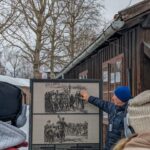
The process, based on the service descriptions, goes like this: you’re driven to the camp area, the tickets are arranged ahead, and you’re directed on where to go inside to connect with your guide. One of the most praised parts is that you’re not left wandering. You get instructions, and the driver is there to meet you at planned points.
That matters even if you’re an organized traveler. In a high-traffic, high-emotion environment, a simple delay can make you lose your footing. Instead of worrying about timing and where to stand, you can focus on what’s in front of you.
Another small-but-real plus: there’s a mobile ticket mentioned in the tour details. Even when things are busy, having your ticket format ready helps keep the check-in steps fast.
Auschwitz I: where the camp system and early killings took shape
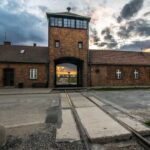
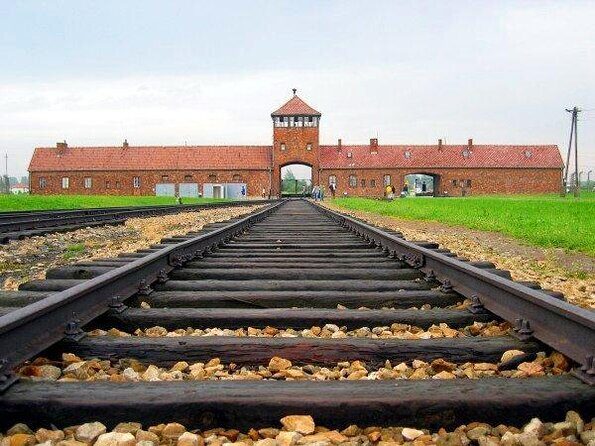
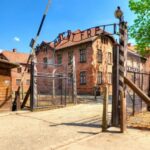
When you visit Auschwitz I, you’re seeing the part of the camp where the Nazis set up the system for men and women. This is where the story starts to feel structured and deliberate: it was the first Auschwitz camps for men and women, and it’s also where the Nazis carried out early lethal experiments using Zyklon B.
You’ll also learn that Auschwitz I includes the start of mass murder by transport—specifically the early mass transports of Jews. These details are heavy, but they’re essential. Auschwitz didn’t begin as chaos. It grew as a plan, and Auschwitz I is the place that shows the beginning of that logic.
Why I think this part earns its place on your schedule: it helps you understand the setting as something built by people and carried out step by step. That may sound clinical, but it’s actually about clarity. You’re not just looking at preserved buildings and artifacts. You’re being guided to connect how the camp functioned and why Auschwitz became a symbol of Nazi crimes.
The tour framing also underlines that Auschwitz wasn’t only a crime against one group. It references Nazi crimes against Poles, Romas, and other groups. Seeing Auschwitz I first can help you process those references in context before you move to the larger extermination setting.
Birkenau (Auschwitz II): understanding the scale of the extermination system
Then you move to Auschwitz II-Birkenau. Even though this part is only described in broad terms in the tour info, the reason it’s essential is clear: visiting both parts is what gives you the proper sense of the place.
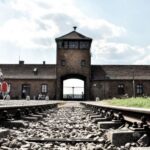
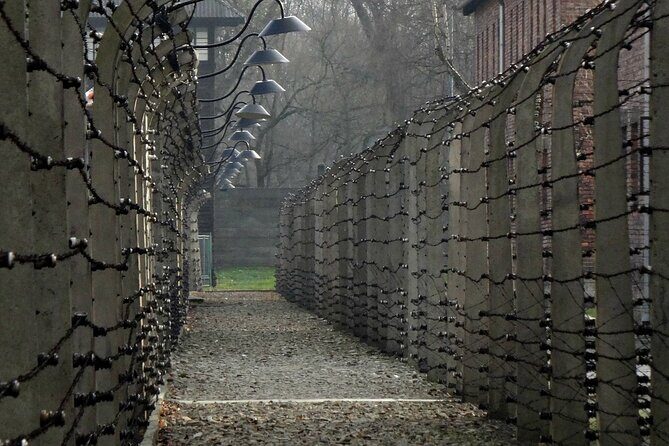
Birkenau is the part that helps you grasp the extermination setting as something built to run at scale. It’s where the camp’s purpose feels larger and harder to hold in your mind. If Auschwitz I is about the start of the system, Birkenau is about the operation of that system in the wider sense.
There’s a practical side to visiting Birkenau during a guided day. The guide’s role is to connect what you’re seeing to the overall story. Without that, it’s easy to focus only on the most visible elements and miss the meaning that connects them to the Holocaust and Nazi crimes.
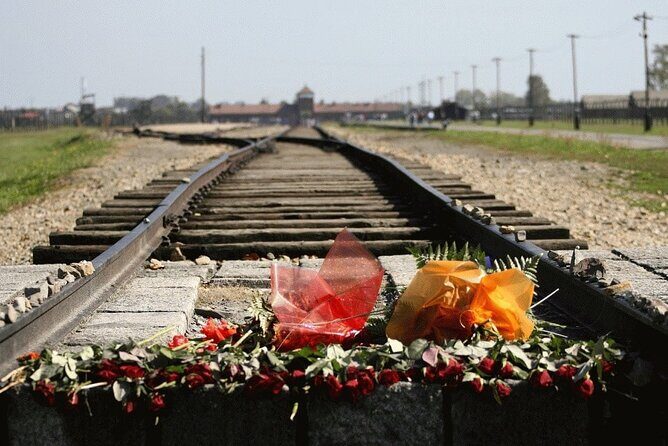
From a visitor-expectation standpoint, this is also where you’ll likely feel the emotional weight most strongly. The site is a remembrance place for deceased prisoners, and it’s described as impossible to fully put into words. That’s not a reason to rush or skim. It’s a reason to go in with a calm mindset and accept that your brain will need time to process.
Why doing both halves matters more than you think
Auschwitz isn’t one museum moment. It’s a whole place made of parts that explain each other. That’s why the tour is built around Auschwitz I and Auschwitz II-Birkenau in one day.
If you only see one, the story can feel lopsided. You might understand the beginnings but not the scale. Or you might see the scale but not the origin of how the Nazis organized the system. Doing both gives you a clearer before-and-after effect, even if everything you see is tragic.
I also appreciate that the tour info stresses Auschwitz as the symbol of the Holocaust and Nazi crimes against multiple groups. That framing helps keep the visit from becoming only architectural or only personal. You’re guided to see the place as a historical reality, while also treating it as remembrance for people who were killed.
One more practical point: doing both parts in a single 7–8 hour window is not just efficient. It keeps your understanding intact. When you separate the halves into different days, your memory of the story can get fragmented. Here, your guide can connect the dots while the information is still fresh.
You can also read our reviews of more private tours in Krakow





What the guide role adds to a place like this
In a normal city tour, a guide adds fun facts and local tips. Here, the guide’s job is different: to bring order to overwhelming material without turning it into a lecture you can escape.
People who praised this experience emphasized a few practical strengths: a driver who preps the start so you can find your guide, and a guide who explains things clearly. They also mention that the driver drives you to each location and gives details on where to go inside—then meets you at the agreed spot each time.
That’s what you want for Auschwitz-Birkenau. You don’t need your day to be one long scramble. You need to stay oriented so you can actually take in what the guide is pointing out.
Also, the experience is capped at a maximum of 30 travelers. That size matters because it helps maintain some control over group flow. You’re more likely to hear and follow instructions without feeling completely swallowed.
Price and value: what $104.23 buys you from Krakow
At $104.23 per person, the big question is what you’re paying for. This isn’t just a guided walk. You’re getting private transportation from Krakow, an air-conditioned vehicle, bottled water, and all fees and taxes. That combination is where much of the value sits.
You’re also not paying a separate dinner cost on the day—dinner is listed as not included—so the price is focused on the essentials of getting you there and through the guided parts.
Another value point: the tour info notes admission ticket free. In a visit like this, skipping separate admission hassles keeps your budget simple and your arrival day cleaner.
Then there’s time value. The day is roughly 7 to 8 hours, and you’re handling long-distance travel plus two major sites. If you were doing it on your own, you’d still have to manage transport and timing and ticket steps. Paying for a driver who handles the flow is often cheaper than it sounds once you factor in stress.
Finally, you get mobile ticket delivery and group discounts. The details point to a service designed for smooth operations, not just selling seats.
Timing, pacing, and how to handle a long, intense day
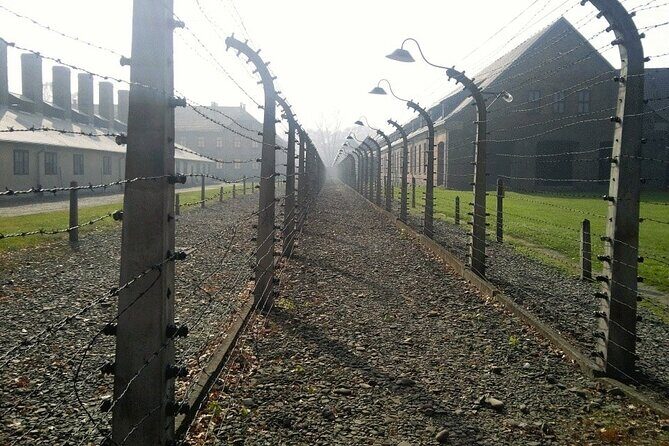
This is a long day by design, and it can be mentally demanding. Even if you’re a prepared traveler, you might feel like you can’t “process” the experience the way you’d process a normal itinerary.
Here’s what helps: let the guidance do some of the heavy lifting. When your entry points and meet-ups are organized, you can focus on staying with the moment rather than checking your watch every few minutes.
The tour is also described as involving a private transport setup with the driver repeatedly meeting you at agreed locations. That reduces the chance of getting separated or losing track of where the group is supposed to go next.
One practical consideration: dinner isn’t included. If you’re coming from Krakow, you’ll likely want to plan where you’ll eat afterward so you don’t end up hunting for food right after the visit. You’ll have time to settle your thoughts, but you may not want to tackle an extra logistics quest.
If you’re someone who likes clear structure—pickup, ticket steps, and a guided route—this setup fits well. If you’re someone who hates time limits, be aware that the schedule is set.
Who this Auschwitz-Birkenau tour fits best
This experience fits best if you want a guided day that reduces logistical friction. It’s also a good match if you’re visiting from Krakow and you’d rather spend your energy on understanding the place than on figuring out transport and timing.
It’s described as suitable for most travelers, and the day runs 7 to 8 hours, with a maximum of 30 travelers. That suggests a balance: structured enough for first-timers, not so large that you’re stuck in the back.
It’s also a strong fit if you care about seeing both Auschwitz I and Auschwitz II-Birkenau. The tour info explicitly says visiting both parts is essential to get a proper sense of the place.
If you’re the type who likes a calm start—prompt pickup, pre-arranged tickets, and a driver who keeps the plan on track—this is likely your kind of tour.
Should you book this Auschwitz-Birkenau tour from Krakow?
Book it if you want stress-light logistics paired with a guided visit that covers Auschwitz I and Auschwitz II-Birkenau in one day. The combination of private transport from Krakow, pre-arranged tickets, and a driver who handles meet-ups is a real comfort on a hard day.
Skip it or consider another option if you strongly dislike packed schedules, because this one is built to fill a full 7–8 hour window. Also remember that dinner isn’t included, so you’ll want a post-tour plan.
If your goal is to see both parts with clear guidance and minimal hassle, this tour offers good value for the money, especially because admission is listed as free and all fees and taxes are included.
FAQ
How long is the Auschwitz-Birkenau guided tour from Krakow?
It lasts about 7 to 8 hours.
What is the price per person?
The price is $104.23 per person.
Is hotel pickup included?
Yes, pickup is offered.
Is admission ticket included?
Admission is listed as free in the tour information.
What’s included in the tour price?
Bottled water, an air-conditioned vehicle, private transportation, and all fees and taxes are included.
Is dinner included?
No, dinner is not included.
How many people are in the group?
The maximum group size is 30 travelers.
Do you get a mobile ticket?
Yes, a mobile ticket is provided.
When do I get confirmation?
Confirmation is received at the time of booking.
What is the cancellation window for a full refund?
You can cancel for a full refund up to 24 hours in advance of the experience start time.