REVIEW · KRAKOW
Auschwitz- Birkenau and Wieliczka Salt Mine in One Day
Book on Viator →Operated by Poland Active · Bookable on Viator
Two UNESCO sites, one brutal day. This one-day combo pairs a museum-guided visit through Auschwitz-Birkenau with a guided descent into the Wieliczka Salt Mine, both in English, plus free hotel pickup and headphones so you can actually follow along. It’s also a smart way to see a lot without running around Krakow trying to stitch together separate tickets and transport.
Here’s the catch: it’s a long, heavy day. You’ll do a lot of walking and standing, and the schedule can feel tight if you’re the type who needs extra minutes to sit with what you’re seeing.
In This Review
- Key Takeaways Before You Go
- A One-Day UNESCO Double: Auschwitz I and Birkenau Plus Wieliczka
- Hotel Pickup and the Van Ride That Keeps You Moving
- Auschwitz-Birkenau: What the Museum Guide Gives You in 3.5 Hours
- Auschwitz I (about 2.5 hours)
- Auschwitz II-Birkenau (about 1 hour)
- Security checks and bag limits
- How to Handle the Pace at Auschwitz Without Rushing Your Feelings
- Transfer to the Salt Mine: From Camp History to Underground Wonder
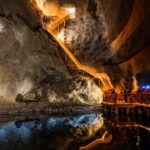
- Wieliczka Salt Mine Underground: Stairs, Depth, and Salt Statues
- The physical reality: 378 wooden stairs and a lift back up
- What you’ll see underground
- Lunch and Food: Plan for Realistic Breaks
- Price and Value: Is $187.53 a Good Deal?
- Who This Tour Is Best For (and Who Should Rethink It)
- Should You Book This One-Day Combo?
- FAQ
- How long is the Auschwitz-Birkenau and Wieliczka Salt Mine day trip?
- What’s included in the price?
- Are tours offered in English?
- Do I need a passport or ID?
- Where is the meeting point?
- Is lunch included?
- What’s the bag limit for Auschwitz-Birkenau?
- How many stairs are in the Wieliczka Salt Mine?
- How far underground does the Salt Mine tour go?
- What’s the group size limit?
Key Takeaways Before You Go
- Two UNESCO stops in one day: Auschwitz I, Auschwitz II-Birkenau, then Wieliczka Salt Mine
- Comfort + clarity: air-conditioned minivan and headphones to hear the guide well
- Guided Auschwitz pacing: English museum guide for Auschwitz I and the same guide for Birkenau
- Big underground effort at Wieliczka: a deep descent, including 378 wooden stairs early on
- Small-ish group size: maximum 30 travelers, which helps avoid total chaos
- Worth it for limited time: tickets and transport are bundled, so you don’t manage logistics all day
A One-Day UNESCO Double: Auschwitz I and Birkenau Plus Wieliczka
If you’re in Krakow with only a day to spare, this tour does something few itineraries can: it packs two UNESCO World Heritage sites into one trip, with guides and tickets handled for you. Auschwitz is always the emotional anchor of the day, and the salt mine is the physical and visual reset—still serious in its own way, but with a completely different mood.
I like that the day is built around guided time, not just entry tickets. Auschwitz I comes first with a museum guide in English, then you transfer to Auschwitz II-Birkenau for more guided time, so you’re not left trying to interpret the grounds on your own.
The schedule is intense, though. You’ll spend hours in motion, and both locations are places where you’ll want to slow down. Just know that this is a “see it all” day, not a “linger quietly for hours” day.
You can also read our reviews of more tours and experiences in Krakow

Hotel Pickup and the Van Ride That Keeps You Moving
What makes day trips work is the part you don’t notice: getting there on time. This tour includes hotel pickup and drop-off, and you’re transported by air-conditioned minivan with a driver/guide plus clear instructions. That matters because Auschwitz and Wieliczka run on strict entry and tour timing.
Headphones are included, and that’s a big deal at Auschwitz. In a crowd, it’s the difference between catching the meaning of what you’re being told and just hearing noise while you shuffle along.
A practical note from real-life group experience: minivan legroom can vary. If you’re tall, it’s worth wearing lighter layers and settling in early—your knees will thank you.
Auschwitz-Birkenau: What the Museum Guide Gives You in 3.5 Hours
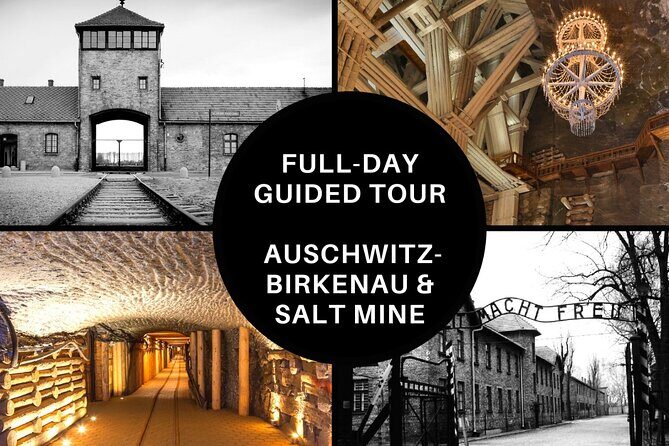
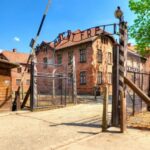
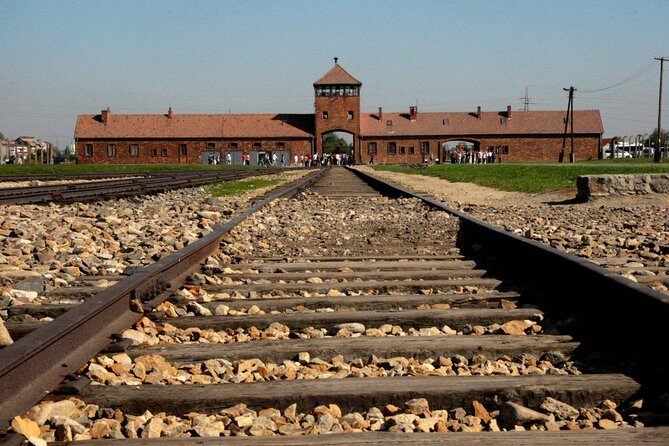
Auschwitz happens in two parts. First you go to Auschwitz I, the original camp complex, about 50 km (31 miles) from Krakow. You’ll join an English guided tour provided by the museum’s own guide for about 2.5 hours.
Then you transfer about 2 km to Auschwitz II-Birkenau. You’ll keep the same guide for about 1 hour in Birkenau. That continuity is helpful. It keeps your timeline and context from turning into a blur.
Auschwitz I (about 2.5 hours)
Auschwitz I is where the museum guide can set the stage. Expect you’ll move through key areas of the camp with an explanation of what you’re seeing and why it matters. This is the part where the history turns from names on a page into real places: barracks, pathways, and preserved sites that force you to understand scale.
If your guide is Martin, for example, he’s been highlighted for keeping the information clear and direct. Even without specific names, the on-site museum guiding style is built to give you context fast, so you don’t end the visit feeling lost.
Auschwitz II-Birkenau (about 1 hour)
Birkenau is larger and more open. That can make it feel different—less “room-by-room,” more “walk-and-absorb.” With only about an hour of guided time, you’ll want to be ready to process quickly while you’re moving.
You may find some specific stops feel brief depending on how your group flows. The reality is that crowd movement and group timing can tighten the schedule in certain areas. If you need long pauses, plan to use your own mental time rather than expecting extra minutes in every point of the route.



Security checks and bag limits
This isn’t a casual museum entry. For safety, everyone gets security checked at the gates. Also, large bags can’t go inside. The maximum bag size is 30x20x10 cm, so pack accordingly—small bag, low fuss, easy to pass through security.
And yes, bring ID/passport. You’ll need it for the day.
How to Handle the Pace at Auschwitz Without Rushing Your Feelings
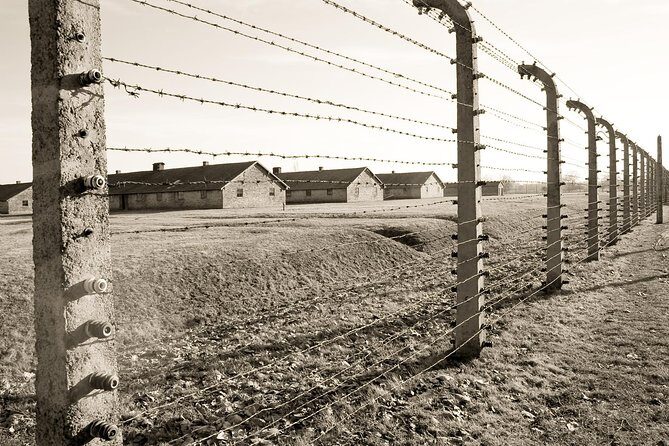
This tour is organized and timed, but Auschwitz is also the kind of place where you’ll want to sit and think. The biggest practical drawback is pacing: the day is structured so you don’t miss key areas, which can reduce chances to stop and stare for a long time.
Here’s how to make it work anyway:
- Bring a small bag you can manage quickly during security checks.
- Wear shoes that let you stand without pain. When your feet hurt, you stop absorbing.
- If you feel pulled along, don’t fight the flow—just watch what your eyes land on and use the brief moments for your own reflection.
- Consider skipping the urge to take constant photos. You might see people trying to capture everything fast; you can do the opposite and still leave with the story.
If you’re visiting with kids, this is a grown-up emotional visit. The material is difficult, and the pace is not designed for long processing or breaks to decompress.
Transfer to the Salt Mine: From Camp History to Underground Wonder
Between Auschwitz and Wieliczka, you’ll have travel time by minivan. That brief shift matters. You don’t get to fully reset your emotions, but you do change environments—from outdoor camp spaces to an underground world carved by miners and builders over centuries.
It also helps that the salt mine tour is guided and scheduled in a way that keeps your attention. You’re not just walking corridors. You’re following a planned route with stops that explain what you’re seeing.
Wieliczka Salt Mine Underground: Stairs, Depth, and Salt Statues
Wieliczka is one of the oldest working salt mines in the world, producing table salt for over 700 years. And it’s UNESCO-listed, which is part of why it draws so many visitors.
You’ll descend underground on an English guided tour, taking you down to about 140 meters. The tourist route is about 2.5 kilometers, and the guided experience lasts roughly 2.5 hours.
The physical reality: 378 wooden stairs and a lift back up
Even if you’re prepared for stairs, Wieliczka is still a workout. To reach the first level (about 64 metres underground), you descend a wooden stairway with 378 steps. After the tour, you go back up to the surface with a lift.
So you get both worlds: real effort going down, and less strain returning up. Still, dress for this as a climb, not a stroll.
What you’ll see underground
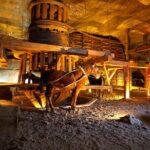
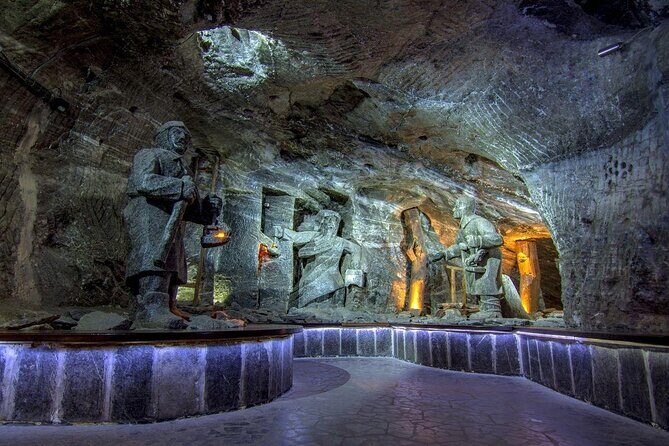
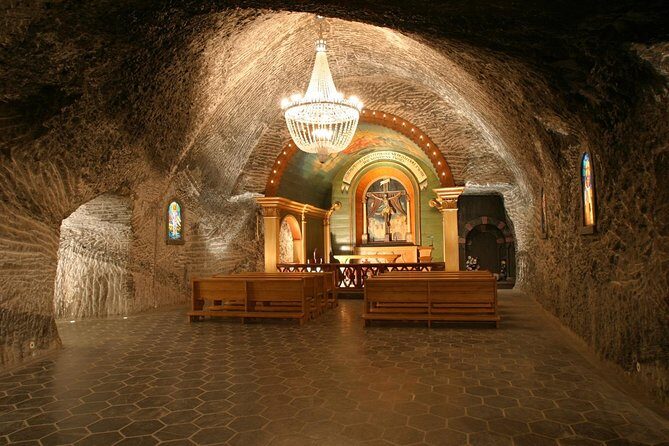
Expect chambers, carvings, and statues made of salt. The route is designed like a moving gallery underground: you’re led from feature to feature, with the guide pointing out what the salt work represents and how the mine evolved.
A note on pace: the salt mine has multiple rooms with things to notice, and if your group timing is tight, it can feel like you move through faster than you’d like. If you’re the type who loves stopping to read everything, bring extra patience. The mine is amazing, but it’s not built for slow wandering.
Some groups have been especially happy with guides such as Dominik, or with Justine for making the mine feel fun and energetic. Even with a different guide, the structure stays the same: guided explanation plus a route full of striking salt-made scenes.
Lunch and Food: Plan for Realistic Breaks
Lunch isn’t included. The day is timed, so you get time to eat, but it’s on you to bring snacks or choose what you want when the break happens.
A useful habit: carry a small snack and water. You don’t want to be hungry while walking between sites, and it’s one of the easiest ways to keep the day from feeling worse than it already is.
Also, have some cash on hand. Some nearby food options around the Auschwitz area may not take cards. You don’t need to overthink it, but being prepared saves stress.
Price and Value: Is $187.53 a Good Deal?
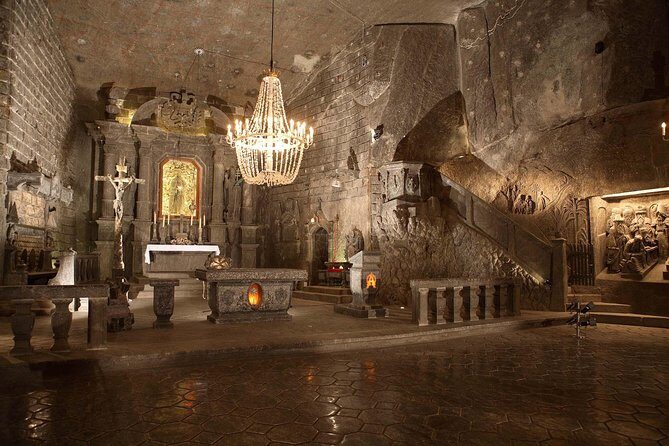
At $187.53 per person, this is not a budget add-on. But it’s not just a bus ticket either. Your money goes toward a full package: round-trip transport in an air-conditioned vehicle, hotel pickup and drop-off, museum guiding time at Auschwitz (and guided time at Wieliczka), and admission tickets for both sites. Headphones are included too.
The value logic is simple: booking Auschwitz and the salt mine as separate experiences means more planning, more waiting, and more risk of mismatched timing. This tour solves that by bundling everything into one day.
Where the price can feel less fair is if you’re hoping for a slow, quiet experience. You’re paying for organization and guiding, not for extended free time inside every important spot.
If your goal is to hit both UNESCO sites efficiently from Krakow, this price often feels like a reasonable trade for convenience.
Who This Tour Is Best For (and Who Should Rethink It)
This tour makes sense if:
- You’re short on time in Krakow but still want the two big UNESCO hits.
- You like guided context so you can make sense of Auschwitz quickly.
- You can handle a long day with lots of walking and standing.
- You prefer a group day trip with logistics handled, not independent travel stress.
Consider another approach if:
- You want a very unhurried pace at Auschwitz. The schedule is structured to move you through key areas.
- You’re planning to bring very young children or anyone who gets overwhelmed easily.
- You have limited mobility or find long stairs difficult. You’ll face 378 wooden steps descending into Wieliczka’s mine levels.
For most adults, though, the tour is a solid way to do both sites in a single shot.
Should You Book This One-Day Combo?
I’d book it if you’re trying to make the most of one day in Krakow and you’re okay with a packed schedule. The big wins are practical: pickup/drop-off, tickets bundled, English guiding, and headphones that keep you connected to what you’re seeing. The salt mine is also a great counterpoint to Auschwitz, and the guided route gives it shape.
But go in with expectations tuned correctly. Auschwitz is heavy and fast-moving on a day like this. If you need lots of solo quiet time inside exhibits, you might feel squeezed. If you can accept that and focus on what you’re learning and seeing in each moment, you’ll likely leave with a clear sense of both places.
If you only have a day, this is one of the more efficient ways to get both UNESCO experiences without turning your trip into a logistics project.
FAQ
How long is the Auschwitz-Birkenau and Wieliczka Salt Mine day trip?
It runs about 12 hours (approx.).
What’s included in the price?
You get hotel pickup and drop-off, transport by air-conditioned minivan, headphones, driver/guide support, and tickets to Auschwitz-Birkenau and the Wieliczka Salt Mine.
Are tours offered in English?
Yes, the experience is offered in English.
Do I need a passport or ID?
Yes, a passport/ID is necessary on the day of the tour.
Where is the meeting point?
The listed start and end meeting point is Przystanek Turystyczny Kiss&RideWielopole 2, 31-072 Kraków, Poland.
Is lunch included?
No, food and drinks are not included, and lunch is not included.
What’s the bag limit for Auschwitz-Birkenau?
Large bags can’t be brought inside the museum, and the maximum permitted bag size is 30x20x10 cm.
How many stairs are in the Wieliczka Salt Mine?
To reach the first level (64 metres underground), you descend a wooden stairway with 378 stairs.
How far underground does the Salt Mine tour go?
The tour takes you up to about 140 meters underground.
What’s the group size limit?
The group size has a maximum of 30 travelers.