REVIEW · KRAKOW
Krakow: Auschwitz-Birkenau Self-Guided Tour with Tour Leader
Book on GetYourGuide →Operated by Time4Krakow Tours in Kraków · Bookable on GetYourGuide
Two camps. One heavy day.
This Auschwitz-Birkenau experience from Kraków is built for a reflective visit: you travel by coach, enter using an express security check, and then move through both Auschwitz I and Auschwitz II at your own pace using a guidebook and map. The day is structured so you can pay your respects while still having space to slow down where you need to.
I like that the price bundles the big-ticket basics—transport and museum entry—so you’re not juggling tickets after an already-intense commute. I also like the format: the tour is self-guided with a book, which makes it feel less like a checklist and more like a careful, personal visit.
One consideration: the time is tight, and you may find you need to choose what to focus on most—especially at Birkenau. The order of camps can also shift depending on the time of year, and the schedule can run differently than you might expect.
In This Review
- Key takeaways before you go
- Kraków to Auschwitz in one day: how the 7-hour schedule feels
- Auschwitz I with a guidebook: what to expect in the first camp stop
- Auschwitz II-Birkenau: the preserved ruins and the reality of time
- Your driver and host: the human help that makes the day smoother
- Getting your money’s worth: price, what’s included, and what you’re paying for
- Respectful visit tips: what to bring and what to avoid
- Who this Auschwitz-Birkenau self-guided tour fits best
- Should you book this Kraków Auschwitz-Birkenau tour?
- FAQ
- How long is the Auschwitz-Birkenau self-guided tour from Kraków?
- What is included in the price?
- Is there a live guide inside the camps?
- What language is available?
- What do I need to bring to the tour?
- Are there any rules about photography or drinks?
- Can I cancel for a full refund?
Key takeaways before you go
- Express security check helps you get moving faster
- Self-guided Auschwitz I + Birkenau II means you set the pace for reflection
- English guidebook and map support you when you’re on your own in the camps
- Coach transport with clear pickup options in Kraków reduces guesswork
- Rules matter: no flash photography, and you’ll want comfortable walking shoes
Kraków to Auschwitz in one day: how the 7-hour schedule feels
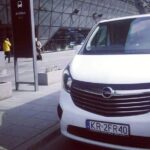
This runs as a full-day trip from Kraków—listed at about 7 hours door-to-door, with coach time built in. Pickup is offered at three spots in Kraków, and the departure point includes a Kiss and Ride-style stop at 18B Pawia Street, so you’re not wandering around trying to find the group.
You’ll ride about 1.5 hours each way by bus/coach. Once you arrive, you’ll go through an express security check, then you’ll start the museum visit. This is important: the camp complex is intense enough on its own, and the smoother the entry process, the more mental energy you can spend on the visit rather than logistics.
Weather is handled like it’s the real world. The tour operates in all conditions—rain, snow, sun—so plan for wet pavement and cold or warm layers. Also, seasonal crowds can affect how long things feel once you’re inside, even with express security.
You can also read our reviews of more guided tours in Krakow
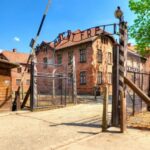
Auschwitz I with a guidebook: what to expect in the first camp stop
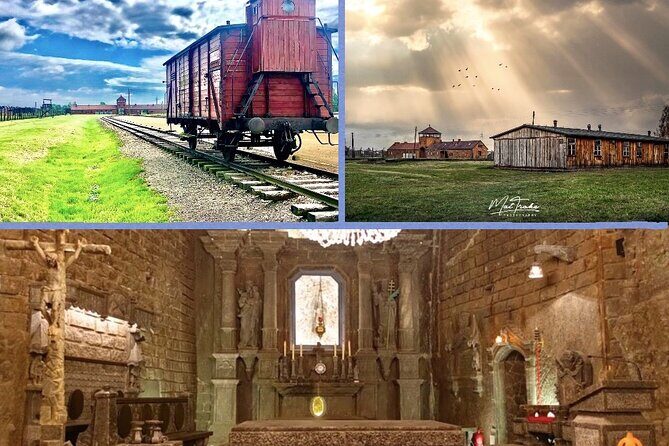
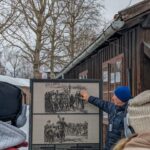
Auschwitz I is the first major stop and is the more museum-driven side of the visit. You’ll spend time walking through preserved barracks and exhibitions that lay out what happened here—plain rooms, heavy photographs, and displays you can’t really speed through.
Because this is self-guided, you should treat the guidebook like your “pace setter.” Use it to find what you want to understand most—then give yourself permission to stop when something hits harder than expected. I like this format for moments like this: you don’t get yanked along, and you can linger near the parts that need more attention.
A practical note: you’re not only looking at objects. You’re reading signage, following layouts, and trying to understand chronology while your body keeps moving. Comfortable shoes are not optional. You’ll be walking and standing, often at your own pace, so choose footwear you’d wear for a long city day—not a quick sightseeing stroll.
Photography rules are strict here. Flash photography is not allowed, and that’s usually easier than it sounds: the lighting inside is designed so that flash doesn’t help anyway. Bring patience instead of gear.
Auschwitz II-Birkenau: the preserved ruins and the reality of time
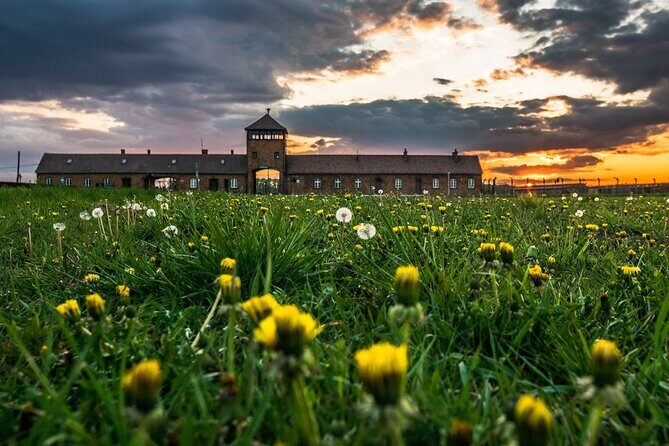
After Auschwitz I, you’ll transfer briefly by coach—about 5 minutes—to the second camp, Auschwitz II-Birkenau. This is where you see more of the open-space layout and preserved remnants that many people picture when they think of Auschwitz.
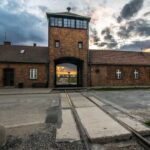
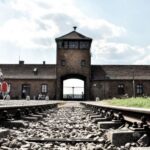
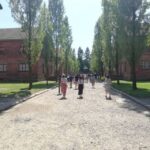
Expect to spend time walking through areas tied to the camp’s function and daily life, including remnants of crematories, the unloading ramp, barracks, and a monument dedicated to the final victims. Even if you know the history in advance, the scale can still hit you. Birkenau’s layout is spread out, and the walking isn’t just distance—it’s how the site makes you understand scale and separation.
Here’s the timing reality. The tour is listed with a long day, but the Birkenau portion may feel short depending on your departure time and how the day runs. One common frustration is that there simply isn’t enough time to see everything in the depth you might want. If you only have a limited window, go in with a simple plan: decide in advance what you want most—crematories, ramp area, or the monument—and give those parts your full attention.
In some scheduling situations, you might also find that the visit emphasizes major preserved areas and ruins rather than a fully “walk everywhere” tour. That’s not a reason to skip the trip—it’s a reason to show up ready to focus.
Your driver and host: the human help that makes the day smoother
Even though the camps themselves are self-guided, your day still benefits a lot from the people handling the ride and entry flow. Names from recent groups pop up often—Kris, Marcel, Kuba, and Jacob—and the theme is consistent: they help you with the process so you spend less time figuring things out on the day.
Kris stood out as more than just a driver, offering tips and extra information during the trip. Marcel also helped explain what to expect and kept things organized. Kuba came across as friendly and practical, and Jacob did more than point the way—he gave maps and spent real time explaining how to navigate between the two camps.
That matters because self-guided can feel empowering, but it can also feel confusing when you’re dropped into a site with complex layouts. Having someone explain the best route through the camps—or how to get your bearings fast—saves you from wandering in a daze.
Communication is also part of the support. The provider uses WhatsApp to communicate, so check messages before you go and during the day. If you’re the kind of person who likes a tight schedule, this is the place where being responsive to WhatsApp actually helps.
Getting your money’s worth: price, what’s included, and what you’re paying for
The listed price is $18 per person for a 7-hour experience. That’s low for a day trip that includes coach transport and museum entry. What makes it good value is that you get the essentials handled: entry tickets, transportation, and a guidebook and map in your chosen language.
You’re not paying for a live guided lecture inside the camps. That can be a plus or a minus. If you want a speaker guiding every step, this isn’t that format. But if you want space to read at your own speed and reflect without being rushed, self-guided can be exactly the right fit.
Food and drinks are not included. You’ll want to plan on bringing simple snacks and water if allowed by the operator on the day, or at least decide in advance how you’ll handle the long gap between meals. In moments like this, I’d rather you spend your focus on the site than on hunger.
Also note: tickets to the museum are non-refundable. That sounds obvious, but it’s worth taking seriously. If there’s even a chance you won’t be able to travel, you’ll want to weigh that risk before booking.
You can also read our reviews of more tours and experiences in Krakow

Respectful visit tips: what to bring and what to avoid
This is a site that asks for a certain kind of behavior, not in a moral way that’s preachy, but in a practical way: you’re in a memorial space, and the rules keep the experience respectful.
Bring:
- Passport or ID card
- Comfortable shoes
- Weather-appropriate clothing
Not allowed:
- Flash photography
- Alcohol and drugs
Dress for walking and standing, and don’t forget that you’ll be outdoors between parts of the day. Layers help. If it’s cold, you’ll thank yourself for gloves or a warm hat. If it’s wet, you’ll want shoes that don’t turn into sponges.
One more planning point: the tour is all-weather. Don’t rely on the idea that conditions will improve. The best strategy is to dress like you’re doing a long outdoor city walk and then bring your attention where it matters.
Who this Auschwitz-Birkenau self-guided tour fits best
This tour works best if you:
- Want a self-paced visit where you can stop and start without a group pressure clock
- Prefer having a guidebook and map instead of a live guide narrating every room
- Are comfortable reading your way through exhibitions and signage
It’s also a good match if you want the heavy experience with fewer moving parts. Transport, entry, and the basic navigation support are handled, so you can spend your brain on meaning instead of logistics.
It’s not suitable for children under 12, based on the stated rules. And if your ideal travel day is highly scheduled and guided, you might feel that the self-guided format leaves too much to you. In that case, you may want a different style of tour where interpretation is delivered in real time.
Should you book this Kraków Auschwitz-Birkenau tour?
Yes, you should book it if you want an organized, affordable day trip with transport, admission, and a guidebook, plus an approach that lets you reflect without being constantly managed. The express security check and coach setup reduce the stress on a day that’s already emotionally heavy.
But be honest with yourself about timing. Birkenau can feel like it needs more than the available minutes. If your priority is seeing every area with maximum depth, you may wish the day were longer. Still, even with limited time, you’ll cover the core memorial spaces that matter most.
My practical advice: go in prepared to focus. Choose a few key parts you want to understand deeply, use the guidebook to orient, and let the rest be secondary. In a place like this, that approach is both respectful and realistic.
FAQ
How long is the Auschwitz-Birkenau self-guided tour from Kraków?
The total duration is listed at about 7 hours, with time spent visiting Auschwitz-Birkenau and traveling by coach.
What is included in the price?
Included are entry tickets to the Auschwitz-Birkenau museum, transportation (coach), and a guidebook plus a map in your chosen language.
Is there a live guide inside the camps?
This experience is self-guided with a booked guidebook and map. A host or greeter is listed as English, but the camps visit itself is self-guided.
What language is available?
The host/greeter and the materials are available in English.
What do I need to bring to the tour?
You should bring a passport or ID card, plus comfortable shoes and weather-appropriate clothing.
Are there any rules about photography or drinks?
Flash photography is not allowed. Alcohol and drugs are also not allowed.
Can I cancel for a full refund?
Yes. Free cancellation is available up to 24 hours in advance for a full refund.