REVIEW · KRAKOW
Auschwitz Birkenau Guaranteed Guided Tour or your money back
Book on Viator →Operated by SeeKrakow Day Tours · Bookable on Viator
One long day, one heavy lesson. A guided trip to Auschwitz-Birkenau from Krakow is interesting because you’re not just looking at buildings—you’re walking through the physical record of how the Holocaust was carried out. I like that the day is structured, with a plan for the main camp and then the larger Second Camp area.
Two things I really like: first, you get a guided walkthrough that helps you connect what you see to what it meant, including key original elements like the ramp and gas chamber/corrematoria ruins. Second, the small-group feel matters—this option caps at 30 travelers, so you’re not lost in a mass of people.
One drawback to plan around: the visit can feel fast-paced, especially once you reach Birkenau, and the museum controls the time you spend there. If you want long pauses at every display, you’ll need to manage expectations.
In This Review
- Key takeaways before you go
- Auschwitz-Birkenau from Krakow: The day in plain terms
- Pickup in Krakow and why your schedule needs a cushion
- Entering Auschwitz I: What the main camp segment focuses on
- Auschwitz II-Birkenau: Why Birkenau can feel long, rushed, or both
- The Oświęcim moment: a quick connection to the setting
- Guides, headsets, and the “keep up” reality
- Price and value: Is $54.37 a bargain or a gamble?
- Ride comfort and safety: what to watch for on the bus
- Lunch and food timing: plan like you might not get a proper meal
- Who this Auschwitz-Birkenau tour suits best
- Should you book this Auschwitz-Birkenau guided tour?
- FAQ
- How long is the Auschwitz-Birkenau guaranteed guided tour from Krakow?
- Is the tour guided and in English?
- Do I get hotel pickup in Krakow?
- Is there a maximum group size?
- Are admission tickets included?
- What happens if weather is bad?
Key takeaways before you go
- Hotel pickup inside Krakow (and a backup pickup point) keeps the day from starting with a stressful commute.
- English-speaking guidance helps you understand the site without needing outside research.
- Auschwitz I includes the ticket, which can reduce delays at entry.
- Birkenau pacing varies by departure, and some time at the Second Camp may feel like standing or moving quickly.
- Small group size (max 30) can make it easier to hear instructions and track your bearings.
- Comfort depends on the bus driver and route, and a few past experiences flagged reckless or motion-sickening driving.
Auschwitz-Birkenau from Krakow: The day in plain terms
This is the kind of tour you plan like a mission. You’re leaving Krakow, spending several hours at Auschwitz I and Auschwitz II-Birkenau, and then returning to the same area—usually late enough that you’ll be thinking about dinner, not sightseeing.
Expect a 7 to 8 hour day on the clock. Your exact start time is not fixed: you pick a preferred pickup time, but the tour can begin anywhere from 5:00 AM to 4:00 PM, and the real start time is sent the day before. That variability affects what time you can squeeze in breakfast, a museum visit, or an airport transfer later.
You can also read our reviews of more guided tours in Krakow
Pickup in Krakow and why your schedule needs a cushion
The pickup setup is designed for convenience. If you’re in Krakow city centre and your hotel is on the available pickup list, you’ll get hotel pick-up. If your place is outside the centre or not reachable by the bus, you’ll be sent to the nearest possible scheduled pickup point.
Here’s the practical part: because pickup time can shift, I suggest you protect your day with a buffer. If you’re relying on this tour to fit around a train, put in extra margin or plan a day with fewer commitments.
Also note the meeting point: Wielopole 2, 31-072 Kraków is where the tour starts and ends. Pickup time and point get confirmed up to a day before, so keep an eye on your confirmation email.
Entering Auschwitz I: What the main camp segment focuses on
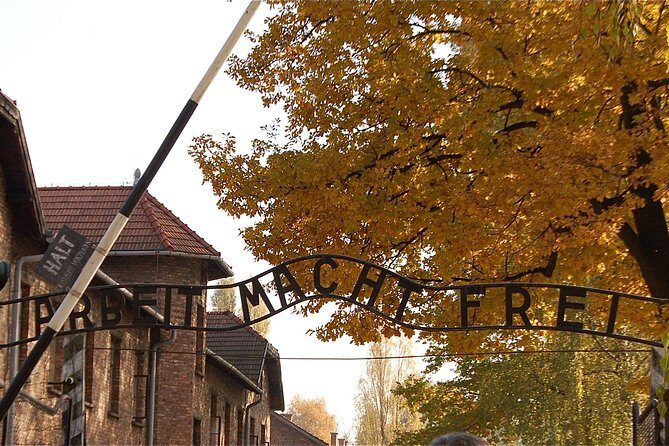
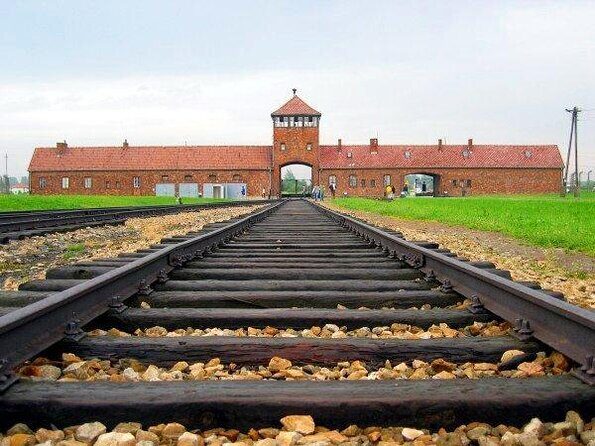
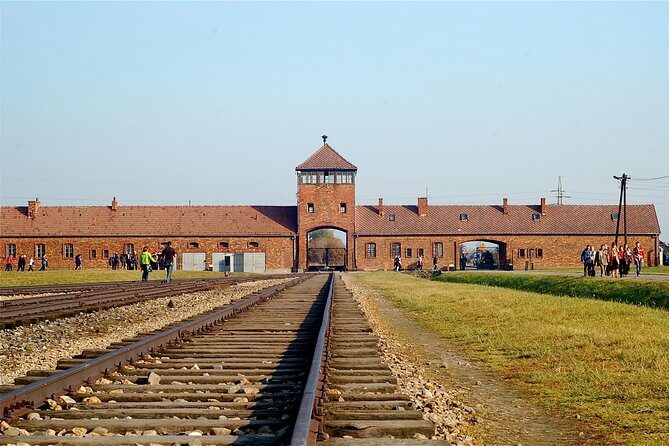
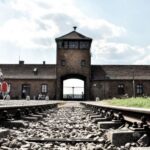
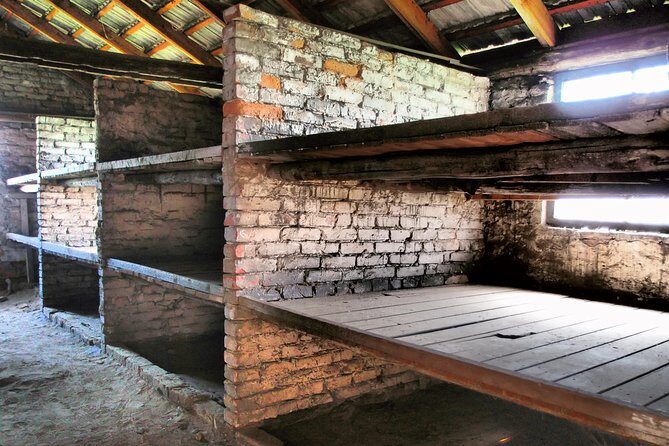
Auschwitz I is where the story becomes sharply defined. Your guided portion there is about 3 hours 30 minutes, and the emphasis is on the permanent exhibitions and key original structures. You’ll see major areas including prisoner barracks, the unloading platform (the ramp), and the ruins connected to gas chamber and crematoria buildings (including crematoria II or III).
This part of the visit is valuable because it gives you anchors. When you have guidance pointing out what each location represents, the site stops being a set of photos and becomes a sequence—how people were processed, held, and murdered. Even if you’ve read the basics, the physical layout is what makes it stick.
One more thing that matters: several past participants describe smoother entry with tickets already sorted. That’s a real time-saver in a place that can get crowded, because you don’t want your main camp time chopped up by administrative delays.
Auschwitz II-Birkenau: Why Birkenau can feel long, rushed, or both
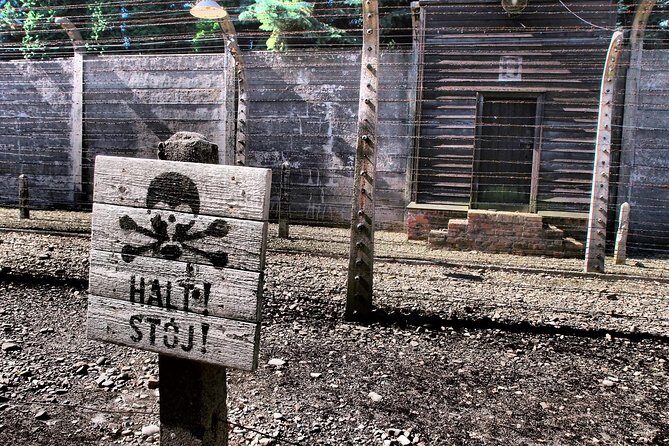
Birkenau is larger, more spread out, and visually overwhelming in a different way. The Second Camp portion is where people often have the strongest emotional reactions—and also where pacing becomes the biggest factor.
In the better experiences, the guide’s explanations help you process what you’re seeing: the layout, the scale of the internment area, and how the camp’s structure supported the Nazi system. Some people name guides like Chris or Mirolstaw for making the information clear and handled with care.
But here’s the tradeoff you should plan for: multiple accounts flag that Birkenau can be very fast or that there can be time spent “standing around” rather than nonstop walking. Some people also say they didn’t get enough time to read boards or look closely at displays. The museum sets the overall constraints, so the local provider can’t fully control total time.
If you’re the type who likes to linger, you may need a strategy:
- Bring the mindset that you’ll get the main highlights with your group.
- Plan to focus on a few key areas rather than trying to absorb everything line-by-line.
- If you struggle with fast movement, it’s smart to mention that early when the group forms.
The Oświęcim moment: a quick connection to the setting
There’s also a short Oświęcim stop built into the day. The time is brief—just a few minutes—and the purpose is more about context and placement than a full add-on activity.
Think of it as a transition. Even a short town segment can help your brain switch from Krakow logistics to the reality of where the camps sat in the region.
Guides, headsets, and the “keep up” reality
A strong guide can transform this day from tragic to understandable. Several people describe guides who stayed friendly while handling the content seriously, and who were very good at answering questions. Names like Gregory come up in feedback for being highly engaging, and others like Chris and Mirolstaw are mentioned for both knowledge and sensitivity.
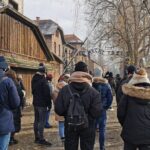
Still, this is a site where your attention is limited by how the group moves. A few accounts mention moments where the guide walked ahead quickly, leaving the group stretched out, or where headsets cut out. If you need clear audio, sit where you can hear the guide best, and don’t assume your device will be perfect the whole time.
Also, this tour is described as having moderate physical fitness needs. There’s walking, uneven ground in places, and a long stretch with concentrated attention. You don’t need to be an athlete, but you do need to be comfortable moving for hours.
Price and value: Is $54.37 a bargain or a gamble?
At about $54.37 per person, this tour sits in the mid-range for a guided Auschwitz-Birkenau day from Krakow. The big value points are:
- English guidance (not just an audio app)
- a structured route across Auschwitz I and the Second Camp area
- admission ticket for Auschwitz I included in the plan
- pickup and drop-off that reduces your time and hassle in Krakow
So why do some people still feel dissatisfied? Because the product isn’t only the ticket—it’s the day management. When communication is tight and the timing works, the value feels excellent. When the pickup timing shifts without much notice, or when the ride is uncomfortable or stressful, the same price can feel less fair.
There’s also a promise in the tour title about a guaranteed guided tour or your money back. That’s a safety net in theory, but I’d still treat it as something you verify through your own planning: double-check your start time email and be at the pickup point early enough to absorb surprises.
Ride comfort and safety: what to watch for on the bus
The bus ride is part of the experience, even though you can’t control the emotions of the day. Most feedback is positive about comfort and organization, but there are also serious complaints tied to driving style and motion sickness.
A number of people described a driver who drove dangerously, with abrupt braking and fast cornering, and some said it caused someone to feel physically sick. Even when the tour content is excellent, a stressful, frightening drive can spoil the day—especially for anyone sensitive to motion or stress.
What can you do with that information?
- If motion sickness is an issue for you, consider taking your usual prevention before you leave Krakow.
- Bring water and wear comfortable clothing you can layer.
- If you’re able to choose a seat, aim for the position that tends to feel steadier (often closer to the front, though it varies by vehicle).
I’m not saying your bus will be a problem. I am saying it’s worth mentally preparing for long hours in a coach and paying attention to how the driver handles the vehicle when you board.
Lunch and food timing: plan like you might not get a proper meal
This is the kind of tour where food is a side character. Some participants described boxed lunch options, but they also reported tight timing that limited when they could actually eat. A few said food arrived late and became warm or unappetizing, and others noted there wasn’t much scheduled time for breaks beyond basic needs.
Because the day can be long and museum time governs the schedule, I recommend bringing a snack plan of your own. Even a small amount—something you can eat quickly without waiting—can save you from the stress of searching for food later.
Who this Auschwitz-Birkenau tour suits best
This tour is a strong fit if you want:
- Guided context rather than wandering alone
- an organized structure that hits the major original sites in one day
- an English-speaking guide to explain what you’re seeing
- a group size that’s not enormous (max 30)
It’s also a good pick if you’re okay with the idea that you won’t have unlimited time at every display. The experience is intense. Most people get more out of it when they trust the guide’s route and focus on the moments that matter most.
You might consider another option if you:
- need slow pacing and lots of reading time
- are very sensitive to long bus rides
- are planning around a narrow schedule with no buffer for pickup timing
Should you book this Auschwitz-Birkenau guided tour?
Yes—if you want a guided, efficient day that includes Auschwitz I admission and works with pickup from Krakow city centre. The core value is strong: you’re guided through the major sites, and when the guide is on form, the explanations make the physical places much easier to understand.
But book with eyes open. Give yourself a cushion for the pickup time that’s confirmed the day before, and be ready for Birkenau to feel fast. If you’re especially worried about bus comfort or if you’ve seen warnings about driving style in your own tolerance level, consider how you’d handle that risk.
Bottom line: this is a must-do historical experience for many people, and it can be excellent when the logistics line up. Just plan like the day will be long, emotional, and structured—because that’s exactly what it is.
FAQ
How long is the Auschwitz-Birkenau guaranteed guided tour from Krakow?
The duration is listed as 7 to 8 hours (approx.).
Is the tour guided and in English?
Yes. It’s offered as a guaranteed guided tour and the available language is English.
Do I get hotel pickup in Krakow?
Pickup is offered from selected hotels in Krakow city centre. If your accommodation is outside the city centre or not accessible by bus/coach, you’ll be assigned the nearest available scheduled pickup point.
Is there a maximum group size?
Yes. This tour has a maximum of 30 travelers.
Are admission tickets included?
The tour includes the admission ticket for Auschwitz I (Panstwowe Muzeum Auschwitz-Birkenau) as part of the visit plan. The short stop connected to Oświęcim is listed as admission ticket free.
What happens if weather is bad?
The tour requires good weather. If it’s cancelled due to poor weather, you’ll be offered a different date or a full refund.