REVIEW · KRAKOW
Krakow: 3-Hour Small Group Tour on E-Bike
Book on GetYourGuide →Operated by krakowbiketour · Bookable on GetYourGuide
Krakow goes by fast on an e-bike.
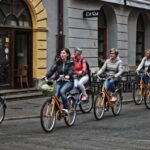
This 3-hour small-group ride is built for getting your bearings quickly, moving through Old Town, Kazimierz, and the WWII ghetto area with electric help so you’re not grinding your way up every curb. You’ll stop for guided looks and photos at major landmarks, then roll between districts on mostly easy, flat streets and bike-friendly paths.
I especially like the modern Dutch e-bikes (Bosch-assisted, no throttle) and the limit of up to 15 people, which keeps the guide’s explanations easy to hear. I also like that the route connects big sights with quiet streets, so it feels like city exploring instead of a race.
The main thing to consider is road-crowd reality. You need to be comfortable riding near pedestrians and cars in busy areas, and if you can’t ride confidently, this isn’t the right fit—one cold-day comment also pops up in the feedback, so dress for the weather.
In This Review
- Key Points to Know Before You Ride
- Enter Krakow Like You Mean It: E-Bike, Three Districts, Zero Sweat
- Where You Meet and How the Bikes Work (So You Don’t Fight the Machine)
- Old Town in Motion: Market Square, Gates, Uni Quarter, and Wawel
- Main Market Square and the early photo stops
- Jagiellonian University quarter and remnants of the old city line
- Wawel Royal Castle and the Wawel dragon
- River Views and the Turn Toward Kazimierz
- Kazimierz on the E-Bike: Quiet Streets, Szeroka Street, and Bridges
- Father Bernatek’s Bridge and the feel of the area
- WWII ghetto area and Schindler’s Factory: Hear It, Then Move On Carefully
- Pace, Distance, and Riding Comfort: What Feels Easy and What Needs Attention
- English-Language Guiding That Keeps the Ride Human
- Price and Value: Why This Often Costs Less Than It Feels
- Should You Book This Krakow E-Bike Tour?
- FAQ
- How long is the Krakow e-bike tour?
- Where does the tour meet?
- What’s included in the price?
- Are entrance fees included?
- How many people are in the group?
- Do the e-bikes have a throttle or lever?
- Is the guide English-speaking?
- Is it suitable for children?
Key Points to Know Before You Ride
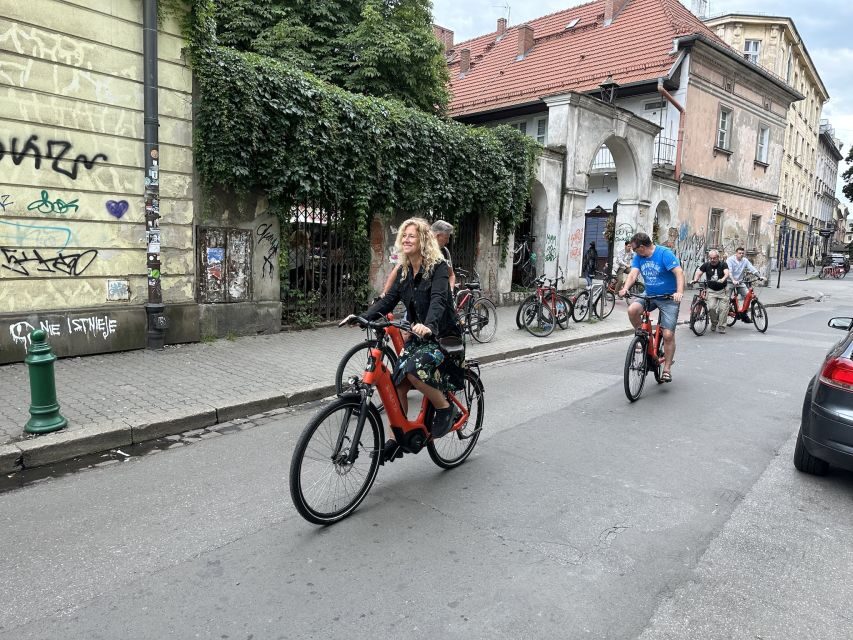
- Bosch e-bike assistance (no throttle) keeps the ride easy while you still pedal.
- Max 15 people means better listening during frequent stops and explanations.
- Three districts in 3 hours: Old Town, Kazimierz, and the WWII ghetto area.
- You get a mid-tour refreshments break, timed around the heavier WWII portion.
- Schindler’s Factory is part of the route, with a guided stop at the Oscar Schindler factory building.
- Entrance fees aren’t included, so plan for sights you view and learn about from outside.
Enter Krakow Like You Mean It: E-Bike, Three Districts, Zero Sweat
This tour is a practical “first big loop” for Krakow. In just 3 hours, you connect the city’s medieval core, Jewish-quarter streets, and the WWII ghetto area—without spending your day bouncing between bus stops or walking every block. The e-bike changes the whole rhythm: you cover more ground, but you still stop often enough to actually understand what you’re seeing.
What really works for me is the way the route is designed to feel varied. You’ll move from major squares and castle-area icons to river boulevards and calmer neighborhood streets. It’s not about racing from one photo spot to the next; it’s about rolling through Krakow at a pace where the guide’s stories can land.
You can also read our reviews of more cycling tours in Krakow
Where You Meet and How the Bikes Work (So You Don’t Fight the Machine)
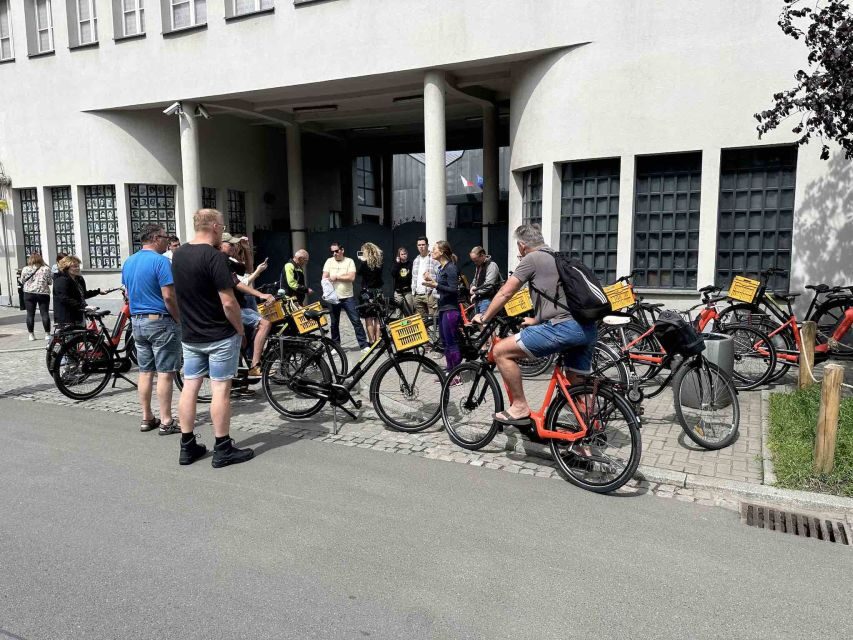
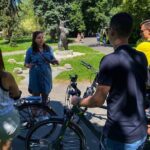
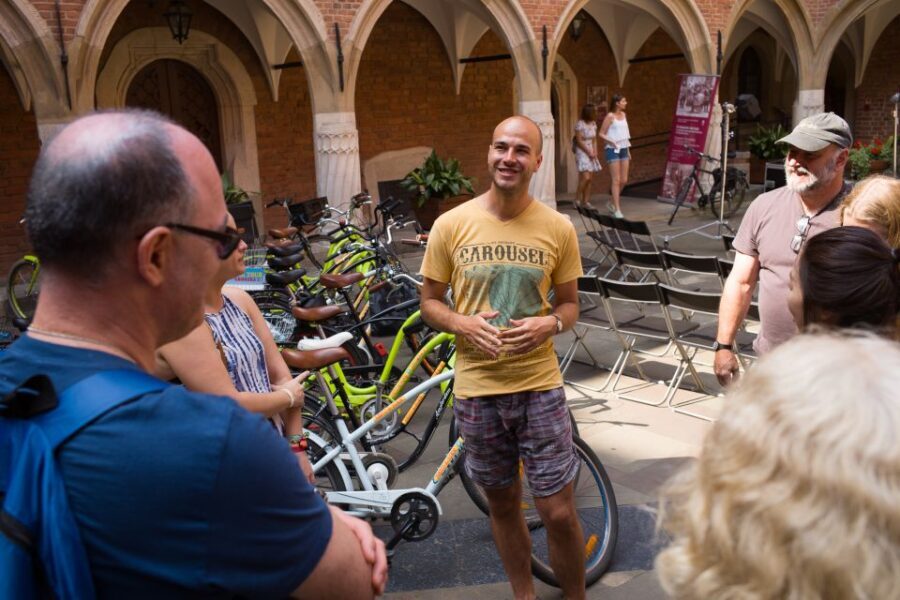
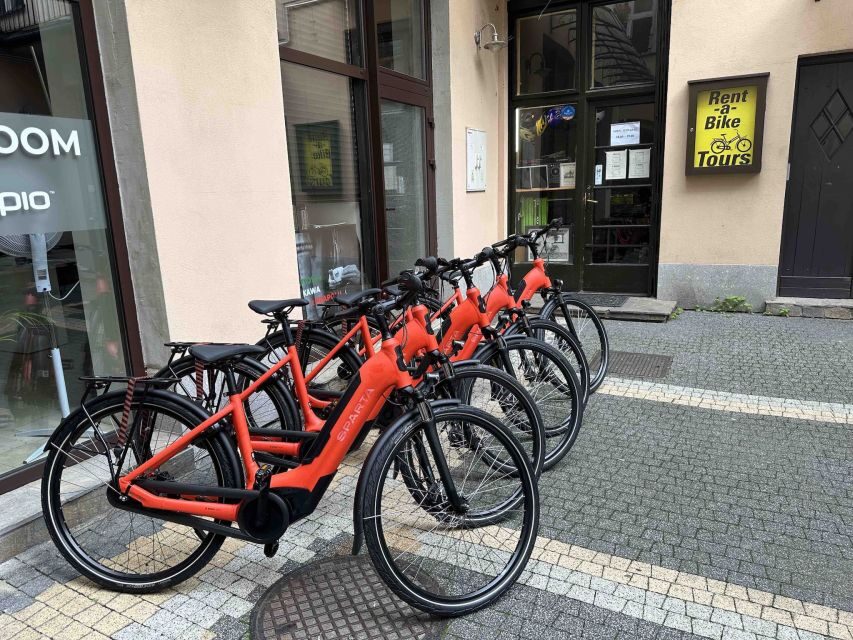
You’ll start at Sławkowska 11, at the inner courtyard where you pick up the e-bike. The meeting spot is at rent a bike, with the entrance next to an exchange point. There’s a short safety briefing (10 minutes) before you head out, which matters because you’re riding through real city traffic and crowd zones.
The bikes are Bosch e-bikes by Sparta, described as brand new and built for comfort. The key detail: there’s electric motor support while you pedal, but there’s no throttle or lever you can flip to go faster. In plain terms, the bike helps you when you work—and it won’t let you magically stop pedaling and coast like a video game.
If you’re new to e-bikes, this is still manageable. Because there’s no throttle, you control your speed the normal way with your pedaling effort. That also helps keep the group steady when you’re bunching up for photo stops or listening breaks.
Old Town in Motion: Market Square, Gates, Uni Quarter, and Wawel

The Old Town portion is all about getting your visual map locked in. You start with the big anchor points that most first-time visitors want—then you thread them together with bike routes that avoid the “walk everywhere, sweat everywhere” trap.
Main Market Square and the early photo stops
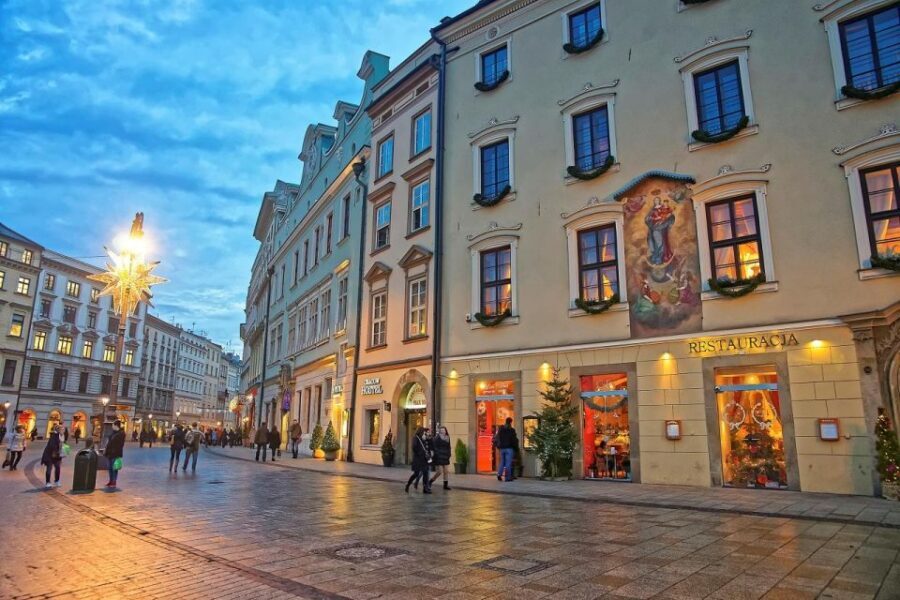
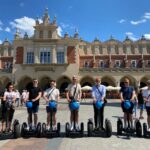
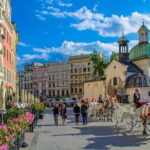
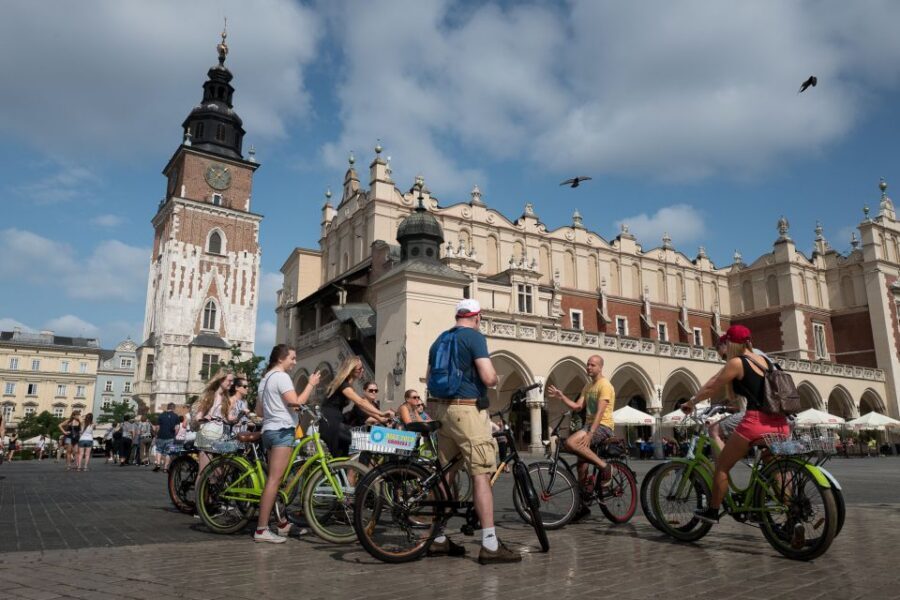
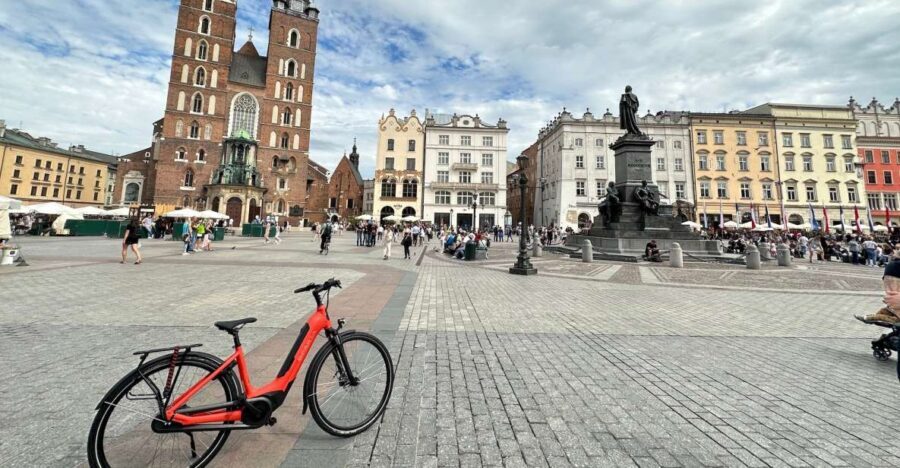
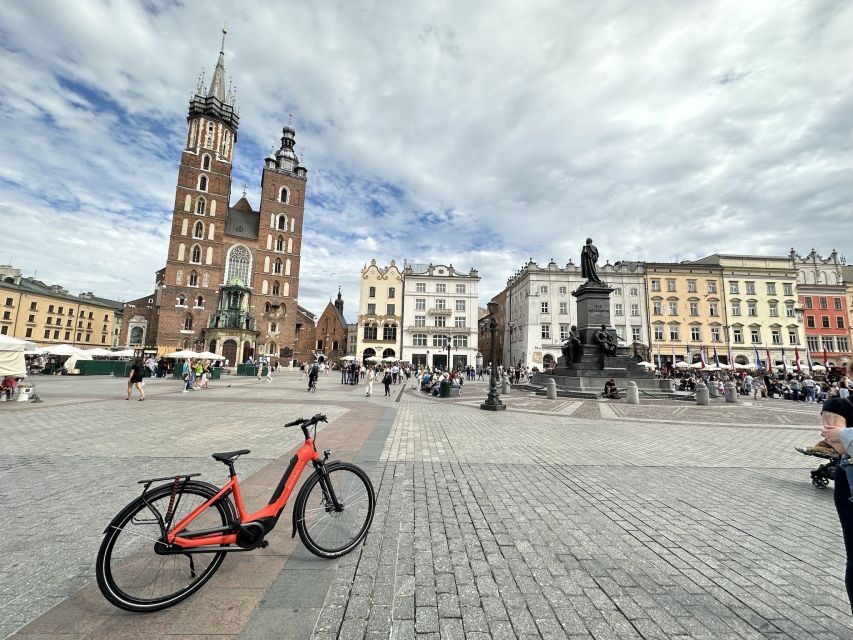
Your first proper stop is Main Market Square, with a photo moment and guided explanation before you roll on. This is the place that gives you scale—where the city’s center feels like the center—and it’s a useful reference point for the rest of your days in Krakow. You’ll also hit the Juliusz Słowacki Theatre area and Florian Gate, both as photo stops plus guided looks.
Practical tip: in the Market Square area, pedestrians move unpredictably. Slow down early. Let the guide set the walking pace around crowd clusters, then match it on the bike.
Jagiellonian University quarter and remnants of the old city line
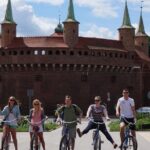
Next you pass through the Jagiellonian University quarter and the Bishop’s Palace area, again with guided stops mixed into the riding. You’ll also see remnants of the city’s fortifications along the way. Even without going inside everything, these external landmarks tell you how Krakow used to hold itself together—walls, gates, and the kind of street layout that shaped daily movement.
You can also read our reviews of more tours and experiences in Krakow
Wawel Royal Castle and the Wawel dragon
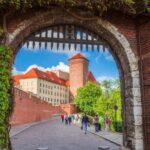
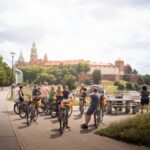
The Old Town arc climbs toward the Wawel Royal Castle area, including a stop at the Wawel Dragon Statue. The tour description calls out the dragon as a fun scare-factor moment, and it fits the way this route is balanced: serious learning, then a human-sized story you can remember later.
Because the route is described as easy and flat, you won’t feel like you’re doing a fitness trial. Still, keep your hands ready for quick steering. The castle-area approach can feel crowded, and you’ll want to stay calm rather than power through.
River Views and the Turn Toward Kazimierz
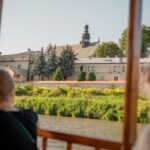
Once you’re done with the castle zone, you head toward the Vistula River boulevards. There’s a stop at Vistula Krakow with scenic views along the way and guided touring as you go.
This section is useful because it changes the atmosphere. You’re not just in landmark-hopping mode anymore—you’re transitioning into the parts of Krakow that feel more like local neighborhoods. It’s also a good moment to reset mentally before you enter the quieter, more reflective WWII-related area later in the ride.
Kazimierz on the E-Bike: Quiet Streets, Szeroka Street, and Bridges
Kazimierz is the heart of the Jewish-quarter experience on this tour, and the route is paced so you don’t just “pass through.” You’ll reach the former Jewish quarter with its quiet markets, synagogues, and old streets—exactly the kind of atmosphere you want when you’re trying to understand a neighborhood, not just collect stamps.
You’ll start making these connections through key stops. First, you hit Kazimierz as a photo stop with guided context. Then you’ll roll into plac Nowy and Szeroka Street, both with guided stops plus the bike ride between points.
One detail I like here: the stops aren’t only about famous monuments. They’re about street life and the layout of the neighborhood—places where it feels natural to imagine everyday routines.
Father Bernatek’s Bridge and the feel of the area
You’ll also stop at Father Bernatek’s Bridge. Bridges are great for tour pacing because you get a quick pause, a wider view, and a mental shift from one street grid to another. It also helps break up the ride before the heavier WWII portion.
As you get closer to the ghetto-area stops, the vibe changes. The guide’s storytelling is what carries you through that shift without making it feel like a lecture.
WWII ghetto area and Schindler’s Factory: Hear It, Then Move On Carefully
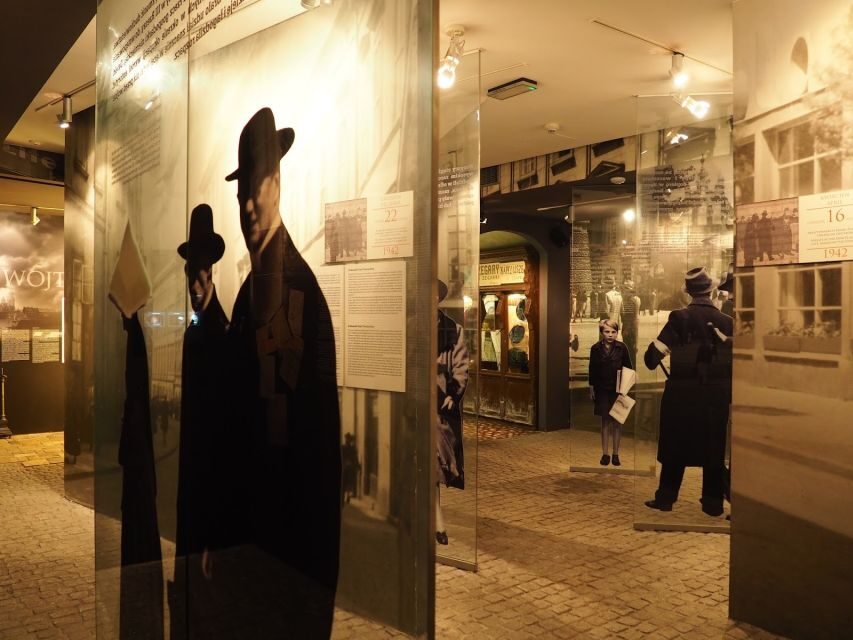
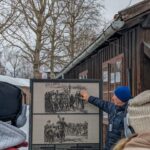
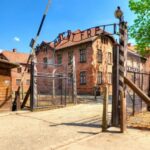
This is the portion you don’t want to rush. The tour description frames it clearly: you explore sad Holocaust history in the former WWII Jewish ghetto and you see the building of the former Oscar Schindler’s factory.
You’ll go to Ghetto Heroes Square and then Oskar Schindler’s Factory, with photo stops and guided explanations. There’s also a timed break around the Schindler’s List Passage point, so you get a moment to refuel before continuing on to the most emotionally heavy stops.
Here’s the honest practical advice: be ready to put your phone away for stretches. In places tied to WWII history, the best experience usually comes from listening fully for a few minutes at a time, even if it’s not how you usually travel.
Also note what isn’t promised: entrance fees aren’t included. That means you should expect mostly viewing and exterior context at major sites rather than guaranteed entry into buildings.
Pace, Distance, and Riding Comfort: What Feels Easy and What Needs Attention
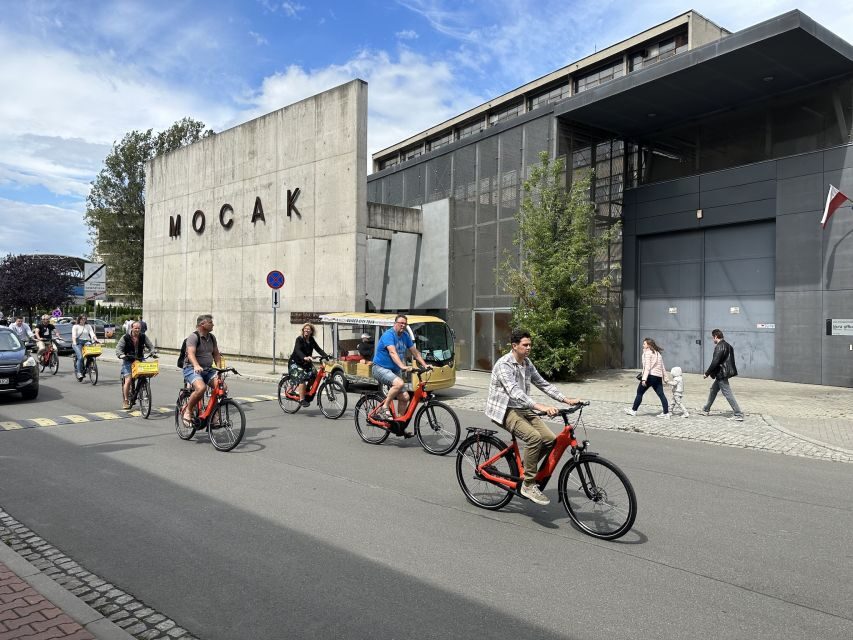
This is described as an easy route—flat, good for all ages—and the e-bike support is there to keep effort low. That makes it a strong choice for people who want city highlights without turning the day into a workout.
From the feedback, many people found the overall pace right, including first-time e-bike users. Some groups reported covering around 12 km, which tells you the ride adds up without feeling like a long-distance ordeal.
Still, the reality check is crowd management. Krakow’s squares and popular streets can be busy, and bike paths aren’t always physically separated from pedestrians. One piece of feedback mentioned the bike bell not working, which is a reminder to stay extra aware and communicate with your body—slow down early, keep a straight line, and don’t assume you’ll get a clean buffer around people.
For comfort, wear normal city footwear and keep it simple. If it’s cold, it can change the whole mood—one cold-weather comment suggests you’ll enjoy this more with milder conditions.
English-Language Guiding That Keeps the Ride Human
A bike tour lives or dies on the guide, and this one gets consistent praise for being friendly, responsive, and easy to listen to. Names that come up in the feedback include Chris, Thomash (Thomas), Alex, Kristoff, Krzysztof, Zee, Margena, Max, and Michael—with comments noting good English and a sense of humor.
That humor matters more than you’d think. It helps the stories travel from stop to stop without the day feeling heavy or stiff. You still get history, but it’s delivered in a way that feels like a conversation rather than a monotone script.
Price and Value: Why This Often Costs Less Than It Feels
At $62 per person for 3 hours, you’re paying for three things that add up fast if you do them separately: a small guided experience, modern e-bike use, and route planning that gets you through multiple districts.
You’re not just renting a bike. The bikes are included (Bosch E-bikes by Sparta), and you’re led through major places with scheduled stops for photos and explanations. For many first-timers, that’s the value: you get context early, then you can explore the areas later at your own pace with better direction.
Entrance fees aren’t included, so the cost isn’t trying to buy you paid museum access. Instead, you’re buying efficient orientation plus guided interpretation of what you’re seeing.
Should You Book This Krakow E-Bike Tour?
Book it if you want the best kind of “starter day” in Krakow: cover serious sights fast, hear the stories from an English-speaking local guide, and move through three key neighborhoods without exhausting yourself on foot. It’s a great fit for couples, friends, and anyone who can ride a bike confidently and wants a practical overview before deciding what to revisit.
Skip it if any of these apply: you’re not comfortable riding in busy pedestrian zones, you’re mobility-limited, or you’re under the 15-year minimum. Also, if you’re hoping for guaranteed inside visits everywhere, adjust your expectations—entrance fees aren’t included, and the experience leans toward guided viewing and exterior context.
In short: if you like getting oriented quickly and you’re up for real-city riding conditions, this is a strong value way to see Krakow in one focused half-day.
FAQ
How long is the Krakow e-bike tour?
The tour lasts 3 hours, with a safety briefing included at the start.
Where does the tour meet?
The meeting point is Sławkowska 11, in the inner courtyard next to an exchange point (at the rent a bike area).
What’s included in the price?
E-bike rental is included, specifically Bosch e-bikes by Sparta.
Are entrance fees included?
No. Entrance fees are not included.
How many people are in the group?
It’s a small group with a maximum of 15 persons.
Do the e-bikes have a throttle or lever?
No. The bikes have electric motor support while you pedal, with no throttle.
Is the guide English-speaking?
Yes. The tour includes a live guide in English.
Is it suitable for children?
It is not suitable for children under 15 years old.