REVIEW · KRAKOW
Krakow: Bike Tour of the Old Town, Kazimierz, and the Ghetto
Book on GetYourGuide →Operated by Cruising Krakow Bike & Segway Tours · Bookable on GetYourGuide
That first pedal always feels like a win.
This guided Krakow bike tour helps you get your bearings fast, linking the big sights with the smaller streets in between. I like that it mixes major landmarks with lived-in neighborhoods, and that the guide uses real context to make places like Podgórze and the Kazimierz Jewish Quarter feel clear, not like a checklist. You also cover the Vistula area, so you get some breathing room and easy photo moments. One consideration: it’s not for people who can’t ride a bike, and the route follows city surfaces that can feel uneven.
Two things I especially like: first, you get a true “how Krakow works” overview early in your trip. Second, I see real value in the pace—there’s plenty of stopping for stories, plus a lunch break that’s part of the tour rhythm rather than an afterthought. Guides such as Mike (often mentioned), plus names like Zoe and Chris, come up repeatedly for strong storytelling and keeping the ride fun. The possible drawback is emotional weight: the WWII ghetto portion is handled with respect, but it’s still heavy subject matter.
In This Review
- Key Points to Know Before You Ride
- Why a Bike Tour Works So Well for First-Time Krakow
- Start Under Adam Mickiewicz: Your Quick Orientation Begins
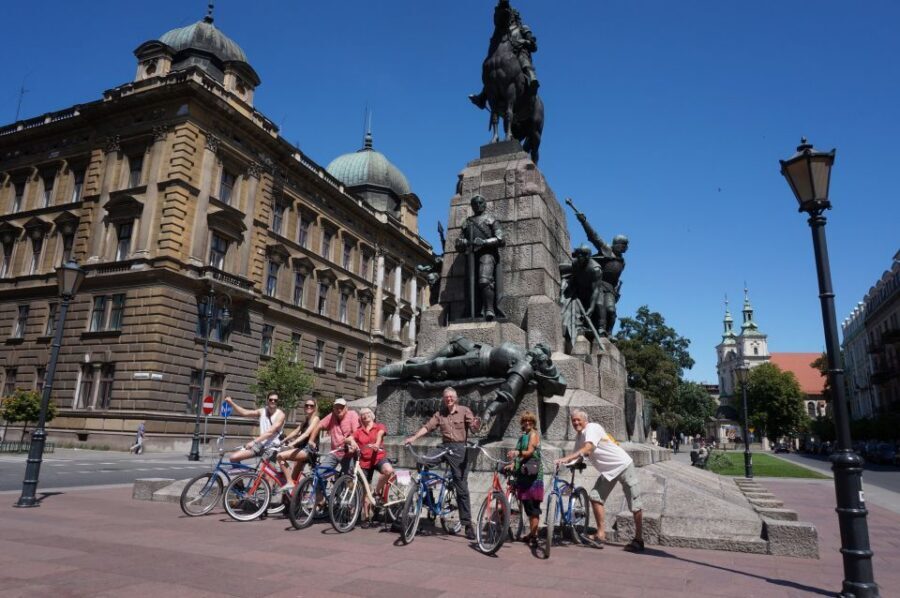
- Old Town Highlights: Main Square to Wawel Without the Marathon Feel
- The Wawel and Church on the Rock stops
- Planting Your Feet by the Vistula: A Calm Photo Stop
- Podgórze and the WWII Ghetto: The Part You’ll Remember
- Kazimierz: Colorful Streets and a Different Krakow Mood
- Why these specific Kazimierz stops matter
- How Long Is This Tour Really, and Will You Be Tired?
- Bikes, Helmets, and the Small Comfort Wins
- English and Dutch Guides: What That Means for Your Experience
- Is $26 Good Value for This Bike Tour?
- Who This Tour Suits Best
- Should You Book This Bike Tour?
- FAQ
- How long is the bike tour?
- Where does the tour start and end?
- What’s included in the price?
- Is lunch included?
- Are e-bikes included?
- Is the tour suitable if I can’t ride a bike or have mobility issues?
Key Points to Know Before You Ride
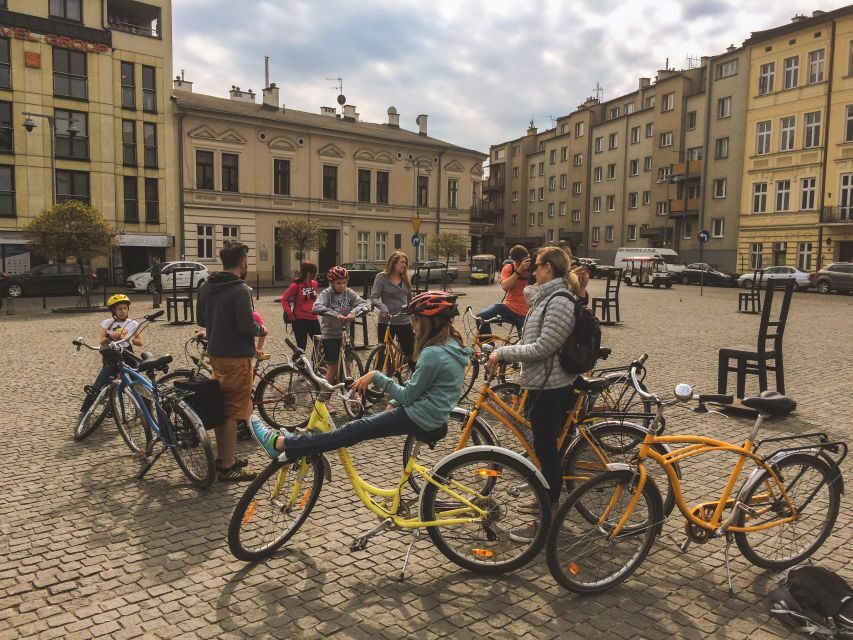
- Bike-first city orientation: you’ll cover more ground than walking, without feeling rushed.
- Quiet-street cycling vibe: a lot of the route feels easy and traffic-light compared to typical sightseeing routes.
- Old Town to Kazimierz to Podgórze in one sweep: the tour helps you connect neighborhoods that are close on a map but different in feel.
- Photo and pause moments built in: the Vistula river stop and multiple short stops keep it from feeling like one long sprint.
- A lunch break is included in the plan: it helps you reset, especially on the longer 3.5–4 hour option.
- Guide style matters here: strong guides (Mike, Zoe, Chris are mentioned) can make the history land in a way a standard audio app can’t.
Why a Bike Tour Works So Well for First-Time Krakow
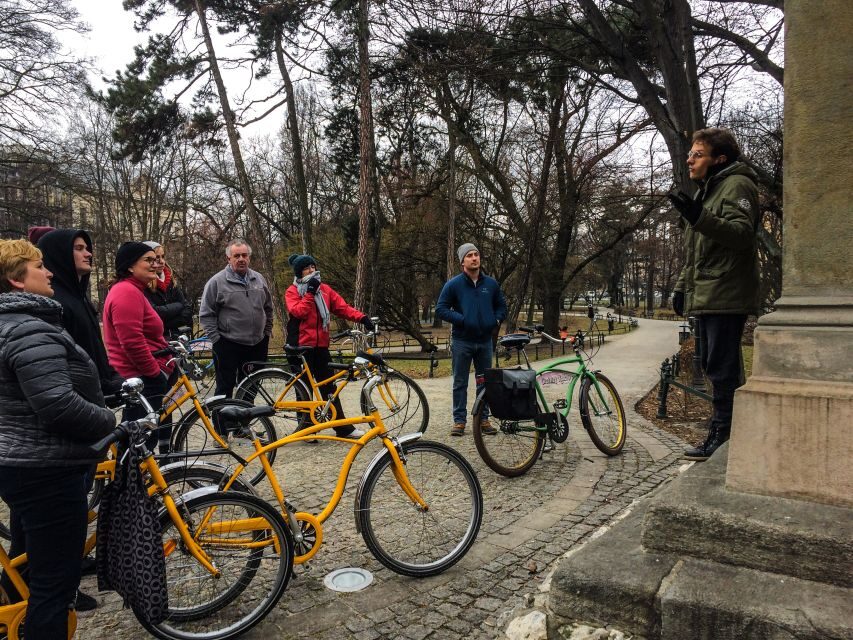
Krakow is a city where you can feel lost even when you’re standing in the center. A bike tour fixes that quickly. You leave the starting point and soon you know where the river is, where the historic core sits, and how Kazimierz and Podgórze connect across the city.
What makes this one practical is how it stitches landmarks together with neighborhood streets. You’re not only “seeing sights,” you’re also getting the small-scale geography that helps you plan the rest of your days. And because you’re moving at a human pace, you can actually notice the details: gate areas, church domes, and the flow of streets through different districts.
Also, the format stays friendly. Even with an itinerary full of stops, the ride is described as not too strenuous, and it’s framed as suitable for all fitness levels. If you can ride a bike at a comfortable pace, you’re in the right lane.
You can also read our reviews of more cycling tours in Krakow
Start Under Adam Mickiewicz: Your Quick Orientation Begins
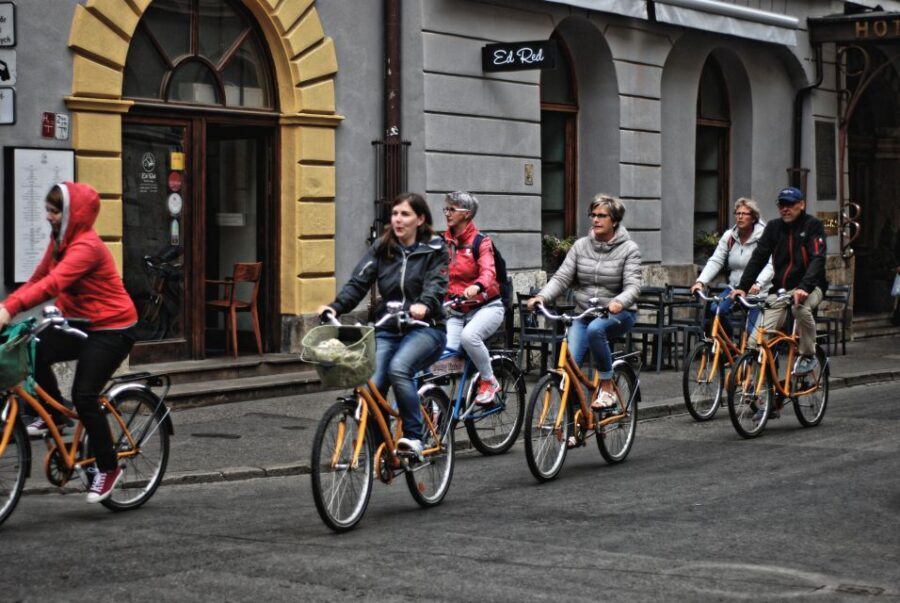
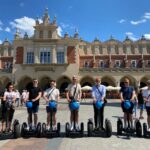
The tour launches under the Adam Mickiewicz statue in Krakow’s main market square area. That matters more than it sounds. You’re starting in a central, recognizable place, which makes it easier to tie your tour to your hotel plans afterward.
From there, you’ll move through the city with structured pauses. There’s a safety briefing early on, so you’ll know how to ride as a group. That’s a small thing, but it changes the whole experience—your brain can relax and pay attention to the stories instead of guessing what everyone else is doing.
Old Town Highlights: Main Square to Wawel Without the Marathon Feel
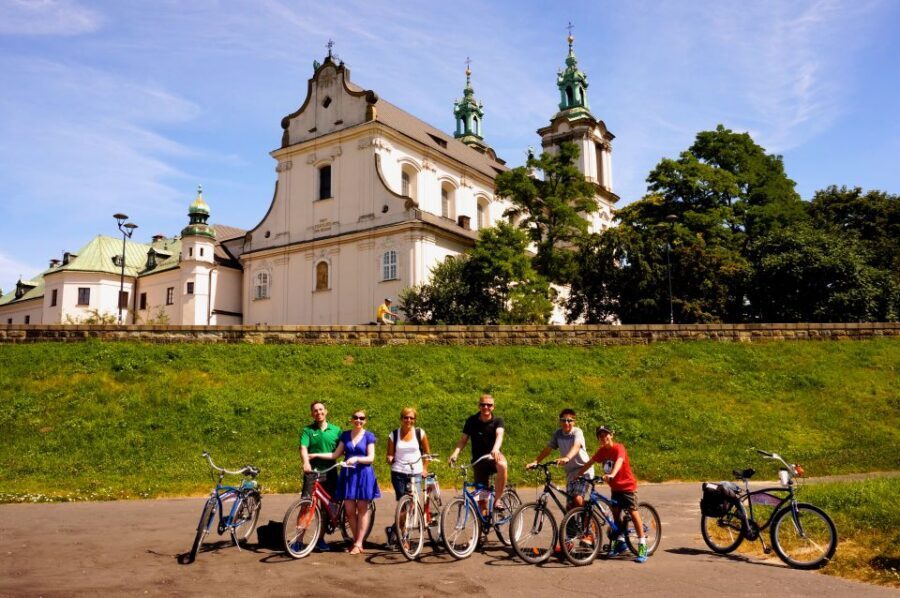
The Old Town portion is the “classic Krakow” opener, and the stops are placed like a guided route through the historic heart.
You’ll spend time at the Main Market Square and then head to the Krakow Old Town segment with a bike loop that’s paced for photos and explanations, not a race. The vibe here is: you get the big overview views, plus context you can use later when you wander on your own.
Next comes the Kraków Barbican. This defensive structure is one of those places that looks impressive but can be hard to interpret if you’re just walking by. On a bike tour, it’s easy to see where it sits in the city plan, which helps the architecture make sense.
Then you glide into Planty Park, which acts like a green belt around the core. It’s a welcome change of pace. You’re still in historic Krakow, but you get a calmer feel and an easier stretch of riding.
After that, you pass Jagiellonian University. Even if you’re not touring inside buildings, it gives you a sense of Krakow as a living city, not only a museum.
You’ll also visit the Church of St. Francis of Assisi. The point of this stop isn’t just a photo—it’s the chance to connect the church setting with the surrounding streets and how people use these spaces.
The Wawel and Church on the Rock stops
Two of the most memorable moments are built around iconic silhouettes.
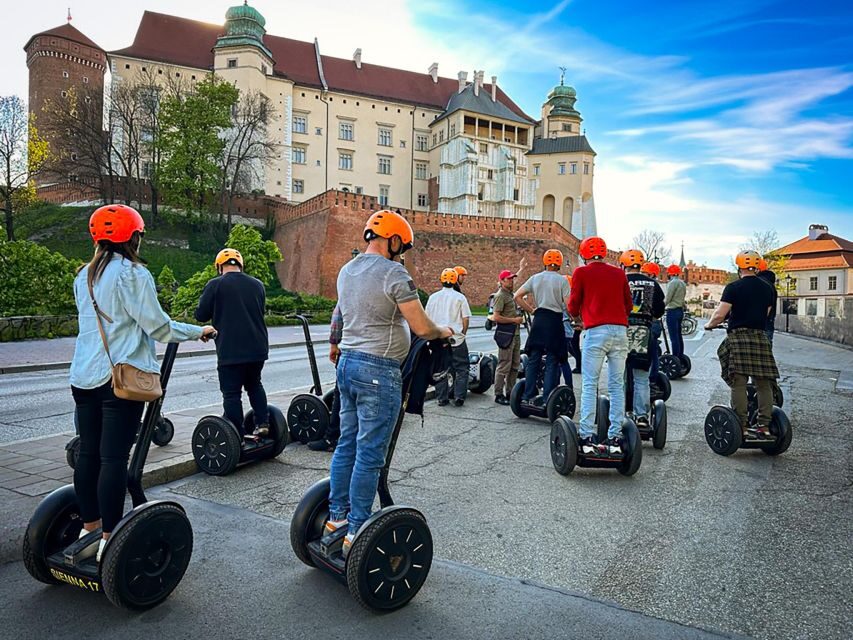
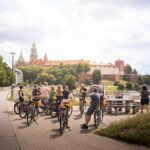
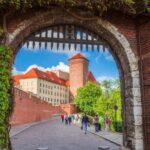
You’ll pass the Wawel Royal Castle area, with time for the bike-and-look rhythm that works well for big structures. Then you’ll roll past the Church on the Rock. This is the kind of spot where movement helps: you see the church in relation to the area around it rather than as a standalone postcard.
The tour keeps the Old Town segment from feeling like a long museum day. You get “main landmarks,” but also the short, connecting stretches that help you understand the layout.
Planting Your Feet by the Vistula: A Calm Photo Stop
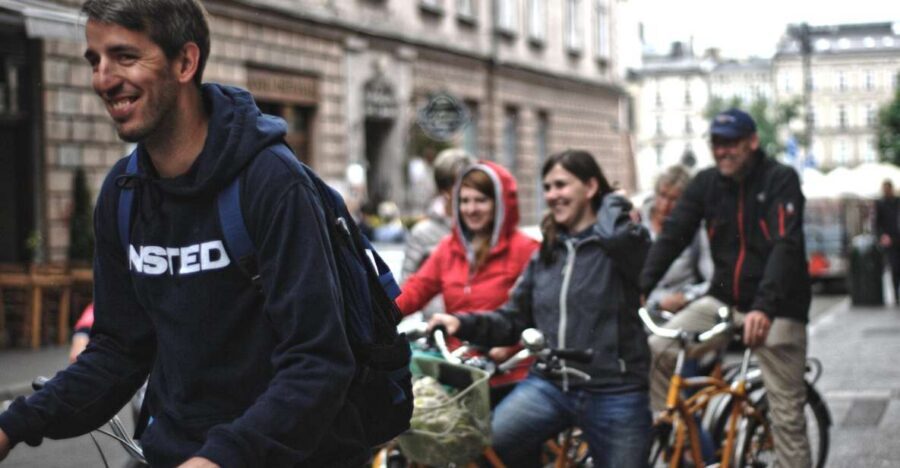
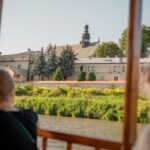
At the Vistula River, you’ll have a short photo stop. This is a good balance point. After concentrated historic stops, the river gives you light, space, and the chance to reset your legs and attention.
If you like taking photos but hate feeling like you’re always sprinting, this stop is a nice break in the rhythm. The tour uses these short pauses strategically, so you don’t feel trapped in a rigid schedule.
Podgórze and the WWII Ghetto: The Part You’ll Remember
This is the section that gives the tour its meaning, not just its sightseeing value.
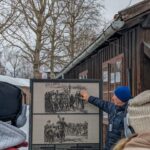
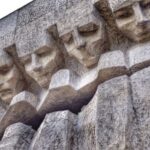
You’ll reach Podgórze and then cycle by Plac Bohaterów Getta. This is where the tour shifts from “beautiful old city” to “understanding history.” You should expect a respectful tone and clear explanation, because the subject is unavoidable and important.
Next comes Oskar Schindler’s Factory. Even if you don’t go inside on this exact tour format, passing the site helps connect the story to a specific place in the city. It also makes the later Kazimierz streets feel more grounded, because you’re seeing how the districts relate.
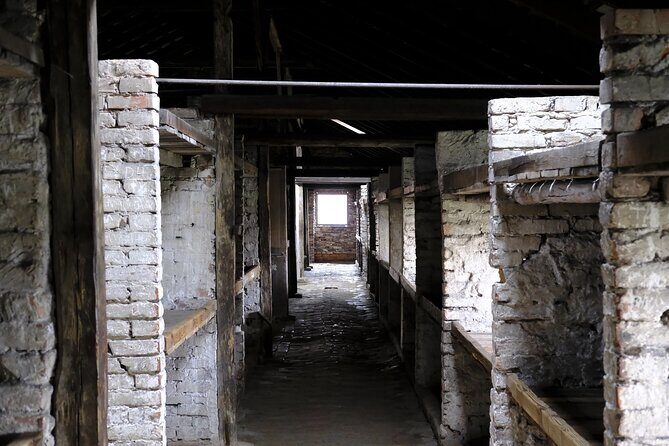
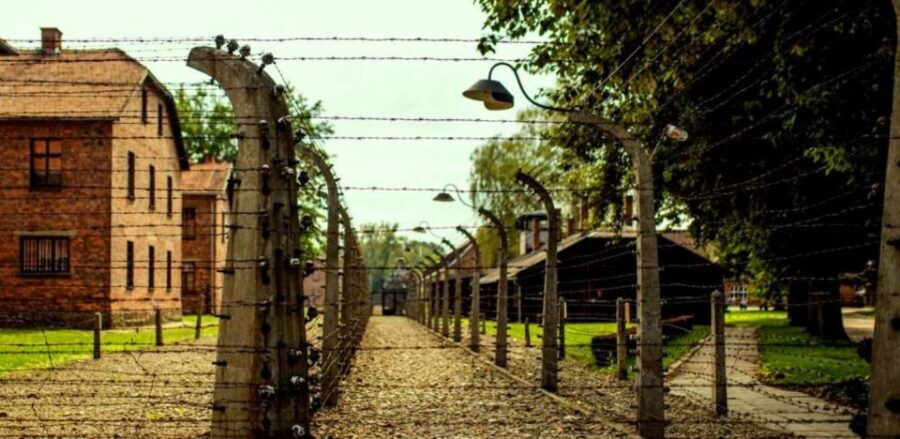
This part can hit hard. If you’re the type who likes to mentally prepare before heavier history, plan for that. The upside is that the bike format keeps you from feeling like you’re stuck in long passive time—your guide can connect the dots in a way that feels human and immediate.
Kazimierz: Colorful Streets and a Different Krakow Mood
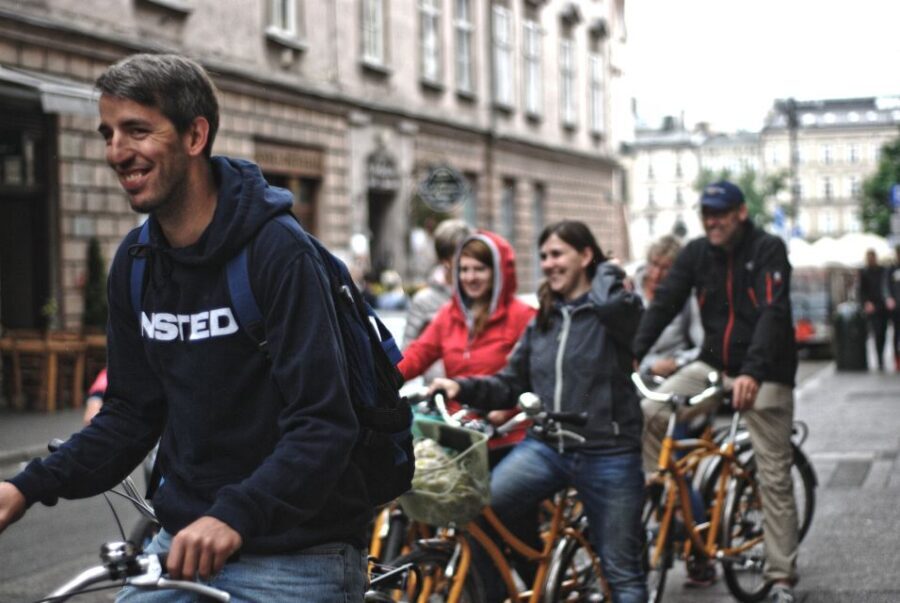
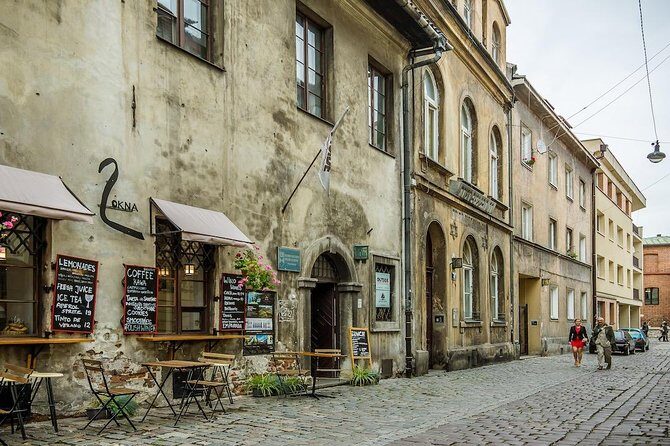
Once you enter Kazimierz, the city’s tone shifts. The streets feel lively and distinctive, and you get to see why this neighborhood is so associated with Jewish culture and community life.
You’ll spend time in Kazimierz—enough to feel like you’re not only passing through. Stops include Krakow New Jewish Cemetery (a short bike segment), then Szeroka Street, and then key sites tied to synagogue life such as the Old Synagogue and Remuh Cemetery.
Why these specific Kazimierz stops matter
Cemeteries and synagogues can feel abstract when you see them out of context. On a guided bike tour, you get spatial context: where these places sit in the neighborhood fabric, and how the streets connect them. It’s easier to remember what you saw because you experienced the links between locations while moving through the area.
You’ll also visit plac Nowy and pass Juliusz Słowacki Theatre. Those are good signs of how Kazimierz isn’t frozen in time. It’s still a real neighborhood with daily life around historic sites.
How Long Is This Tour Really, and Will You Be Tired?
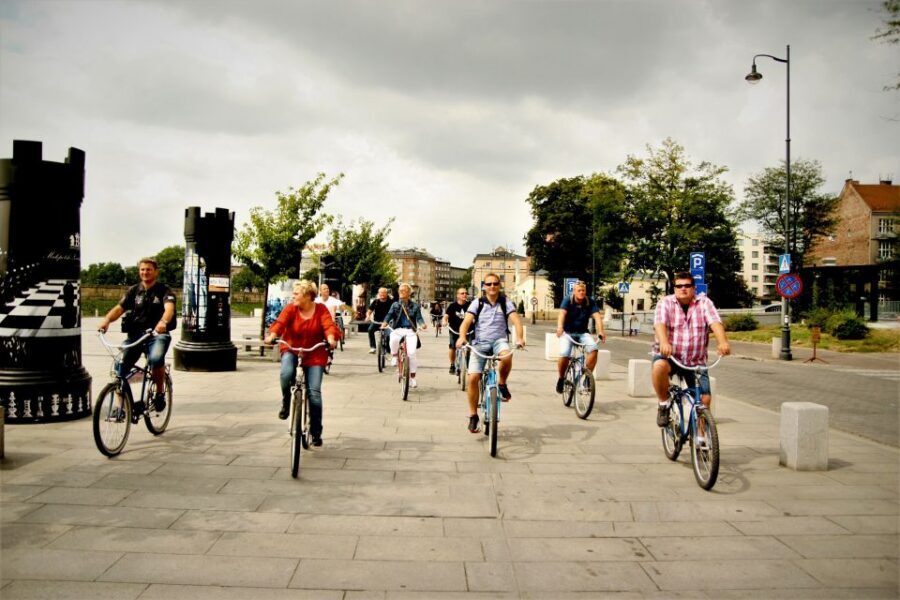
The tour runs about 2 to 4 hours, depending on the option you pick. The longer version is described as 3.5 to 4 hours and includes a 45-minute lunch break.
In summer, you can choose between:
- a morning ~4-hour option covering Old Town, Kazimierz, and Podgórze, and
- an evening ~2-hour option covering Old Town and Kazimierz.
That flexibility is useful if your schedule is tight or if you’re saving energy for other plans. If you want the full WWII ghetto connection, go for the longer option. If you mostly want an intro to the historic core and Kazimierz atmosphere, the shorter evening ride is a smart fit.
As for effort, the tour is described as not too strenuous and suitable for all fitness levels. That said, you are riding a bike for a large chunk of time. If you don’t ride often, plan to take it slower at the start and let the pace settle.
Bikes, Helmets, and the Small Comfort Wins
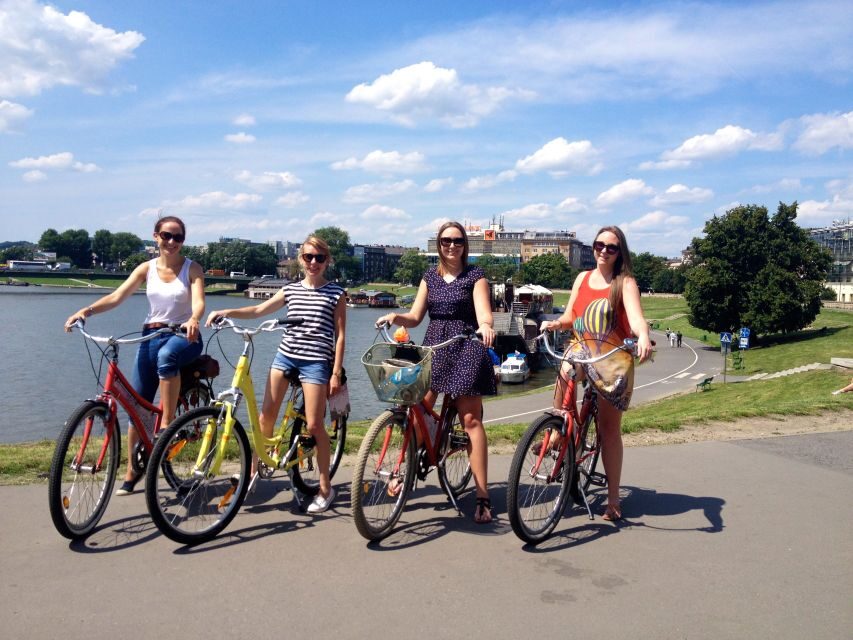
This tour is set up to minimize hassle. You get bike rental and a helmet included. E-bikes aren’t included, so if you need motor assistance you’ll want to check in advance whether an option like that exists through the provider. From the available info here, the safe assumption is that you’re riding a standard rental bike.
Another nice touch is that the lunch stop is built into the plan. Lunch itself isn’t included, but there’s a recommended cafe break during the tour rhythm, which makes it easier to avoid scrambling for food mid-sightseeing.
One small detail from guide experiences: a dog named Ramsey sometimes joins the ride, though heat can affect whether they can come along. It’s not a reason to book, but it is a real-world reminder that these tours often feel personal and relaxed rather than rigid.
English and Dutch Guides: What That Means for Your Experience
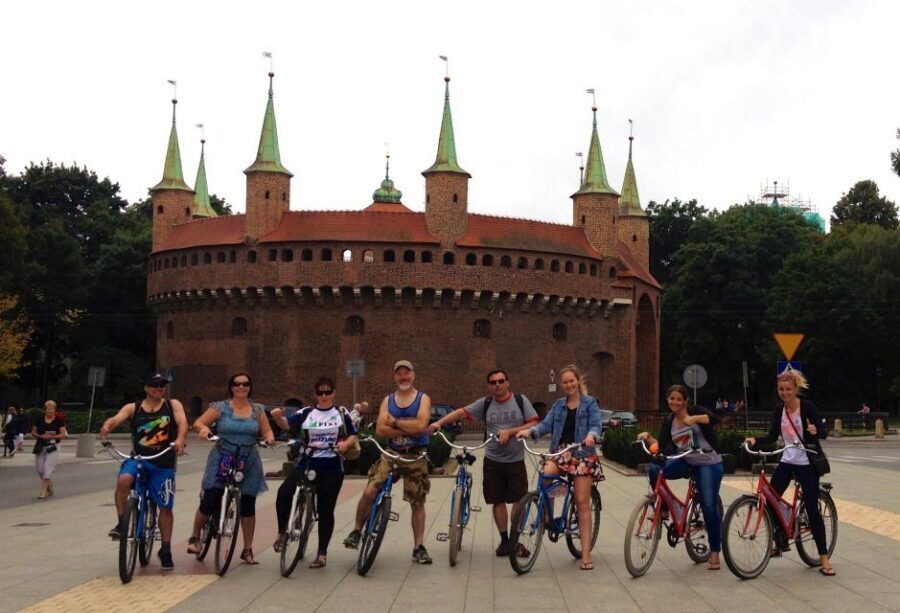
The guide is live and available in English or Dutch. That’s a big deal for a city tour, because Krakow’s architecture and history are layered. This is especially true where WWII topics show up—good guiding helps you understand why sites matter without turning it into a lecture.
Names that come up frequently include Mike, along with guides like Zoe and Chris. The consistent theme is pacing and storytelling: clear explanations at stops and a sense of humor that keeps the day from turning into a slog.
If you like learning but also want to enjoy the ride itself, this tour is built for that balance.
Is $26 Good Value for This Bike Tour?
At $26 per person, this is priced like a strong “first Krakow” activity. You’re paying for four things at once: a guide, bike rental, helmet, and a route that ties together major districts without you needing to plan transport.
The value becomes clearer when you think about time. If you try to replicate this on your own, you’d spend time figuring out a safe route, getting permissions (where needed), and stitching together the exact stops for Old Town, Kazimierz, and Podgórze. Here, the work is done for you—then you can use the knowledge to plan the rest of your stay.
One caution on value: the tour does not include lunch, and it doesn’t include entry fees if you decide to go into places not specified as part of the stops. Still, the day’s structure and the inclusive basics make it a cost-effective way to see a lot with minimal effort.
Who This Tour Suits Best
This tour fits best if:
- you want a guided intro to Krakow across three major areas
- you like bicycling and want an easier way to cover ground
- you care about context for WWII-era sites, not just photos
It’s not for you if you can’t ride a bike or if you have mobility impairments. The format is designed around cycling, and that limits who can participate comfortably.
If you’re traveling solo, it still works well because the structure gives you confidence. If you’re a couple or small group, the private group option can be a good choice if you want more flexibility in pace and questions.
Should You Book This Bike Tour?
I’d book it if you want Krakow to feel organized in your head by day one or day two. The combination of Old Town landmarks, Kazimierz street life, and the Podgórze WWII ghetto sites makes this more than a casual ride.
Choose the longer morning option if WWII history is a priority for you and you want enough time to move through Podgórze and Kazimierz in one sweep. Choose the shorter evening option if you’re optimizing energy and mainly want Old Town plus Kazimierz atmosphere.
If you’re nervous about riding, pick a day with calm weather, bring your patience, and lean into the fact that the stops are frequent enough to keep the day from feeling relentless. With a rating around 4.9 from 350 reviews, the main story here is simple: you’re paying for a fun, guided route that helps you understand Krakow, not just pass through it.
FAQ
How long is the bike tour?
It runs about 2 to 4 hours. The longer option is around 3.5 to 4 hours and includes a 45-minute lunch break.
Where does the tour start and end?
The tour starts at a meeting point that may vary by the option booked, with the city bike tour starting under the Adam Mickiewicz statue in the main market square. It ends back at the meeting point.
What’s included in the price?
The guide, bike rental, and helmet are included.
Is lunch included?
No, lunch is not included. There is a lunch break during the tour where you can eat on your own.
Are e-bikes included?
No. E-bike is not included.
Is the tour suitable if I can’t ride a bike or have mobility issues?
No. It’s not suitable for people who can’t ride a bike, and it’s also not suitable for people with mobility impairments.