REVIEW · KRAKOW
Krakow: Bike Tour of Old Town, Jewish Quarter and the Ghetto
Book on GetYourGuide →Operated by krakowbiketour · Bookable on GetYourGuide
Pedal through Krakow’s darkest corners.
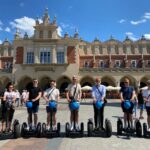
This 3.5-hour bike tour mixes postcard Old Town sights with the stories of the Jewish ghetto and Kazimierz, and you cover a lot of ground without feeling rushed. I love the small-group pace and the way guides like Christopher keep everyone together while teaching in clear English. I also love the Schindler’s List connections built into the route, so history lands in the exact places you see in the film. One drawback to plan for: it’s not a good fit if you can’t ride a bike or have mobility limits, because you’ll be cycling across streets for the full duration.
A big part of why this tour works is the rhythm: you start with a safety briefing, you ride in between short photo stops, and you get a 30-minute pause to reset, grab refreshments on your own, and meet the rest of the group. Bikes come with what you need to get going, and the route is generally easy for most riders, though you’ll still want to slow down over rougher spots like the river bridge.
In This Review
- Key highlights that make this tour worth your time
- Entering Krakow by bike: why this route clicks
- Meeting point at Chicago Music Club: getting started smoothly
- Main Market Square and the classic Krakow loop
- Kazimierz: where street-level stops add meaning
- Ghetto-area stops and Oskar Schindler’s Factory
- The ride experience: pace, road feel, and comfort tips
- What’s included in the price (and what you’ll pay extra)
- Which guide style you should expect
- Who should book this bike tour of Krakow Old Town and the ghetto
- Should you book it
- FAQ
- FAQ
- How long is the Krakow bike tour?
- How much does the tour cost?
- What areas does the tour cover?
- What is included in the price?
- Where do I meet the group?
- Are there different starting locations?
- Is there a break during the tour?
- What language is the tour guide?
- Is this tour suitable for people who can’t ride a bike?
- Can I cancel for a refund?
Key highlights that make this tour worth your time
- Old Town + wartime history in one route so you don’t have to stitch together half a day of sightseeing.
- 25 stops for photos with built-in breaks to keep your energy up.
- Schindler’s List filming locations and ghetto-area stops that put names and dates into physical context.
- English live guiding with named hosts like Christopher, Tomasz, Michael, Thomaz, and Krzysztof.
- A generally flat, ride-friendly plan that still includes a few spots where you should take your time.
Entering Krakow by bike: why this route clicks
Krakow is the kind of city where you can walk for hours and still miss things—mainly because the streets spread out and the story changes neighborhood to neighborhood. This bike tour solves that problem fast. In about 210 minutes, you get a guided sweep of the center, a strong pass through Kazimierz, and then the ghetto-area sites tied to WWII history and Schindler’s List.
The real value here is not just “see sights.” It’s that cycling lets you keep moving while your guide connects the dots. You’ll be looking at landmarks and then hearing what happened around them, with frequent photo stops so you’re not rushing for time. And since the group stays small, questions don’t get lost in a crowd.
You can also read our reviews of more cycling tours in Krakow
Meeting point at Chicago Music Club: getting started smoothly
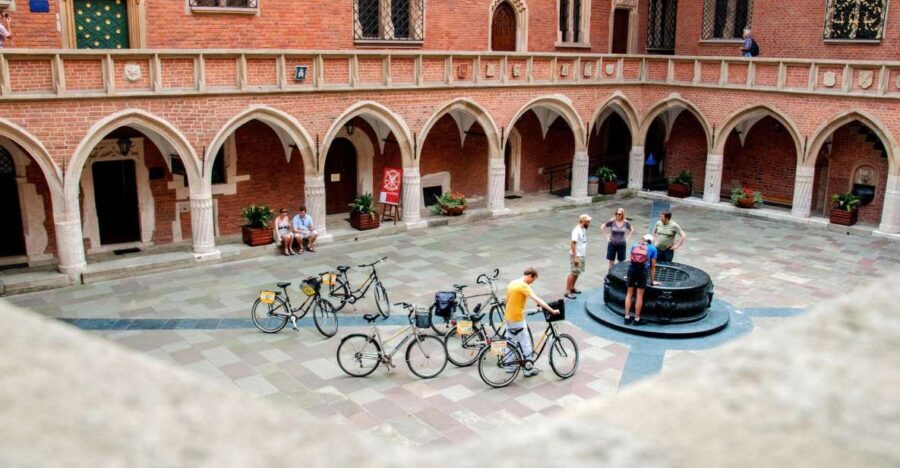
You meet at the provider’s office inside the courtyard of the building. The key detail: to reach it, you enter through the gate marked with the sign Chicago music club. It’s a small thing, but it saves stress when you’re trying to find the place in a busy old-city area.
You’ll begin with a safety briefing (10 minutes). That matters more than people think. Krakow’s streets include cobbles and mixed surfaces, and you’re cycling in a group. Once you know the plan—how stops work, how you re-form, and how the guide handles routes—everything feels simpler.
If you’re arriving early, use that time to get comfortable with your bike and check essentials like hand position and braking feel. Your legs will do the rest.
Main Market Square and the classic Krakow loop
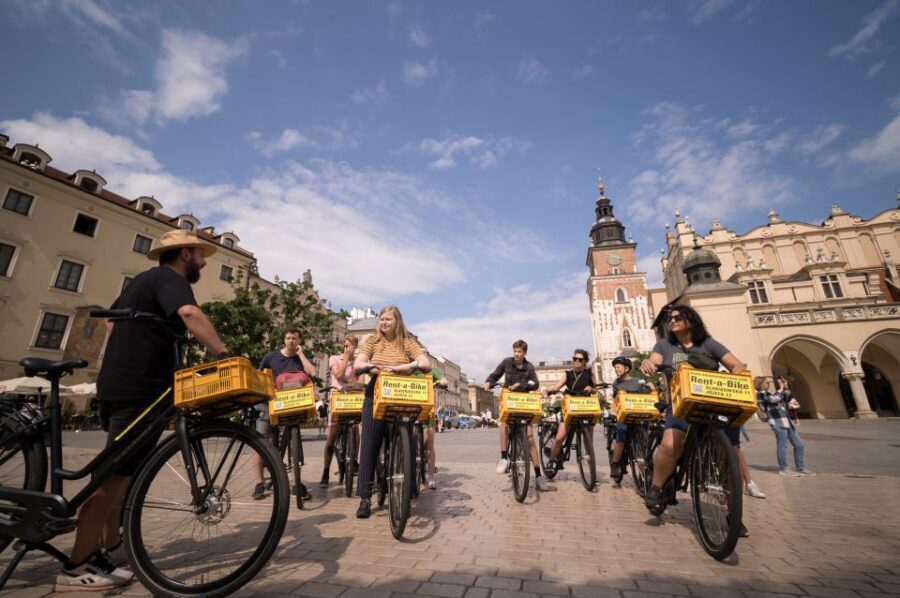
The tour starts in the historic core with the kind of sights you expect—then it adds perspective. One of the best moments comes right away at Main Market Square, where you’ll get a photo stop plus a guided walk-through from the bike. There’s also a short electric bike ride segment (15 minutes). It’s not the whole tour, but it’s a nice assist in the busiest area so you can focus on seeing and listening rather than straining.
From there, the route moves through some of the most recognizable city architecture:
- Juliusz Słowacki Theatre: you’ll stop for photos and a guided look. Even if you’re not catching a show, it’s a strong landmark that helps you visualize where culture sits in the city’s fabric.
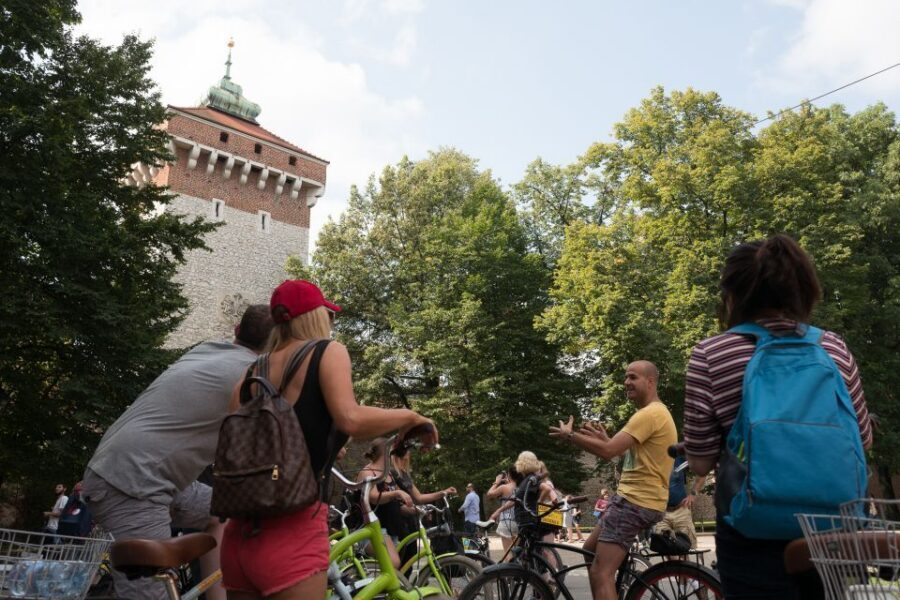
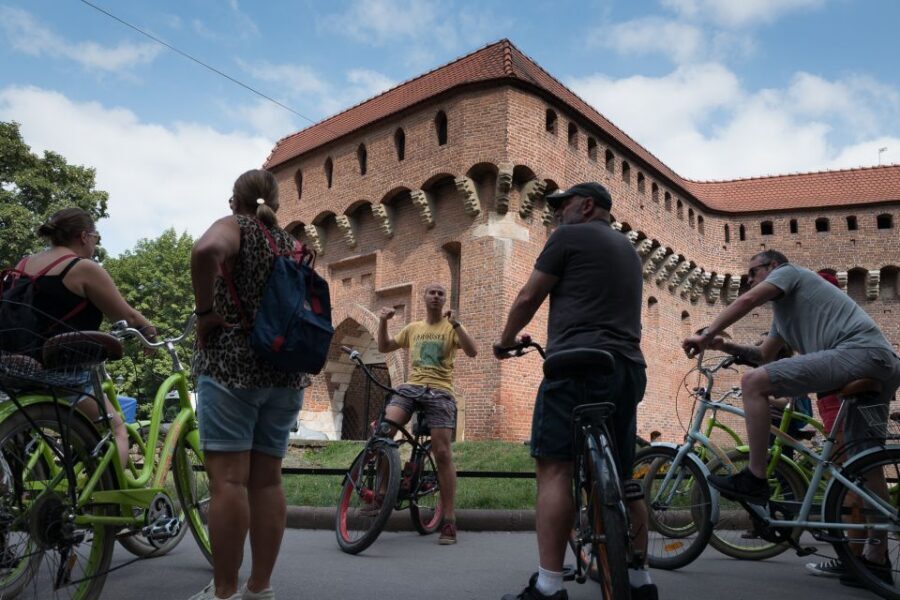
- Florian Gate: this is one of the reminders that Krakow wasn’t always the open, walkable center you see today. The guide’s framing helps you connect it to the city’s older defensive layout.
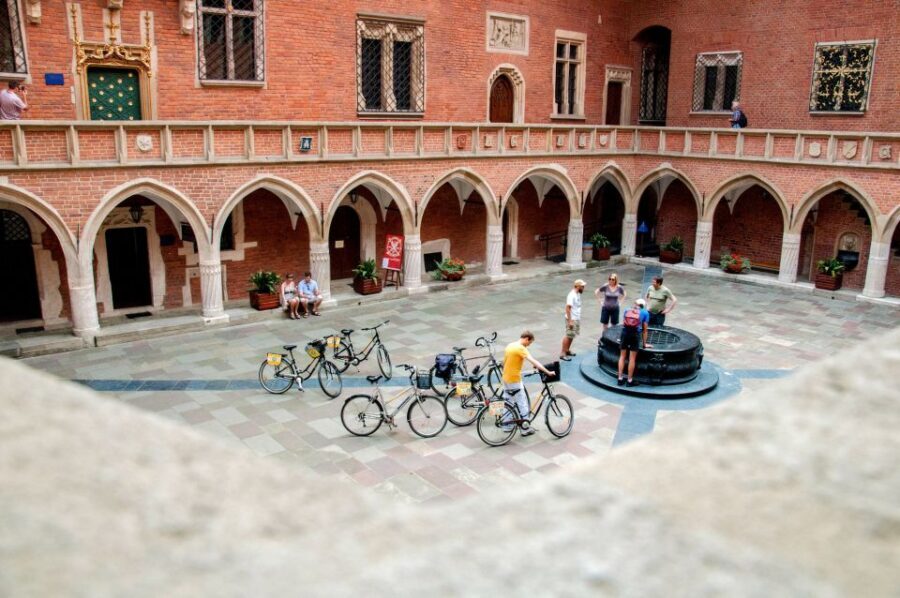
- Jagiellonian University: you’ll see it up close and get context. It’s the kind of stop that turns a big building into a story about generations of learning.
- Bishop’s Palace: another quick photo stop with explanation, useful if you like your sightseeing with a few clear historical anchors.
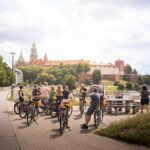
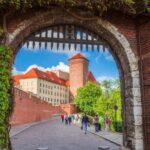
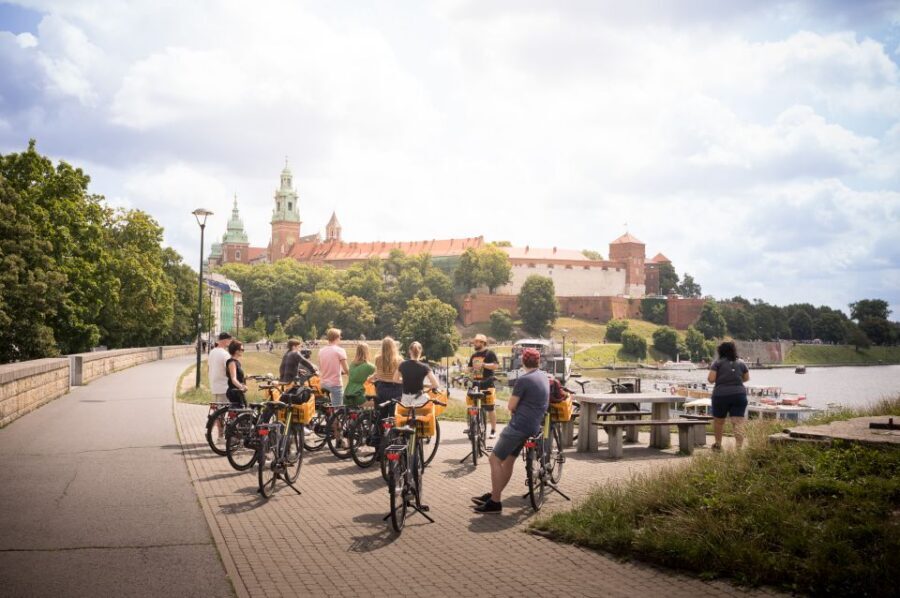
As you roll onward, you’ll reach Wawel Royal Castle and the Wawel Dragon Statue. These stops are some of the most high-impact visually in Krakow. The castle area is also where you start to feel the city’s “main stage” geography—everything else starts to make more sense when you understand where Wawel sits.
Then you cross toward views over the river area at Vistula Krakow, where you get scenic perspectives along the way. It’s a natural mental break, and it helps you reset before the tour pivots to Kazimierz and the WWII sites.
Kazimierz: where street-level stops add meaning
After the Wawel section, the tour shifts into Kazimierz, Krakow’s historic Jewish district. This is where cycling really pays off, because you can cover more street edges than you would on foot, while your guide keeps the story connected.
You’ll have a few focused stops that help you build an actual “map” in your head:
- Schindler’s List Passage: this is where the route slows for a break time and a guided photo stop. It’s also one of the stops that makes the tour feel especially specific, not generic.
- plac Nowy: a square stop that gives you a sense of the neighborhood’s daily energy and layout.
- Szeroka Street: a key street in the Jewish quarter area. You’ll stop for photos and guidance that make the architecture and street patterns more than background.
- Father Bernatek’s Bridge: you’ll pass by this bridge with a short stop. In practice, the bridge is often the part where you should slow down, because it’s the only segment many riders find a bit more demanding than the rest.
Kazimierz can feel emotionally heavy if you read it only through the WWII lens. The guide’s approach matters here: you should come away not just with tragedy, but also with the sense of community life and the way places carry layered meaning.
Ghetto-area stops and Oskar Schindler’s Factory
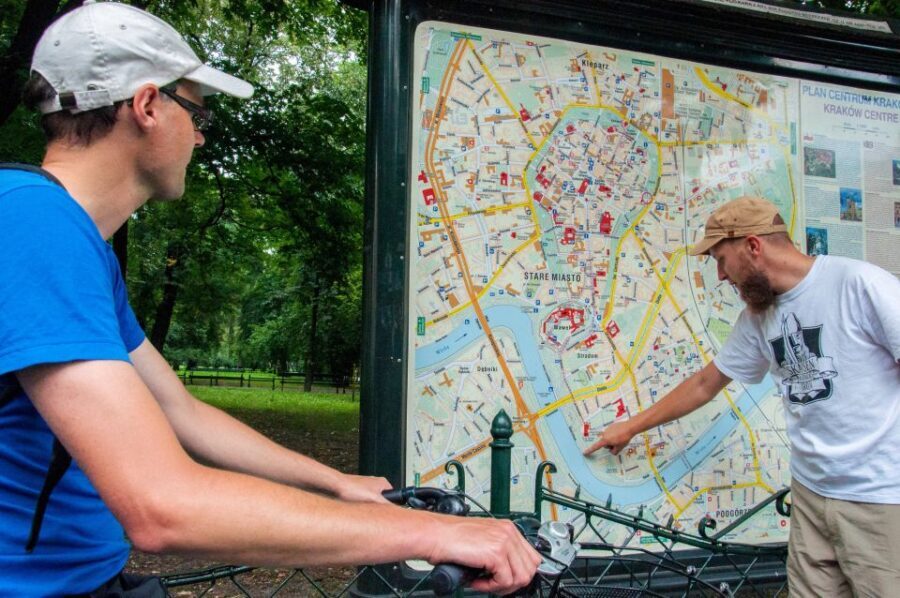
This tour’s emotional center is the sequence that follows Father Bernatek’s Bridge: Ghetto Heroes Square and Oskar Schindler’s Factory.
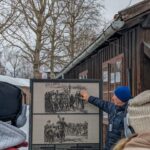
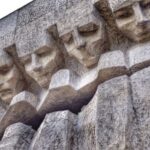
At Ghetto Heroes Square, you’re in the heart of the WWII ghetto-area story. The guide’s framing is the difference between seeing a site as a photo background and understanding why that ground matters. Expect the tour to be frank and grounded in clear timelines and context, not vague talking points.
Then you reach Oskar Schindler’s Factory, another anchor stop tied directly to the stories made famous through Schindler’s List. The key practical detail: entrance tickets aren’t included. So you should expect this stop to be more about seeing and listening around the site, unless you decide to pay separately to go inside.
You finish back at the drop-off point in the city center (the tour lists Sławkowska 11), so you’re not left stranded in a different neighborhood than where you started.
The ride experience: pace, road feel, and comfort tips
On paper, 210 minutes sounds like a long stretch. In practice, the structure makes it manageable. You get:
- a 10-minute safety briefing at the start
- frequent photo stops instead of one long lecture
- a 30-minute break mid-tour
- a route designed for a group experience rather than a race
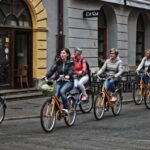
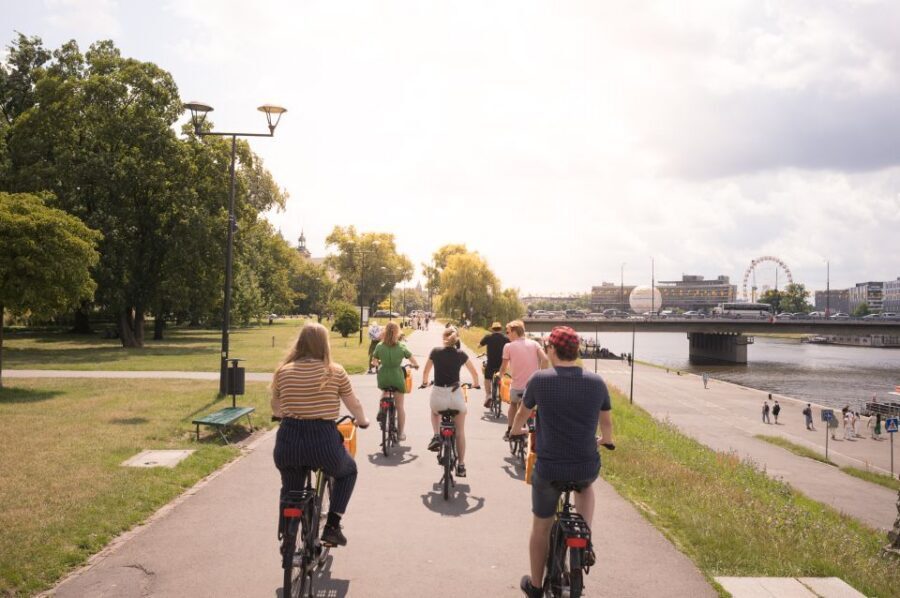
Most riders will find the cycling straightforward. The main “heads up” is surface variety. Even when the ride is generally easy and paced for different cycling levels, you can still hit cobbles and the usual old-town road roughness. Plan to take it slow over the river bridge segment and keep your grip steady.
A few comfort notes you’ll appreciate:
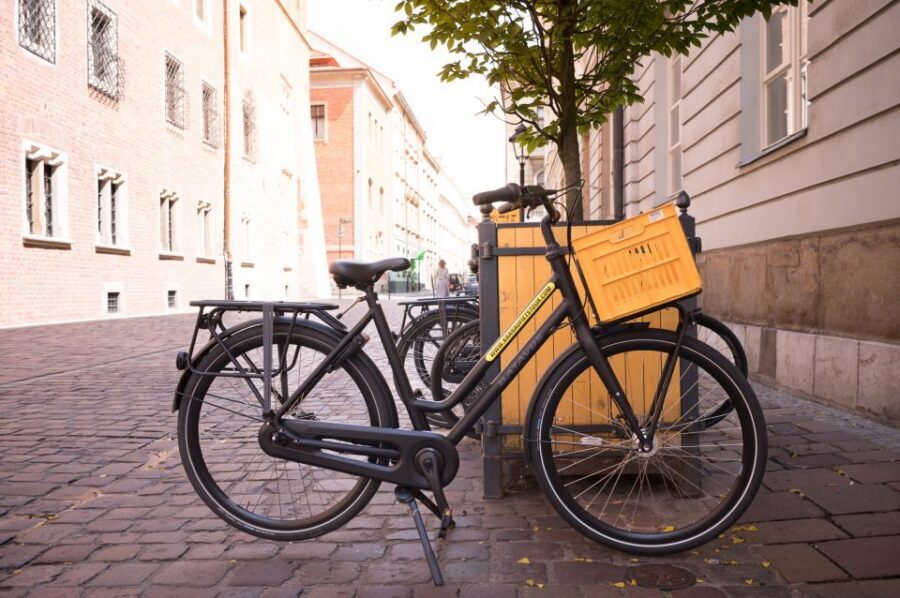
- Bikes are reported as in great condition, sturdy, and easy to control.
- Some bikes come with a basket on the front, which helps if you carry a water bottle or phone.
- If you want a helmet, ask. Some riders noted helmets available upon request.
What’s included in the price (and what you’ll pay extra)
Price is listed at $37 per person for a 210-minute guided bike tour. That’s solid value when you compare it to the cost of doing multiple separate transport-and-guide activities in Krakow.
Here’s what you get:
- Bikes
- Insurance (a safe cyclist insurance package)
And here’s what you don’t:
- Refreshments
- Entrance tickets
So for value, think like this: you’re paying for transportation, guided context, and cycling time through major areas. You’re not paying for museum entry fees or snacks. If you want to go inside places tied to the WWII story, you’ll likely need to budget entrance tickets separately.
Also, it’s worth knowing the tour supports flexible plans. The listing says free cancellation up to 24 hours in advance for a full refund, plus reserve now and pay later options.
Which guide style you should expect
The most praised aspect across the experience is the guides themselves. Names like Christopher, Thomaz, Tomasz, Michael, and Krzysztof come up repeatedly, and the pattern is consistent: guides stay friendly, answer questions, and keep the group together without sounding robotic.
You’ll likely get two kinds of storytelling:
- place-based facts tied to what you’re seeing in real time
- personal touches that make the city feel lived-in, not just explained
One practical plus: guides tend to check bike comfort and keep a steady group pace. If you’ve ever been on a tour where the person at the back gets left behind, you’ll appreciate the opposite here.
Who should book this bike tour of Krakow Old Town and the ghetto
This is a great choice if you want:
- a fast orientation to Krakow’s main sights
- a guided route that includes Old Town, Kazimierz, and the ghetto-area story
- a bike-based experience rather than another walking tour
It’s not right for you if:
- you can’t ride a bike
- you need accessibility for mobility impairments
- you’re traveling with a baby under 1 year
If you’re short on time, go early in your trip. You’ll leave with a clear mental map of what to revisit later—especially around Kazimierz and the WWII sites tied to Schindler’s story.
Should you book it
Book this tour if you want maximum Krakow per hour without sacrificing context. The combination of cycling plus guided history is the winning formula: you get movement, you get frequent stops for photos, and you get specific connections between landmarks and the WWII narrative.
Skip it only if cycling isn’t your thing. If you can ride comfortably and you want the Old Town + Kazimierz + ghetto-area story delivered in one efficient route, this is an easy yes.
FAQ
FAQ
How long is the Krakow bike tour?
The tour duration is 210 minutes (about 3.5 hours).
How much does the tour cost?
The price is listed as $37 per person.
What areas does the tour cover?
You’ll see Old Town, the former ghetto area, and the Jewish quarter, with stops that include locations associated with Schindler’s List.
What is included in the price?
Bikes and insurance are included. Entrance tickets and refreshments are not included.
Where do I meet the group?
The meeting point is inside the courtyard of the building. Enter through the gate with the sign Chicago music club.
Are there different starting locations?
Yes. The tour lists two starting location options, including Sławkowska 11 and an Old Town shop associated with BikeTour.com.
Is there a break during the tour?
Yes. There is a 30-minute break during the tour.
What language is the tour guide?
The live tour guide speaks English.
Is this tour suitable for people who can’t ride a bike?
No. It is listed as not suitable for people who can’t ride a bike.
Can I cancel for a refund?
Yes. Free cancellation is offered up to 24 hours in advance for a full refund.