REVIEW · KRAKOW
Krakow: City Sightseeing Tour Eco Electric Buggy Golf Cart
Book on Viator →Operated by citytourkrakow.com · Bookable on Viator
Kraków by buggy feels like a time-saver.
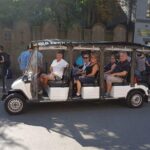
This eco electric golf cart tour is built for an efficient overview: you glide between nearly 24 stops without the constant stops and starts of walking. You’ll bounce through both old-town energy and the Jewish quarter, with a mix of churches, squares, and synagogues, plus a live driver who keeps the story flowing.
I love two things most. First, the ride is practical: in cold weather, you can stay comfortable with blankets and heating mentioned in multiple rides. Second, it’s the kind of tour where the guide and audio work together, so you get clear explanations in English, and the tour has featured guides such as Olivia, Jacob, Natalia, Philip, and Oskar.
One possible drawback: seating can feel tight if your buggy is full, and audio can be hit-or-miss on a given day. There’s also a chance you’ll pass some major sights rather than go inside, so manage expectations if you’re hoping to enter every single stop.
In This Review
- Key highlights to know before you go
- Getting oriented fast: why this 90-minute buggy works in Kraków
- Finding the pickup: Parking 24H Old Town car park tip
- Church on the Rock (Skałka): the martyrs’ story you’ll remember
- Kazimierz market squares and churches: Plac Wolnica and the Lateran basilica
- Historic synagogues in a fast loop: Tempel, Kupa, Izaak, High, Old
- Popper and Remah: bookshop reuse and an active congregation
- Podgórze and the ghetto memory route: Ghetto Heroes Square and the Eagle Pharmacy
- Schindler’s enamel factory, old ghetto wall, and St. Joseph’s Church
- Price and comfort: is the value fair for $28.88?
- Who this tour suits best (and who might want something else)
- Should you book? My quick take
- FAQ
- How long is the Kraków City Sightseeing Tour Eco Electric Buggy Golf Cart?
- Does the tour offer pickup in Kraków?
- Is the tour available in English?
- Do I get a mobile ticket?
- What’s the group size limit?
- Can I cancel for a full refund?
Key highlights to know before you go
- Warm and easy on your legs, especially on a winter day
- Nearly 24 stops across Kazimierz and Podgórze in about 90 minutes
- A strong focus on Jewish Kraków, including several historic synagogues
- WWII-era stops are handled with context, including the ghetto and nearby sites
- Guides like Olivia, Natalia, Jacob, Philip, and Oskar show up in this tour’s best feedback
- A bumpy moment is possible, since it’s an outdoor buggy ride
Getting oriented fast: why this 90-minute buggy works in Kraków
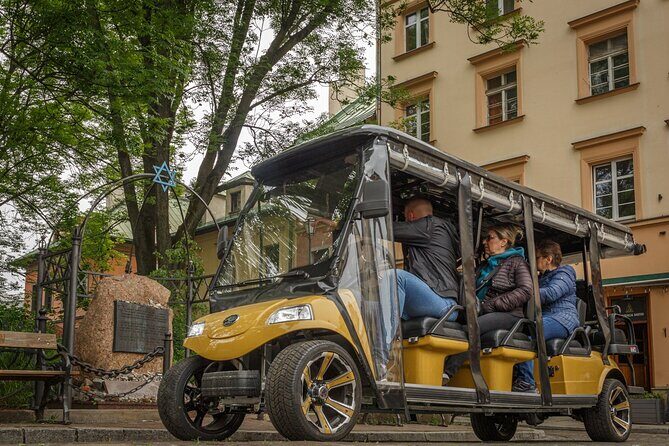
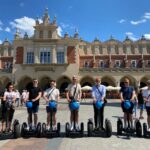
Kraków is one of those cities where you feel productive the moment you understand the neighborhoods. This tour is basically a shortcut to that understanding. You start at a clear meeting spot near the Old Town parking area, then you loop outward to Kazimierz and Podgórze, coming back to your starting point.
The timing matters. In 1 hour 30 minutes, you’re seeing a lot more than you’d get by walking at a steady pace, and you’re not stuck with the stress of plotting routes. It also helps if you’re doing other tours later, because you’ll return with a mental map you can actually use.
Group size is capped at 50 travelers, but comfort can still vary by how a specific vehicle is loaded. One review described a very cramped cart, so if you’re sensitive to tight seating, pick a less peak time if you can and consider traveling with fewer bulky layers.
You can also read our reviews of more city tours in Krakow
Finding the pickup: Parking 24H Old Town car park tip
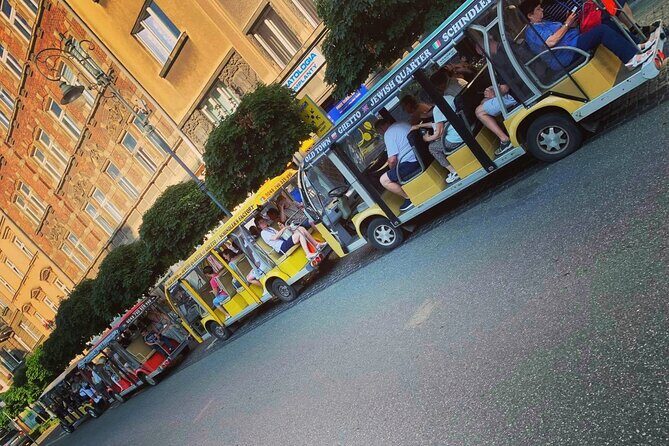
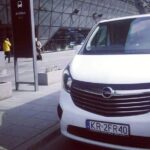
The meeting point is at Parking 24H Kraków old town car park, Mikołaja Zyblikiewicza 2, 31-029 Kraków, Poland. The tour ends back at the same place, so you’re not wondering where you’ll be dropped.
If you want a simple way to navigate there, use the local landmark approach from a guide’s tip: walk toward the wide main street of Westerplatte, then head to Zyblikiewicza Street just off it. The pickup is across from a Zabka shop. That small detail can save you time when the area is busy.
Once you’re on board, expect the driver to do the main guiding, with audio support. If you’re using the audio headsets, check early that you can hear clearly.
Church on the Rock (Skałka): the martyrs’ story you’ll remember
Your first stop is the Church on the Rock (Kosciol na Skalce), part of the Pauline monastery on Skałka. It’s a small outcrop with big symbolism, and it links Kraków to a dramatic event from 1079.
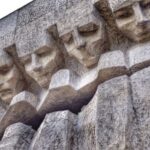
This is where you’ll hear about Saint Stanislaus of Szczepanów, who was slain by order of Polish King Bolesław II the Bold. The aftermath, including the king’s exile and eventual canonization, turns Skałka into more than a pretty church stop. It’s a “why Kraków is Kraków” lesson in one place, and it sets the tone for the rest of the tour: faith, power, and history all layered together.
Plan for a short visit here (about 10 minutes is typical in the schedule). If the weather is nasty, this early stop is a good moment to shake out photos quickly before the tour shifts to longer sight-bounce moments.
Kazimierz market squares and churches: Plac Wolnica and the Lateran basilica
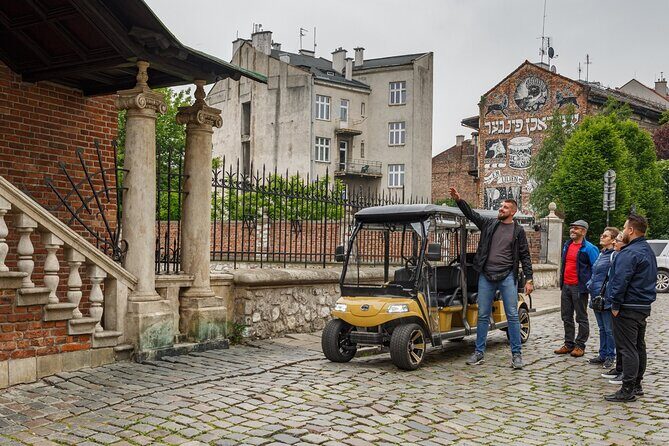
After Skałka, the tour heads into Kazimierz, where the streets feel like a second Kraków. The standout square is Plac Wolnica, tied to the original market functions of Kazimierz.
Here’s what makes Plac Wolnica worth paying attention to: it was created when Kazimierz was founded in 1335, and it carried trade and city administration roles that were once as significant as Kraków’s main market square. You’ll also learn why the name points back to the Latin Forum liberum, meaning free trade in meat outside stalls. It’s a practical history detail that helps the neighborhood feel real, not abstract.
Nearby, you’ll also encounter a monastery basilica that was built in stages from 1340 until the mid-15th century. It was designed as a monastery church, with a monastic cemetery beside it. In 1404, King Władysław II Jagiełło gave it to the Canons Regular of the Lateran congregation, which adds another layer of “who controlled what, when.”
A smaller stop in this area connects to the Libuszhof complex of streets and buildings, with the current shape shaped by regulatory projects in 1808 and 1844. Even if you don’t catch every detail from the seat, it’s the kind of context that makes the next stops easier to understand.
Historic synagogues in a fast loop: Tempel, Kupa, Izaak, High, Old
This is the heart of the tour for many people. You’re not just seeing buildings; you’re getting a quick, structured walk-through of the Jewish quarter through multiple synagogue identities.
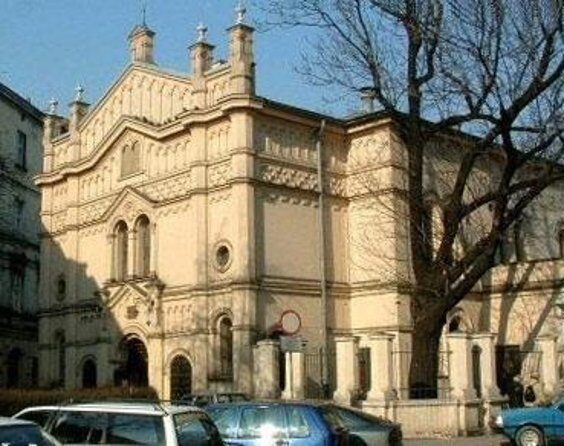
Tempel Synagogue is one key stop. It’s described not only as a major place of worship, but also as a center of Jewish culture with concerts and meetings, especially during festival time. That matters because it challenges the idea that historic synagogue life was only about prayer. It was also community, music, and public events.
Kupa Synagogue is another major stop. It’s a 17th-century synagogue in Kazimierz and served as one of the venues for religious ceremonies and cultural festivals, including the annual Jewish Culture Festival in Kraków. The location in the old Jewish quarter also ties it to the neighborhood’s development and relocation over time.
Then you’ll move through Izaak Synagogue (Isaak Jakubowicz Synagogue). It dates to 1644 and is named for its donor, Isaac the Rich, a banker to King Ladislaus IV. The design is credited to Italian-born Francesco Olivierri. When you hear the architect detail out loud, the building feels less like a generic “historic” stop and more like a specific project with known creators.
You’ll also see the High Synagogue, also called the Tall Synagogue. It’s inactive today and noted as the tallest synagogue in the city, built in Late Renaissance architecture. One detail worth holding onto: the prayer hall was upstairs, so its form has a functional reason, not just height.
Next is the Old Synagogue (also known as the Alta Shul in Yiddish). It’s described as the oldest synagogue building still standing in Poland and a crucial landmark of Jewish architecture in Europe. Pre–World War II, it was a central hub for the Kraków Jewish community’s religious, social, and organizational life. That’s heavy context, but it’s exactly why this tour is valuable: you’re not just looking at facades.
Popper and Remah: bookshop reuse and an active congregation
Two final synagogue-related stops round out the Kazimierz segment in a way that feels grounded.
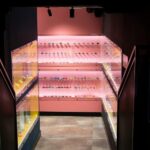
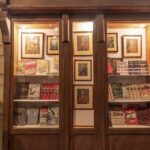
Wolf Popper Synagogue (also referred to as Bociana) is noted for its former ornate character, including decorative doors once showing four animals representing traits of a devout man. Today, it serves as a bookshop and an art gallery upstairs, including an art space in the women’s area. It’s the kind of transformation that helps you see continuity rather than only loss.
Then there’s the Remah Synagogue (Synagoga Remu), described as the smallest of the historic synagogues in Kazimierz and one of the two active synagogues in the city. It’s named after Rabbi Moses Isserles (ReMA), known for commentaries and additions that complement Rabbi Yosef Karo’s Shulchan Aruch. In practical terms, it means this building is not just an exhibit; it still fits into day-to-day religious life.
If you’re the type who wants to keep going after a tour, these synagogue stops set you up perfectly. You’ll know what to search for later and what questions to ask while you’re there.
Podgórze and the ghetto memory route: Ghetto Heroes Square and the Eagle Pharmacy
After Kazimierz, the tour turns toward Podgórze, where the tone shifts. The big marker here is Ghetto Heroes Square (Bohaterów Getta Square), which was known as Mały Rynek and later Plac Zgody. Between 1941 and 1943, this area was inside the Kraków ghetto, serving as a concentration point before deportations.
This stop is crucial because it’s specific. You’re not hearing a general lecture about WWII. You’re being guided to the physical places where daily life and forced movement collided.
Right at number 18 on the square is the Eagle Pharmacy Museum. This is one of the most practical, human-sized stories in the whole route. The pharmacy, run by Józef Pankiewicz and later his son Tadeusz Pankiewicz, is described as the only pharmacy within the ghetto borders and the only place where the proprietor had rights to stay. It also served both Polish and Jewish clients before the war, which helps you understand it wasn’t a symbol before it became one.
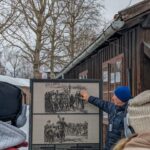
If you care about how history is explained, pay attention to how the driver frames it here. It can make the difference between feeling overwhelmed and actually understanding what you’re seeing.
Schindler’s enamel factory, old ghetto wall, and St. Joseph’s Church
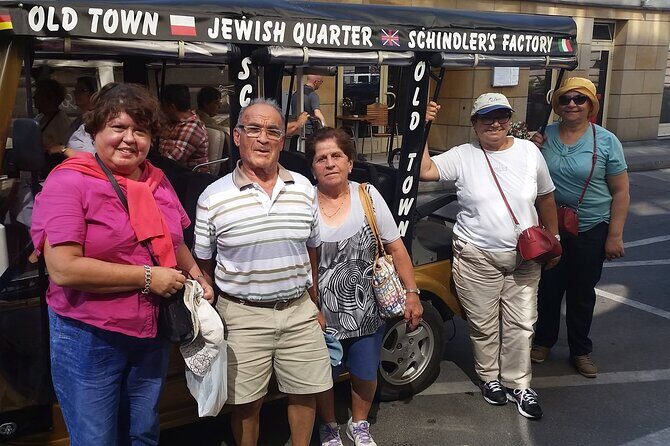
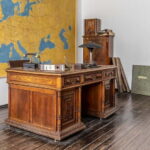
Next comes Oskar Schindler’s Enamel Factory, now home to two museums: a contemporary art museum in the former workshops and a branch of Kraków’s Historical Museum in the preserved administrative building. It’s tied to the storyline made famous through cultural memory, but the tour’s description keeps it anchored as a real factory site that later became museum space.
After that, you’ll pass the Old ghetto wall, another hard-but-important physical reminder. Walls are not just background in Podgórze; they’re part of how the city tells its story.
The final religious stop listed here is St. Joseph’s Church in Podgórze. It sits on Podgórski Square on the northern slopes of the Krzemionki foothills. This ending is useful because it gives you a calmer, architectural contrast after the WWII memory stops.
Price and comfort: is the value fair for $28.88?
At $28.88 per person for roughly 90 minutes, this tour is priced like a “smart use of time” outing. You’re paying for transportation, a guided loop, and a big concentration of stops that would take you much longer to piece together on your own.
The value improves if you care about comfort. Reviews mention warm gear like blankets and even heating inside the buggy. If you’re visiting in winter or shoulder season, that alone can justify the cost compared with a long walking day.
What might reduce value for some people is expectation matching. The format prioritizes lots of exterior stops, and while key sights are included in the route, not every big name may be toured inside. One report even mentioned that Schindler’s factory was only passed, not visited from within.
Here’s the practical way to decide: if you want a guided orientation and you’re okay with short, stop-and-look moments, this is a strong deal. If you want a ticketed, inside-the-building crawl of every major site, you might want a separate museum-focused plan too.
Who this tour suits best (and who might want something else)
This buggy tour fits you if you:
- Want a quick map of Kazimierz and Podgórze
- Prefer resting your legs while still learning real context
- Like hearing stories tied directly to named places like Plac Wolnica, the Tempel Synagogue, Ghetto Heroes Square, and the Eagle Pharmacy
It may not be your best choice if you:
- Hate tight seating and fear a bumpy ride
- Are expecting to enter every stop, especially major museums
- Want the classic Old Town and castle highlight reel rather than a neighborhood-focused route
It’s also a solid choice for solo travelers who don’t want to do everything alone. The group format can help you meet people, and you’ll likely hear different travel questions and photo tips during the ride.
Should you book? My quick take
I’d book this tour if your goal is understanding Kraków by neighborhood without spending your whole day walking. The mix of places is unusually focused, especially the sequence of Kazimierz synagogues and the Podgórze WWII memory route.
Do it earlier in your trip if you can. One of the best pieces of advice from riders is that an early tour gives you bearings for the rest of your days. And if you’re going on a very cold day, this is the kind of ride where you can stay warm and still feel like you did something meaningful.
Just keep your expectations practical: it’s a tour with many stops, not a guarantee of entering every attraction.
FAQ
How long is the Kraków City Sightseeing Tour Eco Electric Buggy Golf Cart?
It runs for about 1 hour 30 minutes.
Does the tour offer pickup in Kraków?
Yes. Pickup is offered, and the meeting point is at Parking 24H Kraków old town car park, Mikołaja Zyblikiewicza 2, 31-029 Kraków.
Is the tour available in English?
Yes, it’s offered in English.
Do I get a mobile ticket?
Yes, a mobile ticket is included.
What’s the group size limit?
The tour has a maximum of 50 travelers.
Can I cancel for a full refund?
Yes. You can cancel up to 24 hours in advance for a full refund. If you cancel less than 24 hours before the start time, the amount paid is not refunded.