REVIEW · KRAKOW
Highlights of Krakow Bike Tour – Small group
Book on Viator →Operated by Cruising Krakow Bike Tours · Bookable on Viator
Krakow looks different from the saddle. This small-group ride links major sights in a smooth loop, with a smart mix of university streets, royal landmarks, and the WWII-era lanes of the former ghetto area. I especially like that it starts in the heart of the city at Rynek Główny and uses bike routes that make the day feel easy rather than frantic.
Two big wins: you get a flat, cruiser-friendly route that helps you cover real ground in about four hours, and the guide keeps the story moving with lots of stops that explain what you’re actually seeing. One thing to consider is that the route packs in many photo and history stops, so you may want extra time later if any site hooks you hard.
In This Review
- Key things to know before you go
- How the Krakow Bike Tour Fits Together in 4 Hours
- Getting Oriented at Rynek Główny (Main Market Square)
- Planty Park and the University Quarter: A Nice “City Core” Connection
- Barbican, Old City Walls, and the Logic of Krakow’s Defenses
- Jadwiga and Jagiello Monument: Royal History Without the Museum Overload
- St. Anne’s Church and Jagiellonian University Collegiate Church Area
- Wawel Castle: The Royal Seat You Actually Want to See
- The Vistula River Ride and the Transition to Darker Chapters
- Plac Bohaterow Getta and the Ghetto Borders
- Schindler’s Enamel Factory: Linking a Name to a Place
- Jewish Kazimierz Stops: Szeroka Street, Synagogue Area, and Cemeteries
- Little Market Square, Plac Nowy, and a Taste of Local Street Life
- The Lunch Break: What You Should Plan For
- How the Pace Feels (and Why the Stops Can Matter)
- Bikes, Comfort, and Who This Tour Works Best For
- Guides and the Small-Group Advantage
- Price and Value: What $36.28 Gets You
- The Best Way to Use This Tour on Your Krakow Trip
- Should You Book This Krakow Bike Tour?
- FAQ
- Where is the meeting point for the Krakow bike tour?
- How long is the tour and what language is it in?
- What’s included in the price?
- Is lunch included?
- How big is the group?
- Are the bikes suitable for children?
- What if the weather is bad?
Key things to know before you go
- Small group feel: maximum 15 travelers, which helps you hear the guide and stay together.
- Flat-city cycling: built around easy roads for a relaxed pace.
- Full Krakow sweep: Old Town, the University quarter, Wawel Castle, and the former ghetto area.
- Long belt of parks: the ride uses the Planty area around the Old Town to connect neighborhoods smoothly.
- Lunch is on your own: you’ll pause for food, but the cost is not included.
- Bike comfort + support: bike rental is included, and you may find kid riders have helmet options.
How the Krakow Bike Tour Fits Together in 4 Hours
If you’re arriving with jet lag and big plans, this kind of tour can save you. Krakow’s main sights are spread out enough that a walking day can get tiring fast, but cycling lets you “see more city” without feeling like you’re power-walking from stop to stop.
The schedule is built like a guided route: start at the Main Market Square area, trace the city’s green ring around Old Town, reach Wawel, then follow the river toward the historical Jewish and ghetto areas before heading back. It’s also priced low enough that you’re not taking a huge risk on day one, especially since bike rental and a city guide are included.
You can also read our reviews of more cycling tours in Krakow
Getting Oriented at Rynek Główny (Main Market Square)
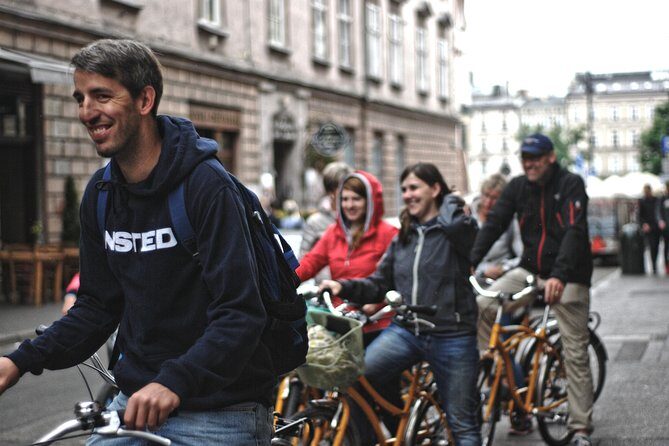
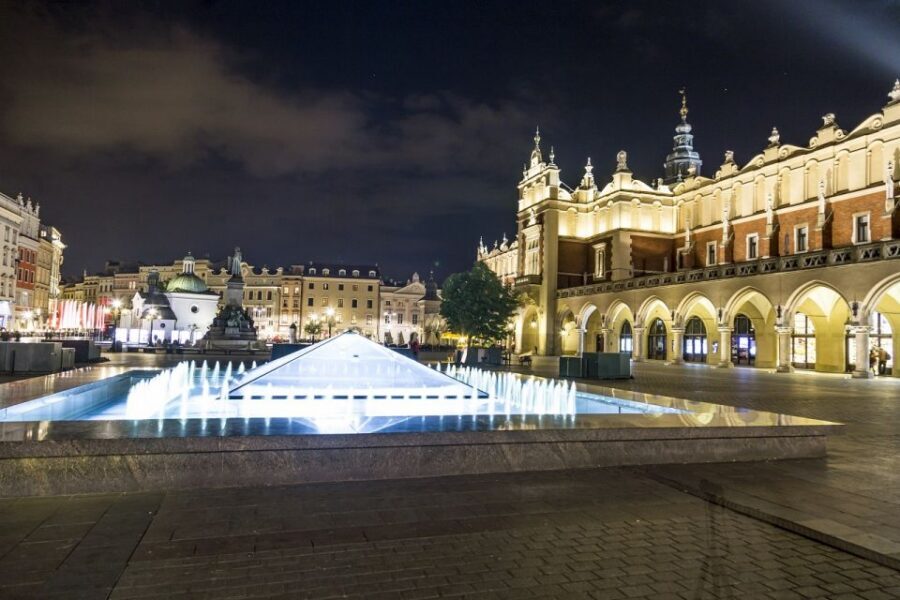
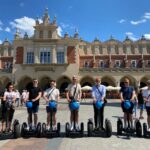
Most first-time visitors start with Rynek Główny, because it’s the iconic medieval heart of Krakow. Your tour begins at the Adam Mickiewicz Monument on Rynek Główny, so you get immediate bearings before you pedal a meter. This matters because the rest of the day depends on you understanding where you are in the Old Town grid.
At the central square, expect a quick orientation moment rather than a long lecture. You’ll get the kind of context that helps the rest of the city clicks into place—where the streets lead, why certain buildings matter, and what “Old Town center” means in practice. Admission isn’t required for the square itself, so you’ll spend your time moving.
Planty Park and the University Quarter: A Nice “City Core” Connection
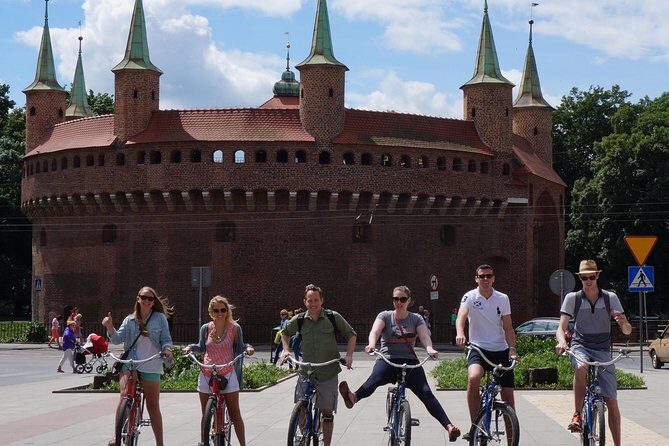
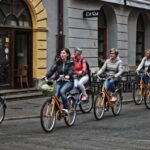
Once you roll out, you’ll cycle along Planty Park, the long park belt that surrounds the Old Town. This is one of those travel details that makes your day feel smoother. Instead of bouncing between distant points, you glide through a corridor that keeps the tour flowing and gives you breaks from dense streets.
From there, the tour heads toward Jagiellonian University, a major landmark tied to the founding of the university tradition in Krakow. You’ll also see points connected to the Collegium Maius courtyard and its clock. Even if you don’t care about universities, this stop is useful because it adds a “living Krakow” layer: the city isn’t only castles and squares; it’s also ideas, education, and daily life.
Barbican, Old City Walls, and the Logic of Krakow’s Defenses
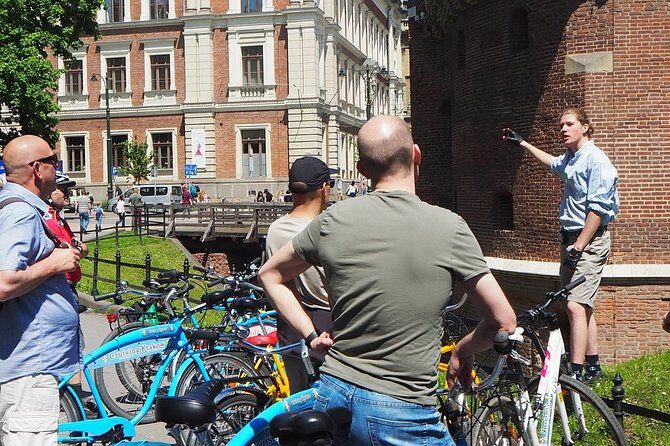
A good bike tour doesn’t just show you buildings—it shows you how the city worked. The route includes a stop for the Barbican and the Museum of Krakow area connected to the old city walls. These defensive structures can look like decorative stone until someone explains their purpose.
You get brief context on how Krakow protected itself and why certain wall-and-gate areas shaped the layout. This helps when you later wander on your own, because suddenly you’ll notice patterns you’d otherwise miss.
Jadwiga and Jagiello Monument: Royal History Without the Museum Overload
The tour also pauses at the Jadwiga and Jagiello Monument area, which connects to the history behind the Polish–Lithuanian Commonwealth. This is a smart use of time. A monument stop can be short, but it gives you a time anchor for the next big section: Wawel.
If you like history but don’t want to commit to long museum hours, this is a good compromise. You’ll understand why the royal story matters before you see the royal seat.
St. Anne’s Church and Jagiellonian University Collegiate Church Area
You’ll see the University Collegiate Church of St. Anne in Krakow, a stop that brings in Jewish historical threads in the broader Krakow context. Religious buildings can be hard to “read” from the outside, so the value here is that the guide ties the architecture to the city’s layered past.
Even if you don’t go inside (nothing is promised here), the stop helps you understand the neighborhood as something more than a scenic backdrop.
Wawel Castle: The Royal Seat You Actually Want to See
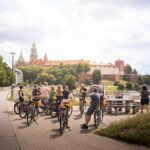
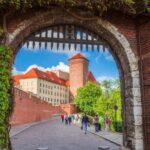
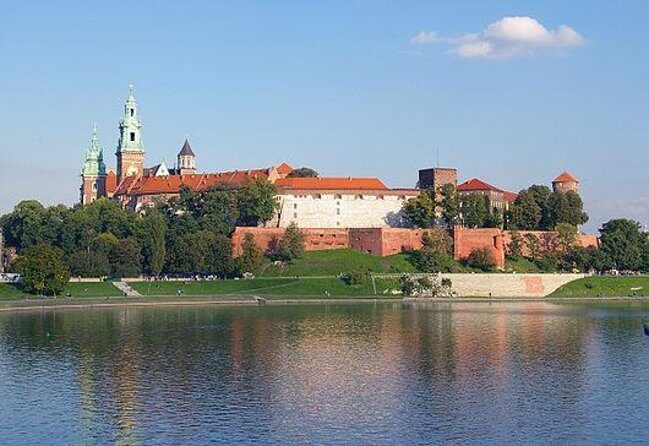
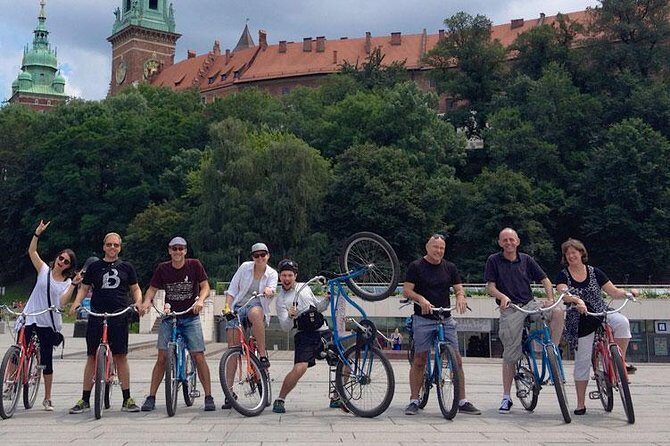
Wawel Royal Castle is the kind of name you hear everywhere for a reason. The tour includes a stop at Wawel, the long-time seat of Polish royalty and today a leading art museum.
This is where cycling pays off. You can approach Wawel from the “right” direction, see it as part of the day’s story arc, and still keep the momentum for the next sections. If you later want to return and go in, you’ll know exactly what you want to prioritize.
The Vistula River Ride and the Transition to Darker Chapters
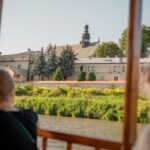
One of the most important parts of any Krakow tour is how it handles the transition from beauty to grief without making it heavy-handed. After Wawel, the route moves along the Vistula River before entering the Krakow ghetto area.
That river stretch does two things. It gives your legs a break, and it also creates a psychological shift—from royal Krakow to the wartime geography that people had to live inside.
Plac Bohaterow Getta and the Ghetto Borders
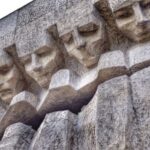
The tour then enters the WWII-era story through stops like Plac Bohaterow Getta and a ghetto wall fragment. These are not “random photo stops.” They help you grasp the physical boundaries that shaped daily life.
You’ll see remnants and markers tied to the Podgórze district and the ghetto borders. The practical value: once you’ve seen the boundary logic, it’s easier to understand later references you’ll hear in Krakow about how neighborhoods were separated.
Schindler’s Enamel Factory: Linking a Name to a Place
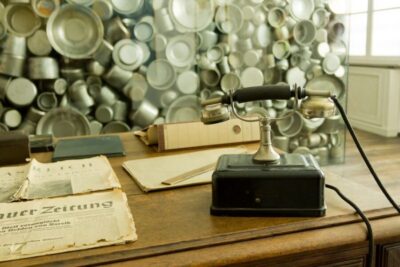
The route includes Oskar Schindler’s Enamel Factory as a stop in the same ghetto-related arc. Even if you don’t tour inside, you get the connection between a famous name and a real address in the city.
This stop tends to stick with people because it makes history feel specific. You’re not only hearing that something happened—you’re standing near a place tied to it.
Jewish Kazimierz Stops: Szeroka Street, Synagogue Area, and Cemeteries
After the ghetto stops, the tour moves into Kazimierz and its Jewish heritage areas with several key points.
You’ll pass places on Szeroka Street, then head toward the Old Synagogue area and see stops connected to Jewish cemeteries, including Remuh Cemetery and the New Jewish Cemetery. There’s also time set around the historic streets and squares that help you understand how Kazimierz functioned as a neighborhood rather than a single attraction.
A useful way to think about these stops: they’re not only about one era. They show layers—before the war, during it, and in how the city preserves memory afterward.
Little Market Square, Plac Nowy, and a Taste of Local Street Life
Before the tour turns back, you’ll also get stops in the more everyday parts of the area: Plac Nowy and the Little Market Square (Maly Rynek). These stops are great if you want to leave with a feel for where you might eat and wander after the tour ends.
Plac Nowy is also tied to the idea of casual food, and the tour’s timing makes it feel like a natural lead-in to your next meal plans.
The Lunch Break: What You Should Plan For
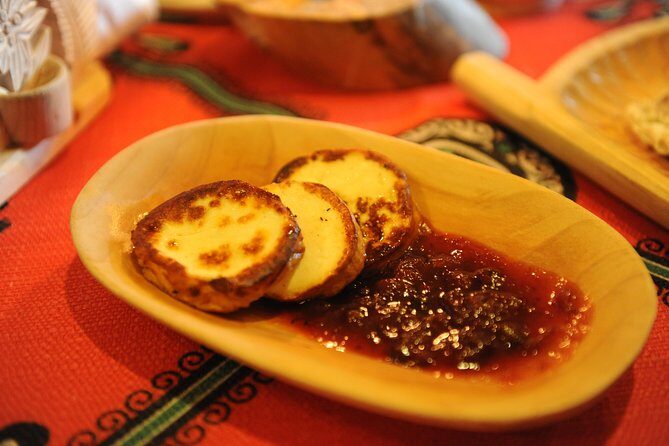
Lunch is a break in the middle, at an authentic Polish restaurant. Food and drinks are not included, so treat it like a normal meal stop rather than an included lunch.
This matters for your planning: bring cash or a card you can use in Poland, and be ready for a sit-down break even if you normally prefer “grab and go” travel days. The payoff is that you reset your energy for the return ride.
How the Pace Feels (and Why the Stops Can Matter)
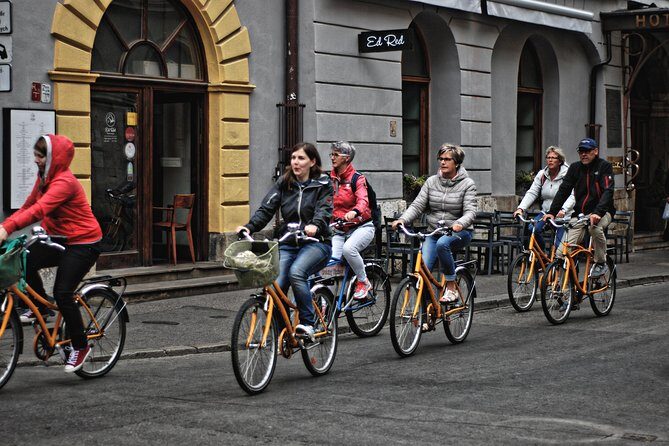
The full loop runs about four hours, and the route is designed so most riding feels non-demanding on flat roads. People also report it’s not overly strenuous, with a distance often around eight miles depending on pacing and stop time.
The trade-off is that the tour packs in many points. Some sights may be seen from the outside with brief explanations, so if you love one specific building or cemetery and want more time to linger, you’ll likely want to plan a later self-guided visit.
Bikes, Comfort, and Who This Tour Works Best For
Bike rental is included, and the tour is built for travelers who can handle a relaxed street ride. Bikes are suitable for children over 128 cm height, which is a helpful minimum if you’re traveling with teens or older kids.
What also helps: rain ponchos are provided if needed, and the route is structured around safer-feeling cycling corridors. Helmets for kids have been mentioned as available, so if you’re traveling with younger riders, it’s smart to ask what’s on hand at the start.
This tour is especially good if you:
- Want a first-day overview of Old Town + Wawel + Kazimierz + ghetto area
- Prefer bikes to walking because Krakow’s streets add up quickly
- Like learning as you go, with lots of short story stops
- Need a manageable day that still covers real city geography
Guides and the Small-Group Advantage
The small group size (up to 15) is the engine behind the “not rushed” feeling. When you’re fewer people, you hear the guide better and it’s easier for the group to stay together during quick stops.
Names come up in the real-world experience: guides like Mike and Zoey, and the guide dog Ramsey sometimes joins, adding a memorable, friendly touch. That detail isn’t about cuteness—it’s about atmosphere. It makes the day feel human, not like a script read to a crowd.
Price and Value: What $36.28 Gets You
At about $36.28 per person, the price lands in the sweet spot for a four-hour city orientation. You’re paying for four things at once: guided route, bike rental, the work of connecting many neighborhoods, and included rain gear.
You also get strong value because the tour covers both postcard sights and the heavy historical geography of the ghetto area. A cheap tour that skips context can leave you with questions; this one aims to give you the landmarks and the why behind them, so you can keep exploring afterward with more confidence.
The Best Way to Use This Tour on Your Krakow Trip
Think of this bike tour as a day-1 foundation. After it, you’ll know where the Old Town edges are, how to reach Wawel area on your own, and how to navigate toward Kazimierz and the former ghetto area without getting turned around.
Then, pick 1–2 stops you want to revisit longer. The tour is great at orientation and first exposure, but Krakow rewards repeat visits.
Should You Book This Krakow Bike Tour?
Book it if you want an efficient, comfortable way to see major Krakow highlights without wearing out your feet. The flat riding, small group size, and the way the route stitches together Rynek Główny, Planty, Wawel, and the Jewish Quarter make it a smart “get your bearings” move.
Skip it (or at least consider alternatives) if you’re the type who wants long museum time at a single site. This tour is about breadth and orientation. You’ll see a lot, but you may prefer to return later for the deeper dive at the places that really grab you.
FAQ
Where is the meeting point for the Krakow bike tour?
You meet at the Adam Mickiewicz Monument on Rynek Główny in Kraków (31-042).
How long is the tour and what language is it in?
The tour runs about 4 hours and is offered in English.
What’s included in the price?
Bike rental, a city guide, and a rain poncho if necessary are included.
Is lunch included?
Lunch is not included. There is a stop at an authentic Polish restaurant where you can relax and purchase your own food and drinks.
How big is the group?
The maximum group size is 15 travelers.
Are the bikes suitable for children?
The bikes are suitable for children over 128 cm height.
What if the weather is bad?
This experience requires good weather. If it’s canceled due to poor weather, you’ll be offered a different date or a full refund.