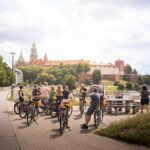
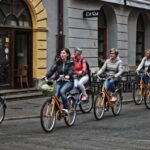
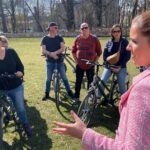
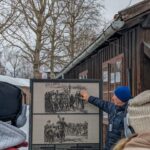
Two neighborhoods, one practical ride. This bike tour is a smart way to connect Krakow’s Kazimierz and Podgórze without feeling stuck in transit time. You’ll get story-driven stops tied to the film Schindler’s List and the realities of the WWII ghetto.
I especially like how the tour links place to story at the first stop in Kazimierz—Skalka basilica plus a short Schindler’s List introduction. It’s a quick hit, but it gives you a mental map for what you’re seeing and why it matters.
One possible drawback: the Kazimierz segment is short (about 15 minutes at Skalka basilica), so if you want to linger, you may need to plan extra time on your own.
In This Review
- Key things to know before you pedal Krakow
- Pedal-powered history in Kazimierz and Podgórze
- Meeting at Józefa Dietla 59 and what the timing means
- Kazimierz stop: Skalka basilica and the Schindler’s List intro
- Podgórze ghetto sites: Heroes Square, wall remnants, and resistance HQ
- Bikes, pacing, and why the small group matters
- English guiding and how you’ll experience the story
- Price and value: what $39.32 gets you
- Who should book this bike tour, and who should skip it
- Should you book Hidden Krakow Bike Tour?
- FAQ
- Is the Hidden Krakow Bike Tour offered in English?
- How long is the bike tour in Krakow?
- Where do I meet and where does the tour end?
- What time does the tour start?
- How big is the group?
- Are there admission tickets required for the stops?
- What is the cancellation policy?
Key things to know before you pedal Krakow
- A 3-hour English bike tour focused on two historic areas: Kazimierz and Podgórze
- Skalka basilica + Schindler’s List context to help you read the neighborhood faster
- WWII ghetto landmarks at Podgórze including Ghetto Heroes Square and wall remnants
- Free admission listed for the site stops, so you’re paying mainly for guiding and the ride
- A max group size of 15 people, which keeps the pace manageable and the vibe calm
Pedal-powered history in Kazimierz and Podgórze
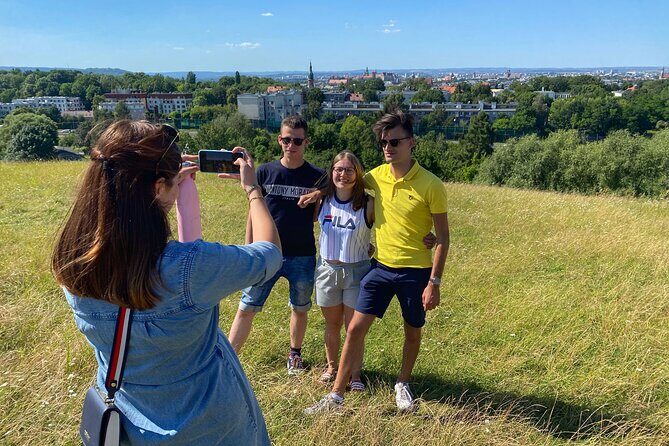
Krakow can be a lot on foot. Stairs. Crosswalks. Getting lost between “this is the right street” and “why does my map look different?” A bike tour solves that problem fast. You move through the city while your guide keeps the story line straight.
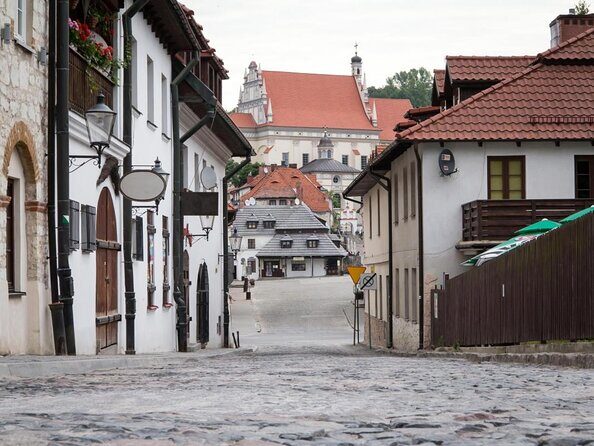
This one is built around two places that feel connected, but often get visited separately. Kazimierz is where you start, in the former Jewish district. Podgórze is where the WWII story gets heavy. The tour’s value is that it gives you context in real locations, not just general talking points.
You also get a small-group feel. The ride caps at 15 people, which matters on narrow streets and at stops where you want to hear the guide without straining.
You can also read our reviews of more cycling tours in Krakow
Meeting at Józefa Dietla 59 and what the timing means
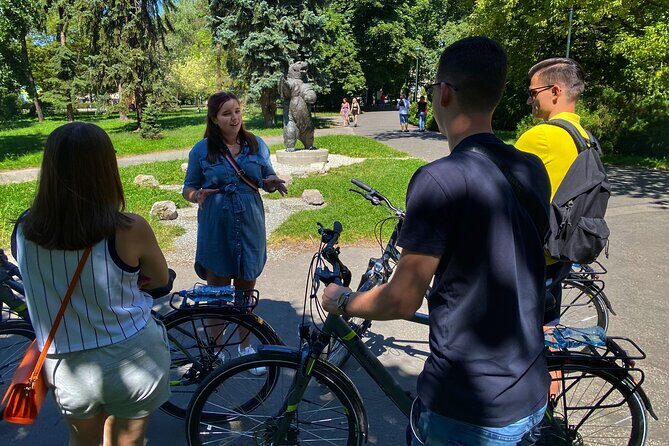
The tour starts and ends at Józefa Dietla 59, 31-054 Kraków, Poland, with the start time set for 2:00 pm. It’s about 3 hours total (approx.), so you’re not signing up for an all-day commitment.
That timing is important because it shapes the pacing. You’ll have short stops for key points, then more time where it’s most meaningful. For most people, that’s the right balance: enough time to understand what you’re seeing, without turning the tour into a slow crawl.
You also get practical support: it’s offered in English, and you receive a mobile ticket. The meeting point is near public transportation, which helps if you’re mixing this with other Krakow plans later in the day.
Kazimierz stop: Skalka basilica and the Schindler’s List intro
Kazimierz is your first big window into the stories of this city. The stop at Skalka basilica is listed at about 15 minutes, with free admission.
That short time might sound limiting, but it’s actually useful if you’re here for the bigger picture. A brief stop means you’re not stuck waiting on one building while the rest of the tour moves on. Instead, you get a quick orientation point, and your guide ties it to what you may already know from the film Schindler’s List.
This is where the tour earns its name Hidden Krakow—not by hiding everything, but by pointing you toward the “why” behind what you see. Once you’ve heard the Schindler’s List connection, the neighborhood starts to feel more readable. You’re less likely to treat it like scenery and more likely to treat it like a timeline.
Practical consideration: because this segment is brief, don’t expect a full deep visit of the basilica itself. If you’re the type who likes to sit for a while or study details at your own pace, you’ll probably want a return trip later.
Podgórze ghetto sites: Heroes Square, wall remnants, and resistance HQ
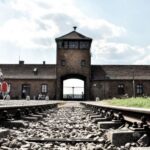
After Kazimierz, the tour shifts into Podgórze, focused on the WWII Jewish ghetto experience. This part is listed at 2 hours 45 minutes, again with free admission for the site stops.
The specific locations include:
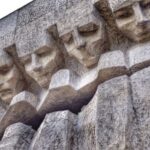
- Ghetto Heroes Square
- A remnant of the wall around the ghetto
- The former headquarters of the resistance
That mix is powerful because it covers more than one “angle” of the story. You’re not only looking at a memorial space or a single building. You’re seeing places that relate to resistance, identity, and the physical reality of confinement—plus a wall remnant that makes the boundary feel real.
Also, the guide’s narration style matters a lot for this topic. One guide name you might see on this tour is Nikki. In her approach, she connects WWII with later themes too, including communism. If that kind of connection interests you, you’ll likely like this tour format: guided interpretation that links eras without turning it into a textbook.
One more thing: Podgórze can feel emotionally intense. That’s not a reason to skip it. Just go in knowing the subject matter is serious, and plan to take your time processing it instead of racing to the next attraction.
Bikes, pacing, and why the small group matters
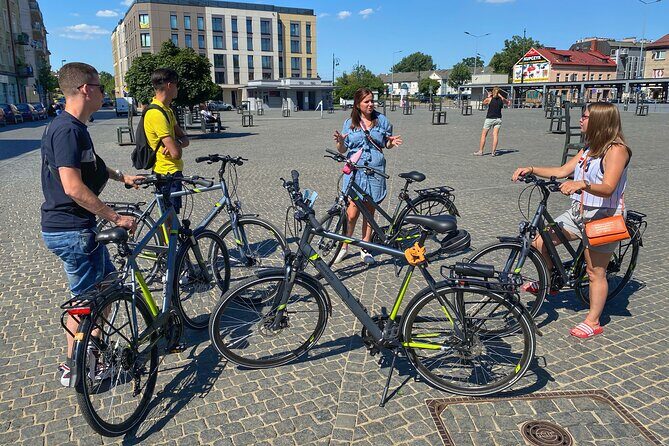
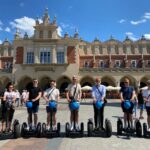
The ride itself is part of the experience here, and the practical details are a big reason the tour stays popular. People describe the bikes as comfortable and easy to ride, and they also mention feeling safe on the route.
With a group size capped at 15, it’s easier to keep things orderly. That matters if you’re not an everyday cyclist. You’re less likely to get separated into chaos, and the guide can slow down where the story requires a stop.
Comfort is also about timing. With only about three hours total, the tour has to “spend” that time wisely. You get a brief orientation in Kazimierz, then more time in Podgórze where the landmarks and explanation take longer.
If you’re comfortable on a bike for short city rides, you should be fine. And if you’re not a strong cyclist, you still benefit from the guided structure: you’re following a planned loop with a focus on safe movement between stops.
English guiding and how you’ll experience the story
This tour is offered in English, and guide personality clearly affects how enjoyable the ride feels. One guide named Bram Hoffman has been mentioned for being informative and fun, which is a great combo for history tours. You get the facts without the feeling of being lectured the whole time.
It helps that the itinerary is structured around specific places rather than vague neighborhoods. When you know you’re heading to Ghetto Heroes Square and the wall remnant, you can listen with purpose. The guide isn’t asking you to imagine; they’re pointing you at real points along the route.
Also, the fact that the tour includes a short Schindler’s List intro gives you a narrative doorway. Even if you don’t care about the film, that framing helps you understand why people talk about these streets the way they do.
Price and value: what $39.32 gets you
At $39.32 per person for about 3 hours, this tour is fairly priced for a guided bike experience in a major European city.
Here’s what makes the value work:
- You’re paying for guiding and logistics (bike setup, route planning, and interpretation in English)
- Key stops list free admission, so you’re not stacking up entrance fees on top
- You’re getting focused time in two areas with major historical weight—so the guide is saving you from doing all the research yourself
Compared with piecing this together alone, the savings come from not needing to figure out what to prioritize between Kazimierz and Podgórze. The tour gives you the “what to look at” list in motion.
There are also group discounts offered, and the tour is described as being booked about 14 days in advance on average, which suggests it’s a popular slot. If you know your dates, you’ll likely have an easier time if you book earlier rather than later.
Who should book this bike tour, and who should skip it
This is a good fit if:
- You want a short, efficient way to see two big Krakow districts
- You like learning at actual locations, not only from museum walls
- You prefer a small group and a practical ride over a crowded walking tour
- You’re okay with a historical topic that includes WWII ghetto sites, with the emotional seriousness that comes with it
You might want to skip it or add extra time elsewhere if:
- You need long, slow museum-style visits. The Kazimierz basilica stop is only about 15 minutes.
- You want a purely light, casual city ride. This tour has strong WWII themes right after the first stop.
If you’re visiting in the afternoon (it starts at 2:00 pm), this also pairs well with morning activities. You can use it as your “context-setting” tour, then explore on foot later with a clearer sense of what you’re looking at.
Should you book Hidden Krakow Bike Tour?
Yes, I’d book it if you want a tight, English-guided way to connect Schindler’s List context in Kazimierz with the WWII ghetto landmarks in Podgórze. The combination of small group size, comfortable bikes, and guides who keep the tone informative and engaging makes it a strong value at $39.32.
I’d hesitate only if you’re hoping for lots of time inside buildings—Kazimierz is brief by design. If you want to linger, plan to return after the tour.
FAQ
Is the Hidden Krakow Bike Tour offered in English?
Yes. The tour is offered in English.
How long is the bike tour in Krakow?
It runs for about 3 hours (approx.).
Where do I meet and where does the tour end?
You meet at Józefa Dietla 59, 31-054 Kraków, Poland, and the tour ends back at the same meeting point.
What time does the tour start?
The start time is 2:00 pm.
How big is the group?
The tour has a maximum of 15 people.
Are there admission tickets required for the stops?
The listed site stops include free admission tickets.
What is the cancellation policy?
You can cancel for a full refund up to 24 hours before the experience start time. If you cancel less than 24 hours before, the amount you paid is not refunded.