REVIEW · KRAKOW
Cracow: Guided Tour of Schindler’s Factory & Jewish Ghetto
Book on GetYourGuide →Operated by MyRide · Bookable on GetYourGuide
Krakow hits you with stories fast. This tour pairs Schindler’s Factory with a focused walk through Podgórze’s most emotional traces, so you’re not just reading history on walls. I love how the museum tour is guided by a live professional guide and how the walk outside keeps the context grounded in real streets. The one thing to consider is pacing: in about 3 hours, you’ll cover a lot, so if you want to linger for long stretches, you may wish you had extra time.
What makes it especially interesting is how the route connects daily life under Nazi occupation to specific surviving landmarks in the neighborhood. I also like the practical setup: tickets are included, and you skip the ticket line, which matters with a popular museum. The main drawback I’d flag is that you must plan paperwork carefully for entry, since names must match and you’ll need an ID or passport.
If you’re open to a serious, guided experience—plus a short but meaningful outdoor walk—this is a strong way to understand Krakow’s WWII-era Jewish story without getting lost or guessing.
In This Review
- Key things to know before you go
- Schindler’s Factory and Podgórze: why this pairing works
- Meeting at the factory: the pace of a 3-hour tour
- Inside Schindler’s Factory: what the guided visit adds
- Podgórze on foot: seeing the ghetto’s physical traces
- The Under the Eagle pharmacy stop (Pod Orłem)
- Heroes’ Square and the Empty Chair Monument (68 chairs)
- Guide quality and languages: getting real answers
- Price and value: is $58 worth it?
- Practical tips that make the tour smoother
- Who should book this tour?
- Should you book this tour?
- FAQ
- How long is the guided tour?
- What is included in the price?
- Where do I meet the guide?
- Is hotel pickup or drop-off included?
- Are food and drinks included?
- Do I need to bring identification for Schindler’s Factory?
- What languages are the tours offered in?
- Can I choose a start time?
- Is there free cancellation?
- Can I pay later?
Key things to know before you go
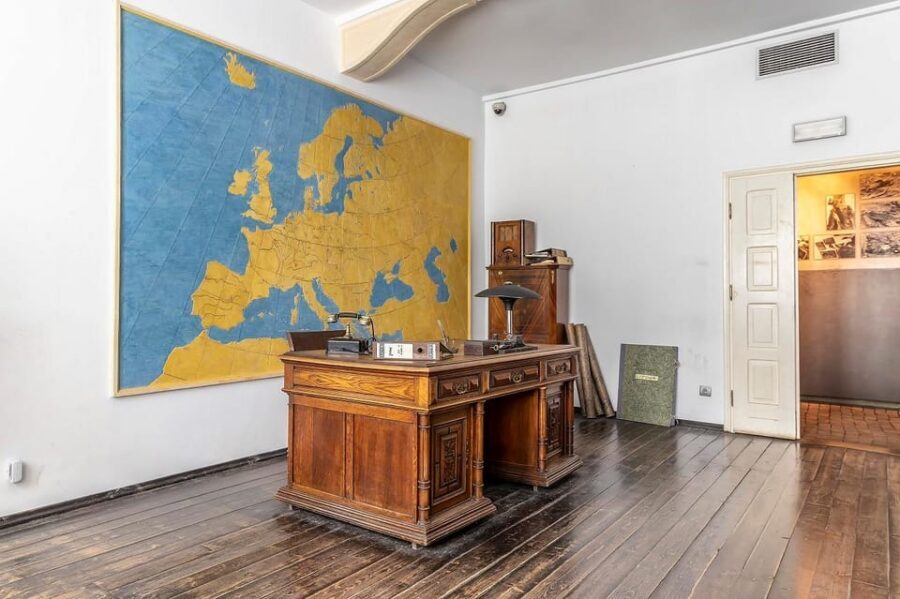
- Skip the ticket line at Schindler’s Factory, saving you time for the actual visit
- Guided museum entry with a professional guide and clear explanation of life under Nazi occupation
- Podgórze on foot: you’ll see the preserved ghetto wall segment and housing traces
- Pod Orłem (Under the Eagle) pharmacy: a famous landmark on the route
- Heroes’ Square Empty Chair Monument with symbolic 68 chairs
Schindler’s Factory and Podgórze: why this pairing works
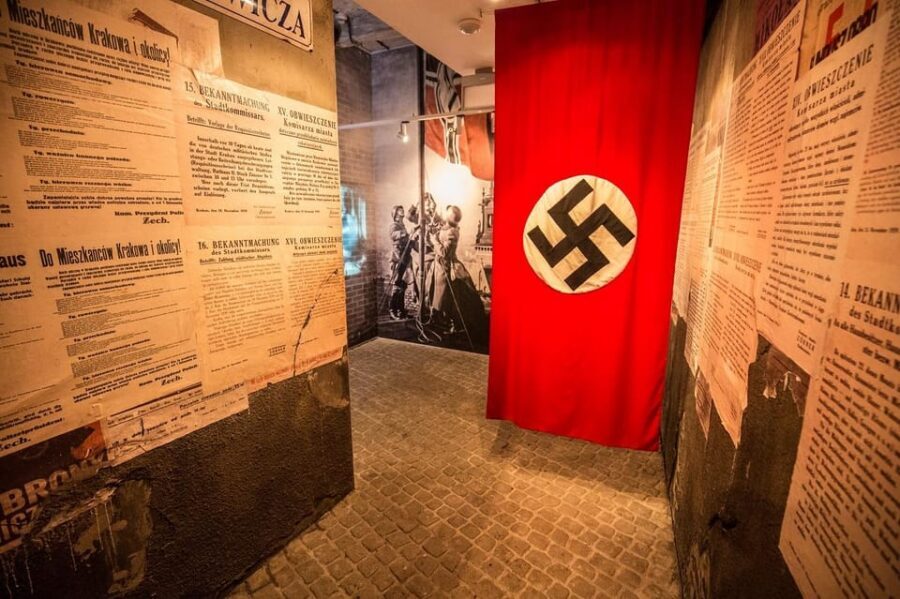
I like tours that connect dots. Here, you start at Oskar Schindler’s Factory museum, where the exhibit frames what Nazi occupation did to Krakow’s Jewish community, and then you step outside into Podgórze to see what’s still left in place. That shift—from exhibition panels to street-level remains—helps the story “stick.”
Schindler’s Factory is built around the idea that ordinary daily life can be changed instantly by terror, policy, and forced displacement. Once you walk Podgórze, you can better picture what those words meant in real time: homes, neighborhoods, and the boundaries of the ghetto shaping people’s movements.
The value of the route is that it’s not scattershot. Instead, you get a guided storyline, then a guided walk through the neighborhood traces that match that storyline.
You can also read our reviews of more guided tours in Krakow


Meeting at the factory: the pace of a 3-hour tour
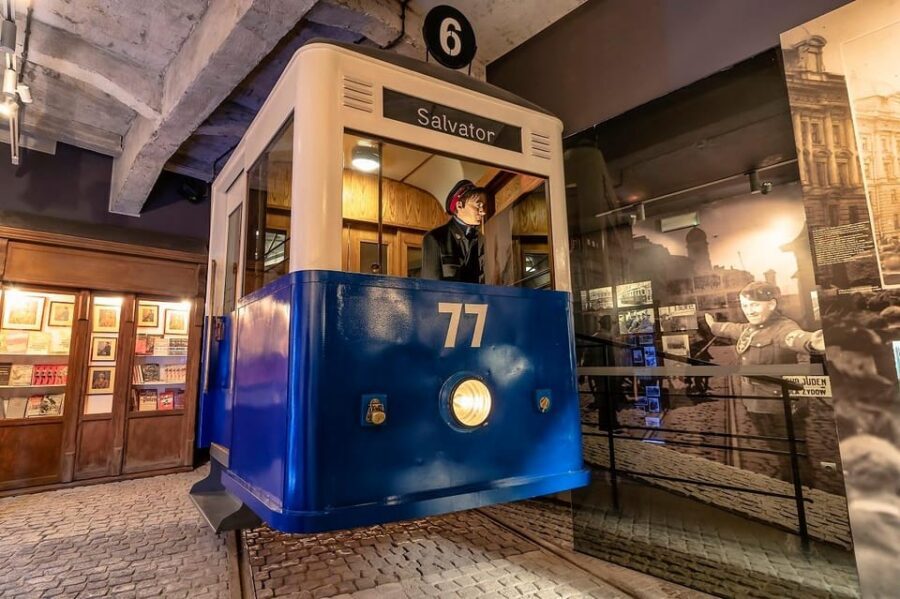
You meet in front of the main entrance to Schindler’s Factory Museum, with the excursions.city sign. Expect about 3 hours total, including the museum time and the walking portion.
Times can be approximate because museum scheduling can affect exact entry timing. You can pick a preferred start time, but the exact time isn’t guaranteed, so I suggest building in a little flexibility around your day.
Also, this is a guided experience, so the group moves at a steady pace. You’ll get stops you can’t easily find on your own, but you won’t have unlimited free time at each location. If you love museums and could spend hours alone, you’ll still get the core story here—just plan to return later if you want deeper reading.
Inside Schindler’s Factory: what the guided visit adds
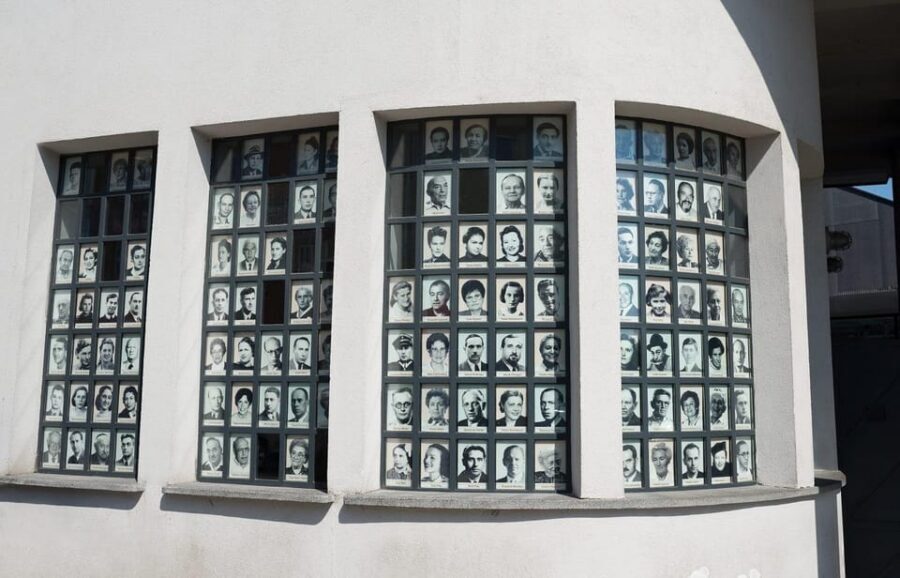
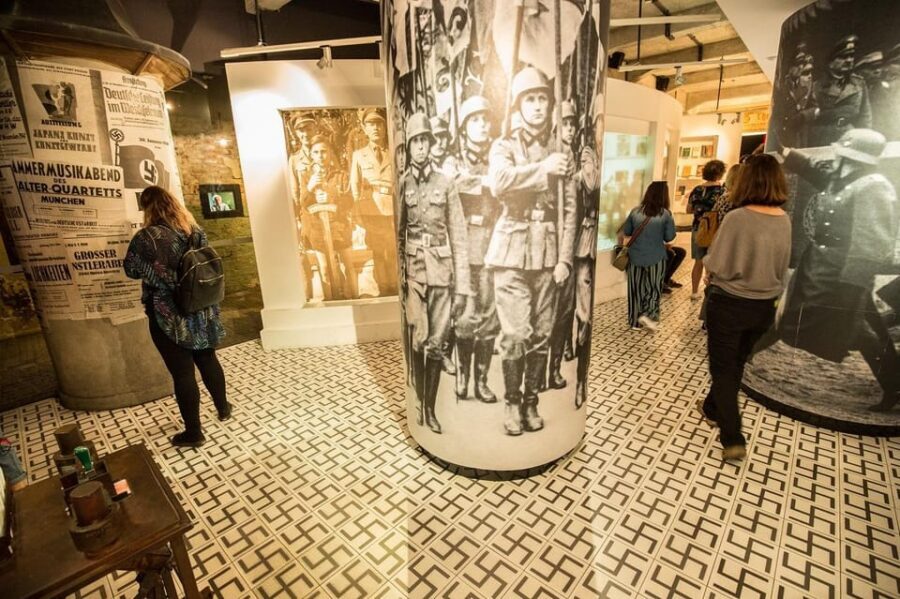
Schindler’s Factory is not just about one man’s story. It’s about the system around him and the people caught inside it, including how the occupation shaped everyday life—what people could do, where they could go, and what survival required.
With a live guide, you’re not stuck trying to interpret everything at museum pace. The guide helps you connect the exhibition content to the later street walk, including how the neighborhood’s layout reflects the forced segregation and displacement described inside.
One of the strongest reasons to choose this format is clarity. You’ll learn what the exhibition is pointing at and why certain artifacts and sections matter. That’s harder to do when you’re alone, because you can miss the “why” and only absorb the “what.”
Podgórze on foot: seeing the ghetto’s physical traces
After the museum, you walk through Podgórze, the area where so many people were displaced and forced to live under brutal conditions. This part of the tour is powerful because you can physically see the urban remnants that survived the war.
You’ll visit a preserved segment of the ghetto wall, plus residential areas where thousands of displaced Jews once lived. Those aren’t just “old buildings” anymore; they’re the setting for the daily realities the exhibit explained earlier.
I like that this walk doesn’t feel like a long lecture outside. It’s structured as a series of stops that give you enough context to understand what you’re looking at, without drowning you in facts. Still, it’s not a light stroll. It’s a memorial-focused route, so it helps to keep your phone away for long moments and really look.
The Under the Eagle pharmacy stop (Pod Orłem)
One stop that many people find unforgettable is the Pod Orłem pharmacy, often referred to as Under the Eagle pharmacy. It’s a landmark you can recognize easily once you’re there, and it anchors the story in a place that still exists in the present.
This stop works because it sits at the edge between past and present. You’re not just thinking about events that vanished. You’re looking at a real location that has carried forward into today’s city.
Even if you don’t know the history before you arrive, the guide’s explanation gives you the meaning behind the building and why it belongs on this route. If you’re the type who likes to connect “place names” to a story, this is a great one.


Heroes’ Square and the Empty Chair Monument (68 chairs)
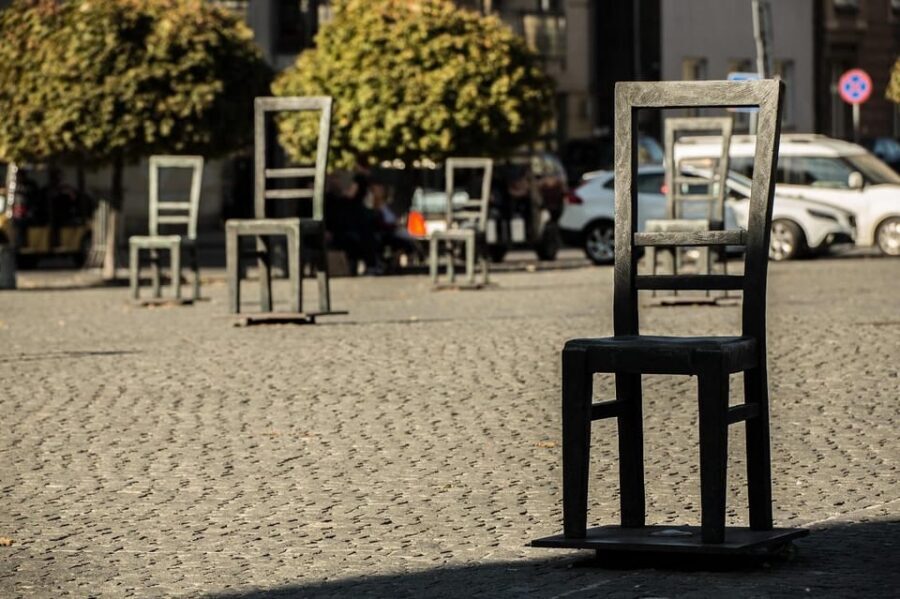
Next comes Heroes’ Square and the Empty Chair Monument, marked by symbolic 68 chairs. This is the kind of stop that shifts the tour from information into reflection.
Monuments like this are designed to make you stop and notice what’s missing—who isn’t there, and what loss means when it becomes policy and violence. The chairs give the memorial a human feel, which is exactly what makes the moment stick.
I also think this stop balances the earlier ones. The museum gives you context. Podgórze gives you geography. Heroes’ Square gives you a way to process it all without needing to say anything complicated.
Guide quality and languages: getting real answers
This tour includes a live guide and supports several languages: Italian, French, English, Spanish, and German. That matters, because the tour leans on interpretation—explaining what you’re seeing and why the details count.
On recent departures, guides like Margherita have been praised for being engaging and prepared, and Phill has also been highlighted for enthusiasm and a huge amount of information. You don’t need to hunt for the right questions on your own; your guide should help you understand what you’re looking at and what to pay attention to.
A quick tip: if your language is English or another supported option, ask yourself what you care about most—daily life, the ghetto’s structure, or Schindler’s role. A good guide can shape the story around what you want to understand.
Price and value: is $58 worth it?
At $58 per person for roughly 3 hours, you’re paying for more than a museum ticket. You get: museum admission, a professional guide, and a structured walking route with key stops.
The value is biggest if you hate wasting time. With skip-the-line entry, you avoid a common museum bottleneck. And with the guide, you’re not spending your limited time trying to figure out how to connect Schindler’s Factory themes to the right spots in Podgórze.
Could you do parts independently? Sure. But the “value math” here is about saved time and stronger understanding. You’re buying coherence: a guided storyline that turns a set of sites into one meaningful route.
If you only plan to spend 3 hours total in the area, this guided format is a smart way to get the main points without stretching your schedule.
Practical tips that make the tour smoother
A few things will help you avoid stress.
First, bring your ID or passport. From January 1, 2026, museum entry uses personalized tickets, so you’ll need to provide full names for all participants when reserving. Without the right documents, entry may be denied.
Second, pack for walking. The outdoor portion is part of the experience, and you’ll be moving between stops in Podgórze and Heroes’ Square. Wear comfortable shoes you trust.
Third, expect serious subject matter. This is not a sightseeing-only loop. I recommend keeping your pacing calm and giving yourself a moment to reset between the museum and the street walk.
Who should book this tour?
This works well if you:
- Want a guided introduction to Schindler’s Factory and Krakow’s WWII-era Jewish sites
- Prefer a short, structured route instead of figuring things out alone
- Like learning with context—museum first, neighborhood traces second
- Are comfortable with a reflective, memorial-focused experience
It may not be ideal if you want long free time at each stop or if you get uncomfortable with heavy historical themes. But for most first-timers who want a meaningful start, it’s a strong fit.
Should you book this tour?
I think you should book it if you want your Krakow time to feel purposeful. The mix of Schindler’s Factory guided explanation plus the Podgórze walk through surviving reminders gives you both context and place. And at $58 for a guided, ticketed, skip-the-line experience, it’s priced like something designed to protect your time.
If you’re the type who hates rushing and would rather read every panel at your own pace, you might want to pair this with a separate self-guided visit later. But as a 3-hour orientation to Krakow’s most important WWII Jewish sites, this is a practical, high-impact choice.
FAQ
How long is the guided tour?
It lasts about 3 hours.
What is included in the price?
You get tickets to the Schindler’s Factory Museum, a professional tour guide, and a walking tour.
Where do I meet the guide?
Meet the guide in front of the main entrance to Schindler’s Factory Museum, where you’ll see the excursions.city sign.
Is hotel pickup or drop-off included?
No, hotel pickup and drop-off are not included.
Are food and drinks included?
No, food and drinks are not included.
Do I need to bring identification for Schindler’s Factory?
Yes. You must bring a passport or ID for entry, and your reservation must include the full names of all participants.
What languages are the tours offered in?
The live tour guide is available in Italian, French, English, Spanish, and German.
Can I choose a start time?
You can choose a preferred time, but the exact time isn’t guaranteed because museum scheduling can affect it.
Is there free cancellation?
Yes. You can cancel up to 24 hours in advance for a full refund.
Can I pay later?
Yes. You can reserve now and pay later.