REVIEW · KRAKOW
Explore Katowice in 60 minutes with a Local
Book on Viator →Operated by LocalBini - The go-to platform for Experiences by Locals in Europe · Bookable on Viator
One hour is enough. In a small-group format, you’ll get a fast, focused look at Katowice’s key sights and how the city has shifted over time. The walk starts at the Archcathedral of Christ the King and ends near the Silesian Theatre, with stops that map out faith, architecture, civic pride, and culture.
I love that this is led by a local guide, not a script reader. You’ll hear city facts and get personalized recommendations you can use right after the tour. I also like the pacing—your guide adapts to your walking speed and interests, which matters a lot when you only have 60 minutes.
The main consideration: 60 minutes means you’ll be sampling the city, not fully unpacking it. If you’re expecting long, story-heavy stops instead of architecture-led explanations and quick context, you may want more time in Katowice.
In This Review
- Key things you’ll notice
- A one-hour Katowice plan that actually works
- Starting at the Archcathedral of Christ the King
- Goldstein Palace: when architecture tells a story
- Market Square: where local life shows up
- The Silesian insurgents tribute: pride you can’t ignore
- The Silesian Theatre: a culture stop with a finish line
- What you get from a local guide (and why it matters)
- Price and value: is $80 for one hour fair?
- Timing, walking comfort, and weather reality
- Who should book this Katowice 60-minute walk?
- Should you book this Katowice 60-minute walk?
- FAQ
- How long is the Katowice tour?
- What group size is this experience limited to?
- Where does the tour start?
- Where does the tour end?
- Is there a guide?
- What’s included in the price?
- What is not included?
- Do I get a ticket on my phone?
- Can I bring a service animal?
- Is confirmation provided after booking?
Key things you’ll notice
- Small group (up to 8): enough attention from your guide without feeling crowded.
- Architecture + local context: you’ll connect buildings to the city’s transformation.
- Market Square stop: a central place for day-to-day life and occasional markets.
- Silesian insurgents tribute: a powerful reminder of local identity and history.
- Silesian Theatre: a culture stop in a preserved historic venue.
- Guide-led recommendations: practical suggestions you can actually follow after the walk.
A one-hour Katowice plan that actually works

Katowice is a city that rewards quick orientation. This walk is built for that moment when you land, you’re short on time, and you want your bearings fast. With only about an hour, the tour stays tight: meet at one major landmark, move through a handful of important sites, and finish somewhere useful for the next part of your day.
What makes it a good “first-timer” experience is the mix of stops. You’re not just seeing pretty buildings. Each one connects to a different side of the city: religious life, architectural heritage, the everyday pulse of the center, a memorial tied to regional pride, and a cultural venue where performances happen.
The small-group size is a quiet advantage. In a group of eight, your guide can adjust to your questions and your pace instead of bulldozing everyone through.
You can also read our reviews of more tours and experiences in Krakow



Starting at the Archcathedral of Christ the King
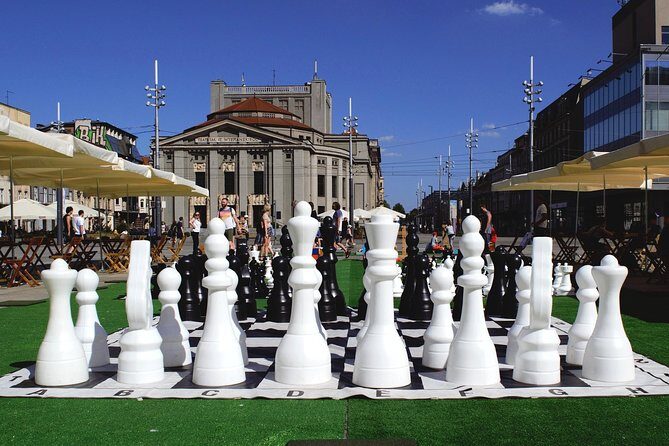
Your walk begins at the Archcathedral of Christ the King, a commanding religious site and Katowice’s main church landmark. Expect your guide to set the scene right away with context—how people think about this city, and what you’re going to see as you go.
This first stop is useful for two reasons. First, it gives you a strong visual anchor. Second, it helps you understand how Katowice views itself—spiritual and cultural identity shows up again and again later in the walk.
Practical note: cathedrals often make people want to slow down and look closely. The tour duration is short, so you’ll likely get just the right amount of explanation to appreciate what you’re seeing without getting stuck in one spot.
Goldstein Palace: when architecture tells a story
Next you’ll head to Goldstein Palace, described as an elegant historic building reflecting Katowice’s cultural heritage. If you like reading a city through its façades, this stop is right in your wheelhouse.
In a short tour, architecture stops can either feel rushed or satisfying. Here, the goal is connection: your guide links the building’s appearance to why it matters. Even if you’re not an architecture nerd, it helps to have someone point out what makes the building feel intentional—rather than just another pretty structure you pass on your own.
Possible drawback: because the tour is brief, the emphasis can lean toward buildings and city facts. One visitor felt the conversation centered more on architecture than on broader storytelling. If you want chatty, lifestyle-heavy details at every corner, this may not be your perfect match—but it is a solid way to understand Katowice’s visual language quickly.
Market Square: where local life shows up
Then you’ll stroll through Market Square, the heart of the city. This is where the tour shifts from landmark appreciation to everyday rhythm. Market Square is a practical stop because it’s the kind of place you’ll revisit on your own—coffee, people-watching, and the simple satisfaction of knowing where “the center” is.
Your guide will frame what you’re looking at so it’s not random. The square is where local life gathers and where periodic markets may happen, so the space tends to feel alive even when nothing special is scheduled.
This is also a good moment to ask quick questions. In an hour, the most valuable thing you can do is learn what you should do after the walk. If the guide shares insider recommendations here, you’ll have time to act on them while the city is still fresh in your mind.
The Silesian insurgents tribute: pride you can’t ignore
After that, you’ll pay respects at the monumental tribute to the Silesian insurgents. This stop is a clear pivot into local pride and regional memory.
Memorials can become background noise if you don’t have context. In this tour, the guide’s job is to help you read what the monument means to people. You’re not just looking at a sculpture or a stone landmark; you’re learning how Katowice’s identity is tied to the Silesian story.
Because this part of the tour is emotional rather than scenic, it’s also where your guide’s tone matters. In a short walking tour, you won’t get a full lecture—but you should leave with a better sense of why locals treat this site with seriousness.



The Silesian Theatre: a culture stop with a finish line
The walk ends at the Silesian Theatre, right at Rynek 10. This is a smart finish because it’s not a dead-end location. It’s a cultural beacon and a preserved historic venue, and it’s the kind of place where you can naturally continue your day—by grabbing a meal nearby or checking what’s on.
Your guide will point out why the theatre matters, and you’ll get a sense of Katowice as a city that invests in performances and public culture, not only monuments and institutions.
Finishing at a theatre also gives the tour a clean sense of closure. You start with a major religious landmark, and you end with arts and events—one city, two sides, same local identity thread.
What you get from a local guide (and why it matters)
The biggest value in this experience isn’t any single building. It’s the person guiding the walk. The tour is hosted by an independent local, and that means the explanations are designed for real visitors: short, clear, and tied to how you’ll move around the city later.
I especially like that the guide provides personalized recommendations. In practice, that’s often the difference between feeling like you “saw sights” and feeling like you learned where to go next. A guide’s local suggestions can steer you toward neighborhoods, sights, or activities that match your interests and time limits.
There’s also an extra touch that shows up in at least one guide style: one guide named Agnieszka was described as welcoming the group with typical Polish sweets. That’s small, but it adds warmth and makes the start feel more like a shared local introduction than a cold meet-and-go.
Price and value: is $80 for one hour fair?
At $80.14 per person for about an hour, you’re paying for three things: a local guide, a small group (up to eight), and a tight route that hits high-impact places without you doing navigation work.
Is it expensive? It depends on how you travel. If you hate planning and want a quick orientation with context, the price can feel reasonable because you’re buying time. For short stays, that can be a better deal than spending an extra day fumbling for “what matters” on your own.
Where the value can soften is the same place the tour is honest about itself: it’s brief. You’re not paying for a full day. You’re paying for a concentrated version of Katowice.
Also, keep expectations aligned: entry tickets for transportation, museums, and monuments aren’t included. The tour itself is the walk and interpretation, not paid museum access. That’s fine if you just want context and don’t plan to add extra ticketed stops.
Timing, walking comfort, and weather reality
This is a walking tour, and it’s short enough that you’ll likely do it all in one go. Still, comfort matters. The tour isn’t recommended for guests with impaired mobility, so if walking duration or uneven surfaces are an issue for you, this one may not fit.
Weather can change the experience. Stops may vary depending on conditions, so you could end up with a slightly different mix of what you see. When it’s cold, you’ll want layers and shoes you trust—Market Square and memorial areas are open spaces, and cathedral visits can involve standing and pausing for explanations.
A good strategy for a one-hour tour: treat it like sightseeing fuel. After you finish at the Silesian Theatre, use what you learned to decide where to go next—rather than expecting the walk to cover everything.
Who should book this Katowice 60-minute walk?
This tour is a strong fit if you:
- Want a fast Katowice orientation with minimal planning
- Prefer small-group interaction over large bus tours
- Like explanations tied to buildings, city transformation, and local meaning
- Need a starter route that lands you near a useful endpoint (the theatre area)
You might skip it (or consider adding extra time on your own) if you:
- Want a long, story-driven experience in one sitting
- Prefer museum time or ticketed interiors rather than exterior stops
- Have mobility limits that make walking tours hard
Should you book this Katowice 60-minute walk?
I’d book it if you’re in Katowice for a short window and you want your time to count. The route makes sense: it moves from a major landmark to architectural heritage, then into the civic core, a memorial with identity meaning, and finally a cultural venue to cap your day.
The biggest reason not to book is expectation mismatch. If you’re chasing a deep, slow, talk-everywhere style of tour, this one is more structured and time-boxed. But if you’re looking for a practical primer—facts, context, and recommendations—you’ll likely feel like you got more than just steps on a map.
FAQ
How long is the Katowice tour?
The tour runs for about 1 hour.
What group size is this experience limited to?
It’s a small group with a maximum of 8 travelers.
Where does the tour start?
The tour starts in front of the Archcathedral of Christ the King, at Plebiscytowa 49A, 40-041 Katowice, Poland.
Where does the tour end?
The tour ends at the Silesian Theatre, Rynek 10, 40-003 Katowice, Poland.
Is there a guide?
Yes. The tour is led by a local guide (hosted by an independent local).
What’s included in the price?
Included items are the local guide and a small-group experience, plus personalized recommendations.
What is not included?
Entry tickets for transportation, museums, and monuments are excluded, along with personal expenses.
Do I get a ticket on my phone?
Yes, the tour uses a mobile ticket.
Can I bring a service animal?
Service animals are allowed.
Is confirmation provided after booking?
You should receive confirmation at the time of booking.