REVIEW · KRAKOW
Guided Tour of Plaszow Concentration Camp, Kraków
Book on GetYourGuide →Operated by Hello Cracow · Bookable on GetYourGuide
Plaszow hits you fast. This isn’t a showy museum visit. It’s a guided walk across open ground where the history is explained through what remains: key buildings, memorial points, and the camp’s layout—so you can understand how the machinery of persecution worked.
I especially like how the tour is paced for reflection, not rushing through stops. I also love the way the guide connects Plaszow’s story to Schindler’s List—so you see how Oskar Schindler’s wartime choices relate directly to what happened here.
The main drawback to know upfront: there are few preserved buildings to look at. If you’re hoping for lots of original structures and photo backdrops, this place will feel more emotionally demanding than visually packed.
In This Review
- Key highlights you’ll care about
- Why Plaszow Feels Different in Kraków
- Starting the Walk: Grey House, Pre-Burial Hall Ruins, and Cemetery Traces
- The Roll-Call Square: Where the Camp’s System Comes Into Focus
- Memorial Stops You’ll Remember: Monument of Torn-Out Hearts and More
- The Camp’s Timeline in Plain Language: From Kraków Ghetto to Auschwitz Transit
- Schindler’s Connection: Work Permits, Plaszow Names, and Brünnlitz Survival
- Schindler’s List Filming Locations: What You’ll Recognize on the Ground
- Price and Value: What $29 Buys in Understanding
- Timing, Meeting Point, and How to Prepare for a Respectful Visit
- Who This Tour Fits Best
- Should You Book This Plaszow Tour?
- FAQ
- How long is the guided tour of Plaszow?
- What language is the tour in?
- Where do we meet for the tour?
- What’s included with the ticket?
- What will the guide help me see or understand at Plaszow?
- Does the tour include the Schindler story and Schindler’s List connections?
- Is the tour wheelchair accessible, and what about late arrivals?
Key highlights you’ll care about
- A respectful 2-hour route designed for quiet, not speed.
- Grey House, roll-call square, and memorial points explained in context.
- Monument of Torn-Out Hearts and other remembrance sites along the way.
- Traces of Jewish cemeteries, including paths with gravestone fragments.
- Schindler’s work permits and Brünnlitz transfer, tied to real survival stories.
- Schindler’s List filming locations pointed out so the film locations make sense.
Why Plaszow Feels Different in Kraków
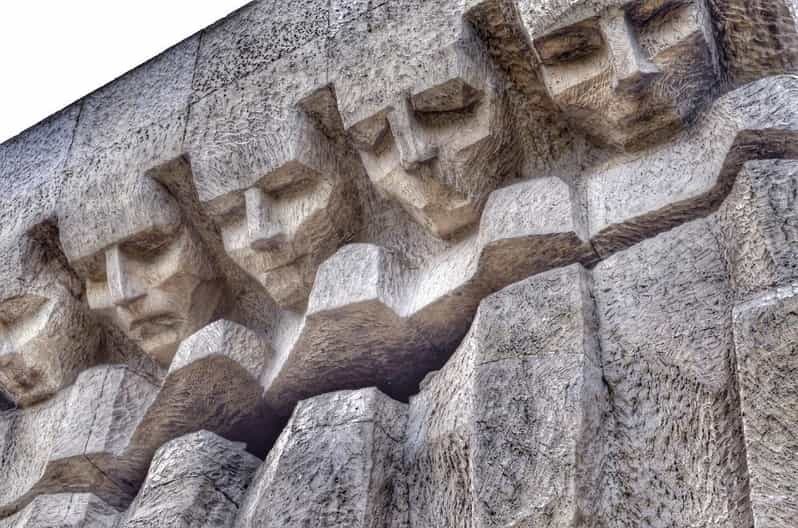
Plaszow Concentration Camp can be hard to process in the best way. It was established in October 1942 by Nazi German occupiers on the grounds of two Jewish cemeteries in Kraków. Over time, the camp’s purpose expanded and shifted: forced labor at first, then additional penal labor for Poles, later redesignated as a concentration camp, and eventually a transit stop for Hungarian Jews being sent onward to Auschwitz.
What makes this tour stand out is the kind of learning it encourages. With many WWII sites, you walk past intact structures and feel like you’re “looking at history.” Here, you’re walking through space that holds memory. That changes the tone. You’re not distracted by walls and exhibits. Instead, your guide helps you piece together the camp from traces—ruins, memorials, and the way areas were organized.
That’s why the tour’s slower pace matters. Plaszow asks for time. The route is explicitly built so you can stop, understand, and reflect rather than sprint from one point to the next.
You can also read our reviews of more guided tours in Krakow
Starting the Walk: Grey House, Pre-Burial Hall Ruins, and Cemetery Traces
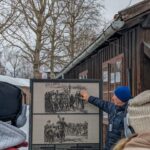
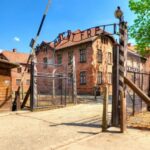
The tour begins with orientation, using the camp’s surviving markers to explain what life—and control—looked like here. One of the first anchors is the Grey House, a key reference point in the camp’s remains. Even if you don’t recognize it at first glance, the guide puts it into a bigger picture: how the camp was arranged and how different areas functioned.
From there, you’ll move to the ruins of the pre-burial hall. This isn’t just an architectural stop. It’s a moment where your guide helps explain what the camp did on the ground—where processing and death-related routines took place, and how the system was organized to operate.
Then comes the part many people find most unsettling because it’s so human-scale: traces of the Jewish cemeteries that stood here before the camp. You also walk along paths once paved with fragments of gravestones. That detail is more than a grim fact. It’s a reminder that this site wasn’t built on empty land. It was built over a place that already mattered to people with names, families, and roots.
If you’re someone who needs visuals to stay focused, this area may feel harder than you expect. But if you want understanding that’s grounded and specific, these cemetery traces do the work.
The Roll-Call Square: Where the Camp’s System Comes Into Focus
Next is the roll-call square, a space that helps you understand how order was enforced. Even without intact structures, your guide connects the dots: how the camp organized people, how routines were used for control, and how the daily system was enforced through repeated procedures.
This stop is also where a good guide makes the difference. You’re not just looking at a location. You’re learning why locations like this existed and what they were designed to do. The goal isn’t to overwhelm you with names or dates in rapid-fire chunks. It’s to help you grasp the logic of the camp’s organization.
One more thing I value about this tour style: the guide continuously ties the physical spots to how the camp worked, including the way the camp was organized into sections with different functions—living, hospital, administrative, and industrial areas. When those categories are explained clearly, you start seeing the camp not as one big blur, but as a set of linked systems.
Memorial Stops You’ll Remember: Monument of Torn-Out Hearts and More
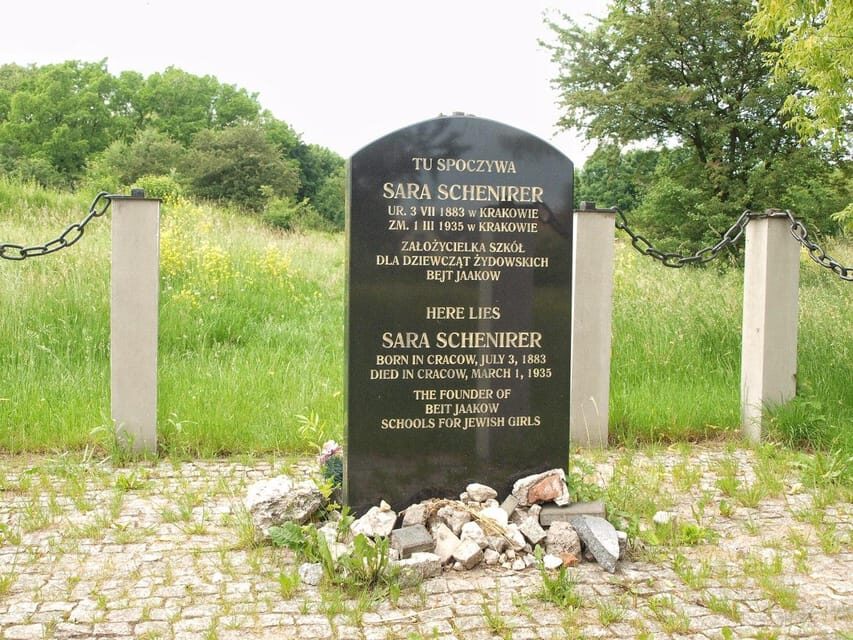
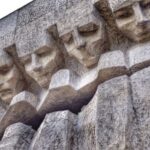
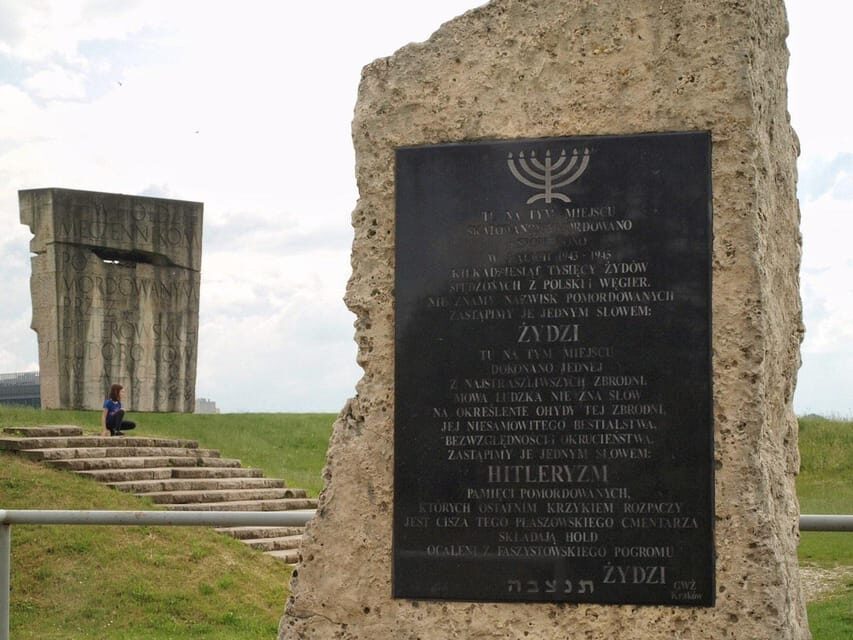
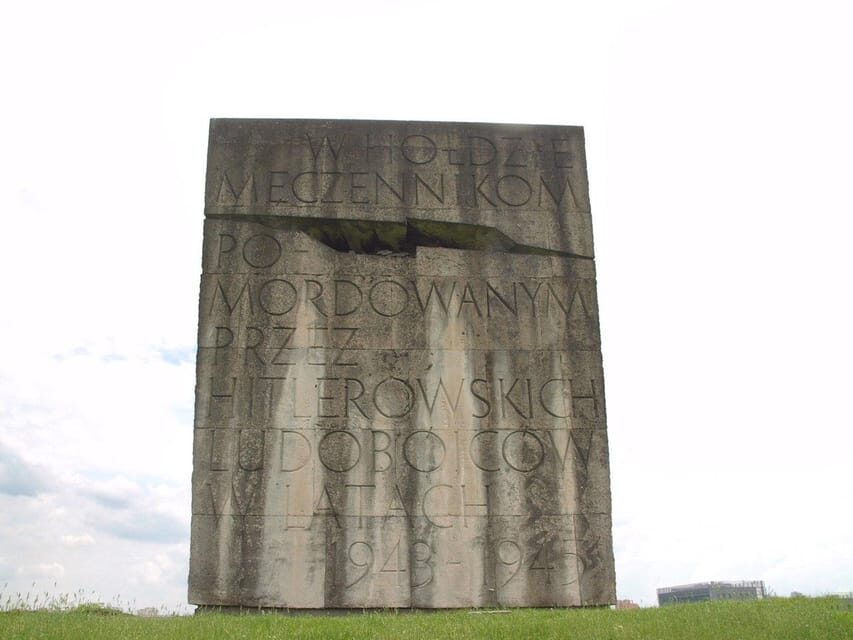
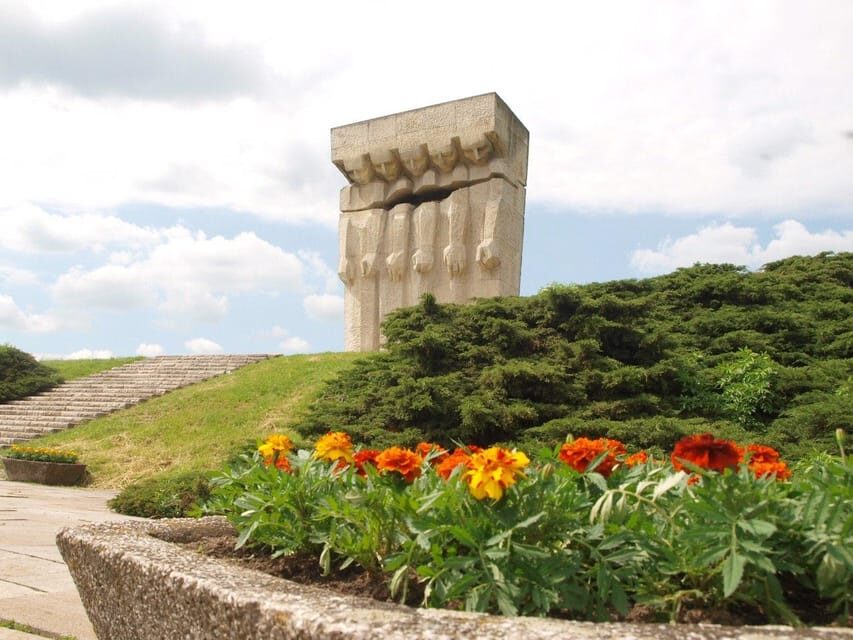
In many places, memorials can feel like afterthoughts. Here, memorial points are central. You’ll pause at major remembrance locations, including the Monument of Torn-Out Hearts. The guide helps frame what you’re looking at and why it matters, which is important because memorial art can be powerful but also easy to misread if you only skim it.
You’ll also encounter other memorials marking where executions and deaths took place. The camp had multiple execution sites within it, and today mass graves and memorials mark that reality across the area. That means the tour isn’t concentrated in one “final” point. You’re reminded repeatedly that this was a space built to imprison and kill.
This is where you’ll feel the emotional weight most strongly. There isn’t an easy way around that. The value is in how the tour handles it: a route paced for reflection, with the guide encouraging you to slow down and take in what’s in front of you.
The Camp’s Timeline in Plain Language: From Kraków Ghetto to Auschwitz Transit
Plaszow’s story isn’t static. The camp’s role changed across the war, and the guided walk helps you follow those shifts without getting lost.
Here’s the timeline you’ll hear explained in the context of the places you visit:
- October 1942: Nazi German occupiers establish the camp on former cemetery grounds.
- Forced labor begins: it starts holding Jews from the liquidated Kraków Ghetto.
- July 1943 expansion: a penal-labor section begins holding Poles as well.
- January 1944: it’s redesignated as a concentration camp.
- Later function: becomes a transit camp for Hungarian Jews sent to Auschwitz.
Hearing it this way—tied to real locations—helps the timeline feel concrete. You stop thinking of Plaszow as a label and start thinking of it as a machine that evolved. That evolution helps explain why the camp’s footprint is emotionally complicated: it wasn’t one uniform “thing” for the whole war. It adapted to shifting Nazi priorities.
Schindler’s Connection: Work Permits, Plaszow Names, and Brünnlitz Survival
One of the most important threads you’ll take away is Oskar Schindler and how his actions connect directly to Plaszow.
Your guide explains that Schindler’s enamelware enterprise helped him obtain work permits for Jewish prisoners registered through Plaszow. Those permits weren’t magic. They were administrative weapons of survival—paperwork that could shield people from being sent on further transports.
Later, Schindler organized the transfer of these people to his wartime plant in Brünnlitz, saving over a thousand lives. The guide treats this part of the story as inseparable from the history around it, not as a separate “feel-good” side note.
I like how this element is handled in a tour like this, because it changes how you process the site. You’re still facing the brutality of Plaszow, but you’re also shown how individual choices mattered inside an environment built to remove choice.
Schindler’s List Filming Locations: What You’ll Recognize on the Ground
If you’ve seen Schindler’s List, you’ll probably notice that the film’s settings line up with real places—at least in feel, and sometimes in direct filming locations.
This tour points out the filming locations connected to Schindler’s List. That’s useful because it does two things:
- It keeps you from relying only on movie memory, which can blur details.
- It helps you understand what the film borrowed from the real geography, even though you’re walking a memorial site, not a movie set.
Important note: this isn’t about turning history into entertainment. It’s about using what you recognize as a doorway into understanding the real location behind it.
Price and Value: What $29 Buys in Understanding
At $29 per person for a 2-hour guided walk, the value comes from the interpretation. Plaszow can be overwhelming, and the difference between a self-guided walk and a guided one is the difference between vague impressions and real comprehension.
You’re getting:
- a licensed guide who explains the camp’s layout and changing role over time
- a single tram ticket included
- an English live guide delivering the route with reflection in mind
Two hours is also a smart length for a site like this. Too long can turn a memorial visit into numbness. Too short can feel like you barely touched the key points. A paced 2-hour route gives you a workable balance.
You should also know you’re paying for clarity. For a place with few preserved structures, your guide’s ability to connect traces to meaning is the product.
Timing, Meeting Point, and How to Prepare for a Respectful Visit
You’ll meet at the start by looking for the guide with the excursions.city sign. Try to arrive 10 minutes early so you don’t miss the departure. Once the group leaves, latecomers won’t be able to join, and tickets can’t be refunded. Plan your tram timing with that in mind.
Because this is a Holocaust memorial site with mass graves and execution-linked locations, keep your expectations grounded. Wear comfortable shoes, plan on quiet moments, and bring whatever helps you stay present—water, a hat if it’s sunny, and a headspace that’s ready to learn without rushing.
Also note the tour runs in English only, in one language. If you need another language, you’ll want to check availability for that specifically.
Who This Tour Fits Best
This is a strong fit if you:
- want a guided approach that explains Plaszow’s timeline and organization clearly
- appreciate memorial visits that feel respectful and reflective
- have seen Schindler’s List and want help connecting film locations to real geography and history
- value a guide who handles questions patiently and can explain details in an understandable way
It may not be the best fit if you:
- want a “see lots of buildings and take photos” kind of experience
- prefer lighter historical topics (this site is emotionally heavy)
Should You Book This Plaszow Tour?
Yes, if you’re open to learning through the camp’s traces and memorial points instead of preserved buildings. A guided walk here is the difference between walking through a place you recognize vaguely and understanding what Plaszow actually was—forced labor, penal labor, concentration-camp redesignation, and transit to Auschwitz.
Book it if you want a 2-hour format that slows down when it matters, highlights memorials like the Monument of Torn-Out Hearts, and connects the site to Schindler’s work permits and the Brünnlitz transfers. If you’re craving visual intensity, you might be disappointed. But if you want real comprehension and a respectful pace, this is an excellent use of your Kraków time.
FAQ
How long is the guided tour of Plaszow?
The tour lasts 2 hours.
What language is the tour in?
The live tour guide speaks English, and it’s only offered in one language.
Where do we meet for the tour?
Meet at the start by looking for the guide with the excursions.city sign.
What’s included with the ticket?
Your ticket includes a licensed guide and one tram ticket.
What will the guide help me see or understand at Plaszow?
You’ll learn about the camp’s story and see key areas such as the Grey House, the ruins of the pre-burial hall, traces of the Jewish cemeteries, the roll-call square, and memorial stops including the Monument of Torn-Out Hearts.
Does the tour include the Schindler story and Schindler’s List connections?
Yes. You’ll hear how Oskar Schindler used work permits to protect prisoners registered through Plaszow and how the transfer to his plant in Brünnlitz saved over a thousand lives. The tour also includes Schindler’s List filming locations you can recognize.
Is the tour wheelchair accessible, and what about late arrivals?
The tour is wheelchair accessible. You should arrive 10 minutes early; once the group departs, latecomers can’t join and tickets can’t be refunded.