REVIEW · KRAKOW
Kazimierz, Schindler’s Factory & Ghetto Guided Tour
Book on GetYourGuide →Operated by INTERCRAC Ltd. · Bookable on GetYourGuide
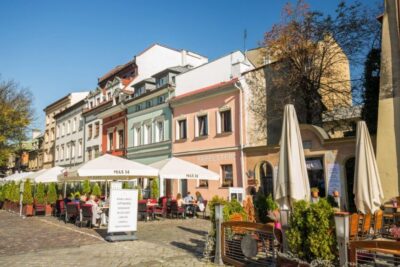
Kazimierz has a way of slowing you down. This tour connects Kraków’s old Jewish streets with the WWII story that followed, using walking distance and clear context so the past feels real. You start in the historic heart of Kazimierz and work your way toward the former ghetto area in Podgórze.
I especially like the guided pacing through multiple key places, from synagogues and cemeteries to ghetto landmarks. I also like the Schindler’s Factory fast-track museum visit, because it turns a famous name—Oskar Schindler—into specific stories of people he helped.
One possible drawback: the experience includes tight, turning passages and indoor sections where group size matters. Even with the audio setup, if the group reaches the full 25-person limit, the route can feel crowded and a bit stressful in narrow spaces.
In This Review
- Key points before you go
- Entering Kazimierz: starting where the story still feels close
- Szeroka Street and the synagogues that frame the day
- Plac Nowy: a living square after a heavy narrative
- Schindler’s Factory: how a famous name becomes a human story
- Podgórze ghetto walls and Ghetto Heroes Square
- What the price gets you: value in a 5-hour format
- Timing, group size, and why the day can feel tight
- Languages and guided storytelling that matters more than you think
- Who this tour fits best (and who might want something else)
- Should you book the Kazimierz, Schindler’s Factory & Ghetto tour?
- FAQ
- Where is the meeting point?
- How long is the tour?
- Is Schindler’s Factory admission included?
- What languages are available?
- What’s the maximum group size?
- Do I need a ticket name for entry?
- Is food included?
- What is the cancellation policy?
- How will weather affect the tour?
Key points before you go
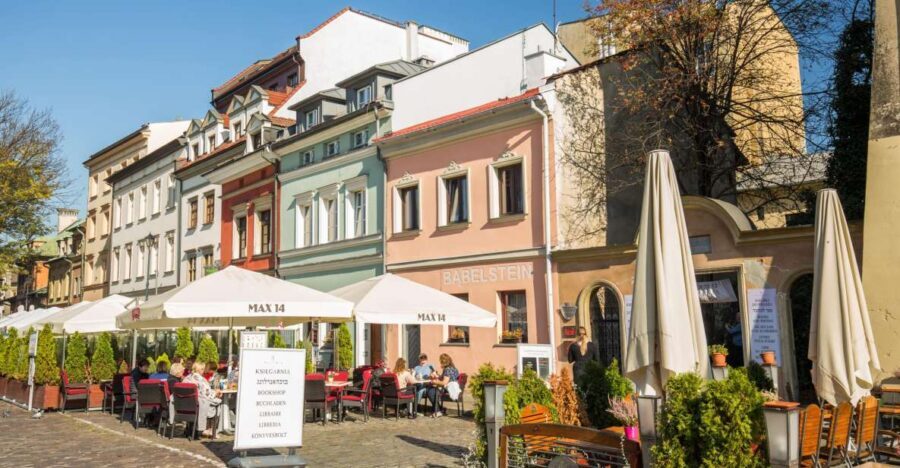
- Old Synagogue start: meeting right at the steps of the Old Synagogue keeps things easy to find.
- Kazimierz stops that explain daily life: Szeroka Street, Remuh, Kupa, Tempel, and Plac Nowy add texture beyond WWII.
- Schindler’s Factory with fast-track entry: no wasting time in ticket lines before you’re led into the museum.
- The ghetto story isn’t abstract: ghetto wall remnants and Ghetto Heroes Square ground the history in physical place.
- Small-group feel, but not tiny: maximum 25 people, and a single tour language per group.
Entering Kazimierz: starting where the story still feels close
You’ll begin on the steps of the Old Synagogue, with your guide holding a Kazimierz Guided Tour sign. That first moment matters, because Kazimierz isn’t a theme park version of Jewish Kraków—it’s a real neighborhood where faith, study, and community life have changed over centuries.
Kazimierz is often described as atmospheric, but what I like is how this tour keeps it practical. You’re not just looking at buildings—you’re learning how people lived in the same streets that now hold museums and active religious sites.
Plan on arriving at least 10 minutes early. Once the group has started, late arrivals can’t be accommodated, and entry tickets aren’t refundable—so treat it like a train departure, not a casual meeting.
You can also read our reviews of more guided tours in Krakow
Szeroka Street and the synagogues that frame the day
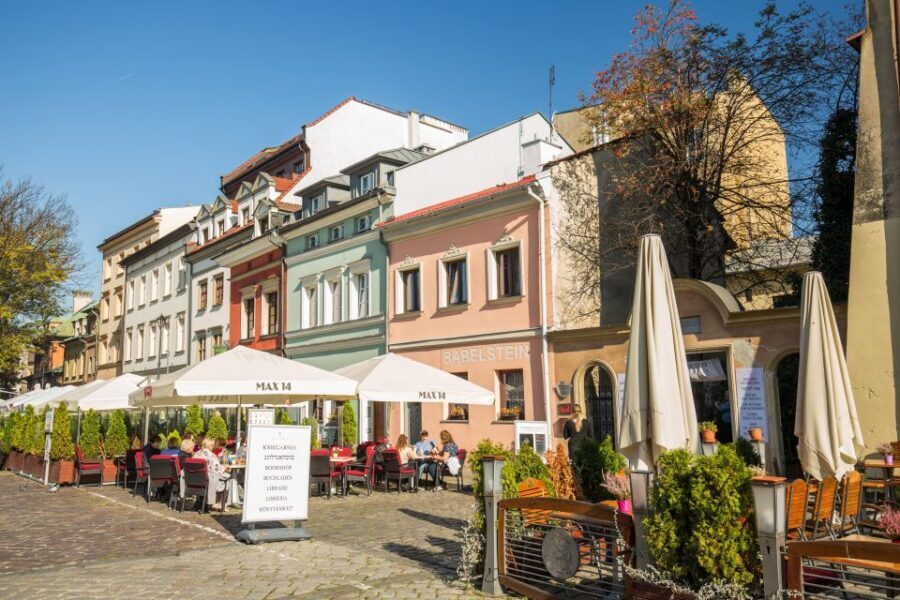
The walking portion begins along Szeroka Street, one of Kazimierz’s historic anchors. Here you get a sense of why this district mattered: synagogues and older townhouses sit close together, showing how religious and everyday life were historically intertwined.
The first major stop is the Old Synagogue, today used as a museum focused on Jewish history. It’s a strong opener because it gives you a foundation before you hit WWII material. When you understand the longer timeline—tradition, community structures, and cultural continuity—the wartime sections hit harder.
From there, you’ll move toward Remuh Synagogue and Cemetery, one of the most important Jewish religious sites in Poland. Even if you’re not a deep-history person, cemeteries are where you feel time. They make the story personal in a way photographs can’t.
Next you’ll pass the Kupa Synagogue, historically associated with the poorest residents. That detail is worth noticing. It subtly corrects the idea that Jewish life was one uniform experience; it wasn’t. Different synagogues served different communities and needs.
Then there’s the Tempel Synagogue, which is now an active cultural center. That matters because it signals continuity: Jewish culture in Kraków didn’t end with the war and didn’t restart from zero. It evolved, and the tour helps you spot that shift as you walk.
Plac Nowy: a living square after a heavy narrative
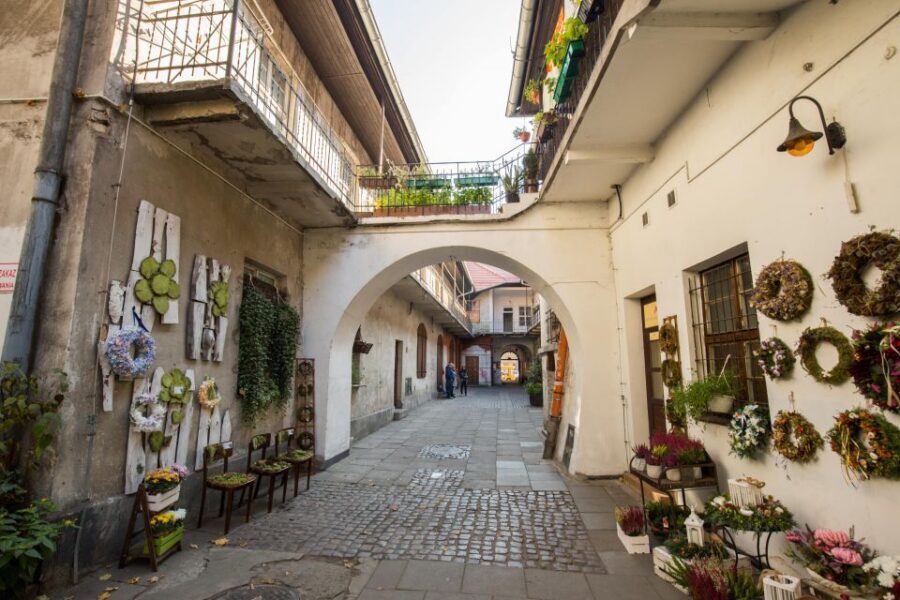
The Kazimierz portion concludes near Plac Nowy, a square that feels built for everyday life—cafés, markets, and local art. This is more than a pleasant finish to the walk. It’s a mental reset that keeps you from leaving Kazimierz only with grim images.
If you’re headed to WWII sites later in Poland, this stop is useful. It reminds you that the people whose names show up in history weren’t only victims—they were neighbors, shoppers, workers, and family members.
Also, because the tour continues into Podgórze afterward, this square break is a good moment to mentally prepare for a different tone. Think of it like turning the page, not just finishing a walking loop.
Schindler’s Factory: how a famous name becomes a human story
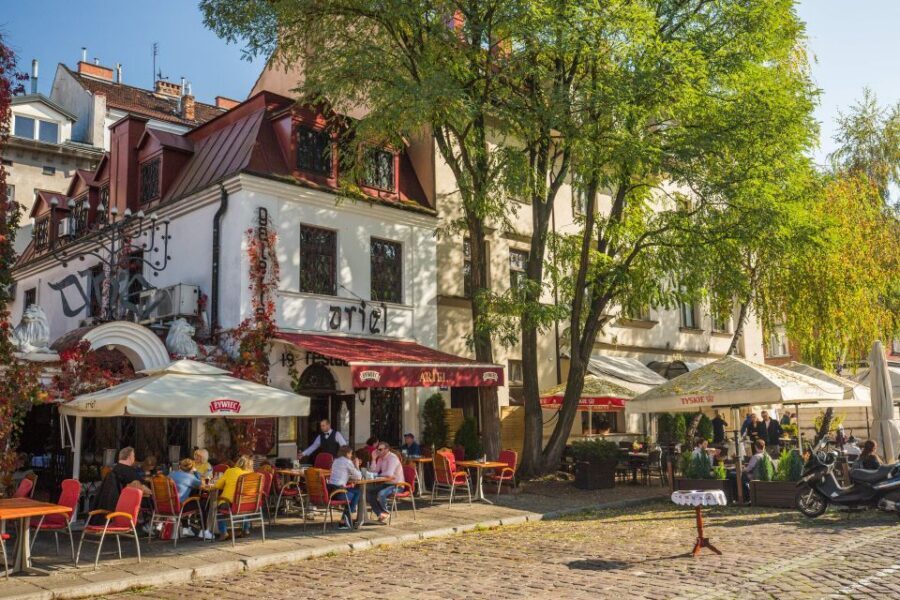
After Kazimierz, you’ll go to the Schindler’s Enamel Factory area. Today it operates as a museum, and your guide will help you understand the exhibition without treating it like a cold archive.
One practical note that helps you manage expectations: although it was once a factory, it no longer contains original production equipment. So what you’re seeing is the museum’s carefully staged story—meant to explain events and the human choices inside them.
With fast-track admission, you skip the ticket line and move in efficiently. That’s a real value here because the day includes multiple stops, and the museum portion is emotionally intense. Fewer delays keeps the pacing smoother.
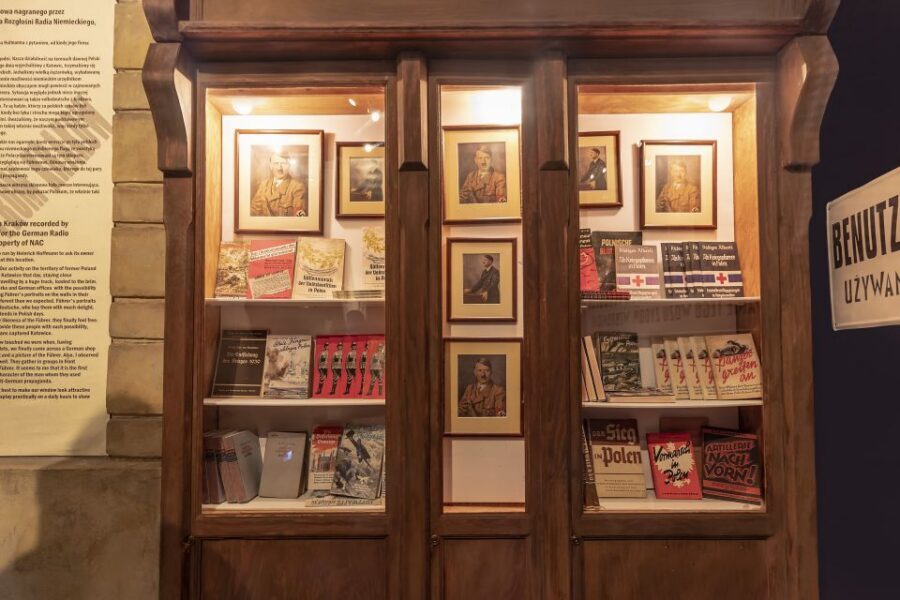
Inside the museum, you’ll follow the exhibition Kraków under Nazi Occupation 1939–1945, guided by your licensed expert. The main thread centers on Oskar Schindler—how his position, influence, and resources were used to protect Jewish workers from deportation.
The key detail I like is that the guide frames Schindler’s role through specific people. You’ll hear about the term Schindlerjuden, the men and women whose survival was connected to his actions. That word alone won’t teach you much, but your guide’s storytelling turns it into real names and outcomes.
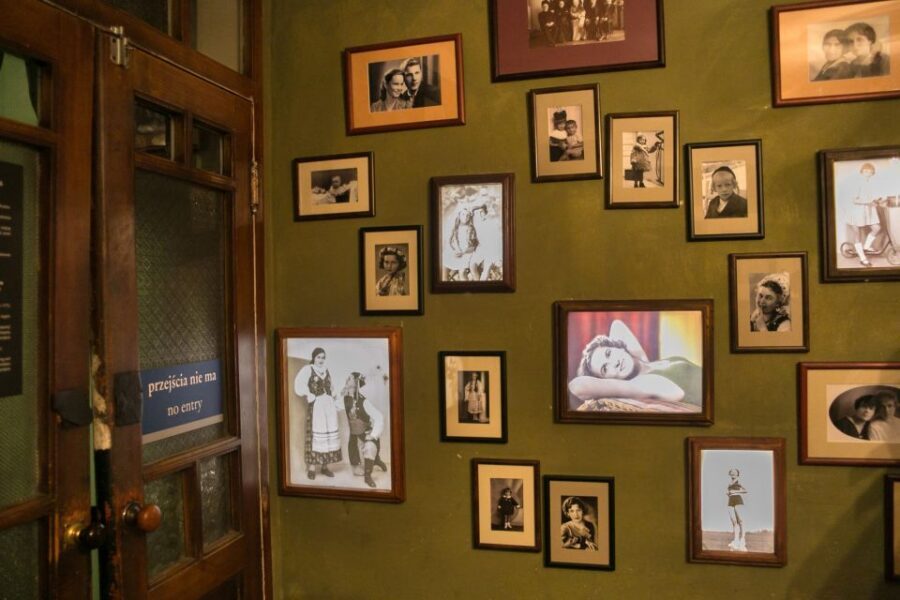
Expect to see photographs, personal objects, and reconstructed streets that bring fear and daily struggle into focus. The tour doesn’t just describe what happened in broad strokes. It shows the pressure, uncertainty, and routine of life under occupation—so you can understand why survival was so fragile.
If you’re planning Auschwitz later, this context is especially helpful. It helps you understand the logic of persecution before you see the scale of the camps.
Podgórze ghetto walls and Ghetto Heroes Square
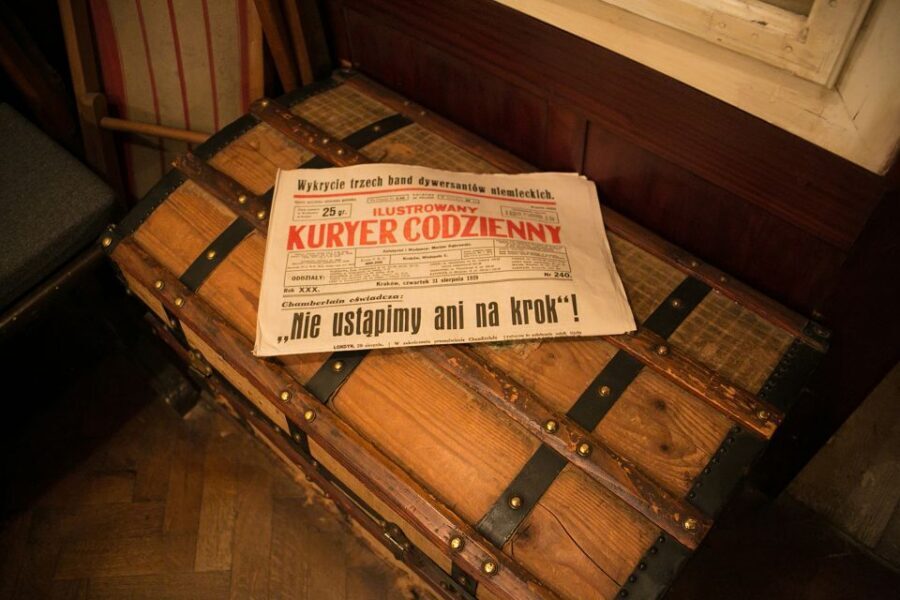
From Schindler’s Factory, the walk continues toward the former Jewish ghetto area in Podgórze. This is where the tour shifts from explanation to place-based memory.
You’ll see remnants of the ghetto walls—surviving fragments that make the concept of isolation physical. It’s one thing to read about boundaries on a map; it’s another to stand near leftover sections of that boundary and imagine what it meant to live beside confinement.
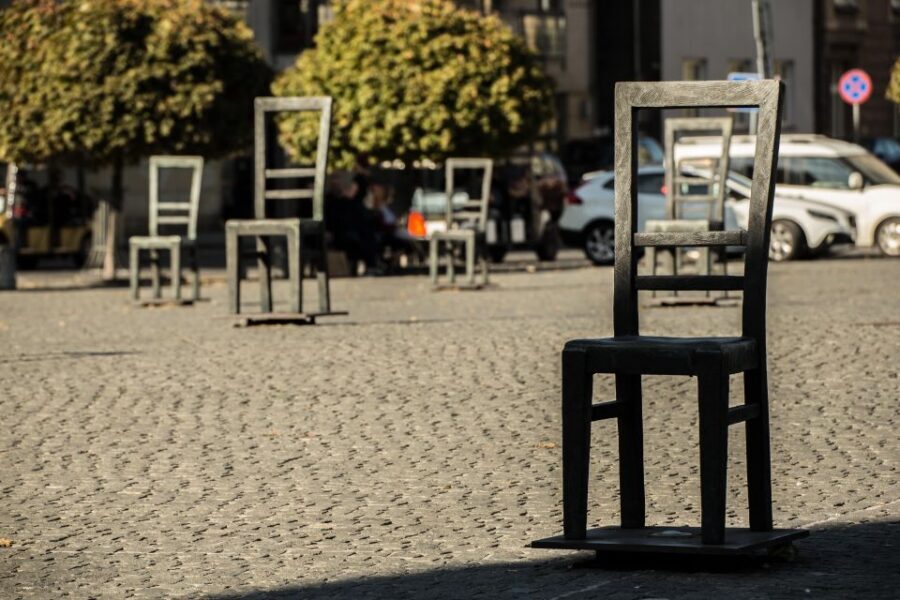
Next comes Ghetto Heroes Square, once a key point connected with deportations. Today, the square functions as a memorial, marked by empty metal chairs that symbolize lives lost. The design is simple, and that’s what makes it hit. It doesn’t rely on dramatic effects; it forces you to slow down and face absence.
This part of the tour can feel emotionally heavy, and that’s normal. If you tend to get overwhelmed in museums, take slow breaths and don’t rush through the memorial sections. Your goal isn’t to “get through it.” Your goal is to let the place do its job.
What the price gets you: value in a 5-hour format
At $81 per person for a 5-hour tour, you’re paying for three main things: a guided walk through multiple historical sites, entry to the Schindler’s Factory museum with fast-track access, and a licensed guide who ties it all together.
For Kraków, the strongest value here is how the guide connects Kazimierz to the ghetto story instead of treating them as separate checkboxes. You’re not just buying museum entry; you’re buying interpretation—an expert voice that helps you understand why each synagogue, cemetery, and square matters.
Also, because the tour includes a guided museum experience, the time feels used well. A self-guided plan could cover the same locations, but it’s harder to get the chronology and human context right without guidance.
Your best move for value: come prepared for walking and wear comfortable shoes. When you’re comfortable physically, the tour’s content lands better, and the time doesn’t feel wasted.
Timing, group size, and why the day can feel tight
The tour runs for about 5 hours, and it’s structured as a walking day with museum time included. Weather can affect comfort, so plan for Kraków’s real conditions—especially if you’re visiting outside summer.
Group size matters for two reasons. First, tours are capped at a maximum of 25 participants. Second, Schindler’s Factory areas and some narrow streets have limited space for everyone to see and hear clearly.
In one experience, a guide was still audible with audio aids while the group grew to the full limit, but visibility became difficult in cramped corridors. That’s a good heads-up: if you hate crowding, you might want to pick a start time that feels less likely to be busy.
The good news is that the route is designed to keep you moving. You won’t spend the whole day stuck in one room trying to catch every detail while standing shoulder-to-shoulder.
Languages and guided storytelling that matters more than you think
Your tour is offered in French, English, German, Spanish, and Italian. Importantly, each group runs in a single language, so everyone hears the same story at the same time.
I also like the “licensed guide” part of this. You’re not relying on random audio commentary. The guide can respond to the pace of the group and explain why certain details matter—like how Kupa Synagogue connects to socioeconomic history, or how Remuh Cemetery changes the emotional tone.
And yes, guide quality varies by person, like it does anywhere. One German-language guide named Aneta stood out for clear preparation, and that kind of careful explaining makes the museum part much easier to follow.
Who this tour fits best (and who might want something else)
This tour is ideal if you want WWII history without skipping the cultural and neighborhood context that leads up to it. I think it works especially well if you’re the type of traveler who likes understanding causes, not just events.
You’ll also like it if you’re planning other Poland WWII stops. The Kazimierz-to-ghetto sequence sets up the broader persecution timeline so later sites feel less like separate stories.
If you struggle with intense topics or you need lots of quiet time, you may find the memorial and ghetto wall segments emotionally demanding. In that case, you can still go—but plan extra downtime afterward so you don’t feel rushed.
Should you book the Kazimierz, Schindler’s Factory & Ghetto tour?
If you want a single 5-hour route that ties together Jewish Kraków before WWII and the ghetto story during the occupation, this is a strong choice. The fast-track museum entry and the licensed guide help you use your time wisely without getting bogged down in logistics.
I’d book it if:
- You want expert context for both Kazimierz and Podgórze
- You’re heading to Auschwitz or other WWII sites and want better background
- You like walking tours where stops build into a clear narrative
I’d think twice if:
- You hate crowds and narrow indoor corridors
- You’re very sensitive to memorial spaces and heavy historical themes
Overall, this is the kind of tour where the route design matters as much as the content. You don’t just learn history—you walk it, one turning street at a time.
FAQ
Where is the meeting point?
Meet your guide on the steps of the Old Synagogue. They will hold a Kazimierz Guided Tour sign.
How long is the tour?
The tour lasts about 5 hours.
Is Schindler’s Factory admission included?
Yes. The tour includes fast-track admission to Schindler’s Factory.
What languages are available?
The live tour guide is available in French, English, German, Spanish, and Italian.
What’s the maximum group size?
Group size is limited to a maximum of 25 participants.
Do I need a ticket name for entry?
Yes. The museum issues personalized tickets, so you must provide the full names of all participants at booking time.
Is food included?
No. Food and drinks are not included.
What is the cancellation policy?
You can cancel up to 24 hours in advance for a full refund.
How will weather affect the tour?
Weather conditions can influence comfort since it’s partly a walking tour, so dress for the conditions you expect on the day.