REVIEW · KRAKOW
Krakow City Pass – Museums, Atractions & City Transport
Book on Viator →Operated by DISCOVER CRACOW · Bookable on Viator
Krakow moves fast when you have the right card. The Krakow City Pass lets you roll through a stack of top sights with included museum entry and free buses and trams. I especially like how easy it is to hop between areas without buying transport tickets every time, and I like that you get into a wide mix of museums, churches, and art spaces. One possible drawback: some big-ticket sites may be limited by opening days or advance reservations, and Mondays can be a trap.
This is the kind of pass that works best when you keep your schedule flexible. You choose 1, 2, or 3 consecutive days, then start using it right away. You’ll still want to plan around closing times because last admission is usually about 90 minutes before the museum shuts.
If you like structure but not rigid tours, this fits. It’s also a solid pick for first-timers who want to pack in Old Town landmarks, Kazimierz culture, and even a couple of “off the beaten path” museums without constantly checking prices.
In This Review
- Key things to know before you go
- What the Krakow City Pass covers (and what it doesn’t)
- Using trams and buses for free like a local
- Timing matters: dates not hours, last admission 90 minutes before close
- Old Town starts here: St. Adalbert, Czartoryski Palace, and the Cloth Hall
- Kazimierz and Jewish memory: Ethnographic Museum and Galicia Jewish Museum
- Resistance and survival stories: Home Army and Schindler’s Factory options
- Artistic Krakow in houses and palaces: Matejko, Mehoffer, and more
- MOCAK, Poland’s aircraft, and what modern culture feels like
- Church and palace museums: Archdiocesan Museum and Bishop Erazm Ciolek
- Panorama stop: Kościuszko’s Mound at golden hour
- Nooks, legends, and Nowa Huta archaeology
- How many days you need for a smart match
- Value check at $42.61: when the pass wins
- Most common snags and fixes before you go
- Should you book the Krakow City Pass?
- FAQ
- How many museums are included with the Krakow City Pass?
- Does the pass include city transport?
- How long is the pass valid for?
- When should I plan my museum visits?
- Are all museums open every day?
- What if plans change and I need to cancel?
Key things to know before you go
- 22 museum entrances included, plus churches, art galleries, and the Town Hall Tower
- Free tram and bus rides day or night, which is a big time-saver in Krakow
- Valid for consecutive dates, not time slots, so start early in the morning
- Last admission is often 90 minutes before closing, so don’t drift late
- Some venues are closed on Mondays, and a few popular sites may require advance planning
- Discounts at select shops and restaurants help if you’re hungry and shopping anyway
What the Krakow City Pass covers (and what it doesn’t)
The pass is built around one idea: museum time plus easy getting around. You redeem a 1-, 2-, or 3-day pass in central Krakow, and your card covers entrance to 22 museums. It’s not just “a couple of entries.” You get a spread that can cover classic Old Town sights, Jewish heritage areas, contemporary art, and history-focused museums.
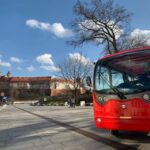
You also get free travel on Krakow’s buses and trams at any time of day. That matters because Krakow’s neighborhoods are close, but not always walk-friendly when you’re hauling your day bag, phones, and sore feet.
What’s not included is simple: food and drinks, and there’s no hotel pickup or drop-off. You’ll still pay for meals, and you’ll want to budget for any activities that aren’t part of the included museum list.
You can also read our reviews of more city tours in Krakow

Using trams and buses for free like a local
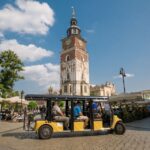
This is one of the most practical parts of the pass. Krakow’s tram and bus network can get you from the Old Town area toward Kazimierz and on farther routes without thinking too hard. If you’re moving between morning museums and afternoon stops, the transport inclusion helps you stay efficient.
Here’s how I’d use it: pick a neighborhood “cluster” for the morning, then use the tram or bus to reset your location for the next cluster. For example, pair Old Town museums first, then ride over to Kazimierz for Jewish-history and cultural sites. In the evening, you can pivot back toward the center for viewpoints and lighter stops.
Also, don’t treat it like a single long museum marathon. Krakow can be tiring even when it’s easy. Use the transit freedom to break your day into sensible chunks, not one nonstop line of tickets.
Timing matters: dates not hours, last admission 90 minutes before close
Your card is valid for the dates you select, not the hours inside the days. That’s why starting earlier matters. If you wait until mid-afternoon, you can lose the best museum hours without realizing it.
And you should plan for the common closing pattern: last admission is usually about 90 minutes before closing time. That means if a museum closes at 5:00, you’ll likely want to be in the admission flow well before 3:30 or you’ll risk being turned away.
Two more timing considerations:
- Some museums don’t operate on Mondays.
- If you’re chasing the most popular history museums, don’t assume your plan will work at the last minute. Some venues can be tight on access.
Old Town starts here: St. Adalbert, Czartoryski Palace, and the Cloth Hall
Start with Church of St. Adalbert. It’s a straightforward opener: a place where you can step inside early, get a feel for Krakow’s religious architecture, and avoid spending your first hour hunting for the right entrance.
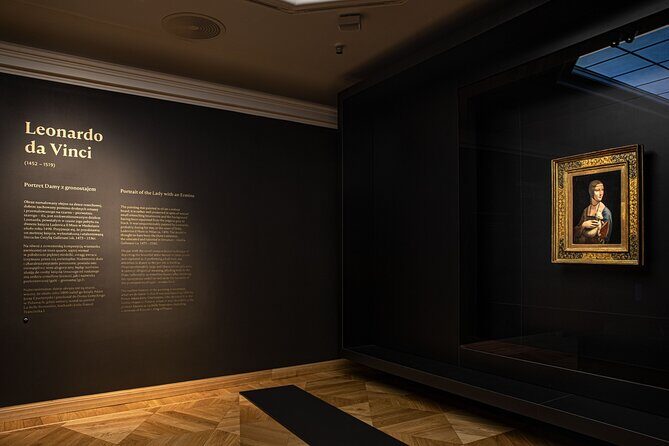
Next, head to Muzeum Ksiazat Czartoryskich, the Czartoryski Palace Museum. This is one of those “you’ll be glad you added it” stops if you like seeing how major collections are housed. Plan on about an hour. You’ll get enough time to see highlights without turning it into a speed run.
Then, make your way back to the heart of Krakow for the Museum Gallery of the 19th-Century Polish Art in the Cloth Hall. The best part here is the setting: you’re in the Main Market Square area, and after your museum time you can step out to the terrace area for a view over the square. Inside, you’ll move through themed rooms tied to Classicism, Romanticism, Academic Art, and Realism/Impressionism.
If you’re also adding major Old Town experiences, this is the natural place to weave them in—like Rynek Underground (with an excavated-merchant-stalls route under the square) and the Town Hall Tower for that iconic viewpoint feeling.
Kazimierz and Jewish memory: Ethnographic Museum and Galicia Jewish Museum
Kazimierz is where the city’s story expands beyond the medieval center. Start with the Ethnographic Museum, housed in a 15th-century Town Hall that was reshaped into a Renaissance building. The building itself is part of the experience. You get the sense of a place that has changed roles across centuries.
Then, go straight to the Galicia Jewish Museum. This one has a heavier emotional tone. It exists to commemorate Holocaust victims and to celebrate Jewish culture from the region of Polish Galicia, with Jewish history presented from a new perspective. Go in ready to slow down a touch and read more than you’d do in a lighter museum.
One practical tip: because these sites carry emotional weight, you might not want to slam them back-to-back with another intense museum. Use your tram pass to give yourself an easy reposition to lunch afterward, rather than forcing a tight timeline.
You can also read our reviews of more museum experiences in Krakow



Resistance and survival stories: Home Army and Schindler’s Factory options
For a Polish-resistance angle, the Home Army Museum (Muzeum Armii Krajowej) is a strong included stop. It’s about the Home Army and the broader context of resistance efforts during World War II. Expect to spend close to an hour so you can actually read and absorb rather than skim.
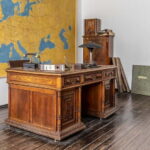
Pair that with one of the major WWII-related inclusions: Oskar Schindler’s Factory or Pharmacy Under the Eagle. This is where you should be alert. Some visits may need advance reservation, and access can be limited. If you’re relying on a specific time slot, plan early rather than hoping for a walk-up moment.
There’s also a queue reality. While the pass can help reduce friction, it’s still smart to arrive with time. In at least one case, I’ve seen people queued longer than they expected because the process wasn’t obvious on the ground. So aim to get there before you’re hungry or rushed.
Artistic Krakow in houses and palaces: Matejko, Mehoffer, and more
If you like art that connects to place and personality, this section is your reward. House of Jan Matejko (Krakow National Museum) is a good example: it’s not just paintings on walls. It’s about how the artist’s world is framed through the home-style setting.
Then step to Jozef Mehoffer House (also within the Krakow National Museum system). Mehoffer’s work and the space around it make for a different mood than a traditional gallery layout. You’ll likely want your hour here to take breaks—look, then re-look, then step back and notice how the rooms guide your attention.
Also worth fitting in around this zone:
- The Archdiocesan Museum (The Archdiocesan Museum)
- The Bishop Erazm Ciolek Palace (National Museum in Krakow)
- Hutten-Czapski Museum
Hutten-Czapski (Czapski Museum) is especially appealing if you enjoy collections tied to specific historic residences. You can expect a longer-feeling visit, around 90 minutes, because it’s easier to get pulled into the details when you’re not only racing through artwork.
Finally, make time for Wyspianski Museum – Szolayski Tenement House. This is a major art stop: the National Museum holds the largest and most valuable collection of Stanisław Wyspiański works. Plan for about 90 minutes. Even if you don’t consider yourself an art superfan, the amount of work on display can make you understand why he’s such a big deal in Polish art.
MOCAK, Poland’s aircraft, and what modern culture feels like
To keep your visit from turning into all-ceremony and all-archive, add MOCAK Museum of Contemporary Art in Krakow. Contemporary art can be hit-or-miss for some people, but it’s a great counterweight to the WWII and medieval themes. Give it about an hour and focus on the big installations rather than trying to read every single label.
After that, go to the Polish Aviation Museum. This is an excellent pivot if you want something more hands-on or subject-driven. It’s also a smart way to refresh your brain after heavier history museums. An hour is enough to get a feel for the collection without feeling like you missed half the point.
Church and palace museums: Archdiocesan Museum and Bishop Erazm Ciolek
If you want religious art and church-linked artifacts without the stress of figuring out separate tickets, the Archdiocesan Museum and Bishop Erazm Ciolek Palace are great choices.
The Archdiocesan Museum offers that “Christian art and church life” perspective you might otherwise have to hunt for on separate museum lists. Keep your visit around an hour and be ready for a lot of visual storytelling.
Then shift to The Bishop Erazm Ciolek Palace – National Museum in Krakow. This stop pairs well with your other art-house choices because you’re looking at how museums interpret historic spaces. If you’re the type who likes architecture as much as exhibits, you’ll likely enjoy the setting here.
Panorama stop: Kościuszko’s Mound at golden hour
For a break from indoor spaces, Kościuszko’s Mound (Kopiec Kościuszki) is the included open-air reset. It’s an artificial mound built as a memorial to Tadeusz Kościuszko, and it’s reached via a winding path.
Go when the light is nicer. The ride up and the walk give you time to breathe, and the top is about 326 meters above sea level with panoramic views toward the Vistula River and Krakow. Budget about 90 minutes if you want time to take photos without turning it into a sprint.
Nooks, legends, and Nowa Huta archaeology
Hutten-Czapski Museum has already been one “palace collection” stop, but now it’s also part of a cluster of smaller, interesting inclusions. If you’re pacing yourself, this is where you can place a 90-minute museum when you don’t want your whole day to be structured around one giant institution.
Next, Legends of Cracow (Legendy Krakowa). This is a robotic show that covers stories tied to Krakow legends like the Wawel Dragon, Kinga and the salt mine in Wieliczka, the Mariacki towers, the yellow boot, and the Sigismund Bell. It’s around 90 minutes, and it works surprisingly well even if you’re traveling solo. It’s a lighter-feeling addition after heavier WWII sites.
For something truly different, go to the Archaeological Museum Nowa Huta branch. It’s in the manor and park complex in Branice. You can expect a setting that feels calmer than the center, and the historical timeline is long: written sources mention the area around 1250, and archaeological relics point to settlement as early as the Neolithic Age (around 6000 BC). Give yourself about 90 minutes so you can take in both the artifacts and the setting.
How many days you need for a smart match
I think 2 days is the sweet spot for most people. You can hit several major museums across Old Town and Kazimierz, ride the trams without planning every step, and still have time for one outdoor stop like Kościuszko’s Mound.
Go 3 days if you want breathing room. This is when you can add contemporary art with MOCAK, fit in the more specialized palaces and art-house museums, and still enjoy the legends show without feeling rushed.
If you’re only in Krakow for a quick stop, be honest with yourself. The museum selection is wide, but you still have to manage days with closures and last admissions before closing. And if your trip is mainly about day tours outside the city, you may find that the pass gets less efficient for your limited time.
Value check at $42.61: when the pass wins
At about $42.61 per person, the pass is trying to do two things for you: reduce the cost of multiple museum tickets and remove the need to buy transport each time.
From what I’ve seen in practice, many museum tickets are often relatively modest, but some of the big-name experiences cost more. One review example cited an average entry around 10 PLN, while Schindler’s Factory was around 24 PLN. Your exact prices can vary, but the math usually comes down to this: if you plan to use the pass for several included museums, you’ll likely feel the value quickly.
The transport piece also quietly helps. If you’re riding trams and buses several times a day, the savings can matter even when museum tickets are cheap. Plus, you avoid the mental load of buying tickets between each stop.
Where value can slip: if you end up limited by closures, advance reservation limits, or you simply don’t get through enough of the included museums.
Most common snags and fixes before you go
Here are the friction points you should plan around.
First: Monday closures. Some museums don’t run on Mondays. If your trip lands on Monday, check your museum priorities early, then be ready to swap in open alternatives like the ones that are operating.
Second: advance reservations for some of the most sought-after sites. If you’re planning Rynek Underground or Schindler’s Factory at specific times, don’t assume walk-up availability. If time slots are full, your pass becomes less useful for the “must-do” items.
Third: pick-up timing. There can be issues if you arrive late. One experience described collection points closing after 19:00 and the airport collection not being open when expected. If you land late in the evening, plan a backup option so your first day isn’t stalled.
Fourth: information clarity on-site. People get disappointed when what they expected from the pass isn’t what they experience at the museum counter. A small example was an audio guide expectation at Wawel Cathedral. Your fix is simple: bring your pass details and any included benefit notes with you, and if something seems unclear, ask on the spot rather than waiting.
Should you book the Krakow City Pass?
Book it if you want an easy rhythm: tram and bus rides included, plus lots of museum entrances, with enough variety to cover different tastes on different days. It’s especially good for first-timers, people who like art and history, and anyone who hates ticket hassle between neighborhoods.
Skip or rethink it if your schedule is too tight, or if you’re relying on one or two popular WWII sites and you might struggle with reservation availability. Also reconsider if you’re the type who prefers walking everywhere and paying for only one or two museums, because you might not use enough included entries to feel the value.
If you do book, my best advice is straightforward: choose your museums early, start your days in the morning, and treat last admission time as a hard boundary. Do that, and this pass becomes a practical shortcut through Krakow.
FAQ
How many museums are included with the Krakow City Pass?
The pass includes entrance to 22 museums.
Does the pass include city transport?
Yes. It covers free travel on Krakow’s buses and trams, day or night.
How long is the pass valid for?
You choose 1, 2, or 3 days, and it’s valid for consecutive dates for the length you select.
When should I plan my museum visits?
Last admission is usually about 90 minutes before closing time, so aim to arrive with enough buffer.
Are all museums open every day?
No. Some museums don’t operate on Mondays.
What if plans change and I need to cancel?
You can cancel up to 24 hours in advance for a full refund.