REVIEW · KRAKOW
Krakow: Sightseeing Tour by Electric Golf Cart
Book on GetYourGuide →Operated by FHU PATART PATRYK TLAŁKA · Bookable on GetYourGuide
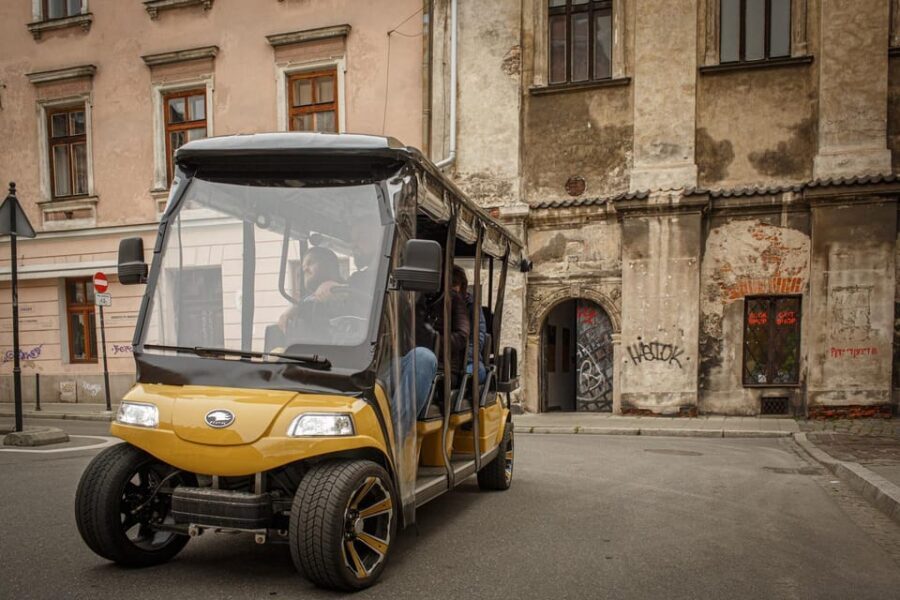
History rolls by on silent wheels. This electric golf cart tour threads you through Krakow’s big story—medieval streets first, then the Jewish Quarter areas of Kazimierz and Podgórze (linked to the former Krakow ghetto). You cover 24-plus stops in about 90 minutes, with commentary that mixes what you see with what it meant.
I really like two things about this format. First, you get a lot of key landmarks—everything from Planty Park to places tied to the Jewish community—without burning your legs on hills and cobblestones. Second, the ride gives you clear context, including major Jewish sites such as Tempel Synagogue, Remuh Synagogue, and several stops tied to ghetto life and memory.
One thing to consider: the tour takes you through areas connected to Nazi-era persecution. It’s informative, but it can feel heavy, so if you’re sensitive to Holocaust-related topics, go in with that in mind.
In This Review
- Key highlights you’ll care about
- Why an electric golf cart works so well in Krakow
- From Planty Park to Podgórze: the 90-minute rhythm
- Kazimierz and the Jewish Quarter: synagogues and street scenes that stick
- The former ghetto stops: how to handle the emotion and still learn
- Your guide and the audio: how to get more out of every stop
- Where you start, what to bring, and cart rules that matter
- Price and value: is $33 worth it for 90 minutes?
- Who this tour suits best (and who should pick something else)
- Should you book this electric-cart sightseeing tour?
Key highlights you’ll care about
- Planty Park start gives you an easy way to grasp Krakow’s medieval layout
- 24-plus stops in 90 minutes means you’ll see more than a typical walking circuit
- Kazimierz and Podgórze focus keeps the story coherent, not random
- Major synagogue cluster includes Tempel, Kupa, Isaac, Old, Popper, and Remuh
- Former ghetto memory stops include Ghetto Heroes Square, a ghetto wall, and Schindler-related storytelling
- Audio guide in many languages plus an English/Polish-speaking driver for flexibility
Why an electric golf cart works so well in Krakow
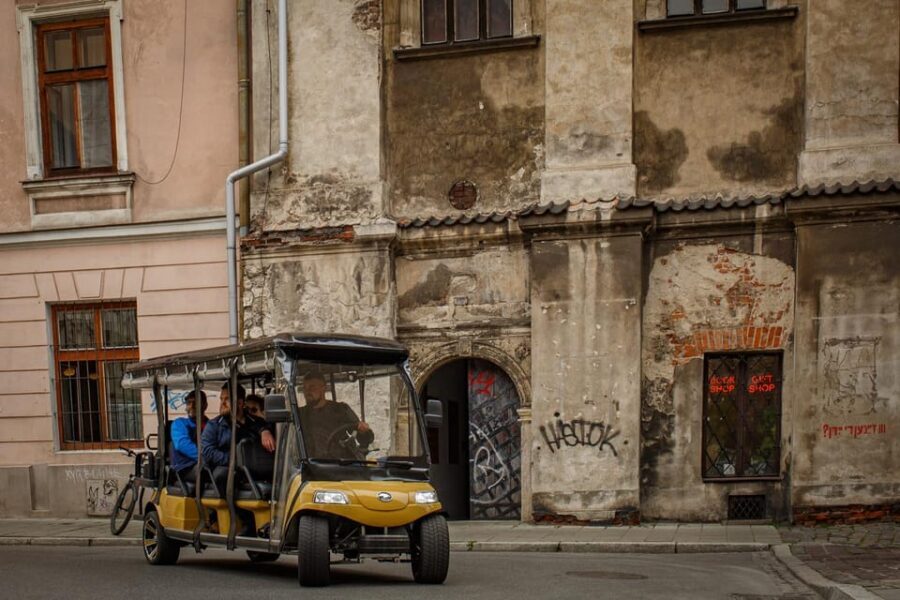
Krakow is gorgeous, but the center can be a leg workout. This tour solves that with a smooth ride that lets you keep your eyes up instead of scanning for your next step. In 90 minutes, you still get big visual moments: churches on hilltops, squares with long memories, and street segments that help you picture how the city functioned.
The other smart piece is pacing. You’re not racing from one stop to the next with constant getting on and off. Instead, you’re carried between clusters—old-town edges, then Kazimierz, then Podgórze—so the story stays in order and your brain doesn’t have to constantly “reset.”
You can also read our reviews of more tours and experiences in Krakow.
From Planty Park to Podgórze: the 90-minute rhythm
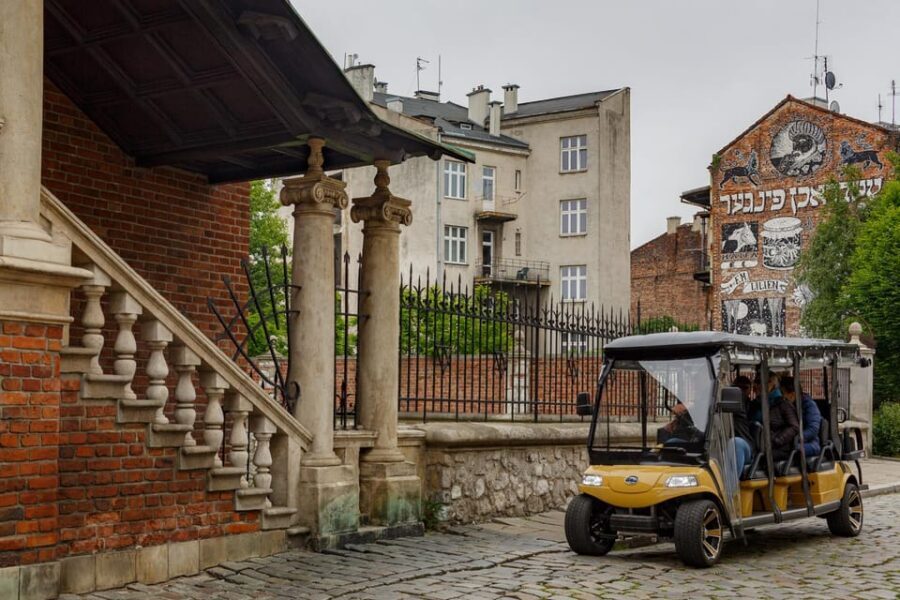
The tour starts with Planty Park, a signature Krakow green ring that frames the medieval city center. Even if you’ve never studied city maps, you’ll start getting the “shape” of the old town fast. From there, the commentary builds toward the medieval city story and then into the Jewish Quarter.
As you move along, you’ll hit viewpoints and landmarks that act like anchors. Skałka Church and the Church of St. Catherine are the kind of places you’d otherwise miss if you were only doing a quick checklist. This is also where you begin to feel the difference between old Krakow’s religious landmarks and the later layers tied to the Jewish neighborhoods.
Then comes a distinct shift into Kazimierz. You’ll pass Wolnica Square, linked to the Jewish city hall area (so it’s not only about places of worship). You’ll also see Church of Corpus Christi and Tempel Synagogue, which helps you understand how Jewish life sat beside Catholic Krakow over centuries.
After that, the route moves into deeper Kazimierz landmarks and street-level details. Ciemna Street and several synagogues (Old Synagogue, Kupa, Isaac, Popper, plus more you may recognize from photos) give you repeated chances to connect buildings with the people who used them.
Finally, the tour leans hard into Podgórze and former ghetto memory. You’ll reach the Ghetto Heroes Square area, the Pharmacy under the Eagle connected to Tadeusz Pankiewicz, and Oskar Schindler’s story elements, before ending with Church of St. Joseph. By the time you’re at the end, you’ve gone from city form to city impact.
Kazimierz and the Jewish Quarter: synagogues and street scenes that stick
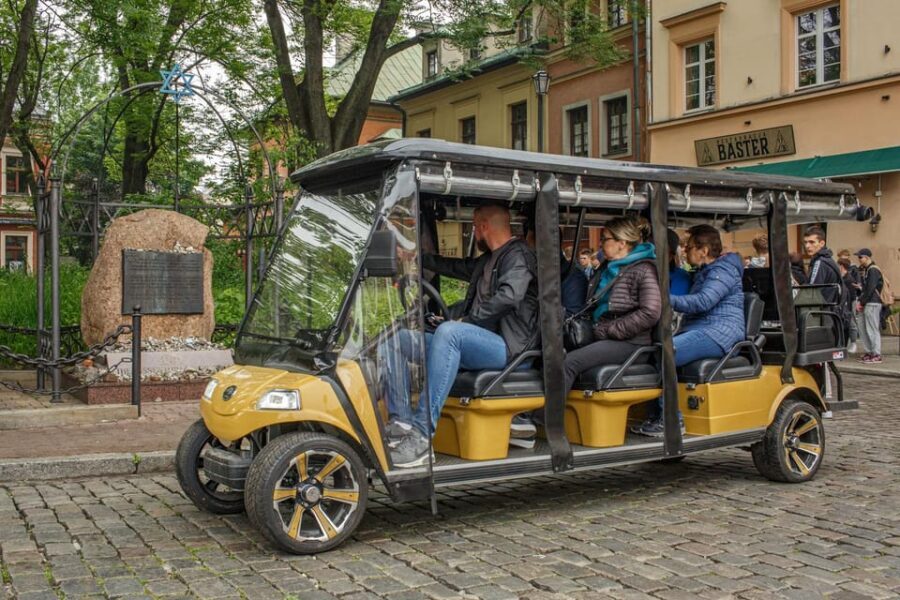
Kazimierz can be overwhelming if you’re walking it alone. This tour helps because it groups the most meaningful stops, so you’re not bouncing around trying to figure out what’s connected. You’ll see multiple synagogues back-to-back—Tempel Synagogue, Kupa Synagogue, Isaac Synagogue, and later Old Synagogue and Popper Synagogue—so the architecture and location choices start making sense.
One reason I like this approach: synagogues aren’t just “pretty buildings.” They’re practical markers of community life—where people gathered, where identity was maintained, where tradition lived day to day. When you’re able to compare several in one sitting, you notice differences in style and siting that you’d miss if you only saw one.
You’ll also get street texture. Stops like Ciemna Street and the Jewish shops area help you picture how commerce and daily routines worked. Family House of Helena Rubinstein adds another layer, reminding you this wasn’t only about worship or tragedy—it was also about people building careers, making choices, and shaping culture.
Remuh Synagogue and the old cemetery are among the most emotionally direct stops on the Jewish side. Even without a long written background, being there in sequence with the other synagogues makes the continuity clearer: this was a living community across time, not just a chapter in a textbook.
The former ghetto stops: how to handle the emotion and still learn
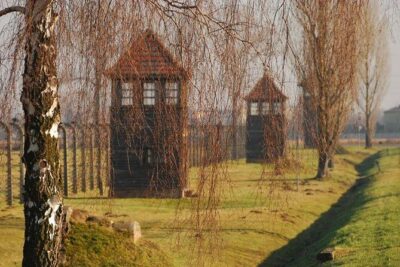
Podgórze and the former ghetto area aren’t sightseeing in the usual sense. They’re memory sites, and the tour treats them that way, including stops that point to daily survival and organized resistance.
You’ll pass a former ghetto wall, see the Ghetto Heroes Square area, and get a “Life in Ghetto” style explanation through the ride. You’ll also visit or reference key storytelling points tied to Schindler’s history. There’s a moment where the tour moves from physical buildings to human stories—Pharmacy under the Eagle (linked to Tadeusz Pankiewicz) is a good example because it points to real-world risk and help in a place people associate with persecution.
Here’s my practical advice: don’t try to cram this part while half-distracted. If you’re multitasking on your phone, you’ll miss the details that make the sites click. Let the information land, then take a breath. If you start feeling overwhelmed, you can ask the driver/guide to slow down or pause briefly between points.
Also, the tone can feel gloomy, which is exactly what one unhappy booking likely meant. That isn’t a flaw in the tour—it’s the subject matter. You just want to be mentally ready for a heavier route than a typical old-town circuit.
Your guide and the audio: how to get more out of every stop
Even the best route can feel flat if the narration doesn’t connect. This one gives you two channels to work with: a driver who speaks English and Polish, plus an audio guide. That audio guide is offered in a long list of languages, including English, Polish, Hebrew, French, Spanish, German, Italian, Japanese, Russian, Turkish, Swedish, and more.
If you’re traveling with mixed languages, this helps a lot. You can rely on audio even if you aren’t catching every word from the driver. It’s also useful if the group is large and you’re not always close to the front seat where the driver talks.
One name that came up in a great way is Natalie. In one case, Natalie was described as friendly and strongly informed, and she even offered to drop people somewhere convenient after the tour ended. That kind of flexibility can turn a standard stop into a smoother end to your day.
The practical trick: listen for names and places that are repeated or referenced. On this route, you’ll hear several key site names more than once through the narration, which helps you form a mental map instead of a pile of separate stops.
Where you start, what to bring, and cart rules that matter
Meet-up is at the Kiss&Ride parking opposite the Żabka store. Arrive a little early so you’re not rushing while the cart is readying. You’ll also want to keep your hands free—this is not the place to arrive with a big load.
What you should bring is simple: water. Krakow walking days can heat up even when the weather looks mild. Since the ride minimizes walking, water becomes your one essential comfort item.
There are also clear rules for riding:
- No smoking in the vehicle
- No alcohol or drugs
- Avoid making noise
- Don’t bring luggage or large bags
- Bikes and electric wheelchairs aren’t allowed
If you’re thinking about this tour as a low-step alternative, it still has limits. The tour isn’t suitable for very young children and it lists restrictions based on age, height, weight, fitness level, and even conditions like diabetes. If any of that applies, check carefully before you go—don’t assume a golf cart means zero constraints.
Price and value: is $33 worth it for 90 minutes?
At $33 per person for a 90-minute ride, the value comes from how much geography you cover. You’re not paying for one monument; you’re paying for a guided route that links multiple areas—medieval framing, Kazimierz synagogues, and Podgórze ghetto memory sites—into one logical sequence.
This format is especially good when:
- you have a short visit and want a fast orientation
- you want to see a lot without long walking breaks
- you’d rather ride between clusters than navigate streets alone
- your group has mixed ages or comfort levels with stairs and cobblestones
It may be less ideal if you prefer deep, slow museum-style study. This is designed to move, point, and explain. You’ll get enough to understand what you’re looking at, but you may still want to return to a couple of the stops later for extra time on your own.
Who this tour suits best (and who should pick something else)
This one fits well if you want a guided overview with structure. You get medieval context, then Jewish Quarter and ghetto-linked storytelling, all tied to named places like Tempel Synagogue, Remuh Synagogue, Ghetto Heroes Square, and the Pharmacy under the Eagle.
It’s also a solid option if you like city history but don’t want to spend your day commuting between far-flung sites. The cart route keeps the day compact, which matters in Krakow because you’ll likely want time for other areas too.
Skip it if you’re looking for lots of free time at each stop or if you strongly dislike Holocaust-related topics. The tour includes those sites as essential parts of the story, so it won’t be a light, casual afternoon.
Should you book this electric-cart sightseeing tour?
If you want a smart, efficient way to connect Krakow’s medieval street life with Kazimierz and Podgórze, I’d book it. The combination of cart convenience + named sites + audio in many languages is a practical win, especially if your schedule is tight.
Do book with a little caution, though. There have been reports of serious problems like missing the pickup for some groups. To protect yourself, confirm your start time and have a backup plan for how you’ll spend the hour if something feels off.
Finally, pack the right mindset. If you go into the former ghetto sections prepared for heavy material, this tour can be both moving and memorable—not just a ride, but a clearer way to understand Krakow’s layers.