REVIEW · KRAKOW
Krakow: Zalipie Village Tour
Book on GetYourGuide →Operated by Cracow Holidays · Bookable on GetYourGuide
One painted village can reset your whole idea of folk art. I love the sheer 100-year floral painting tradition in Zalipie and how the tour makes it make sense, not just look pretty. I also love the focus on the House of the Female Painters, where the local craft and its caretakers feel central to the story.
You’ll ride out from Kraków, then spend about 3 hours walking through the painted village houses, fences, wells, stables, and other everyday spaces. You’ll also visit key landmarks like the Felicja Curyłowa Cottage and the Church of St. Joseph the Betrothed, with floral motifs tied to local faith and folklore. One consideration: the village is a lot of on-foot sightseeing in a short time window, so plan for steady walking and bring comfortable shoes.
In This Review
- Key things to know before you go
- Zalipie’s floral tradition: why it feels special on the ground
- Kraków pickup and the ride east to Lesser Poland
- The heart of Zalipie: 3 hours to spot flowers on everything
- Dom Malarek: the House of the Female Painters
- Felicja Curyłowa Cottage: how one person boosted a whole tradition
- St. Joseph the Betrothed: where faith and folklore meet
- A real guide changes everything: LinkPoland and Damian’s approach
- Timing and comfort: how to make the most of a 6-hour day trip
- Price and value: what $128 buys you here
- Who should book this Zalipie tour?
- Should you book the Kraków: Zalipie Village Tour?
- FAQ
- FAQ
- How long is the Zalipie Village Tour from Kraków?
- Where does the tour start and is pickup included?
- What main places will we visit in Zalipie?
- Is there an English-speaking guide?
- What’s included with the ticket?
- What should I wear or bring?
Key things to know before you go
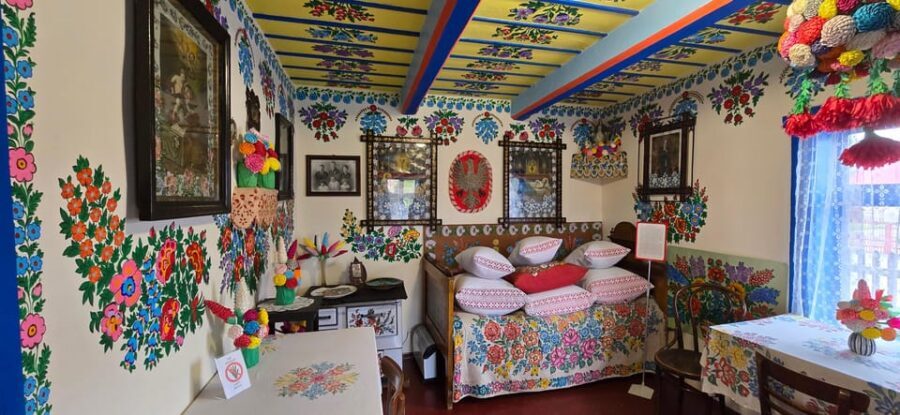
- A village built like a canvas: Floral motifs show up on houses, fences, wells, and even working areas like stables and other village buildings.
- Two landmark stops with real meaning: Dom Malarek and the Felicja Curyłowa Cottage explain how the tradition spread and survived.
- Church interior with folklore detail: The Church of St. Joseph the Betrothed is small but visually memorable for its floral decorations inside.
- English guide + practical driving: You get an English-speaking licensed guide and an English-speaking driver, plus air-conditioned transport.
- Private group feel: You’re not packed into a crowd, and it’s easier to ask questions and slow down for photos.
Zalipie’s floral tradition: why it feels special on the ground
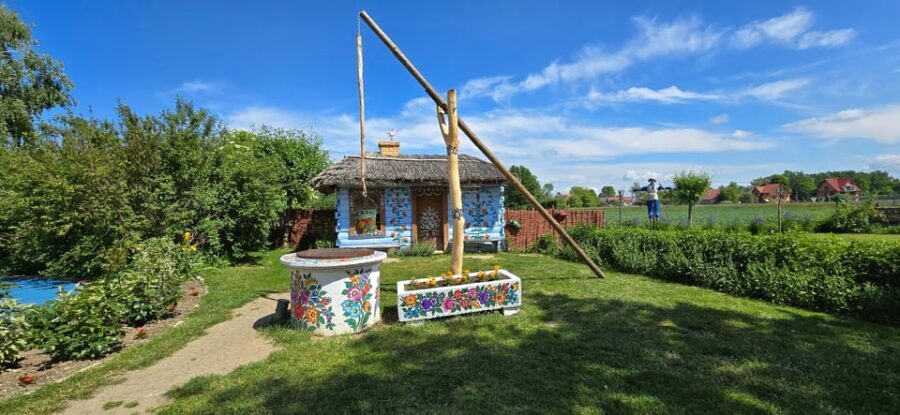
Zalipie is one of those places where folk art isn’t an exhibit behind glass. It’s in daily life. Over the last century, local residents have painted floral motifs onto the surfaces of village buildings and objects, turning ordinary places into something quietly magical and unmistakably Polish.
What makes this tour worth your time is that it’s not just a photo walk. You get the story behind why the painting tradition started and how it continued. That matters because you’ll notice more when you understand the meaning. You’ll see patterns and choices—how the motifs are placed, how the village elements relate to each other—rather than just admiring a pretty coat of paint.
And yes, the visual effect is strong. But for me, the best part is the practical, real-life vibe: painted fences and wells don’t feel like decoration for tourists. They feel like craft that grew out of community habits and pride.
You can also read our reviews of more tours and experiences in Krakow.
Kraków pickup and the ride east to Lesser Poland
This starts with pickup from Kraków, either at your hotel lobby or the front of your apartment building. That’s a small detail, but it saves time and stress, especially if you’re trying to fit this into a short Kraków stay. The transfer is by air-conditioned car, which is a comfort boost in warm or changeable weather.
Because the tour is only 6 hours total, the transportation time matters. The schedule is built around getting you to Zalipie, giving you a solid on-the-ground sightseeing block, and then getting you back to Kraków. It’s a straightforward day trip plan—less wandering through planning logistics, more focus on the village experience itself.
If you’re the kind of traveler who likes a smooth start, this setup helps. You don’t need to figure out routes or ticket timing before you even reach the village.
The heart of Zalipie: 3 hours to spot flowers on everything
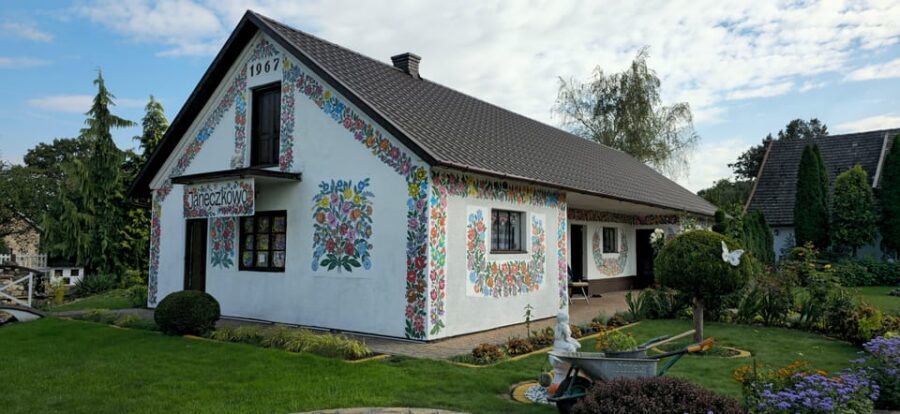
Once you arrive, you’ll get around the painted village at a walking pace for about 3 hours. This is the part where you’ll really feel why Zalipie is known for floral painting. The motifs aren’t limited to one museum wall. You’ll see them across many surfaces—houses and their facades, plus painted fences, wells, stables, and other charming village structures.
Here’s a practical way to enjoy it: don’t try to capture everything at once. Pick a few “themes” and follow them. For example, look for how motifs repeat across different objects—how the style changes from one painted surface to another, or how decoration works on curved versus flat areas. When you do that, your photos become a story instead of random snapshots.
A guide is useful here because the village can be broad and wide. Even when you can see where to walk, you may miss the significance of what you’re looking at. With the right person pointing things out, you catch the small clues that explain the tradition.
One more note from the real-world feel of the outing: it’s easier to see more when you wear shoes that handle uneven village ground. You’ll be glad you did when the sightseeing time is moving but you’re trying to stay comfortable.
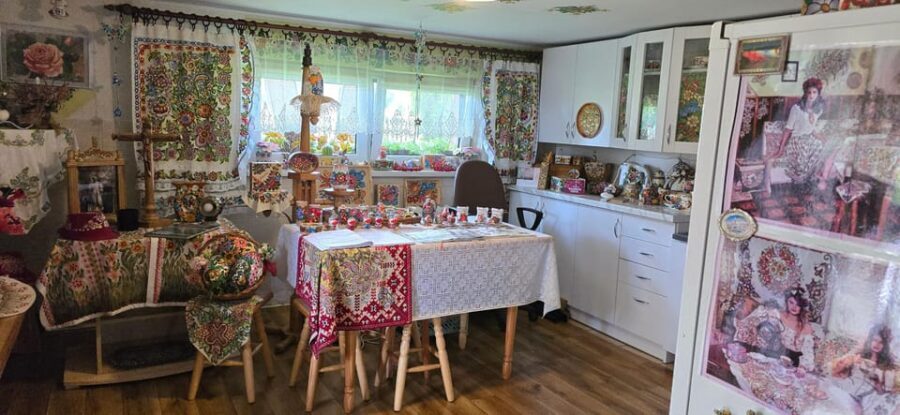
Dom Malarek: the House of the Female Painters

Dom Malarek is the core stop for understanding Zalipie’s tradition. This is the House of the Female Painters, a place dedicated to preserving and presenting the floral painting heritage. The point isn’t just to show you art; it’s to show you a living craft history.
This stop helps you connect two things:
1) why the tradition has a distinctive look, and
2) why it was supported and carried by people in the community.
When you visit a focused site like this, you’re not guessing at what you’re seeing. The guide can put the motifs into context, which makes the rest of the village feel more meaningful when you return outside.
Also, Dom Malarek works well for different travel styles. If you like museum-like information, it gives structure. If you like wandering, it still gives you a lens to use once you’re back on the streets and looking at fences, wells, and houses with fresh eyes.
Felicja Curyłowa Cottage: how one person boosted a whole tradition
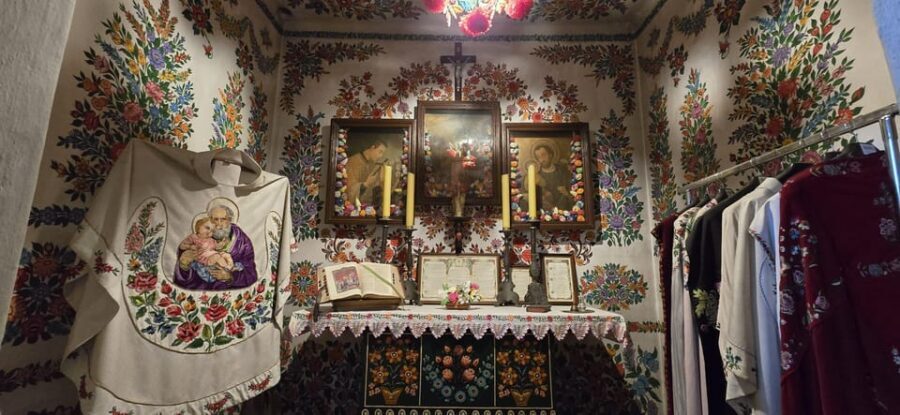
Next comes the Felicja Curyłowa Cottage, connected to an artist who played a pivotal role in popularizing Zalipie’s floral paintings. That name matters because this tradition didn’t spread by accident. It spread through people who practiced, taught, and helped the village become recognized for its art.
What I like about this stop is how it turns the idea of folk art into a real timeline. You’re not just seeing a style—you’re learning how the tradition gained attention and why it stayed strong.
In practical terms, this is also where your photos get better. Once you understand the influence of the artist and the purpose behind the motifs, you tend to notice details you’d otherwise skip: the way the flowers are distributed, the visual rhythm across surfaces, and the difference between everyday decoration and intentional “statement” areas.
If you’re a culture-first traveler, this cottage stop is a payoff. It helps you understand what makes Zalipie more than a pretty village scene.

St. Joseph the Betrothed: where faith and folklore meet
Don’t rush this part. The Church of St. Joseph the Betrothed may be small, but it’s a key landmark. The interior decorations include traditional floral motifs that connect local artistic heritage with religious space.
This is one of the more interesting contrasts in the whole tour. You’re seeing the same floral language used in two different contexts: home and community life outside, and worship inside. That contrast helps explain why the floral painting tradition feels so natural to the village rather than forced or touristy.
You’ll also find that the church visit helps slow the pace. It’s not just another exterior photo moment. It’s a reminder that folk art can be tied to belief and identity, not just aesthetics.
And if you’re the type who likes capturing atmosphere, this is a good stop to take a moment before you move on. Your eyes adjust and your photos look more intentional when you give this kind of site a little time.
A real guide changes everything: LinkPoland and Damian’s approach

This is a guided tour with a licensed English-speaking guide, and the operator is LinkPoland. You also have an English-speaking driver, so communication stays easy from pickup to drop-off.
One detail I really appreciate: you’re not just getting a checklist of sights. A good guide helps you notice what to look for. In this case, guides can point out the influence of the floral motifs across the village, explain the origins of the tradition, and help you spot the places you might otherwise overlook.
I also think the private-group format improves the day. Even if you’re not constantly asking questions, it gives you flexibility. You can spend extra time on a fence that’s especially interesting, or ask about a specific artist connection without feeling like you’re holding up a busload of people.
If your guide is Damian, you can expect a warm, careful approach. The key theme is clear communication and showing you a larger range of village details so you don’t miss the “how” behind what you’re seeing.
Timing and comfort: how to make the most of a 6-hour day trip
The whole tour runs for 6 hours, with about 3 hours dedicated to sightseeing in Zalipie. That balance is important. It’s enough time to see the main painted areas and the major sites, without turning the day into an all-day blur.
Still, you’ll want to think like a practical walker. Wear comfortable shoes and clothes. You’ll be moving between stops, and even if the walking doesn’t feel extreme, it’s continuous enough that comfort matters.
If you want better photos, plan for this rhythm:
- Take quick overview shots early to map the village visually.
- Then slow down for 1–2 focal themes: painted homes, decorated church interior, or painted village objects like wells and stables.
- Leave a little time to look back at spots you liked, because your eye improves after you learn the story.
This is also where a guide helps your pace. They can point out which areas are worth lingering on, so your short time isn’t wasted.
Price and value: what $128 buys you here

At $128 per person, you’re not paying for a long, multi-day trip. You’re paying for a tight, guided, structured introduction to one of the most visually unique folk art villages in Lesser Poland.
Here’s what you actually get in value terms:
- Hotel pickup and drop-off in Kraków, so you avoid transit stress.
- Air-conditioned private transport.
- Entrance tickets included.
- A licensed English-speaking guide.
- Skip the ticket line, which keeps the day on schedule.
- A guided route that connects the tradition across multiple village elements, not just one stop.
If you tried to do Zalipie on your own, you’d likely spend extra time figuring out logistics and piecing together the story. For many travelers, paying for guidance is the difference between seeing paint and understanding craft.
The best value angle is that the guide turns the village into an experience with meaning. When the story clicks, the photos look better and the whole day feels more worthwhile.
Who should book this Zalipie tour?
This is a strong choice if you want folk art with context. You’ll enjoy it if you like rural culture, want to understand why people decorate their everyday spaces, and prefer guided history over guessing.
It’s also a good fit if you’re short on time in Kraków. You get a full day trip with multiple key stops, and you still return to Kraków the same day.
If you’re the type who hates walking or prefers to stay in one spot for long stretches, you might feel a bit rushed with only about 3 hours in Zalipie. But if you can handle steady strolling and you’re excited by photography and craft details, this schedule works well.
Should you book the Kraków: Zalipie Village Tour?
I’d book it if you want a focused, guided look at a village where floral painting is part of daily identity. The combination of Dom Malarek, the Felicja Curyłowa Cottage, and the Church of St. Joseph the Betrothed gives you both the craft and the cultural connections that make the art matter.
Skip it only if you want a completely self-directed day with zero schedule. With this tour, the value is in the route and the guide’s explanations. You’re getting a curated way to see Zalipie in a single day—and that’s exactly what makes it efficient.
If you’re going to Zalipie once, do it with a guide. The village is wide enough that you’ll benefit from a pro helping you notice what counts.
FAQ
FAQ
How long is the Zalipie Village Tour from Kraków?
The tour lasts 6 hours total, with about 3 hours spent sightseeing in Zalipie.
Where does the tour start and is pickup included?
Pickup is included from Kraków, either from your hotel lobby or the front of your apartment building.
What main places will we visit in Zalipie?
You’ll see painted village areas and visit the House of the Female Painters (Dom Malarek), the Felicja Curyłowa Cottage, and the Church of St. Joseph the Betrothed.
Is there an English-speaking guide?
Yes. The tour includes a licensed English-speaking guide, and the tour languages are English and Polish.
What’s included with the ticket?
Entrance tickets are included, and you can skip the ticket line.
What should I wear or bring?
Bring comfortable shoes and comfortable clothes, since you’ll be walking around the village during the sightseeing time.