REVIEW · KRAKOW
Lesser Poland Wooden Architecture Trail UNESCO Private Tour from Krakow
Book on Viator →Operated by Poland Active · Bookable on Viator
If you like architecture with a story you can touch, this route delivers. You’ll follow the wooden architecture tradition of southern Lesser Poland, with UNESCO-linked churches and a mix of Gothic Catholic and Lemko Orthodox heritage along the way.
I especially like two things: the guided inside visits (not just quick photos outside), and the way the day stays well-paced so you don’t feel sprinted from stop to stop. The icing is the guide’s practical rhythm, with time to slow down when you care, and speed up if you want more churches.
One thing to consider: food and drinks are not included, so you’ll want to plan for your own lunch and water stops during the day.
In This Review
- Key highlights at a glance
- Why Lesser Poland Wooden Churches Still Matter
- Krakow Pickup and a Private Schedule That Lets You Breathe
- Stop 1: St. Leonard in Lipnica Murowana (Your First UNESCO Moment)
- Stop 2 and 3: Comparing Two Gothic Wooden Churches Without the Rush
- Stop 4: St. Philip and St. James in Sękowa, the Pearl of Beskid Niski
- Stop 5: Owczary’s Lemko Orthodox Church and the Protection Theme
- Stop 6: St. Parasceve in Kwiaton, One of the Most Beautiful Wooden Churches
- The Lunch Hour and How to Spend It Like a Local
- What’s Included (and Why It’s Better Than DIY)
- Price and Value: What $299.53 Gets You
- Who This Tour Fits Best
- Should You Book This Lesser Poland Wooden Architecture Trail Tour?
- FAQ
- How long is the Lesser Poland Wooden Architecture Trail tour?
- What churches and sites are included on the route?
- Is the tour private?
- Does the tour include hotel pick-up and drop-off?
- Are entrance fees included?
- Is food included?
- What language is the tour guide?
- Is there free cancellation?
Key highlights at a glance
- Private group feel with hotel pick-up and drop-off, so the day runs on your schedule
- UNESCO wooden church focus across multiple villages in Lesser Poland
- Gothic and Lemko church variety, including the Pearl of Beskid Niski area
- Inside access is the goal, with your guide helping you see the important details
- A flexible pace that can fit different energy levels and how many churches you want to cover
Why Lesser Poland Wooden Churches Still Matter
Wooden churches in this region aren’t a gimmick. They’re a practical answer to local materials, local building know-how, and a long tradition of making sacred spaces that people could actually maintain.
What I love about this tour is that it doesn’t treat every church like a copy-paste version of the last one. You’ll learn how this style flourished in Poland, then you’ll see the differences between Catholic Gothic structures and the older Lemko Orthodox tradition you encounter later in the day.
And because these churches are scattered across small villages, the architecture feels connected to real life, not staged for crowds. That’s the kind of travel win that makes the hours feel worth it.
You can also read our reviews of more private tours in Krakow


Krakow Pickup and a Private Schedule That Lets You Breathe
Your day starts in Krakow with hotel pick-up in the early morning window, then ends back at the same place. It runs roughly 10 to 12 hours, using an air-conditioned mini-bus, which helps a lot when weather changes.
This is a private tour in English, so you’re not just listening to a fixed script. The guide can adjust the pace, and that matters because wooden churches reward attention. Slow down for the details and you’ll notice how builders used timber to create structure, light, and symbolism.
One practical tip: wear comfortable shoes. Even when each stop is around 30 minutes, you’ll still want time to walk the village edges, step inside, and not feel rushed.
Stop 1: St. Leonard in Lipnica Murowana (Your First UNESCO Moment)
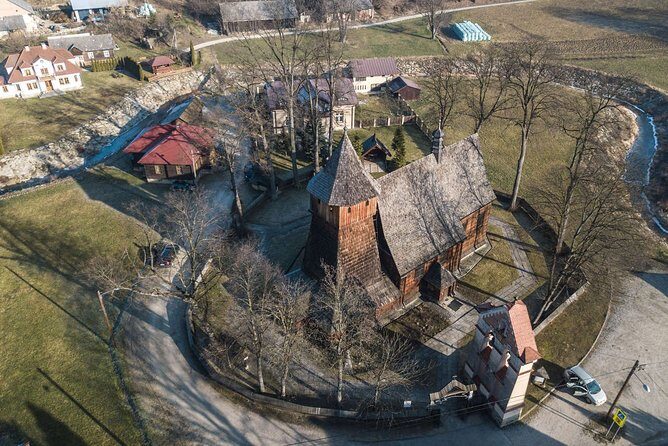
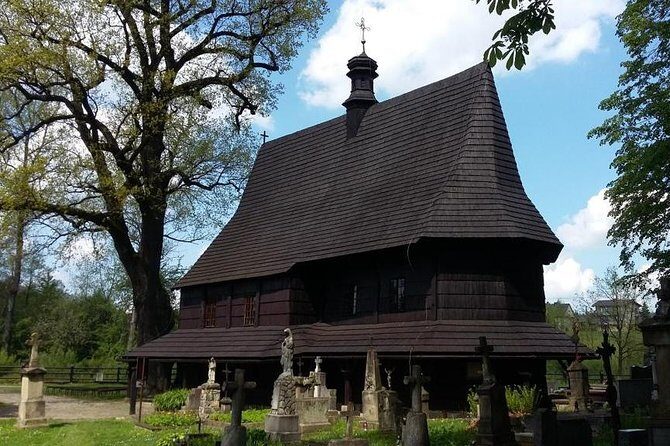
You start in Lipnica Murowana with the church of St. Leonard, built at the end of the 15th century. This site is one of the six wooden churches associated with the southern Lesser Poland UNESCO World Heritage listing.
A quick 30 minutes sounds short, but the timing works because your guide will help you focus on what’s worth seeing first. You’re not just scanning facades for pretty shapes; you’re learning what makes the wooden construction meaningful in a Gothic-era context.
The best part is that admission is free here, and you typically get the chance to see the interior with guidance. That’s the difference between a photo stop and a real stop.
Stop 2 and 3: Comparing Two Gothic Wooden Churches Without the Rush
Next you’ll head to the KoSciol p.w. Nawiedzenia NajSwietszej Maryi Panny, a wooden church from the 15th century. Then you’ll move to St. Michael the Archangel in Binarowa, known for its late Gothic character.
What I like about this pairing is the built-in comparison. In this region, timber doesn’t erase Gothic design language. It transforms it—so you can spot how form, proportions, and decoration shift as styles and regional choices vary.
Both stops are planned for around 30 minutes, and admission is listed as free for these churches. If you want more churches today, this is where the guide’s pacing approach becomes important, because you’ll be stacking short but meaningful visits.
Stop 4: St. Philip and St. James in Sękowa, the Pearl of Beskid Niski
In Sękowa, you’ll visit the Church of St. Philip and St. James the Apostles, built at the beginning of the 15th century. This is the church area often referred to as the Pearl of Beskid Niski—and the nickname fits, because the building quality and setting feel intentionally “kept.”
This stop tends to be the one where you slow down most. The guide can point out elements you might miss on your own, especially if you’re used to seeing stone churches. Here, the wood carries the visual weight, and you start noticing how craftsmen shaped details with the limits of the material.
You should expect the usual 30-minute window, with free admission, so aim to arrive ready to look rather than to chat. If you’re traveling with a camera, this is a good place to pause before the next move.
Stop 5: Owczary’s Lemko Orthodox Church and the Protection Theme
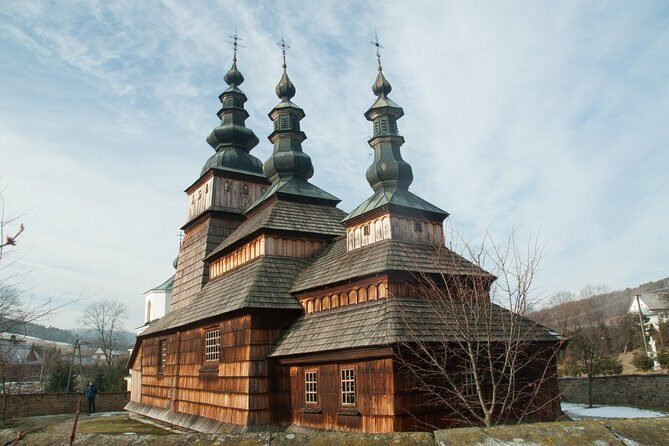
After the Catholic Gothic sequence, the tour shifts into a different spiritual and cultural lane at Owczary. You’ll visit the Greek Catholic Church of Protection of Our Most Holy Lady, also described as an Orthodox-style Lemko tserkov.
This church is linked to the Lemko tradition, and it was erected in the second half of the 17th century. That difference in time alone makes the stop fascinating: you’re not just seeing a different building style, you’re seeing a different chapter of regional heritage.
The overall result is that the day stops feeling like a list. It feels like a story of how wood served different communities, different faith practices, and different needs in the same wider region.
Again, it’s about 30 minutes with free admission, so don’t plan to overpack this stop with extra errands. Use the time to absorb the structure and symbolism before moving on.
Stop 6: St. Parasceve in Kwiaton, One of the Most Beautiful Wooden Churches
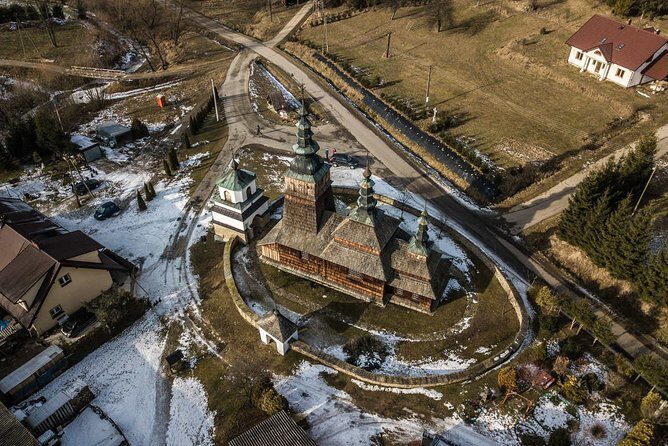
Your final named church stop is Church of St. Parasceve in Kwiaton. It’s described as one of the most beautiful wooden churches in Lesser Poland, and the “last stop” timing is smart because you’ll compare it against what you’ve seen already.
By now you’ll have built a mental checklist: what’s similar, what’s different, and how the woodwork changes the feel of the interior. That’s what makes a final church more rewarding—you’re not starting fresh, you’re refining your eye.
Plan for your 30-minute visit to be high-attention. Admission is listed as free, and the general style of the tour is to help you see inside with guidance or via audioguide options when available. If you care about architecture, this is a stop where you’ll likely want a little extra quiet time once you’re inside.
The Lunch Hour and How to Spend It Like a Local
Food and drinks are not included, but the day typically gives you about an hour for lunch at a village restaurant. This is one of the best parts to plan for, because it turns the trip from “church hopping” into a real taste of the area.
I’d treat this as your chance to eat traditional Polish dishes rather than grabbing something generic. Since you’re traveling through small towns, the restaurant usually feels like part of daily life, not a tourist pit stop.
Bring water with you if you tend to get thirsty on long mornings. You’ll be outside between stops, and having your own bottle keeps you from waiting for service when you’re ready to move.
What’s Included (and Why It’s Better Than DIY)
This tour includes entrance fees, a professional guide, hotel pick-up and drop-off, and transport by air-conditioned mini-bus. For a day built around multiple villages and churches, that package matters.
If you tried to do this on your own, you’d spend a lot of time coordinating travel between sites, and you’d likely miss the context your guide provides. Here, the guide’s job is to help you understand why the style appeared, what to look for at each church, and how each stop connects to the region.
You also get a mobile ticket, which is a small thing but saves you time on the day. Since you’ll be moving from church to church, any “paperwork friction” is the kind of stress you can skip.
Price and Value: What $299.53 Gets You
The price is $299.53 per person, with a private tour format. That’s not a budget day, but for a private guide plus transport plus multiple free-admission church entries, it can represent solid value—especially if you care about interiors and context.
The biggest reason I think it’s worth considering is the guide’s flexible pacing and the fact that the visits are structured. You’re not just driving; you’re getting interpretation, comparisons, and help spotting details worth your time.
Also, this tour is booked fairly in advance on average, which usually signals demand for the combo of timing, guide support, and route access. If you wait too long, you risk losing the exact day and the private-group setup.
Who This Tour Fits Best
You’ll probably enjoy this tour most if you like architecture that has a practical reason behind it. If you also enjoy understanding how people adapted their environment—timber, region, craftsmanship—this day will click fast.
It also suits travelers who don’t want a chaotic day. Each stop is timed, each church is part of a bigger learning plan, and the guide can adjust so you can cover more or focus deeper.
If you’re the type who can sit quietly for a guided interior and actually listen, you’ll get the payoff. If you want nonstop rushing and you dislike structured stops, you might find the 30-minute pacing too “steady.” But for most people, it’s a comfortable rhythm.
Should You Book This Lesser Poland Wooden Architecture Trail Tour?
I’d book it if your goal is to see UNESCO-linked wooden churches with an actual guide and meaningful inside time. The route mixes Gothic Catholic churches and the Lemko Orthodox tradition, so you don’t get a one-note day. You also get the comfort of hotel pick-up, transport, and entrance fees handled.
Skip it only if you’re on a tight schedule and want to maximize only outside views. This tour is designed for learning and looking closely inside, and that takes a bit of patience.
Finally, if you want a little strategy: when you get the chance to talk with your guide about pace, decide early whether you want fewer stops with more time or a bigger stack of churches. The best days here come from matching the itinerary to your attention level, not fighting it.
FAQ
How long is the Lesser Poland Wooden Architecture Trail tour?
It runs about 10 to 12 hours.
What churches and sites are included on the route?
Key stops include St. Leonard in Lipnica Murowana, the wooden 15th-century church dedicated to the Visitation of the Blessed Virgin Mary, St. Michael the Archangel in Binarowa, St. Philip and St. James in Sękowa (the Pearl of Beskid Niski), the Greek Catholic Church of Protection of Our Most Holy Lady in Owczary, and St. Parasceve in Kwiaton.
Is the tour private?
Yes. It’s a private tour/activity, and only your group participates.
Does the tour include hotel pick-up and drop-off?
Yes. Your accommodation in Krakow is picked up and you’re dropped back at the meeting point at the end.
Are entrance fees included?
Yes. Entrance fees are included.
Is food included?
No. Food and drinks are not included, though lunch time is built into the day.
What language is the tour guide?
The tour is offered in English.
Is there free cancellation?
Yes. You can cancel for a full refund up to 24 hours in advance of the experience start time.