REVIEW · KRAKOW
Private Krakow City Tour, Old Town and Jewish District Tour
Book on Viator →Operated by Krzysztof Blaszczyk Hussar Travel · Bookable on Viator
Krakow has a double story.
This private tour stitches together the showpiece sights of Old Town with the quieter, more personal streets of Kazimierz, guided in English from pickup to finish. You start in the historic core, then you move into Krakow’s former Jewish District to see landmarks tied to daily life and to the heartbreak of WWII.
I especially like how the guide keeps the walk feeling like a conversation, not a lecture. I also like that you spend real time around big names like Wawel and the Main Market Square, but you don’t ignore the details that make places like the Schindler’s List filming courtyard and the synagogues mean something. The main catch: it is still a walking tour that runs about 4–5 hours, so comfy shoes matter.
In This Review
- Key points I’d plan around
- Starting at Matejko Square: getting your bearings fast
- Through Florian’s Gate and down Florianska Street
- Main Market Square, Cloth Hall, and St. Mary’s from the outside
- The Royal Route vibe: universities, Franciscan Church, and Grodzka
- Ulica Kanonicza and Wawel: where the story turns ceremonial
- Kazimierz’s essentials: Market Square and Mrs. Dresner’s stairs
- Synagogues and Szeroka Street: turning buildings into context
- Heroes of the Ghetto Square and the ghetto wall fragment
- Price and pacing: is $132.16 per person good value?
- Who should book this Old Town and Jewish District tour?
- Should you book this tour?
- FAQ
- How long is the Private Krakow City Tour, Old Town and Jewish District Tour?
- What is the price per person?
- Is this a walking tour?
- Do I get hotel pickup?
- Is the tour private?
- What language is the tour offered in?
- Are entrance tickets included?
- Is there a mobile ticket?
- Is free cancellation available?
- Are service animals allowed?
Key points I’d plan around
- Hotel pickup in Krakow means you can start relaxed, not hunting for a meeting spot
- Private licensed English guide keeps the pace human and lets you ask questions on the fly
- Old Town highlights + Kazimierz depth in one route, without cutting either area short
- Schindler’s List courtyard and stairs sits right inside the Kazimierz segment
- Synagogues and memorial sites from outside give strong context without making you rush paid entry lines
- Guides like Chris, Andrew, and Kristof bring the city to life with humor and storytelling
Starting at Matejko Square: getting your bearings fast
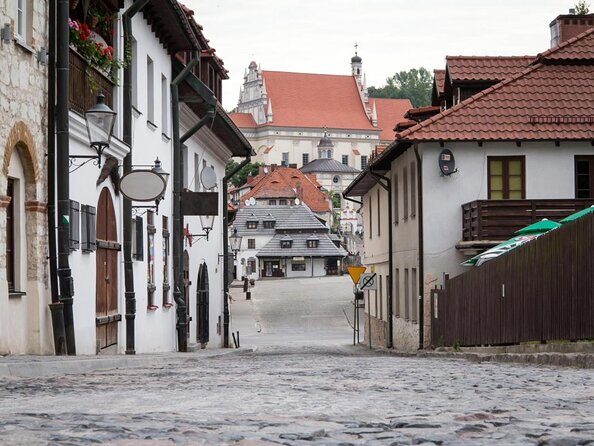
Most Krakow walking tours begin with a flourish. This one begins with orientation, right at Plac Matejki (Matejko Square). From there, you get set up for what you’ll see next: monuments that explain the city’s modern identity, then medieval walls and gates that tell you where the old boundaries were.
Then you move to the Grunwald Battle Memorial area. It’s not just a photo stop. The guide’s explanation helps you connect Krakow to wider Polish history, so when you later pass major civic and religious buildings, you understand why people cared about power, defense, and prestige.
After that, you come to one of the most useful “shape of the city” sights: the Barbican / Museum of Krakow. You’ll notice how it functioned as part of the old defenses. Even if you skip any paid museum entry, it’s a strong mental landmark for imagining how Krakow once pushed back against threats.
You can also read our reviews of more city tours in Krakow

Through Florian’s Gate and down Florianska Street
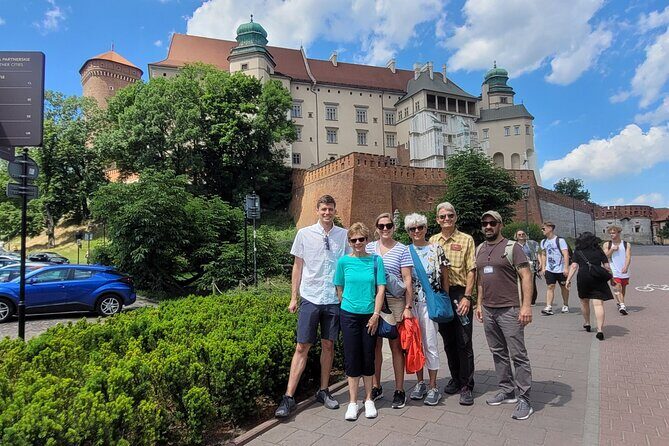
Next comes a classic medieval gateway moment: St. Florian’s Gate and the medieval city walls area. This is where Krakow starts to feel like a walled story, not an open-air museum. The guide points out what you’re really looking at, so the gate reads as part of a system, not a random stone arch.
Then you walk along Ulica Florianska (Florianska Street). This stretch is short, but it matters because it leads you into the civic heart in a natural way. You’re not just dropped into a square. You’re guided there, with context that makes the next stops land harder.
If you’re the type who likes asking questions, this is a good part of the tour for it. You’ll be close to the action, but you’re still early enough that your brain isn’t tired yet.
Main Market Square, Cloth Hall, and St. Mary’s from the outside
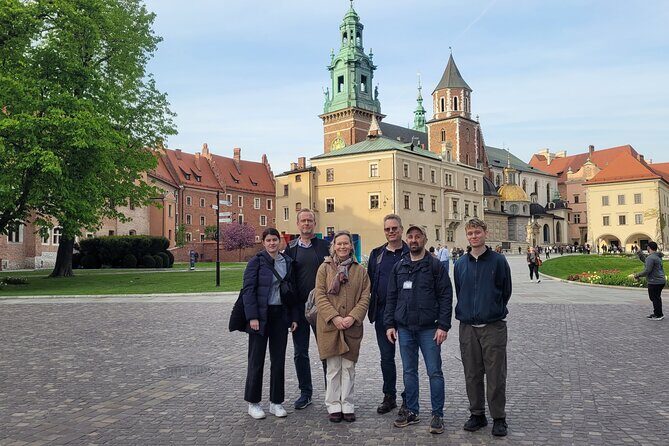
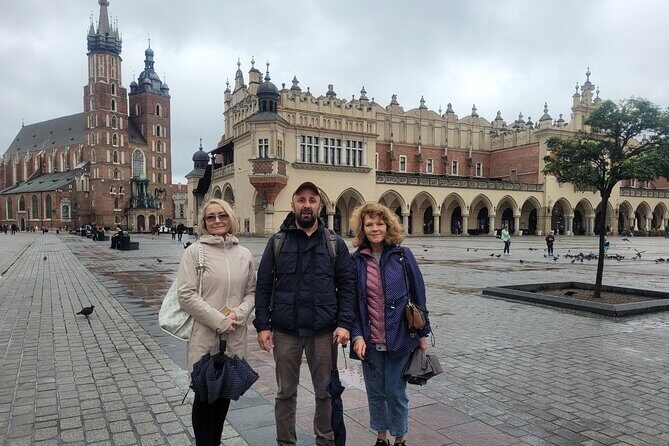
You’ll reach Krakow’s Rynek Główny Central Square (Main Market Square) with a feeling of arrival. This is Krakow’s big public stage. Even if you’ve seen pictures, you’ll likely notice the scale right away, plus the way different buildings still communicate different roles: trade, governance, religion.
The tour keeps you moving, but it gives you time—about 20 minutes in the square, plus focused explanations around key buildings. You get St. Mary’s Church from outside with a clear orientation chat so you know what you’re looking at when you pass it. Then you move on to Sukiennice (Cloth Hall).
Sukiennice is one of those places where you can appreciate it without needing to be inside. The guide’s commentary helps you understand why it became a trade symbol and how the square’s economy shaped the city. You’ll also have a chance to look toward the Town Hall Tower from outside, with a quick explanation that connects civic power to architecture.
A small practical note: this is the moment where you may want to decide how you’ll use your energy. If you’re tired, you can take the tour’s pacing as your reminder to slow down. If you’re feeling good, you’ll likely enjoy speeding up your own sightseeing instincts afterward, because the guide gives you a set of interpretive clues.
The Royal Route vibe: universities, Franciscan Church, and Grodzka
From the Main Square, the route heads into the Old University Quarter. You’ll see Muzeum Uniwersytetu Jagiellońskiego Collegium Maius, followed by Collegium Novum. This isn’t just “a campus.” It’s Krakow’s intellectual footprint in stone and courtyard space.
The guide’s explanations here help you connect the city’s religious and political power with education and ideas. It’s also a nice mental change of pace: after the trade and civic energy of the Market Square, you shift into scholarly rhythm.
Then you head toward the Basilica / Church of St. Francis of Assisi. You’ll spend time with Franciscan Church at a walk-up level, with interpretation to help you read the building’s role in Krakow’s religious story.
Next is Ulica Grodzka, part of the Royal Route. This street carries a sense of processions and status. You’ll get quick orientation time that helps you understand why this route mattered historically.
You also pass Jesuits’ Church, where you’ll get commentary tied to its place among Krakow’s older religious landmarks. The tour highlights it as the oldest church in Krakow, explained from outside. Even without an interior visit, that kind of framing makes the exterior feel less like a backdrop and more like a historical anchor.
Ulica Kanonicza and Wawel: where the story turns ceremonial
As you move along Ulica Kanonicza (Kanonicza Street), you’re stepping into a zone where the city’s religious and administrative layers feel closer together. The tour gives short, targeted explanations here, the kind that help you avoid the common mistake of treating every church stop as a separate, unrelated postcard.
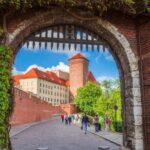
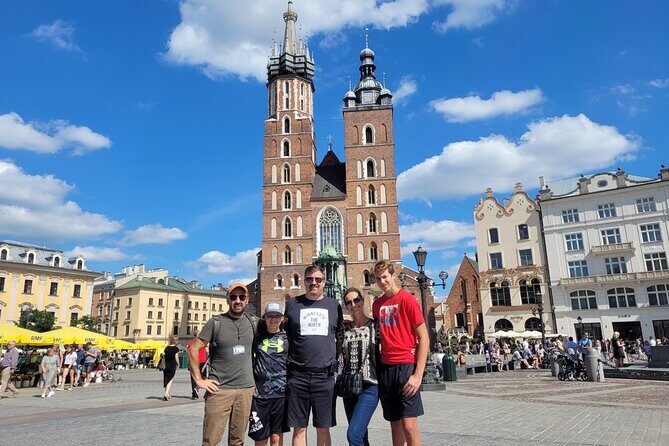
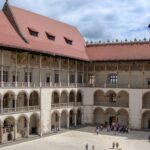
Then you reach Wawel Royal Castle. The highlight here is the courtyard: about 15 minutes of explanation focused on what Wawel represents. You also view the Cathedral Church from outside and get that same framing—so you understand why the cathedral and castle together dominate Krakow’s skyline and identity.
Don’t miss the Dragon Statue part of the Wawel area. It’s playful, but it also helps break the intensity that can come when you’re thinking about centuries of power and conflict. You get a quick storytelling moment before the tour shifts toward Kazimierz.
You can also read our reviews of more private tours in Krakow



Kazimierz’s essentials: Market Square and Mrs. Dresner’s stairs
Now the tour changes mood. You enter Kazimierz, Krakow’s former Jewish District, and the streets start to feel different right away. Instead of civic monuments, you’re dealing with community spaces—markets, synagogues, courtyards, and streets where everyday life once unfolded.
You’ll make a stop at Kazimierz Market Square, framed as a center for trade. Then comes one of the most emotionally loaded parts of the route: Mrs. Dresner courtyard and stairs, tied to Schindler’s List. The guide’s explanation helps you understand the connection to the WWII story without turning the location into a theme-park stop.
From there, you’ll see synagogues and synagogue-area landmarks. The tour includes Izaak Synagogue (17th century) with a short stop designed for orientation. You’ll also pass the Reformed Tempel Synagogue from outside, plus time near the Jewish Community Center.
Most synagogue-related stops on this tour are from outside. That’s not a downgrade. It’s often the best way to keep the day’s pacing steady and make sure you still get context at every place you pass. If you want to go inside a specific site, you’d typically do that with entrance tickets as an extra cost, since paid entry isn’t included in what the tour lists as free stops.
Synagogues and Szeroka Street: turning buildings into context
Kazimierz keeps unfolding street by street. You’ll reach Kupa Synagogue (Synagoga Kupa), viewed from outside, then continue along Szeroka Street, described as the oldest part of Krakow Jewish Quarter. This is where the guide’s storytelling really matters: the street isn’t just old. It’s a corridor of community memory.
As you walk, you’ll get outside explanations for multiple synagogue sites, including a stop near Wolf Popper Synagogue and High Synagogue (with the day including short, focused look-and-learn moments at each). You’ll also pass other synagogue-related landmarks such as the 15th century synagogue from outside and a stop connected to Helen Rubinstein Family House.
This is a strong segment for people who like to ask: How did communities live? How did worship, trade, and neighborhood identity connect? The route is designed for that. Each stop gives you a new piece, and by the time you’re halfway down Szeroka Street, you start to see the logic of the neighborhood.
Heroes of the Ghetto Square and the ghetto wall fragment
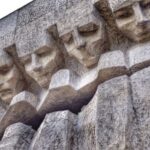
The tour closes the Kazimierz chapter with heavier memorial ground. You’ll visit Plac Bohaterów Getta (Heroes of the Ghetto Square), with a memorial and explanation. Then you reach a Ghetto Wall Fragment, a small physical remnant that helps the history feel real and specific.
This end section matters because it doesn’t treat remembrance as a quick photo moment. The guided framing helps you understand the difference between heritage and survival, and how a city can hold both in the same neighborhood.
When you finish, you’ll likely feel the contrast with Old Town: the ornate civic squares versus the community streets and memorial sites. That contrast is the whole point of combining these two areas in one day.
Price and pacing: is $132.16 per person good value?
At $132.16 per person, the price is mainly paying for one thing: a private licensed English-speaking guide plus hotel pickup and a route that’s built to cover a lot of ground thoughtfully. The tour lasts about 4 to 5 hours, which is a sweet spot for first-time Krakow visitors who want context without spending an entire day in transit.
A big value detail: this is listed as a private tour, so you’re not squeezed into a rigid group schedule. Also, most of the stops in the described route are admission-free exterior looks with explanations, and entrance tickets are extra if you decide to go inside.
So the cost can feel either high or fair depending on your travel style:
- If you want a tailored experience and don’t mind walking, it’s strong value.
- If you only want one or two iconic sights and plan to do the rest on your own, you might choose something shorter.
One more pacing consideration: guides here are known for keeping conversation going for the full time. In past tours, Chris and Andrew were praised for storytelling energy, and Kristof was noted for keeping things thorough even during long walking stretches. That’s great, but it also means you should go into the day with a mindset to keep moving.
Who should book this Old Town and Jewish District tour?
This tour is a great match if you want:
- First-day orientation that helps you understand what you’re seeing, not just where it is
- A day that connects Krakow’s civic power (Old Town) with community life (Kazimierz)
- Lots of time for questions, since the guide style is interactive and conversational in the way people describe it
It’s also a good choice if you’re traveling with family and want someone to handle the flow. One review highlighted the guide making people feel comfortable like friends rather than customers. That matters when you’re walking for hours with kids, or when your group needs slightly more flexibility.
The main group that might want to reconsider is anyone who has very low walking tolerance. Since it’s a walking tour and runs 4–5 hours, you’ll want to plan for that effort.
Should you book this tour?
Yes, if you want one guided day that genuinely links Krakow’s two faces: the glittering center and the deeply meaningful streets of Kazimierz. The route uses outside views strategically, so you still get context at major landmarks like Wawel and Main Market Square, then you shift into the Kazimierz sights connected to neighborhood life and WWII memory, including the Mrs. Dresner courtyard and stairs.
I’d book it in particular if you enjoy stories and you like asking questions. Guides such as Chris, Andrew, and Kristof have been singled out for keeping things engaging and customized, and that’s exactly what you want when a city has more than one narrative happening at once.
If you’re the type who hates walking and only wants interiors, you might be happier with a more museum-heavy plan. But for most people, this is a smart, efficient way to understand Krakow fast.
FAQ
How long is the Private Krakow City Tour, Old Town and Jewish District Tour?
It runs about 4 to 5 hours.
What is the price per person?
The price is $132.16 per person.
Is this a walking tour?
Yes, it is a walking tour.
Do I get hotel pickup?
Yes. The tour guide meets you in your hotel or apartment in Krakow.
Is the tour private?
Yes. It is a private tour/activity, and only your group participates.
What language is the tour offered in?
The tour is offered in English.
Are entrance tickets included?
Additional costs are listed for entrance tickets. Many stops are described as admission ticket free, but paid entry may be extra depending on what you choose.
Is there a mobile ticket?
Yes, a mobile ticket is included.
Is free cancellation available?
Yes, free cancellation is available. You can cancel up to 24 hours in advance for a full refund.
Are service animals allowed?
Service animals are allowed.