REVIEW · KRAKOW
Schindler’s Factory & Kazimierz Jewish Quarter Tour
Book on GetYourGuide →Operated by INTERCRAC Ltd. · Bookable on GetYourGuide
Krakow’s Jewish story hits hard.
This tour links two places that feel inseparable in the city: Kazimierz, Krakow’s historic Jewish district, and Schindler’s Factory, where the wartime reality is shown through the people who survived. If you care about understanding daily life under Nazi occupation, not just one dramatic name, this is a strong way to spend a few hours in Krakow.
I like the fact that you’re not only seeing landmarks. You’re walking through working neighborhoods where Jewish and Christian life grew side by side, then moving into an exhibition that explains what occupation meant in everyday terms. I also like that the guiding quality is consistent and easy to follow, with examples like Helen being described as both engaging and very clear.
One drawback to consider: this is a serious World War II–focused experience with tight corridors inside the museum, so it may feel less comfortable if you’re sensitive to crowds or confined spaces. And while the tour is 210 minutes, timing can run a little longer depending on museum scheduling and the group pace.
In This Review
- Key things to know before you go
- Kazimierz: why this walking part feels personal
- Old Synagogue museum: starting with Poland’s oldest preserved synagogue
- Remuh Synagogue and Cemetery: religion, ritual, and remembrance
- Kupa Synagogue and the Tempel Synagogue: seeing social differences inside the same district
- Plac Nowy: end your walk in a real Krakow square
- Schindler’s Factory: how the exhibition explains Krakow under occupation
- What the factory building does and does not include
- Timing, group size, and languages that shape your experience
- Price and value: is $69 worth it?
- Who should book, and who might want a different plan
- Should you book the Schindler’s Factory & Kazimierz tour?
- FAQ
- What is the meeting point for this tour?
- How long is the tour?
- What’s included in the price?
- Is food or drinks included?
- What languages are available?
- Is fast-track admission included at Schindler’s Factory?
- Are there any ticket details I need to provide?
Key things to know before you go
- Start at the Old Synagogue steps and get your bearings fast in Kazimierz.
- See multiple synagogues that show different social layers of the community, not just one site.
- Schindler’s Factory is told through wartime Krakow, using photos and personal objects, not just speeches about Schindler.
- You get fast-track admission, which saves you time for more explanation.
- Group size stays capped at 25, so the guide can still manage questions and flow.
- Expect narrow passages inside the factory museum setup, and dress for comfort.
Kazimierz: why this walking part feels personal
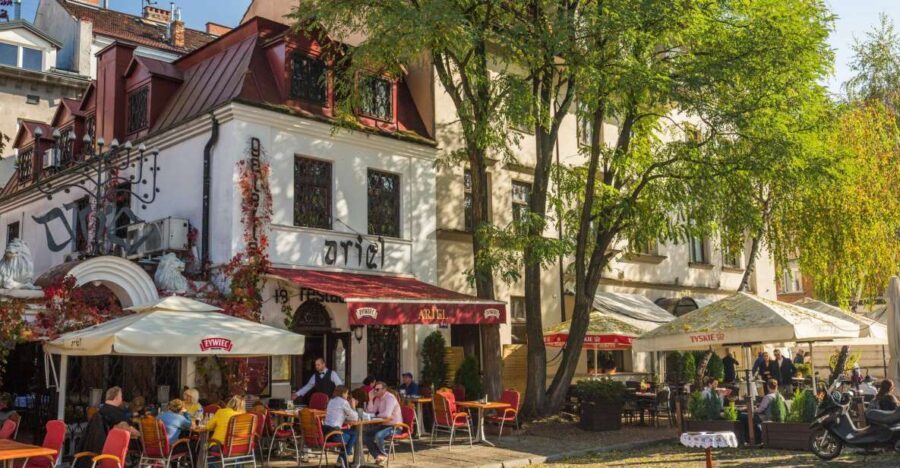
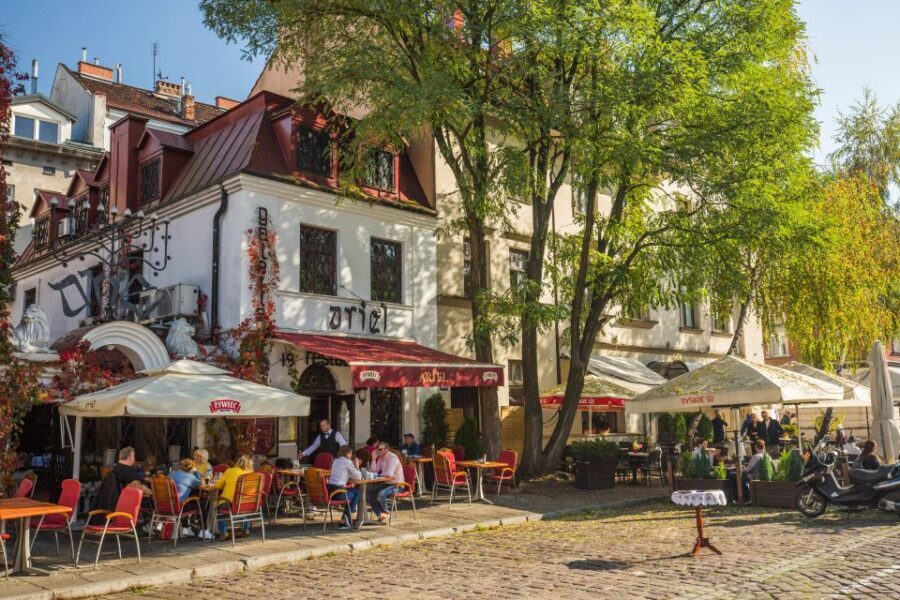
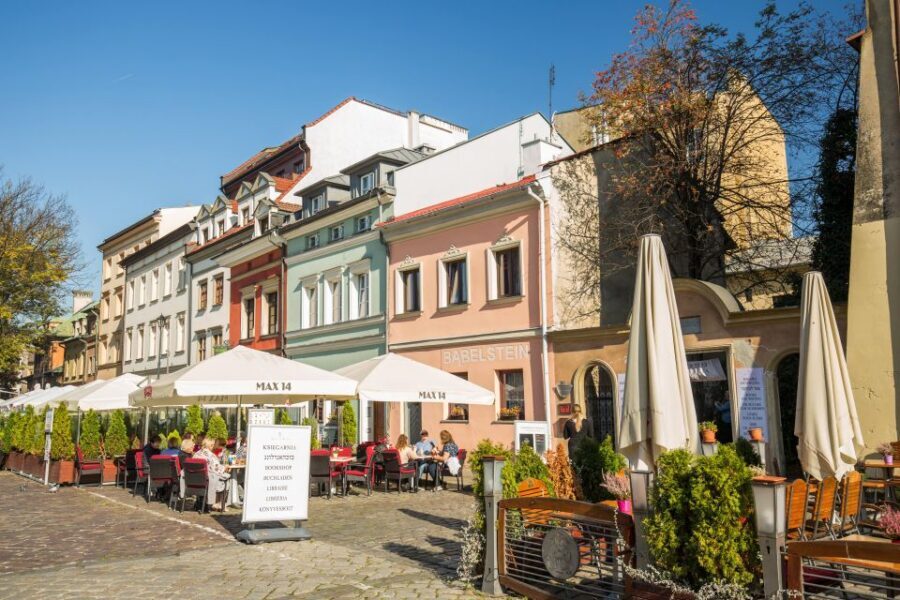
Kazimierz isn’t a museum district you pass through on autopilot. It’s a real neighborhood with centuries of memory in its streets, and the walk helps you understand why people gathered here for prayer, talk, trade, and community life. You’ll start on Szeroka Street, where the streetscape is lined with townhouses dating from the 16th to the 18th centuries, giving you that older Krakow feeling right away.
The route is built to help you read the area like a story. You begin near the core of synagogue life, then move past different synagogues and community sites, and end at Plac Nowy, a lively square with cafés, markets, and local art. That last stop matters because it gives you a sense of how people live here now, not only how they suffered then.
You’ll also learn an important framing point: the story of Jewish survival in Krakow can’t be separated from what non-Jewish Krakovians experienced too. The tour’s emphasis is on endurance and daily reality in Nazi-occupied Kraków beyond Schindler’s personal narrative.
You can also read our reviews of more tours and experiences in Krakow.
Old Synagogue museum: starting with Poland’s oldest preserved synagogue
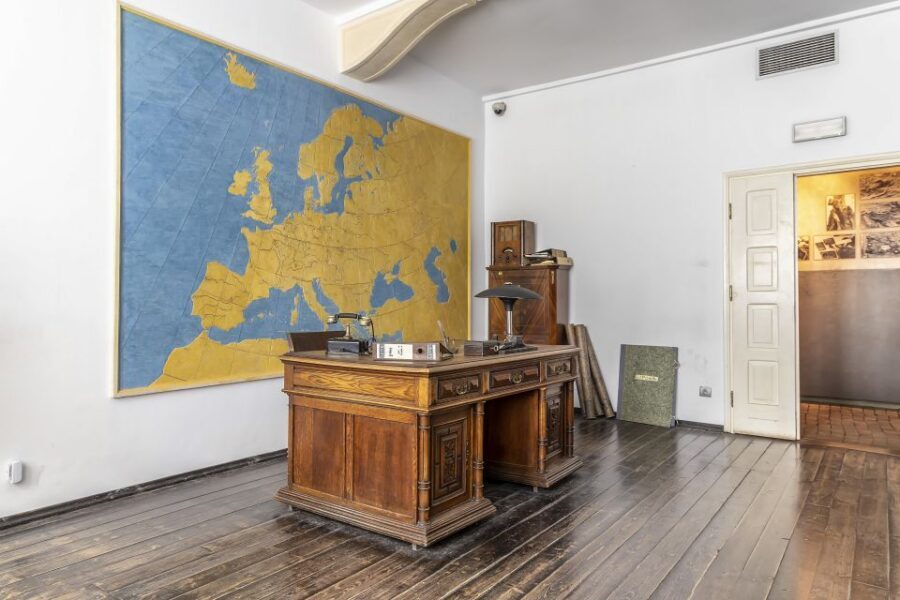
Meeting is on the steps of the Old Synagogue, and that’s a smart choice. You’re not just arriving at a random building; you’re starting at a key landmark for Jewish history in Poland. The Old Synagogue is now a museum dedicated to Jewish history, and it anchors the Kazimierz portion with real historical weight.
As you move through the area, the guide helps connect architecture and location to community life. You’ll hear how the synagogue served as a centerpiece for prayer and communal identity, and you’ll also get context for how people lived around it. For many visitors, this is where the tour shifts from sightseeing into understanding.
Practical note: this portion is a walking tour, so wear shoes you trust. Some streets can feel uneven, and you’ll likely want to keep moving without stopping every two minutes.
Remuh Synagogue and Cemetery: religion, ritual, and remembrance
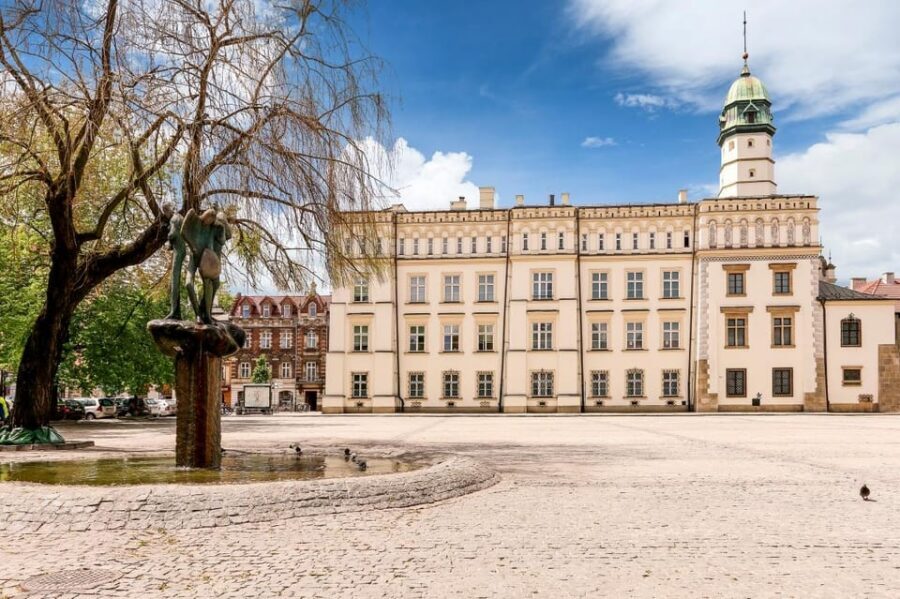
Next you’ll pass the Remuh Synagogue and Cemetery, one of the most important Jewish religious sites in the country. This stop adds a different angle from the “synagogue as landmark” feeling, because it brings you closer to the idea of remembrance in Jewish religious life.
Cemeteries and places like this aren’t just for looking. You’ll understand why burial traditions and ongoing remembrance matter, especially in a community that had to endure catastrophic disruption. Even if you’re not a history expert, the guide’s explanation helps you make sense of the role these sites play in identity over generations.
This is also one of those moments where pace helps. You’ll benefit from slowing down just enough to absorb what you’re seeing, even if the tour keeps moving forward.
Kupa Synagogue and the Tempel Synagogue: seeing social differences inside the same district
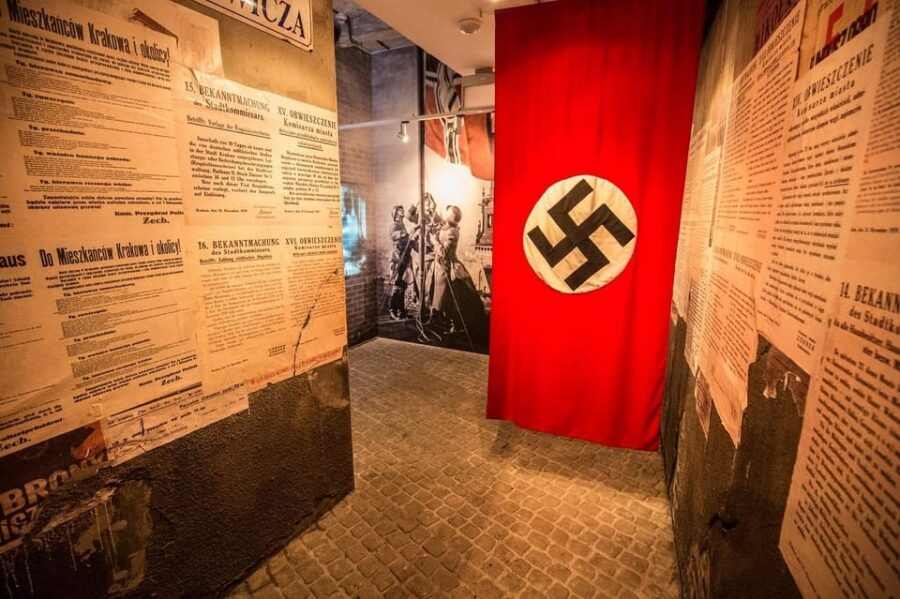
Kazimierz contains synagogues that reflect different communities within the wider Jewish population. The walk passes the Kupa Synagogue, which once served the poorest members of the community. That detail is easy to overlook if you only treat synagogues as one type of building, so I like that the route calls out this social aspect.
Then the walk continues past the Tempel Synagogue, which today functions as an active cultural venue. That contrast is important. You’re seeing how sacred spaces can transform when communities change, while still carrying echoes of what came before.
For you, this means the tour doesn’t freeze Kazimierz in a single time period. You get a sense of continuity and survival in a practical way: the district still has life, but the past isn’t erased.
Plac Nowy: end your walk in a real Krakow square
The Kazimierz walking portion ends at Plac Nowy, a square where you’ll find cafés, markets, and local art. I like this ending because it gives you a natural place to take a breath and reset your mood before the factory museum portion. You can also grab a drink or something quick to hold you over, since the tour doesn’t include food.
If you’re timing your day in Krakow, this is a useful anchor point. You know roughly when you’ll be near Plac Nowy, and you can plan a short stroll after the tour or a stop for supplies.
Just remember: the second half is heavier. If you’re the type who gets drained by serious history, think about how you want to manage your energy before you step into the factory exhibition.
Schindler’s Factory: how the exhibition explains Krakow under occupation
After Kazimierz, you’ll move to Schindler’s Enamel Factory, one of Krakow’s most visited museums. Because you get fast-track admission, you skip long ticket lines and spend more time with your licensed guide in the spaces that matter.
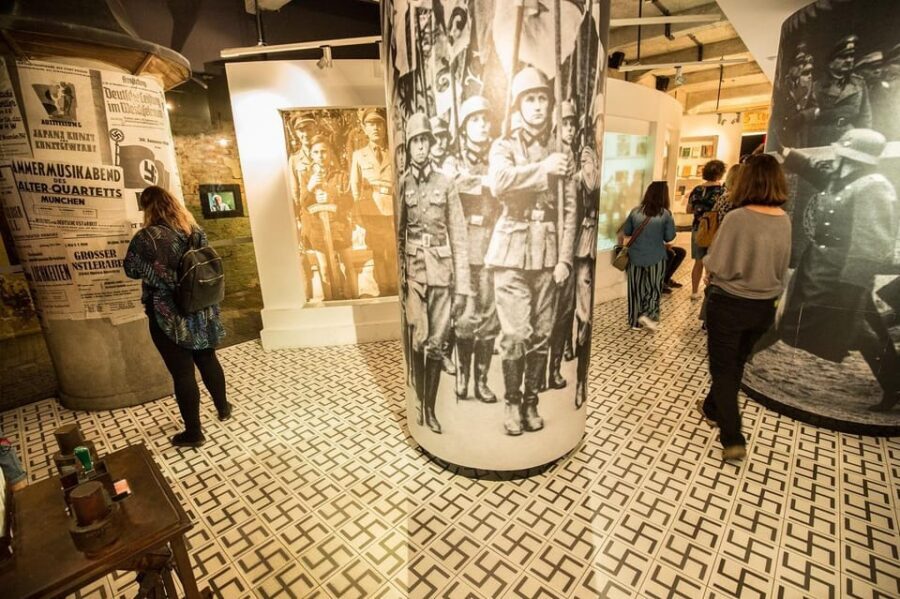
Inside, the main exhibition is called Kraków under Nazi Occupation 1939–1945, and it’s presented through the story of Oskar Schindler. The exhibition doesn’t treat his actions as a stand-alone miracle. Instead, it uses the Schindler story as a pathway into a larger picture: how Kraków’s Jewish and non-Jewish residents lived through fear, uncertainty, and hardship.
Schindler’s action is explained in concrete terms. You’ll learn that Schindler employed Jewish workers and used his influence and resources to help save more than a thousand men and women from deportation. Those people are known as the Schindlerjuden, and the exhibition includes the stories linked to their testimonies.
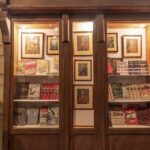
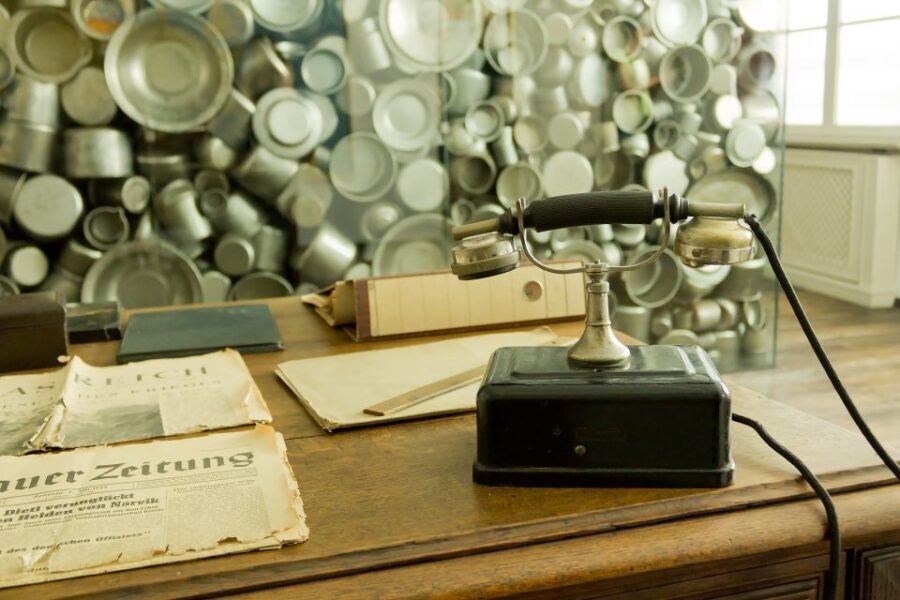
What makes the museum feel real is the mix of materials. You’ll see historic photographs, personal belongings, and reconstructed streetscapes that portray daily life under occupation. This is not just an outline of events. It’s an attempt to show what the atmosphere was like—how ordinary life could shrink until survival became the main goal.
What the factory building does and does not include
One detail I appreciate from the tour information: the building originally functioned as Schindler’s factory, but today it operates as a museum and no longer contains original production equipment. That’s worth knowing because some people expect to see more “industrial proof” than they do.
So treat it as a museum experience, not a time capsule of machinery. The value here is the way the exhibition uses artifacts and reconstructions to teach you what life was like.
Also, the layout uses narrow passageways and a setup meant to reflect the WWII atmosphere. That can be emotionally intense, and it can also be physically uncomfortable if you’re not used to tight spaces.
Timing, group size, and languages that shape your experience
This tour runs for about 210 minutes, and the timing is described as approximate. Plan your Krakow schedule with some flexibility, especially if you have another reservation right after. Museum flow can adjust, and group pacing changes the experience.
Group size matters here. Tours are limited to 25 participants, which helps keep things organized and gives the licensed guide a chance to steer attention without losing control of the room.
Language is another big factor. The tour operates in a single language per group, and available options include German, French, Italian, English, and Spanish. If history is your priority, I strongly recommend choosing the language you feel most comfortable processing details in, especially since the museum is complex.
Arrival time also matters. You’ll need to meet your guide on the steps of the Old Synagogue, holding a Kazimierz Guided Tour sign, and you should arrive at least 10 minutes early. Once the group enters, late arrivals can’t be accommodated and tickets are non-refundable, so don’t cut it close.
A final practical point: museum tickets are personalized, and you’ll be required to provide the full names of all participants at booking. Double-check spelling, because denied entry is possible if names don’t match what’s issued.
Price and value: is $69 worth it?
At $69 per person, you’re paying for two things that are hard to replicate on your own: a guided walk through Kazimierz with synagogue and community context, plus a guided visit inside Schindler’s factory museum with fast-track admission.
If you try to do this solo, you’d likely spend money on separate tickets and then struggle to connect the sites into one coherent story. Here, the guide’s job is to knit those places together so the district doesn’t feel like a list of stops, and the factory museum doesn’t feel like a pile of facts. That’s the real value.
What’s not included is food and drinks. Since the walk ends at Plac Nowy with cafés and markets, you can handle snacks naturally, but plan for it. If you skip meals and expect the tour to cover it, you’ll be disappointed.
Also, keep your expectations realistic about time. This is a long walk plus a museum visit, so it’s best if you can focus for a few hours rather than treating it like a quick photo run.
Who should book, and who might want a different plan
I think this tour is a great match for you if:
- You want the Kazimierz Jewish Quarter experience with specifics about synagogues and community life.
- You’re interested in wartime Kraków as more than one heroic storyline, including how Jewish and non-Jewish residents endured.
- You like guided explanations that help you connect buildings to people and choices.
It may be less ideal if:
- You expected to see original factory machinery. The building is now a museum without original production equipment.
- You’re uncomfortable with tight indoor passageways. The factory exhibition uses narrow corridors and an atmosphere designed to reflect the period.
If you’re traveling with kids, you might consider whether they can handle heavy themes and museum-style pacing. The information is serious, and the tour format is structured.
Should you book the Schindler’s Factory & Kazimierz tour?
If you want a strong, organized way to understand Krakow’s Jewish story and the meaning of Schindler’s actions in context, I’d book this. The structure works: first you grasp Kazimierz as a community space, then you step into Schindler’s factory to understand what occupation did to that world.
The only real cautions are comfort and pacing. Wear good shoes, expect narrow museum spaces, and give yourself some slack in your schedule since timing can run over slightly. Also, if the idea of intense WWII material drains you quickly, plan a calmer rest of the day afterward.
In short: this is a high-value tour for anyone who wants clarity, not just sights—especially if you’re choosing between “seeing places” and truly understanding why those places mattered.
FAQ
What is the meeting point for this tour?
Meet your guide on the steps of the Old Synagogue. They will hold a Kazimierz Guided Tour sign.
How long is the tour?
The duration is about 210 minutes.
What’s included in the price?
You get a walking tour through Kazimierz, a professional licensed guide, and fast-track admission to Schindler’s Factory.
Is food or drinks included?
No. Food and drinks are not included.
What languages are available?
The tour guide languages are German, French, Italian, English, and Spanish.
Is fast-track admission included at Schindler’s Factory?
Yes. You skip the ticket line with fast-track admission.
Are there any ticket details I need to provide?
Yes. The museum issues personalized tickets, so you must provide the full names of all participants at booking.