This day trip hits hard in the best way. You’re transported from Krakow, welcomed by an English-speaking team, and given an orientation that makes the site easier to follow before you explore on your own. I especially liked the comfortable minivan or bus ride and the licensed museum guide’s walkthrough of Auschwitz I, which helps you understand what you’re seeing right away.
The main thing to consider is that this is a heavy, emotionally intense day. You’ll also do a fair amount of walking and standing, so moderate physical fitness helps you stay steady and focused instead of rushing.
For me, the value is the mix: a real expert to set the scene, then enough freedom to move at your own pace through Auschwitz I and Auschwitz II-Birkenau.
In This Review
- Key things that make this tour work
- Why This Auschwitz-Birkenau Day Trip Makes Sense From Krakow
- The 2:30 pm Start in Krakow and the Drive to Oświęcim
- Your Expert Orientation: Auschwitz I at the Gate and Beyond
- Walking Auschwitz I on Your Own: Where to Focus
- Birkenau (Auschwitz II): The Camp That Changes the Scale
- The Timing Loop: Breaks, Rejoining the Group, and Returning to Krakow
- Price and Value: Is $38.05 a Fair Deal?
- Who This Tour Fits Best (and Who Might Want Something Different)
- Practical Tips for a Hard Day You’ll Remember
- Should You Book This Auschwitz-Birkenau Tour?
- FAQ
- What time does the Auschwitz-Birkenau self-guided tour start in Krakow?
- Where do I meet for the tour?
- How long is the tour from start to finish?
- Is transportation included?
- Are entry tickets included?
- Do I need to follow an official guide inside the camps?
- How big is the group?
- Is this tour suitable for people with limited mobility?
- Can the schedule change during the day?
- What happens if I cancel my booking?
Key things that make this tour work
- A licensed Auschwitz-Birkenau museum expert leads your initial orientation
- English-speaking support in Krakow and during the start of the visit
- Entry tickets are included so you can walk Auschwitz I and Birkenau independently
- Preserved barracks, original fences, watchtowers, and exhibitions are part of your route
- You’re not trapped in a long lecture. You get time to reflect on your own
- Small group size (max 30) helps keep the day organized without feeling chaotic
Why This Auschwitz-Birkenau Day Trip Makes Sense From Krakow
If you only do one serious historical visit in Poland, this is it. Auschwitz-Birkenau Memorial and Museum is one of the most important sites in the world, and going in person is different from reading about it. You’re standing in a place where the layout itself tells the story: how the camps were structured, how prisoners were held, and how the machinery of extermination was carried out.
What I like about this format is the pacing. You don’t spend the whole time in a big speech. Instead, you get an initial guided explanation that helps you understand what you’re looking at, then you continue independently with your included entry tickets. That matters because Auschwitz isn’t a museum where you can just “get through” exhibits. You need time to process.
From a practical standpoint, the day trip is built around one goal: remove the stress of figuring out transport and ticket logistics on your own. For most people visiting Krakow, that’s a big win.
You can also read our reviews of more guided tours in Krakow
The 2:30 pm Start in Krakow and the Drive to Oświęcim
You meet at Pawia 18B, 31-154 Kraków, Poland, with a start time of 2:30 pm. The drive to Auschwitz takes about 1.5 hours, and the ride is in a comfortable, air-conditioned minivan or bus. That’s not a small detail. The better you feel on the way in, the more capacity you have when you arrive.
Before you reach the memorial area, you’ll get a brief break on arrival in Oświęcim. It’s not a long hang-out, but it gives you space to stretch your legs and grab something simple like coffee. There’s also mention of a lunchbox if you want to bring one, which is smart for a day that will run 7 to 8 hours total.
The only caution: museum schedules can affect timing. The tour notes that the time may change due to schedule at the Auschwitz Museum, so build in patience and avoid rushing your evening plans back in Krakow.
Your Expert Orientation: Auschwitz I at the Gate and Beyond
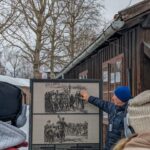
Once you arrive, you meet a local guide who is described as a licensed expert from the Auschwitz-Birkenau museum. This matters because Auschwitz is full of specifics, and a good orientation helps you connect those details to the larger picture.
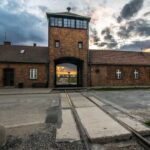
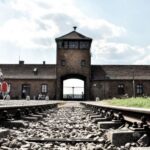
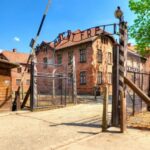
Your introduction starts at the Auschwitz I area, including the famous gate inscription Arbeit Macht Frei. From there, your guide helps you understand how Auschwitz I was set up using repurposed Polish army barracks. You’ll also hear how the camp operated from 1940 until liberation by Soviet forces in 1945, and how more than 1.5 million prisoners were brought in, with 1.1 million exterminated. That scale is hard to hold in your head, which is why a structured start is useful.
After this guided portion, the tour shifts into self-guided mode. That’s the key difference between this and a fully guided experience: you’re not left alone without context, but you also aren’t forced to follow someone else’s pace forever.
Walking Auschwitz I on Your Own: Where to Focus
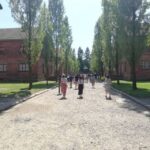
After you receive your entry tickets, you can walk the grounds independently. Auschwitz I includes preserved barracks, original fences, watchtowers, and exhibitions. That combination is important: it’s not just buildings. It’s the boundaries, the controls, and the way information is presented through exhibits.
When you’re self-guided, you can slow down where you want and speed past what doesn’t help you. I’d treat this as a choose-your-own-pace museum visit rather than a checklist. Look for how the fences and watchtowers shape the space and restrict movement. Then use the exhibitions to connect those physical features to what the camp system was designed to do.
Because you’re on your own after the orientation, you’ll want to give yourself permission to pause. Some parts of Auschwitz I can feel repetitive in the sense that many structures are similar, and that can blur meaning if you keep rushing. If that happens, stop and focus on one thing at a time—how the layout functioned, what each area was used for, and how the overall system worked.
Birkenau (Auschwitz II): The Camp That Changes the Scale
Then you move to Birkenau, also called Auschwitz II. This is the larger camp within the Auschwitz complex, and it’s designed to be understood by scale. The camp started as a place for Soviet POWs, later becoming a concentration camp for prisoners of various nationalities and a central hub for the extermination of Jews.
Construction began in October 1941, with prisoners using slave labor to build the camp on the site of the displaced and largely destroyed village of Brzezinka, about three kilometers from Auschwitz I. The camp was designed to hold up to 125,000 prisoners at a time. That number is extreme, and seeing Birkenau in person is often the moment where the story stops being “historical” and starts being physical.
This is also where self-guided time can be especially valuable. Birkenau isn’t laid out like a neat indoor museum route. It’s more open, more spread out, and easier to get overwhelmed. If you move at your own pace, you can take in the space without feeling pressured to keep up.
Time for this section is listed at about 1 hour 10 minutes, but it may feel longer depending on your pace and how much you stop to reflect.
You can also read our reviews of more tours and experiences in Krakow

The Timing Loop: Breaks, Rejoining the Group, and Returning to Krakow
The overall duration is about 7 to 8 hours. That includes the return trip and the structured flow between Krakow, the Oświęcim area, and Birkenau.
After your visit, you rejoin your group. You’re not rushed immediately. There’s at least 15 minutes built in for a bookstore stop or just a break. Then you head back to Krakow, which takes about 1 hour 30 minutes.
One smart tip: treat the return drive as part of the experience. You’ll be emotionally processed and physically tired, and it helps to avoid scheduling a late dinner that depends on you being fully “on.” If you can, keep the rest of your evening simple.
Also keep in mind: this tour can be impacted by museum schedule. That doesn’t mean chaos, just that the day is tied to what happens at the site.
Price and Value: Is $38.05 a Fair Deal?
At $38.05 per person, this is priced like a value-focused day trip, and the inclusions are what make the math work. You’re paying for transportation from Krakow, entry tickets, and assistance from the tour leader at the start. For many visitors, that combination is the difference between a smooth day and a logistical scramble.
The “self-guided with expert orientation” format adds value too. You get the best of both styles: someone licensed helps you understand Auschwitz I quickly and accurately, then you have freedom with tickets to explore independently rather than being stuck behind one pace the entire day.
Is it the most expensive option? No. But it also isn’t just “a bus and tickets.” The orientation piece is the practical differentiator here.
Who This Tour Fits Best (and Who Might Want Something Different)
This works well if you want structure without feeling locked into a full guided narration for every minute. The orientation helps you get oriented, and then the freedom lets you slow down when you need to.
It’s also a good choice if you’re visiting Auschwitz-Birkenau as a day trip from Krakow and you don’t want to handle transport and museum entry on your own. The max group size of 30 helps keep things manageable.
Consider another style if you know you’ll struggle with self-guided exploration at an intense site and would prefer a fully guided, continuous commentary. This experience includes an expert start, but after that, the walk is on your own.
Practical Tips for a Hard Day You’ll Remember
This is not a “quick stop and photos” kind of visit. Plan for a day that will stay with you.
- Wear comfortable walking shoes. You’ll be moving through preserved grounds where surfaces may not be uniform.
- Dress in layers. Even in air-conditioned transport, the conditions outside can change what you feel.
- Bring water and something light to eat if you’re able. The day includes drive time and breaks, but it’s still long.
- Keep your phone use low. You’ll get more from slowing down and reading what’s in front of you rather than jumping between screens and spaces.
- Set expectations for emotions. A guided orientation will help, but you can’t “speed through” the impact.
One more small point: because the schedule may shift with the museum, avoid planning time-critical reservations right after you return to Krakow.
Should You Book This Auschwitz-Birkenau Tour?
Book it if you want an organized Krakow day trip with transport and tickets included, plus a licensed museum guide to help you understand Auschwitz I before you explore on your own. The mix of expert orientation and self-guided time is the sweet spot for many visitors.
I’d skip it only if you strongly prefer an entirely guided experience throughout the entire visit. Otherwise, this tour’s structure is practical, respectful, and built for a paced visit where you can stop, look, and reflect without constant pressure to keep up.
FAQ
What time does the Auschwitz-Birkenau self-guided tour start in Krakow?
It starts at 2:30 pm.
Where do I meet for the tour?
You meet at Pawia 18B, 31-154 Kraków, Poland.
How long is the tour from start to finish?
The duration is listed as about 7 to 8 hours.
Is transportation included?
Yes. You travel from Krakow to the Auschwitz-Birkenau area by comfortable, air-conditioned minivan or bus.
Are entry tickets included?
Yes. Entry tickets for the Auschwitz-Birkenau Memorial and Museum are included.
Do I need to follow an official guide inside the camps?
You’ll have a guided orientation with a local licensed expert, then you receive tickets to walk independently through Auschwitz I and Birkenau.
How big is the group?
The tour has a maximum of 30 travelers.
Is this tour suitable for people with limited mobility?
The tour notes that travelers should have a moderate physical fitness level.
Can the schedule change during the day?
Yes. The time may be changed due to the Auschwitz Museum schedule.
What happens if I cancel my booking?
The experience is non-refundable and cannot be changed for any reason. If you cancel or ask for an amendment, the amount paid is not refunded.