REVIEW · KRAKOW
Guided Tour in Kraków-Płaszów Former Concentration Camp
Book on Viator →Operated by Krakow Explorers · Bookable on Viator
Kraków hides a camp in plain sight. This guided walk helps you connect the Holocaust story to places you can reach in minutes, not hours, using real landmarks and a clear timeline. You’ll start with Plac Bohaterów Getta and move into the Płaszów grounds, so the history doesn’t stay stuck in a museum.
Two things I really like here are the focused route and the way the guide ties the tragedy to specific spots in today’s Kraków. I also like the practical size of the group, with a cap of 25 people, which makes it easier to ask questions without feeling like you’re in a crowd. One drawback to keep in mind: the site is emotionally heavy, and the ground can feel uneven and wild, so plan on a slow, careful pace.
In This Review
- Key highlights to know before you go
- Why Płaszów feels close enough to matter
- Plac Bohaterów Getta: the Ghetto Heroes Square walk that hits fast
- Płaszów Concentration Camp: walking where the past still reads on the ground
- The 12-metre Ghetto Wall fragment: a short piece with heavy words
- How the 2-hour structure keeps you focused (and not rushed)
- What you’re really paying for at $30.01
- Who this tour is best for—and who should think twice
- Should you book the Kraków-Płaszów guided camp visit?
- FAQ
- How long is the guided tour?
- What is the price per person?
- Is the tour offered in English?
- Where do I meet the group and where does it end?
- Do I need an admission ticket for the Płaszów camp stop?
- What are the main places you’ll see on the route?
- How large are the groups?
- Will I get a ticket on my phone?
- Can I cancel and get a full refund?
- Is it easy to reach using public transportation?
Key highlights to know before you go
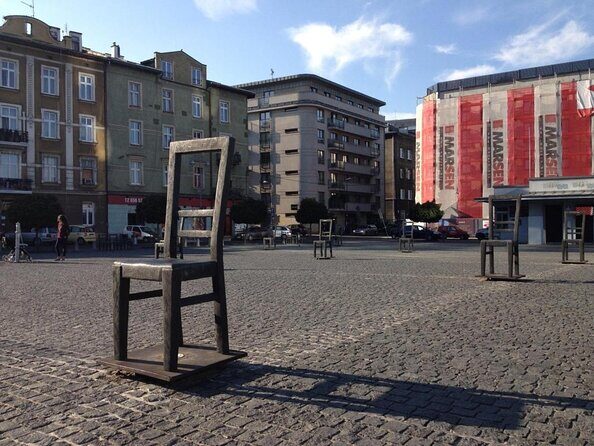
- Ghetto Heroes Square (Plac Bohaterów Getta): a post-war memorial shaped by a controversial 2005 renovation with 70 metal chairs
- Płaszów Concentration Camp grounds: the German Nazi camp in Płaszów, called Konzentrationslager Plaszow bei Krakau
- A practical walk-by route: you cover multiple meaningful points in about 2 hours total
- Free admission ticket for the camp stop: you won’t be hit with another ticket cost on-site
- English mobile tour: mobile ticket delivery and an English-speaking guide experience
Why Płaszów feels close enough to matter
Most people visit Kraków with Auschwitz on their mind. The Płaszów camp is different, because it sits right here, across the river in the Podgórze area. That nearness is the point: you’re not just learning about history somewhere else. You’re seeing how the war’s footprint sat inside a city that kept moving forward afterward.
What surprised me from the way this tour is run is the attention to the immediate surroundings. The Płaszów area is positioned on a major route (Wielicka Street), opposite a large shopping center (Bonarka), and not far from Krakus Mound. In other words, you’re standing in a place that lies in the same daily flow as ordinary Kraków life, even though its wartime purpose was brutal.
The guided approach matters here. Without context, the camp grounds can read like a rough open space. With context, you start to notice how memory gets carried by geography: paths, remnants, and the stubborn presence of what’s no longer there.
You can also read our reviews of more guided tours in Krakow
Plac Bohaterów Getta: the Ghetto Heroes Square walk that hits fast
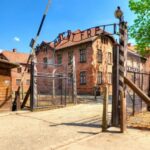
The tour begins with a walk-by at Apteka pod Orłem at Plac Bohaterów Getta 18, in the neighborhood of Podgórze. From there, you head to Ghetto Heroes Square, also known as Plac Bohaterów Getta.
This stop is more than a name change, and it’s one reason I think it’s worth the opening walk. After the war, Plac Zgody was renamed Plac Bohaterów Getta and given a small monument. Later, the area was used in ways that never matched its meaning—reported as a public toilet or a parking lot. Then, after decades, it was renovated in 2005, which sparked significant controversy.
The design is the detail you’ll remember: the square is laid out with 70 large, well-spaced metal chairs intended to symbolize departure and subsequent absence. It sounds abstract until you see it in place. The space becomes an odd kind of memorial—less statue, more arrangement—meant to force you to sit with what those chairs represent.
If you’re the type who likes history in context (not just a list of dates), this start works. It sets a tone that’s reflective before you even reach Płaszów.
Płaszów Concentration Camp: walking where the past still reads on the ground
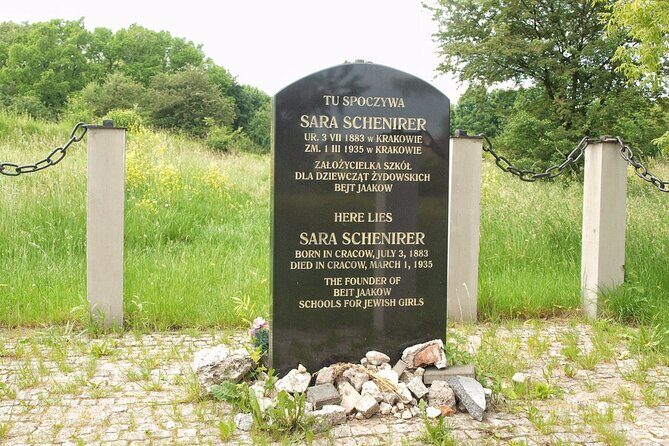
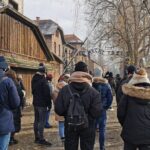
The main portion begins at the Płaszów Concentration Camp. This is where the tour earns its reputation for clarity. Your guide will show you around and explain events in context, connected to what you can actually see around you.
A key point: Konzentrationslager Plaszow bei Krakau wasn’t an abstract concept. It was a German Nazi concentration camp in Płaszów, and the tour frames it that way. You’ll get an overview of Kraków’s Holocaust history that doesn’t treat the story as a detour from Kraków’s more famous sights.
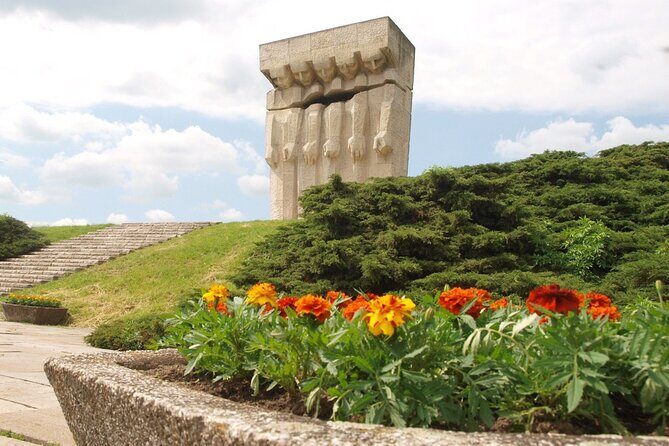
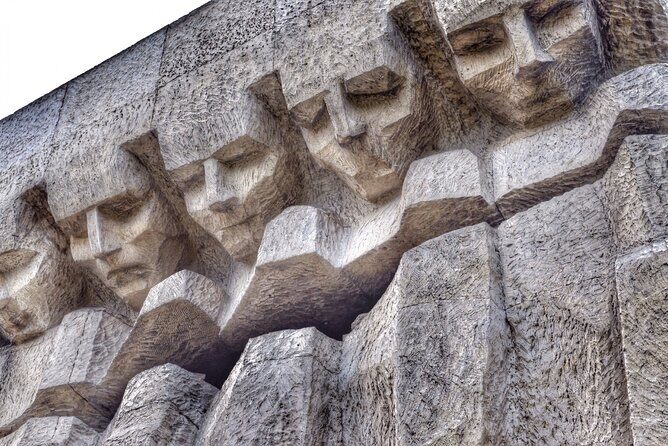
The setting is striking for practical reasons. The site is described as a wild, uneven area that until recently didn’t visually signal what it used to be. That means you’ll likely spend more time looking down and around—at the shape of the land and how you move through it—than you would at a manicured memorial.
This is also where the guide’s pacing matters. Because the visit is about 1 hour inside this stop, you’re not touring for a full day. You’re getting focused context without dragging out the experience longer than it should be, especially since the subject is tragic.
One more advantage: the camp stop includes an admission ticket that’s listed as free. That makes the total price feel more transparent and helps you avoid last-minute costs.
The 12-metre Ghetto Wall fragment: a short piece with heavy words
After the camp visit, the route passes one of Kraków’s most prominent ghetto reminders: the Fragment of Ghetto Wall. This is a rare thing—evidence you can see clearly without needing special arrangements.
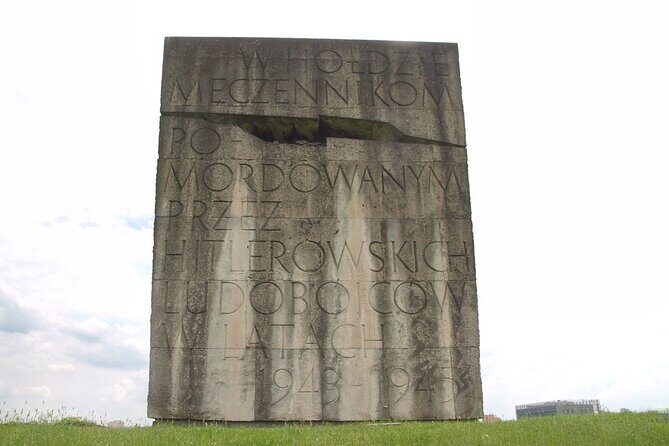
You’re looking at a 12-metre stretch of the original ghetto wall. In 1983, a commemorative plaque was raised on it, with text in Hebrew and Polish. The message is direct: it refers to people who lived, suffered, and died under German torturers, and it points from here to the final journey toward the death camps.
This stop can feel brief on paper, but it’s meaningful in person. A long memorial can sometimes blur into a general mood. A specific wall fragment with a plaque turns the emotions into a message you can read and hold onto afterward. It gives you something concrete to process when the rest of the site is less visually obvious.
How the 2-hour structure keeps you focused (and not rushed)
The full tour runs for about 2 hours in total, with a roughly 1-hour segment at the Płaszów camp area. That structure is smart for first-timers because it keeps the story coherent. You’re not just wandering. You’re moving from a memorial space (Ghetto Heroes Square) to the camp grounds, then to the ghetto wall fragment.
Group size is another practical plus: the tour has a maximum of 25 people. In practice, that means it’s big enough to feel like a real guided group but small enough that you can often hear explanations and keep up without constant bottlenecks.
Logistically, the tour is set up around public transport. The meeting point is at Plac Bohaterów Getta 18 near the Apteka pod Orłem area, and the ending point is Henryka Kamieńskiego 57, with a bus stop near Kamienskiego street. If you’re already in Podgórze or nearby, this is fairly easy to plug into a day of Kraków sightseeing.
Also, you’ll receive a mobile ticket, which removes friction. No complicated print-outs, and you can keep everything on your phone.
What you’re really paying for at $30.01
At $30.01 per person, this isn’t a budget “quick stop,” and it’s not a premium long-form experience either. For me, the value comes from three things working together:
First, you get guided explanation on a site that can otherwise be hard to interpret. When a space doesn’t clearly “look like a camp,” your time is only as good as the context you bring with you.
Second, you’re not paying separately for entry at the camp stop, since admission is listed as free there. That helps the price feel more like a true guided service rather than a fee plus unpredictable on-site charges.
Third, the tour covers multiple Holocaust-related landmarks in Kraków rather than just one location. You connect the square memorial design, the camp grounds, and the ghetto wall fragment into one small route. That combination is exactly what makes a guided plan worth it versus trying to self-navigate on your own.
If your schedule is tight and you want something deeper than a basic walking tour, this price-to-time ratio can be very fair.
Who this tour is best for—and who should think twice
This experience suits you if you want Holocaust history explained on the ground in Kraków, with a route that respects the meaning of each place. It’s also a strong pick if you plan to visit Kraków and you don’t want your entire Holocaust education to revolve around a day trip.
It may be less ideal if you’re not ready for heavy subject matter in a short time frame. You’ll be dealing with tragic events connected to a concentration camp and to the ghetto’s fate. If you need extra emotional space for historical topics like this, you might want to pair this with a slower day afterward.
There’s also the physical reality: the Płaszów grounds are described as wild and uneven. So wear shoes that handle uneven ground, and give yourself time to move carefully.
On the guide side, I noticed a nice practical touch in past experiences: a guide named Olga has been praised for being well prepared and kind, including help with tram tickets. That kind of on-the-ground support is small, but it matters when you’re trying to manage both history and city logistics.
Should you book the Kraków-Płaszów guided camp visit?
Book it if you want a structured, English-led way to understand Kraków’s Holocaust geography in just about two hours. The route hits key places—Plac Bohaterów Getta, the Płaszów camp grounds, and the 12-metre ghetto wall fragment—with clear guidance and no added admission cost at the main stop.
Don’t book it if you’re looking for a light, casual walk or if uneven terrain and heavy history would be a mismatch for your day. This is the kind of tour that asks you to pay attention and to reflect.
If you do book, I’d plan to go in with comfortable shoes and a realistic mindset: you’re not just sightseeing. You’re learning how the past is still written into the city.
FAQ
How long is the guided tour?
It lasts about 2 hours.
What is the price per person?
The price is $30.01 per person.
Is the tour offered in English?
Yes, it’s offered in English.
Where do I meet the group and where does it end?
The start is at Apteka pod Orłem, Plac Bohaterów Getta 18, 33-332 Kraków. The end is at Henryka Kamieńskiego 57, 30-644 Kraków, near a bus stop on Kamienskiego street.
Do I need an admission ticket for the Płaszów camp stop?
Admission for the camp segment is listed as free.
What are the main places you’ll see on the route?
You’ll walk by Ghetto Heroes Square (Plac Bohaterów Getta), visit the Płaszów camp area, and then pass the Fragment of Ghetto Wall.
How large are the groups?
The tour has a maximum of 25 people.
Will I get a ticket on my phone?
Yes. You receive a mobile ticket.
Can I cancel and get a full refund?
Yes. You can cancel up to 24 hours in advance for a full refund.
Is it easy to reach using public transportation?
Yes, it’s listed as near public transportation.