REVIEW · KRAKOW
Krakow: 2h Kazimierz (Jewish Quarter) Scooter Tour
Book on GetYourGuide →Operated by Krakow tours - segway, scooter, bike, walking tour in Krakow · Bookable on GetYourGuide
Two hours, one big story.
This Krakow Kazimierz e-scooter tour is a fast way to understand pre-war life in the Jewish Quarter while you glide street to street with a guide. I like that you start with e-scooter training, so you spend less time figuring out the tech and more time looking at what’s around you. It’s also a practical format for seeing a lot without feeling rushed on foot.
What I like most: the route centers on real places tied to Jewish culture, not just generic viewpoints. You’ll pass synagogues, a Jewish cemetery, and key sites connected to people and institutions from before the war, including the area where the largest mikvah in Krakow was located and where Elena Rubinstein lived.
One thing to keep in mind: this is not for everyone. Pregnant women shouldn’t book, and if you’re expecting a longer visit or lots of stop-and-stare time, the two-hour format may feel tight—though the pace is designed to keep you moving safely.
In This Review
- Key things I’d remember before booking
- E-scooter training first: how you’ll actually enjoy Kazimierz
- Entering Kazimierz: the neighborhood’s pre-war story in motion
- Synagogues, cemetery, and mikvah locations: details that stick
- The former ghetto territory: what the ride helps you process
- Schindler’s List filming locations: connecting cinema to place
- Elena Rubinstein, community institutions, and pre-war context
- Price and practical value: is $33 fair for 2 hours?
- Pace, groups, and guide impact (Arthur and Arturo)
- What to bring and how to be comfortable
- Who this tour suits best
- Should you book the Krakow 2-hour Kazimierz scooter tour?
- FAQ
- How long is the Krakow Kazimierz scooter tour?
- What is the price per person?
- What’s included in the tour?
- Where do I meet the guide?
- What languages are available for the live guide?
- Is it suitable for pregnant women?
Key things I’d remember before booking

- E-scooter training first so you can ride confidently instead of white-knuckling it
- Kazimierz focus: synagogues, cemetery, and the former ghetto territory
- Schindler’s List filming locations tied into the local history story
- Elena Rubinstein and mikvah sites add a human, pre-war angle
- Professional guides with multiple language options, including English, German, Polish, French, and Italian
- Small-group feel with private or small groups available, which helps questions and pacing
E-scooter training first: how you’ll actually enjoy Kazimierz
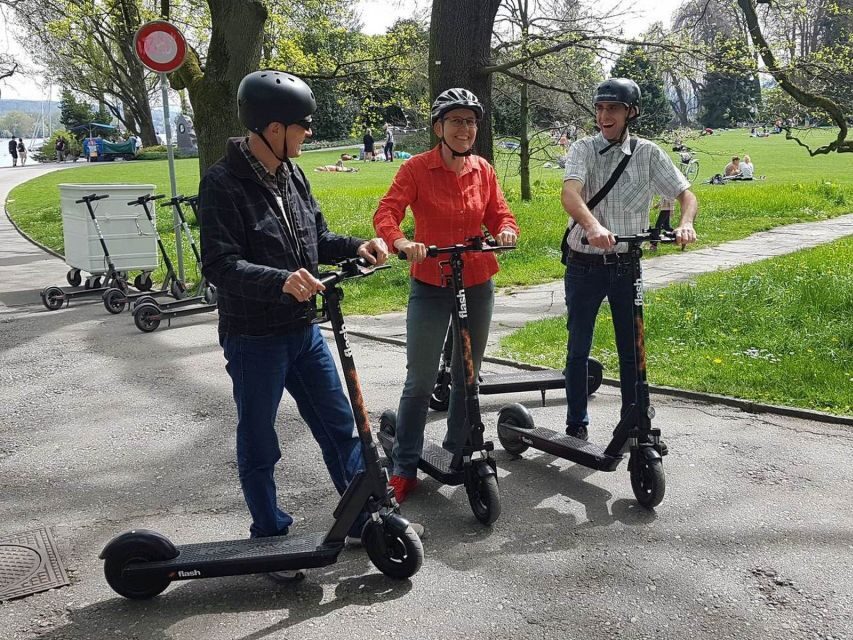
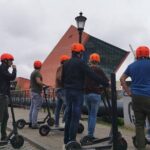
The biggest reason this tour works is the warm-up. You don’t just get handed a scooter and pointed down the street. You’ll receive training on how to manage the e-scooter, with safety as the priority. That matters because Kazimierz streets can be uneven or busy in spots, and you want your attention on the buildings and street-level details.
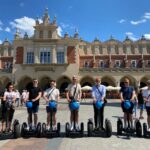
You’ll also get the practical stuff handled for you: an e-scooter and a helmet are included. That’s a real value point at a price like this, because you’re not adding rentals or safety gear on top. I like that you’re encouraged to wear comfortable shoes too—smart, since walking moments can still happen when you park the scooter, regroup, or approach a specific location.
Timing is part of the experience design. Plan to arrive about 10 minutes early so you have time for the training and setup. Once you’re moving, the tour’s rhythm is built around short story stops plus riding time, so you get the feeling of “traveling through the neighborhood” rather than just listening in one place.
If you care about language, you’re covered. The live guide can run the tour in French, Italian, English, Polish, or German. I can’t promise which language you’ll get on a given day, but the offering includes those options, so check your booking language carefully.
You can also read our reviews of more tours and experiences in Krakow


Entering Kazimierz: the neighborhood’s pre-war story in motion
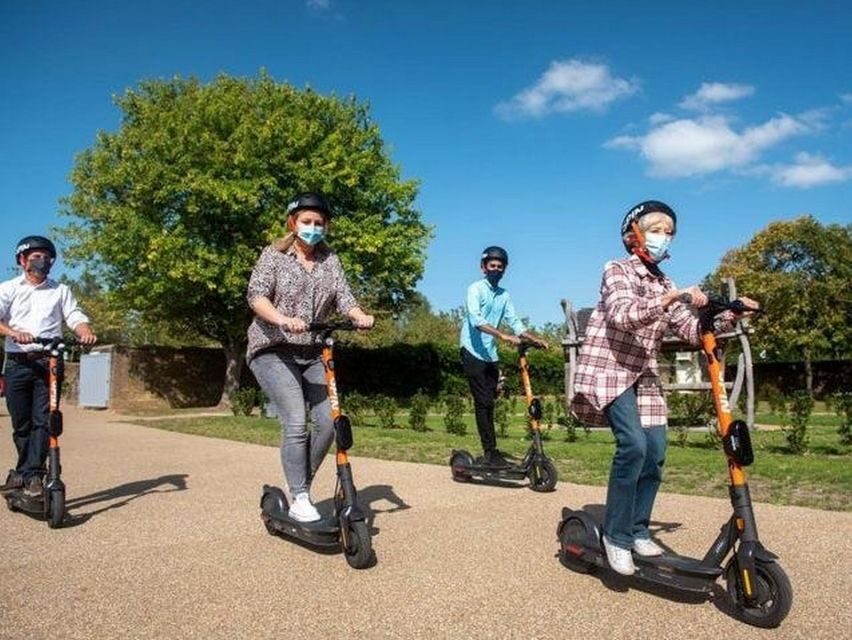
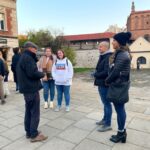
Kazimierz is known for layered history, and this tour keeps that layered feeling front and center. After the training, you’ll head into the Jewish Quarter of Krakow and follow a trail of Jewish cultural life. The tour isn’t trying to be a museum lecture. It’s built around the idea that you learn best when you can connect facts to physical places.
You can expect to see key locations connected with pre-war Jewish Krakow and the community that lived there. The guide’s stories are meant to make the past feel present—your job is to look. When you’re on a scooter, you naturally shift your focus between streets, building entrances, and small site cues, and that helps the history stick.
Two places anchor the feeling of “this was real daily life,” not just history text:
- Synagogues, where architecture and location can communicate significance
- A Jewish cemetery, where the atmosphere changes fast and your pace slows without anyone telling you to
The cemetery stop can be especially meaningful because it changes the mood. It’s harder to treat it like a quick photo moment. You’ll likely find yourself paying closer attention to the scale and seriousness of the space.
The tour also points you toward modern continuity. The goal is to show not only what existed before the war, but also the presence of a contemporary Jewish community today—through storytelling as you ride between sites.
Synagogues, cemetery, and mikvah locations: details that stick

A lot of Krakow tours mention Kazimierz, but this one pushes toward specific cultural markers. You’ll see synagogues and a Jewish cemetery, which is already a strong pairing: community worship and communal memory.
Then you move into some of the most interesting “daily-life infrastructure” stops. The tour includes a visit to the location where the largest mikvah in Krakow was located. That’s the kind of detail people often miss when they stick only to famous landmarks.
Why this matters: a mikvah is tied to ritual life, and seeing where it was located helps you understand that community life was built on institutions, not just houses of worship. It gives you a clearer picture of how people organized routines and responsibilities.
You’ll also visit the location where Elena Rubinstein lived. That adds a different kind of pre-war connection—less about a specific religious site and more about a person tied to Krakow’s history. These personal, place-based stories can make the neighborhood feel more human, because you’re not just tracking dates. You’re tracking lives.
The Rubinstein and mikvah stops also work well with the scooter format. You cover ground efficiently, but you’re not doing “look-and-run sightseeing.” You’re guided to locations that have meaning, and the stories tie them together into a single thread.
The former ghetto territory: what the ride helps you process
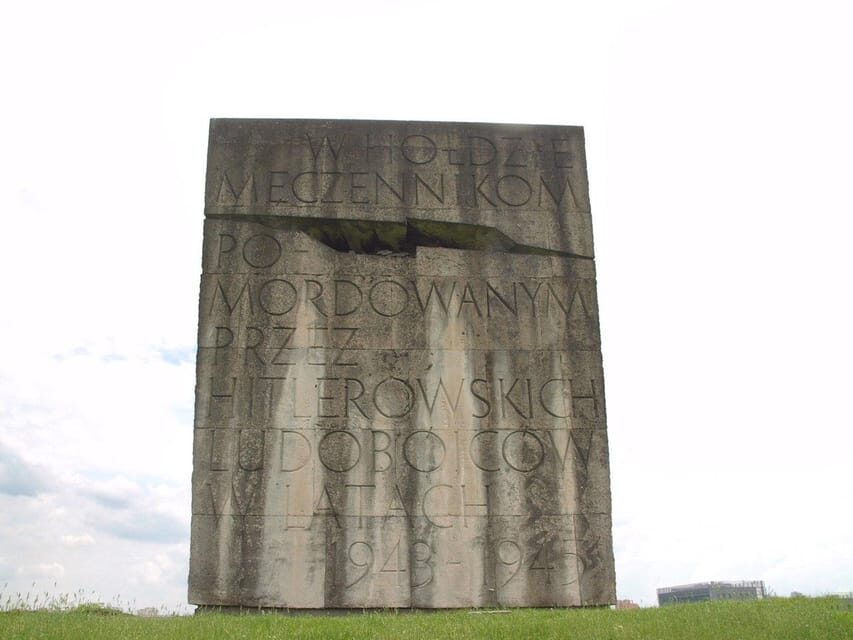
You’ll visit the territory of the former ghetto, which is the most emotionally heavy part of the narrative. This section matters because the tour doesn’t treat it like a checkbox. It connects the location to what happened and then continues into the rest of the story around Jewish life.
On a walking tour, it’s easy to feel stuck at street corners, trying to reconcile distance and scale. On a scooter tour, you still feel the seriousness, but you also get a sense of movement—how neighborhoods and borders functioned in real space.
That’s the value of this setup: you can understand location in a more “map-like” way. You’re not just absorbing one plaque or one corner. You’re getting a route that helps you imagine how people experienced the area.
At the same time, keep your expectations grounded. Two hours is not a full education on Holocaust history. It’s a structured orientation through important sites. If you want a longer, deeper study, you can use this tour as a starting point and then add focused reading or a dedicated museum visit later.
Schindler’s List filming locations: connecting cinema to place
The tour also includes visits to locations where Steven Spielberg’s Schindler’s List was filmed. This is one of the easiest “hook” reasons to book, because lots of people know the film—even if they don’t know the history behind the places.
The key is that the filming locations aren’t treated as trivia. You’re shown them as part of the neighborhood and its past. That turns a movie connection into something more useful: you can look at a recognizable street or area and understand that film imagery is tied to real streets and real history.
For you, this means better recall. When you later picture a scene from the film, you’ll also remember the geography and the surrounding context your guide provided.
This is also where pace matters. You’ll be riding through multiple story points within a short time window, so it helps to stay focused and present. If you’re prone to drifting into photo-mode only, give yourself a rule: listen first, shoot second. The history lands better that way.
You can also read our reviews of more tours and experiences in Krakow



Elena Rubinstein, community institutions, and pre-war context
It’s not only about heavy history. The tour gives you pre-war texture through smaller, specific anchors.
Elena Rubinstein’s residence location is a good example. It adds a sense of how Krakow connected to notable figures. It also helps balance the tour’s emotional weight by showing that the neighborhood was full of lives, not only tragedy.
The mikvah stop helps in the same way. It points to ritual practice and community organization—something normal people carried out as part of life. You’re learning that Jewish community life in Krakow had structure and institutions. That makes later historical shocks harder to reduce to abstract facts.
Even the itinerary choices—synagogues, cemetery, mikvah, ghetto territory, and Schindler’s List filming locations—create a sequence that feels like a story. You start with communal identity, move through cultural practice and memory, and then connect it to how history is represented and remembered today.
Price and practical value: is $33 fair for 2 hours?
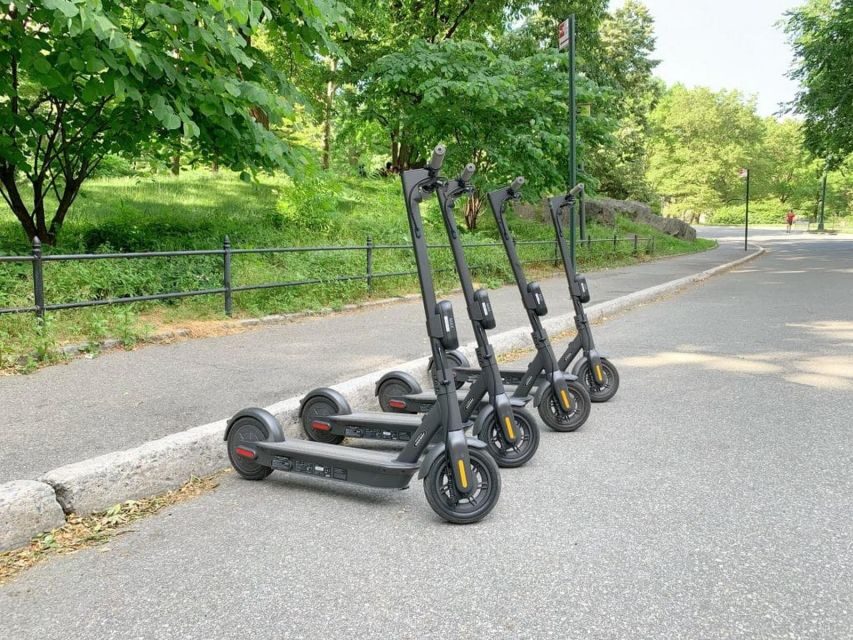
At $33 per person for a 2-hour guided e-scooter tour, this can be good value if you want three things at once:
1) a guided history story
2) a scooter and helmet included
3) a way to cover multiple Kazimierz sites without exhausting yourself
Two hours isn’t long enough for an in-depth course, but it’s long enough for a guided orientation with enough stops to feel like you actually moved through the neighborhood—not just sat in one spot.
I also think it’s worth it if you want a “first day” activity. You’ll get a map in your head: where Kazimierz connects, which sites matter, and how to plan your next walks.
That said, manage expectations around any extra add-ons. Some experiences of this style can include food tasting elements, and one review specifically raised concerns about the value of a small tasting portion and whether it happened as expected. If your booking mentions any food component, treat it as a bonus, not a meal. If it matters to you, double-check your exact inclusions before you arrive.
Pace, groups, and guide impact (Arthur and Arturo)
This tour’s success often comes down to the guide’s storytelling. One guide named Arthur impressed with facts and a friendly delivery. Another guide named Arturo stood out for being both funny and knowledgeable, and several people described the tour pace as well judged.
That matters more than it sounds. With a scooter, your attention needs to stay on two tracks: safety and story. A good guide keeps both working at once, so you feel entertained but also informed.
Group size also affects your experience. The tour offers private or small groups available, which typically helps you ask questions without feeling rushed. If you’re traveling with someone who wants to talk more, this kind of format is usually easier than large-group walking tours.
What to bring and how to be comfortable
This is not a “dress up” type of tour. The most important item is simple: comfortable shoes. You’ll want footwear that handles walking between scooter parking spots and lets you move comfortably around sites.
Beyond that, keep your carry minimal. You’ll have helmet use and scooter use handled by the provider, so your personal burden should be light. If you bring a phone for photos, consider keeping it ready but not in constant use—your best photos will come after the guide explains why a place matters.
And yes, arrive early. Getting set up is part of the experience. If you show up late, you’ll shorten your training time and that can reduce confidence.
Who this tour suits best
This experience fits best if you:
- want a quick, guided way to understand Kazimierz without spending a whole day
- like seeing history connected to specific locations
- enjoy moving through neighborhoods rather than only walking slowly
- want a scooter-based format that’s fast but guided
It may not be the best fit if you:
- need a low-stress setting and would struggle with scooter riding, even with training
- want a long, quiet, museum-style visit at each stop
- are pregnant, since it isn’t suitable for that group
Should you book the Krakow 2-hour Kazimierz scooter tour?
I’d book it if you’re in Krakow for a short time and you want to get oriented quickly in a place that’s easy to misunderstand on your own. The combination of Jewish Quarter sites, a Jewish cemetery, mikvah location, Elena Rubinstein’s residence, former ghetto territory, and Schindler’s List filming locations gives you a strong “story route” in just two hours.
You should think twice if you want a slow, reflective tour with lots of time per location, or if you’re hoping for a big food experience (if anything like that is offered in your exact package). Keep it simple: treat the tour as a guided route with meaningful stops, and you’ll leave with far more than a few photos.
If you want one practical rule: start the tour curious, listen through the story beats, then explore on foot afterward using what the guide pointed out. That’s when this kind of scooter tour pays off the most.
FAQ
How long is the Krakow Kazimierz scooter tour?
It lasts 2 hours.
What is the price per person?
The price is $33 per person.
What’s included in the tour?
You get a helmet, an e-scooter, and a professional guide.
Where do I meet the guide?
Meet at the location where you can look for the Bike Rent Krakow sign across from Izba Administracji Skarbowej.
What languages are available for the live guide?
The live guide can run the tour in French, Italian, English, Polish, and German.
Is it suitable for pregnant women?
No. It is not suitable for pregnant women.