REVIEW · KRAKOW
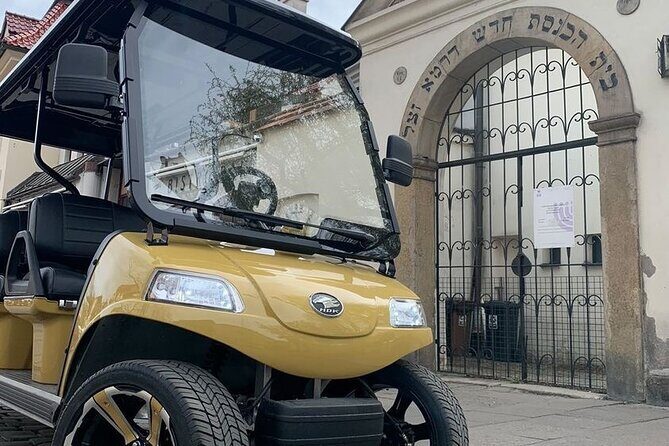
Krakow Guided Tour by Electric Golf Cart
Book on Viator →Operated by Auschwitz-Krakow Tours · Bookable on Viator
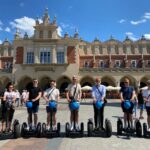
Electric carts make Krakow feel easy. This 1.5–2 hour ride strings together Kazimierz and Podgórze into one smooth loop, with a driver who explains what you’re seeing as you pass key landmarks. You get an English audio guide plus an English-speaking driver, so you can follow the story without constantly stopping to read.
I especially like two things about this tour. First, the photo time is built in, so you can actually capture views from places you’d normally only see from the street. Second, the commentary can go beyond the pre-recorded guide, and in the best runs drivers like Philippe or Andrzej add extra context and make it feel personal.
One drawback to consider: if your pickup details change and you don’t notice, you could lose time. There’s at least one real-world warning sign to take seriously—double-check your exact meeting point the day of the tour.
In This Review
- Key highlights worth knowing
- How the electric golf cart changes Krakow pacing
- Schindler’s Factory and the Krakow Ghetto sites: what you see from the cart
- Market Square and zapiekanki: the smart snack break
- Kazimierz synagogues you can’t enter (and why you’ll still care)
- Wawel Castle viewpoint: impressive outside, ticket-free by design
- Plac Wolnica: the big square in Kazimierz
- St. Joseph’s Church, the ghetto wall, and the Eagle Pharmacy Museum
- Church on the Rock (Skałka) and Corpus Christi: two stops you can enter
- More synagogues in Kazimierz: Tempel, Izaak, High, Popper, Remuh
- Krakus Mound: the payoff viewpoint and a chance to breathe
- Barbican, Matejko Square, and the monument you’ll recognize fast
- Price and value: what $37.99 buys you in real time
- The small details that can make or break your experience
- Who this tour suits best
- Should you book the Krakow Electric Golf Cart Guided Tour?
- FAQ
- How long is the Krakow guided tour by electric golf cart?
- Is the tour available in English?
- Are entrance tickets included for the attractions?
- Can I enter Wawel Royal Castle or the synagogues during the tour?
- Is there a stop to eat zapiekanki?
- What is the cancellation policy?
Key highlights worth knowing
- Electric golf cart comfort, often with blankets, so you’re not stuck standing around.
- Schindler Factory drive-by, handled without admission-ticket hassle.
- Zapiekanki stop at Market Square if you ask the driver and keep it quick.
- Ghetto-wall and pharmacy context, including specific names tied to life under occupation.
- Churches where entry is free, so you’re not locked out of everything.
- Krakus Mound viewpoint, giving you a breather and a panorama.
How the electric golf cart changes Krakow pacing
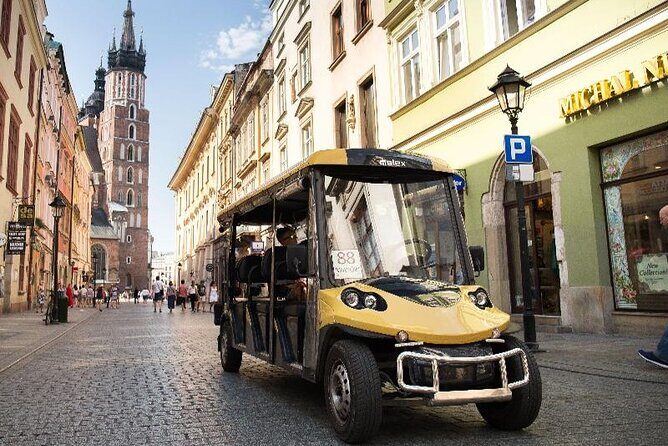
Krakow is gorgeous, but the Old Town can feel like it’s built for walking shoes and tight schedules. This tour solves that problem by using an electric golf cart to cover ground fast while still keeping the experience human-paced.
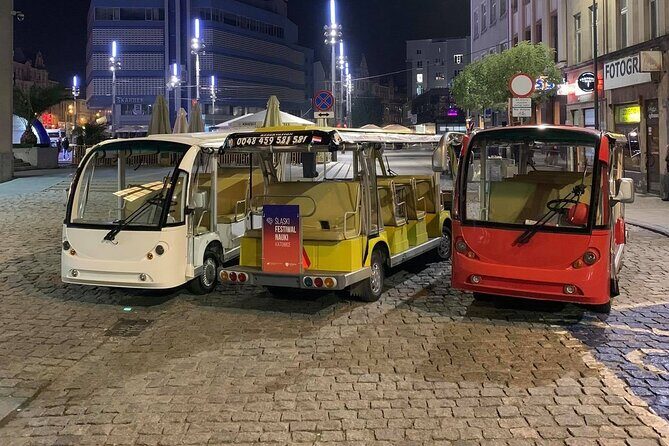
You’re not just being delivered from one landmark to another. The ride is structured with short stops and frequent picture moments, which matters because many of Krakow’s most important sights are spread across different neighborhoods. With a maximum group size of 47, it stays manageable, and the driver can usually accommodate quick requests.
Also, the tour is practical about language. It’s offered in English with an English audio guide, and you can ask questions as you go. That combination is a big deal if you want real-world context, not just a list of place names.
You can also read our reviews of more guided tours in Krakow
Schindler’s Factory and the Krakow Ghetto sites: what you see from the cart
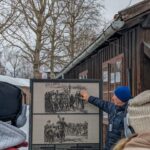
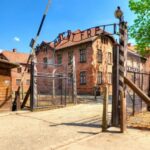
The tour begins by passing Fabryka Emalia Oskara Schindlera, in the area people often associate with Schindler’s Factory. Importantly, you get the drive-through without needing an admission ticket for that moment. It’s a useful first taste because it frames what comes next.
Then you roll past Ghetto Heroes Square (Plac Bohaterów Getta). The setting is tied to executions and displacement, and the name itself is a direct reminder of what happened during the liquidation of the Kraków Ghetto in 1943. Even without entering any museum here, the driver’s framing helps you connect the story to the geography.
A key point for your expectations: some stops here are intentionally “look and learn” rather than “enter and spend an hour.” That’s not a weakness. It’s what makes the whole tour fit into 1 hour 30 minutes to 2 hours without burning your day.
Market Square and zapiekanki: the smart snack break
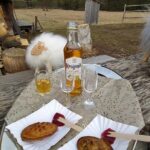
Next comes the Market Square area, where you cross through the “new square” section. This is where the tour turns a bit flexible. When you ask, the driver can stop so you can grab the city’s famous snack: zapiekanki.
The timing is short—about 5–10 minutes—so think of it as a quick bite, not a meal. Snacks and bottled water are not included, so you’ll want to bring a card/cash and keep the line-factor in mind. If you’re picky or you want lots of toppings, skip this stop and plan your food elsewhere. If you want the classic Krakow experience without losing tour time, it’s a good compromise.
Kazimierz synagogues you can’t enter (and why you’ll still care)
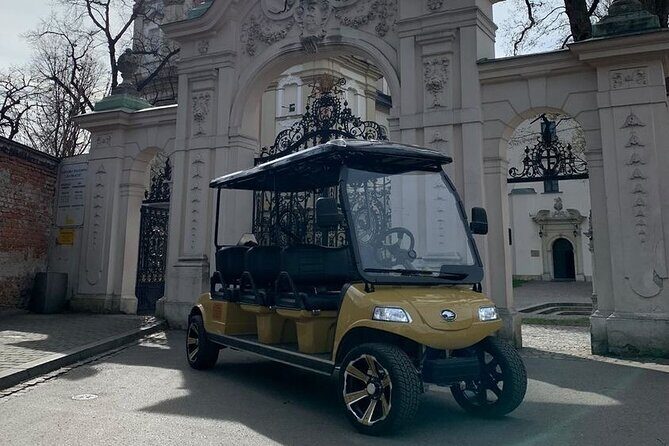
In Kazimierz, the tour brings you past several synagogue landmarks that are architecturally significant and historically important. The catch is that for some of them, entry isn’t possible during the tour.
For example, you’ll pass the Old Synagogue (Synagoga Stara) and the Kupa Synagogue (Synagoga Kupa), including the important note that you can’t enter during this part of the experience. The Old Synagogue is described as the oldest synagogue building still standing in Poland, one of Europe’s most precious Jewish-architecture landmarks. The Kupa Synagogue was established in 1643 with funding tied to the local autonomous Jewish government of Kazimierz, and it was the last synagogue built in the independent city of Kazimierz.
Seeing these from the cart is still valuable because you’re getting continuity. You’re learning how the neighborhood functioned, where communities clustered, and how the built environment relates to the story. Still, if your dream is interior photos and slow sightseeing, this tour may feel limiting. It’s built for fast context more than deep entry.
Wawel Castle viewpoint: impressive outside, ticket-free by design
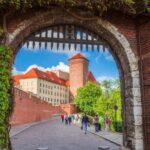
You’ll also pass Wawel Royal Castle and Wawel Hill. The tour sets expectations clearly: you won’t enter the castle. You see it from the cart, which can be a little frustrating if you assumed this was a hands-on castle visit.
But there’s a tradeoff, and it’s the reason this tour works for many people: you can keep moving. Wawel is one of Poland’s signature sights, and a “no-entry” view still gives you the most recognizable framing—courtyard and fortress setting—without adding a ticket line and extra time.
Plac Wolnica: the big square in Kazimierz
Another stop that’s easy to miss if you’re walking on your own is Plac Wolnica, once the near-equal scale counterpart to Kraków’s Main Market Square. The space you’ll pass is described as roughly 195m by 195m, only slightly smaller than Rynek Główny, which is a wild detail if you like scale and urban design.
The context matters. This was a major administrative and judicial area in Kazimierz, with market stalls selling goods ranging from fur and tobacco to salt and amber. Even when you’re only riding through, the driver’s explanation helps you read the neighborhood instead of just photographing it.
St. Joseph’s Church, the ghetto wall, and the Eagle Pharmacy Museum
The tour then steps into Podgórze, starting with Church of St. Joseph (Kościół św. Józefa) on Podgórski Square. This one is marked as free for admission time during the stop, and it’s a good example of how this route mixes pass-by sights with a couple that you can actually spend time at.
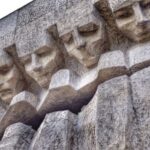
Right after that, you’ll see a 12-metre stretch of the original ghetto wall, with a plaque raised in 1983 in Hebrew and Polish. The inscription explains that people lived, suffered, and died here under German torturers and that their final journey began from this place to death camps.
Then you’ll move to the Eagle Pharmacy Museum area on the southwest edge of Bohaterów Getta Square. This stop is particularly strong if you like human-scale details. The information given includes the pharmacy’s long operation and the family names tied to it: Jozef Pankiewicz and later his son Tadeusz Pankiewicz. It also explains the pharmacy’s role during the Podgórze ghetto establishment in March 1941, noting it was the only pharmacy within the ghetto borders and that its proprietor was the only Pole with rights to stay in the ghetto.
That kind of detail is exactly why this tour feels more than scenic driving. It gives you anchors.
Church on the Rock (Skałka) and Corpus Christi: two stops you can enter
You’ll go to Church on the Rock (Kosciol na Skalce, Skałka), also described as a Pauline monastery area with the story of Saint Stanislaus. The tradition here is tied to the bishop’s murder in 1079, and the fallout: exile for the king and later canonization of the slain bishop. This stop is marked free, and you’ll have about 10 minutes.
After that comes Corpus Christi Church (Kosciol Bozego Ciala). You get another free stop, again around 10 minutes. The church is described as being erected in stages from 1340 to the mid-15th century and intended as a monastery church, which explains the large grounds and the presence of a monastic cemetery.
If you’re wondering what kind of “Christian history” you’ll see on this route, this is a big clue. These churches aren’t random photo walls. They connect religion, architecture, and the city’s shifting power centers over centuries.
More synagogues in Kazimierz: Tempel, Izaak, High, Popper, Remuh
After the churches, the tour keeps rolling through Kazimierz’s synagogue corridor. You’ll pass several major names:
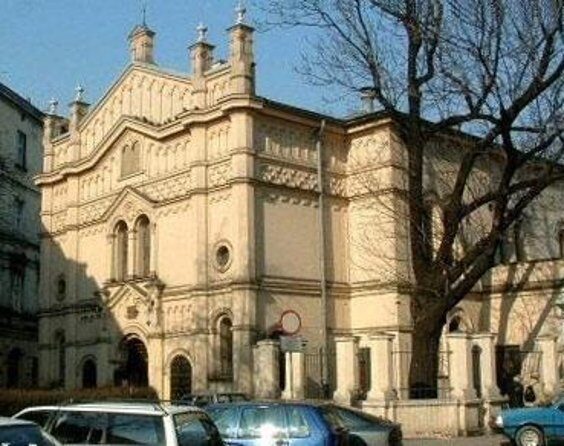
- Tempel Synagogue (Synagoga Tempel), described as a major worship site and a center for Jewish culture and concerts.
- Izaak Synagogue (Synagoga Izaaka), an Orthodox Jewish synagogue from 1644, designed by Italian-born architect Francesco Olivierri.
- High Synagogue, known as the Tall Synagogue, described as the city’s tallest synagogue and an example of late Renaissance architecture.
- Wolf Popper Synagogue (Synagoga Poppera, also called Bociana), founded by Wolf Popper, with a current use as a bookshop and art gallery on the women’s area upstairs.
A practical note: the tour is very clear in at least two cases (Old Synagogue and Kupa Synagogue) about not being able to enter. For others, the tour data indicates admission ticket not included in multiple places, which usually means you shouldn’t assume entry is part of the time plan. This doesn’t make the stops less meaningful. It just helps you keep expectations realistic.
You’ll also stop at Remuh Synagogue (Synagoga Remuh), described as the smallest historic synagogue in the Kazimierz district and one of the city’s currently active synagogues. Admission for Remuh is noted as not included, and the tour framing gives you the names behind it, including the synagogue’s association with Rabbi Moses Isserles (ReMA).
Krakus Mound: the payoff viewpoint and a chance to breathe
Not every stop on this route is heavy. One of the most relaxing parts is Krakus Mound (kopiec Krakusa) on Lasota Hill, about 3 kilometres south of the center.
This stop is free, and it’s built for a different kind of experience: you can go up the hill and get a panorama of the city. The legend explanation given is that Krakus is tied to the mound’s creation and that mourners brought sand and dirt to create a “mountain” over the landscape.
Even if you’re tired from moving around, this is the part where you can slow down. You’ll likely feel your camera shift from details back to the big picture.
Barbican, Matejko Square, and the monument you’ll recognize fast
The tour also gives you a short pass by Barbican—a medieval defensive structure connected to city fortifications. The description makes it easy to spot: usually a round brick building protruding from the wall line and linked to a city gate via a sheltered passage.
Then you’ll see Matejko Square, including the Grunwald Monument, an equestrian statue of King Władysław II Jagiełło. The tour includes the note that it was erected in 1910 to mark the 500th anniversary of the Battle of Grunwald (1410), demolished in 1939, and reconstructed in 1976. In front of it is the Tomb of the Unknown Soldier (1976).
This is a short stop by design, but it’s high-visibility. If you want quick context for Krakow’s public memory, it works.
Price and value: what $37.99 buys you in real time
At $37.99 per person, you’re paying for two things: access to the cart format and the interpretive layer that ties neighborhoods together. The tour lasts about 1 hour 30 minutes to 2 hours, which can be a strong value if you’re trying to make the most of limited time.
What you should watch:
- Bottled water and snacks aren’t included.
- Some stops are drive-through or exterior viewing, not full entry.
- Several synagogue-related sites and museum entries are marked as admission ticket not included.
So, the price is best for you if you want orientation and story more than ticketed attractions. If you want long museum time, you’ll still need a separate plan for deeper visits.
One more value booster: the tour is set up for photo time. If you care about getting pictures without sprinting, the time matters more than the number of stops.
The small details that can make or break your experience
This is where the reviews’ strongest themes show up in how you should plan your own ride.
I’d build in two habits. First, if you want to step out for just a minute or two, ask the guide. On good rides, the driver has time to help you with quick walking photos and little detours. Second, confirm pickup information carefully. A last-minute pickup-location change can cost you a chunk of the tour window, and waiting around in the wrong place hurts.
On the comfort side, there’s often a practical touch like blankets on the buggy, which makes the ride friendlier in cooler weather. And with drivers who keep explanations clear and frequent photo stops coming, you’re less likely to feel rushed or lost.
Who this tour suits best
This works well if:
- you want big-picture orientation across key areas in Krakow,
- you like guided context with frequent viewpoints and quick stops,
- you prefer a lighter day and don’t want multiple tickets and long entry lines.
It may feel less ideal if:
- you strongly want to enter multiple synagogues or Wawel Castle during the same outing,
- you need long time inside museums or churches beyond what fits the schedule.
Should you book the Krakow Electric Golf Cart Guided Tour?
Yes, with smart expectations.
Book it if you want a fast, guided loop that connects Schindler’s Factory area, the Kraków Ghetto sites, and the Kazimierz synagogues and churches into one coherent story, with useful English commentary and built-in photo moments. The Krakus Mound viewpoint is a nice reset, and the free-entry church stops give you a bit of breathing space inside.
Don’t book it if your main goal is full museum time or you plan to rely on this tour for lots of paid admissions. In this format, it’s mainly about seeing, learning, and moving.
If you do book, do one thing that pays off: double-check where you should meet and arrive a little early. Then ask for the quick Market Square snack stop only if you’re ready to keep it short. That’s the recipe for getting the best of a limited-time tour.
FAQ
How long is the Krakow guided tour by electric golf cart?
It runs about 1 hour 30 minutes to 2 hours.
Is the tour available in English?
Yes. The driver speaks English and there is an English audio guide.
Are entrance tickets included for the attractions?
Admission is not included where it is marked as not included, and some stops are free. For example, Churches of St. Joseph, Church on the Rock (Skałka), Corpus Christi Church, and Krakus Mound are marked as free, while places like Eagle Pharmacy Museum and some synagogues are marked as not included.
Can I enter Wawel Royal Castle or the synagogues during the tour?
You will not enter Wawel Royal Castle; you will see it from the golf cart. The Old Synagogue and Kupa Synagogue are also described as not possible to enter during the tour.
Is there a stop to eat zapiekanki?
There is a chance to stop at Market Square for zapiekanki for about 5–10 minutes if you ask the driver. Snacks are not included, so you would pay for what you buy.
What is the cancellation policy?
You can cancel for a full refund if you cancel at least 24 hours before the start time. If you cancel less than 24 hours before, the amount paid will not be refunded.