REVIEW · KRAKOW
Kraków Holocaust Tour
Book on GetYourGuide →Operated by CHT Sp. z o.o · Bookable on GetYourGuide
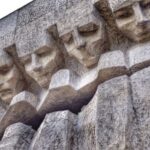
That street-level view hits hard.
This tour stands apart because it covers the entire Kraków Jewish ghetto, much of which still looks close to how it did at the end of the war. I love how the guide explains the ghetto system on-site, not just from a textbook, and I also like the clear focus on daily life—what people faced day after day. One possible drawback: it’s heavy material, so if you want a lighter sightseeing vibe, this isn’t the right fit.
You’ll walk a district that still carries a tense, dramatic atmosphere because many houses and key institutional buildings remain from the 1941–1943 period. The tour is guided in Spanish by a live historian-led team with a background in Geography and History, and you’ll finish at a major museum stop: the famous pharmacy under the eagle. If you’re sensitive to difficult history, consider bringing a moment to pause when you need it—comfortable shoes help.
For just $16 per person and 2 hours, you’re not buying “a quick look.” You’re buying a structured walkthrough of the ghetto’s layout—walls, squares, councils, workplaces, and key facilities—so you can make sense of what you see as you move.
In This Review
- Key things to notice before you go
- Why this Kraków ghetto tour feels different from half-day “hits”
- The 2-hour route: wall fragments to the pharmacy under the eagle
- How ghettos worked: you’ll learn the system behind the streets
- Stops that matter: Judenrats, hospitals, prison, synagogue, factories
- Ghetto Heroes Square and the preserved atmosphere
- Price and value: what $16 buys you in context
- Spanish-language practicals: meeting point, shoes, and pacing
- Who should book this tour
- Should you book the Kraków Holocaust Tour?
- FAQ
- How long is the Kraków Holocaust Tour?
- What language is the live guide?
- Where do I meet the guide?
- What is included in the price?
- Is food or drinks included?
- What should I bring?
- Is the tour wheelchair accessible?
Key things to notice before you go
- Full ghetto coverage across the area that has largely survived in near end-of-war appearance
- Historian-led explanations from a guide trained in Geography and History
- Ghetto Heroes Square (Square of Chairs) as a core stop, not a passing photo stop
- Real categories of life and control mapped to visible locations like the Judenrats, labor structures, hospitals, and prisons
- The pharmacy under the eagle museum stop to bring the story into something you can keep studying
- A 2-hour walk that requires comfortable shoes to stay focused without rushing
Why this Kraków ghetto tour feels different from half-day “hits”
The reason this tour has such strong demand is simple: it’s built around the idea that the ghetto can still “read” like history. Many buildings and institutional spaces are still there in an appearance close to the late-war years, including a large part of the housing stock and key organization buildings. That matters, because when you’re walking streets that remain from the period, the story stops being abstract.
I especially like that the tour isn’t just about dates and names. It’s about how Nazis designed the ghetto and what it was meant to do—then it connects that purpose to what daily life looked like in the area. You’re learning the logic of the system while you’re standing near the physical traces of it.
The tour also explicitly aims to show similarities between Kraków and other ghettos in Poland. That’s valuable for you if you want a bigger framework, not only one city’s experience. If you only visit memorials without structure, it can feel like separate scenes. Here, the stops are meant to help you connect the dots.
You can also read our reviews of more tours and experiences in Krakow.
The 2-hour route: wall fragments to the pharmacy under the eagle
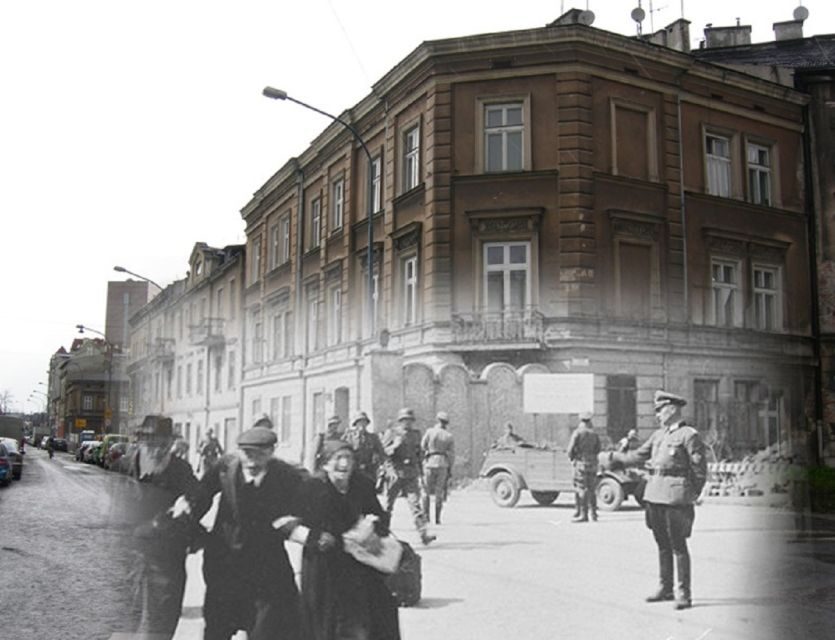
A good ghetto tour works like a guided map. This one does that by moving through key locations that represent different functions of the ghetto.
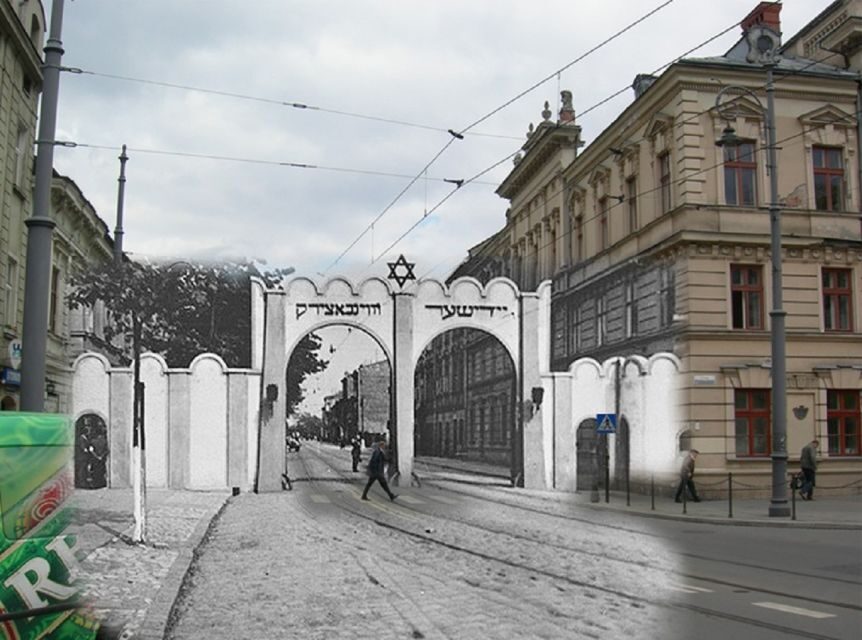
You’ll start with the two fragments of the wall—small pieces of what once surrounded a much larger reality. Even when you know the big picture, wall fragments have a way of making restrictions feel real and physical. It’s not just symbolism; it’s an edge. It tells you where movement was meant to stop.
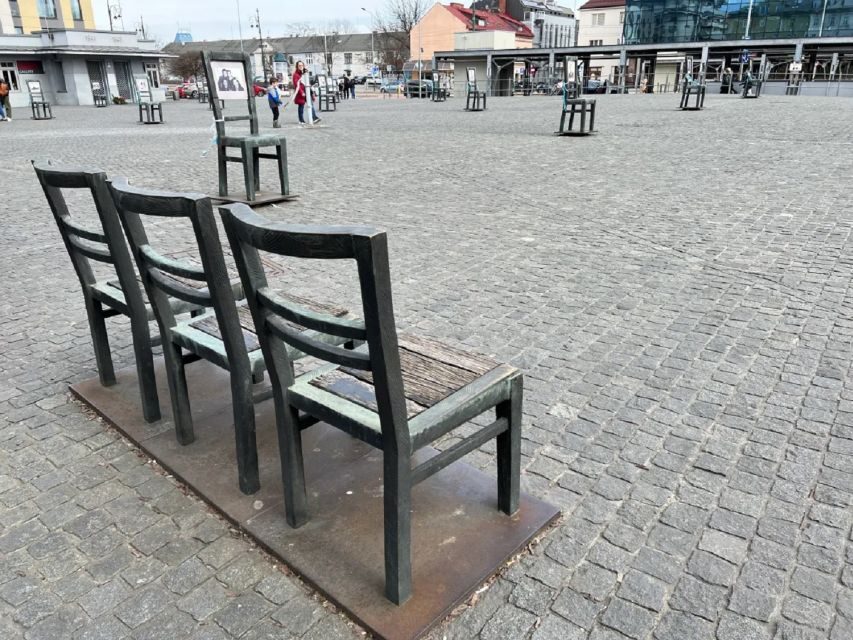
Next comes Ghetto Heroes Square (Square of Chairs). This is a meaningful anchor point because squares help you understand how people gathered, watched, waited, or tried to live within the rules. It also gives you a mental reset in the walk: a place to absorb what you’ve already been told before you move into more specific institutions and areas.
From there, you’ll see important buildings linked to intellectual life, resistance, and policing. The goal isn’t to list every location like a history quiz. It’s to show the kinds of systems and counter-systems that existed inside the ghetto world—what was forced on people and what people tried to resist or preserve.
As the walk continues, the tour highlights the location of the old doors and then shifts into areas tied to internal governance and control. You’ll encounter the Judenrats, labor organizations, hospitals, and the prison—each one representing a different layer of how the ghetto functioned. Finally, you’ll continue to sites connected with community life and production, including synagogue, factories, and orphanages, plus additional stops in the same theme.
The capstone is the museum stop: the pharmacy under the eagle, described as one of the most important museums in Kraków on this subject. You end with a space designed for study and remembrance, so you don’t just walk through the district—you leave with a stronger grip on what the buildings meant.
How ghettos worked: you’ll learn the system behind the streets
The tour is designed to answer a hard question in a practical way: how the Nazi ghetto system worked and what its purpose was during occupation. Instead of only describing what happened, the guide places emphasis on the structure and intent.
Here’s what you can expect the tour to do for you:
- You’ll learn the purpose of the ghetto as an engineered reality, not a vague “harsh time.”
- You’ll see how different institutions supported control—through governance structures, workplaces, health facilities, and confinement.
- You’ll connect daily life to the physical layout you’re walking through.
This is where having a guide trained in Geography and History helps. Geography training usually means better spatial explanations: where things are, why they cluster where they do, and how movement in an area created pressure. History training means the story stays tied to what those places represented.
I also appreciate that the tour explicitly compares characteristics of the Kraków ghetto with others in Poland. That helps you avoid the trap of thinking every ghetto was identical in detail, while still grasping the shared Nazi approach.
Stops that matter: Judenrats, hospitals, prison, synagogue, factories
Some tours move quickly through major points and leave you with one big blur. This one tries to keep categories clear. You’ll see multiple locations that each represent a different aspect of the ghetto system and daily life.
Judenrats are a key stop. Even if you’re familiar with the term, the value of visiting the area is that it ties governance to the reality of confinement and coercion. You’ll be able to connect what you’re told about their role to the physical environment where those decisions had consequences.
Labor organizations are another crucial category. You’re not just learning that work existed—you’re learning why labor was part of the system and how it shaped life inside the ghetto.
Then you’ll move into facilities that show the human cost of the system:
- Hospitals, where health and care were constrained by the reality of occupation and ghetto life
- Prison, which brings the enforcement side into focus
Religion and community are part of the story too. The stop at the synagogue isn’t an afterthought. It helps you understand that everyday life included spiritual practice and cultural identity, even under extreme pressure.
Finally, you’ll visit factories and orphanages, which ground the story in work and family survival. These stops matter because they show the ghetto wasn’t only about confinement—it was also about how people were kept functioning in limited, controlled ways.
Important buildings tied to intellectual meetings and resistance round out the picture. That balance can be uncomfortable, but it’s honest: people tried to live and resist even when the system was built to destroy normal life.
Ghetto Heroes Square and the preserved atmosphere
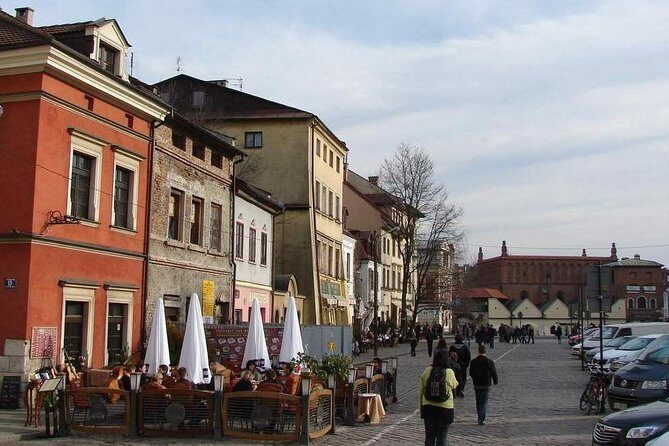
The tour’s setting is part of the lesson. You’re told that the district has largely retained its gloomy appearance, and that many buildings look exactly the same as the 1941–1943 period. When you walk through that kind of preservation, it changes how you process information.
Ghetto Heroes Square (Square of Chairs) works well as a focal point because squares are where people tend to feel exposed and connected at the same time. Even if your first instinct is to take photos, I suggest you treat this stop as a pause. Read what you can, listen closely, and let the guide’s framing connect to the next areas you’ll see.
Because the buildings are still there, the contrast can be jarring. One minute you’re listening to how Nazis designed the ghetto; the next you’re standing in a location where that design is reflected. That’s why this tour can feel more intense than a museum-only experience.
Price and value: what $16 buys you in context
At $16 per person for 2 hours, the price feels low for what you’re actually getting: full ghetto coverage and a historian-led walk through a set of major sites. Many tours that touch Holocaust history are either shorter or focus on fewer points. Here, the promise is explicit—cover the whole ghetto—so your time isn’t wasted on repeats.
What you’re paying for is structure and interpretation:
- a guided route through surviving locations
- explanations of purpose and daily life
- historical context that helps you understand what you’re seeing
If you’re trying to maximize learning per hour, this is a strong value. If you’re looking for entertainment, it won’t match that expectation. Think of it as education you can walk through.
Spanish-language practicals: meeting point, shoes, and pacing
This is a live tour guide in Spanish. If Spanish is your comfort zone, great. If not, you might still follow some concepts, but the real benefit comes from understanding the guide’s explanations clearly.
Meeting point is specific: meet the guide holding a grey umbrella. That detail matters more than people expect. Arriving early makes it easy to spot the right person and prevents stress before a heavy topic.
Wear comfortable shoes. The tour is only 2 hours, but it’s still a walk through an area where you’ll likely stop, look, and listen. Good footwear helps you stay present instead of counting minutes.
The tour is also listed as wheelchair accessible, which is good to know if you use mobility aids. Still, since the exact streets and terrain aren’t described here, I’d plan for slower movement and ask ahead if you need any specific route adjustments.
Who should book this tour
Book it if you want:
- full-area context rather than a few scattered highlights
- a guide who explains how the ghetto system worked, including daily life
- a route that ends with a strong follow-up museum stop at the pharmacy under the eagle
You may want to skip it if:
- you’re searching for light sightseeing
- you don’t handle emotionally heavy content well
- Spanish narration would make you miss most of the explanation
Should you book the Kraków Holocaust Tour?
I think it’s a good booking decision when your goal is understanding, not just looking. The combination of full ghetto coverage, a historian-led guide with training in Geography and History, and a finish at the pharmacy under the eagle makes it feel like a complete experience in a short time.
If you’re ready for a serious, structured walk and you can handle Spanish instruction, this is one of those Kraków activities that changes how you see the city.
FAQ
How long is the Kraków Holocaust Tour?
The duration is 2 hours.
What language is the live guide?
The tour is guided live in Spanish.
Where do I meet the guide?
Meet at the designated spot where the guide is carrying a grey umbrella.
What is included in the price?
The included item is a graduate guide in Geography and History.
Is food or drinks included?
No. Food and drinks are not included.
What should I bring?
Bring comfortable shoes.
Is the tour wheelchair accessible?
Yes, it is listed as wheelchair accessible.