REVIEW · KRAKOW
Krakow: Jewish Quarter and Former Ghetto Tour
Book on GetYourGuide →Operated by Kraków Explorers · Bookable on GetYourGuide
Two and a half hours can feel like a full chapter.
This tour gives you Kazimierz in street-level detail—tiny lanes, historic synagogues (including the second oldest in Europe), and memorial sites that don’t rush past the hardest parts. I also like that the guide connects famous names and traditions to real places, not just plaques. One drawback: it’s emotionally heavy and you’ll be on your feet for the whole stretch, so you’ll want to dress warm and plan for a slower walk after.
What makes it work well is the pacing and storytelling. You start at the Old Synagogue (a great anchor point), then move through key memory sites like the Holocaust memorial and Heroes of Ghetto Square, with stops that also help explain daily life before World War II. Then, you add a curveball: Schindler’s List filming locations—so you see how film changed the way many people picture Krakow, while still learning what happened here in the first place.
The tour runs in English for 150 minutes, and meeting is simple: look for guides with an orange umbrella in front of the Old Synagogue on ul. Szeroka 24. Guides I’ve seen highlighted—like Bart, Magda, Matt, Slavek, and Emily—are often praised for strong engagement and for answering questions without making the group feel rushed.
In This Review
- Key things to know before you go
- Kazimierz: the streets that explain Krakow’s Jewish past
- Meeting at the Old Synagogue on ul. Szeroka 24
- Second-oldest Synagogue in Europe: what you’ll notice (and why)
- Holocaust memorial and the tone you’re given
- Heroes of Ghetto Square: when a location becomes a story
- Jewish cemetery and the quieter side of remembrance
- Schindler’s List filming spots: why film locations belong on this tour
- The people and traditions you’ll connect to place
- Practical tips for a 2.5-hour walking experience
- Price and value: is $19 worth it?
- Should you book this Jewish Quarter and Former Ghetto Tour?
- FAQ
- How long is the Jewish Quarter and Former Ghetto Tour?
- Where does the tour start?
- Is the tour in English?
- What is included in the price?
- Are food and drinks included?
- Is the tour wheelchair accessible?
- What’s the cancellation and payment flexibility?
Key things to know before you go
- Second-oldest synagogue in Europe sets the tone right from the start
- Holocaust memorial stops keep the focus on memory and human loss
- Heroes of Ghetto Square turns street space into named stories
- Jewish cemetery adds a quieter, reflective counterpoint
- Schindler’s List filming spots connect modern pop culture to specific locations
- Local English-speaking guides bring the area to life and field questions
Kazimierz: the streets that explain Krakow’s Jewish past
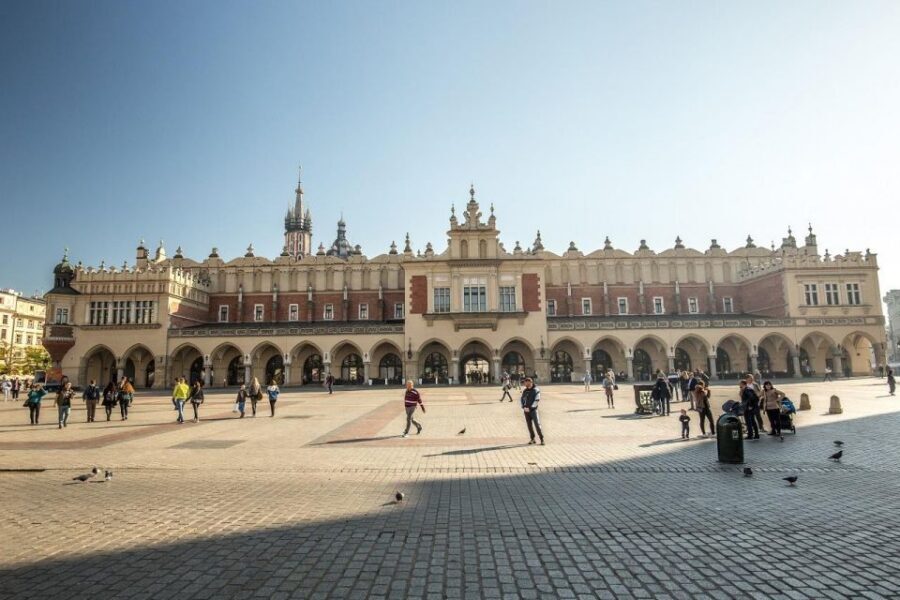
Kazimierz is where you go when you want Krakow to feel less like a postcard and more like a lived-in city. Historically, this area became a center for Jewish life, growing from medieval settlement into a place with its own rhythms and institutions. The tour frames Kazimierz as its own world—full of community buildings, religious traditions, and everyday culture—long before the catastrophe of World War II.
I like how the story starts with geography and place names. When you understand that Kazimierz grew as a rival center near Krakow, it stops feeling like an afterthought and starts feeling like the other heartbeat of the city. The narrow streets and small-scale streetscapes help you grasp something important: this wasn’t just history in the abstract. It was neighbors living close together, building routines, and creating culture within a defined neighborhood.
You’ll also get practical cultural context as you walk—terms like Ashkenazim and Sephardim, plus how different groups shaped community life. And the guide brings it down to real individuals tied to this region of Jewish history, including Helena Rubinstein and Maximilian Faktorowicz, with connections to Roman Polanski and Ludwick Zamenhof. The aim isn’t to memorize names. It’s to recognize that Jewish Krakow includes inventors, artists, and thinkers—not only victims.
You can also read our reviews of more tours and experiences in Krakow.
Meeting at the Old Synagogue on ul. Szeroka 24
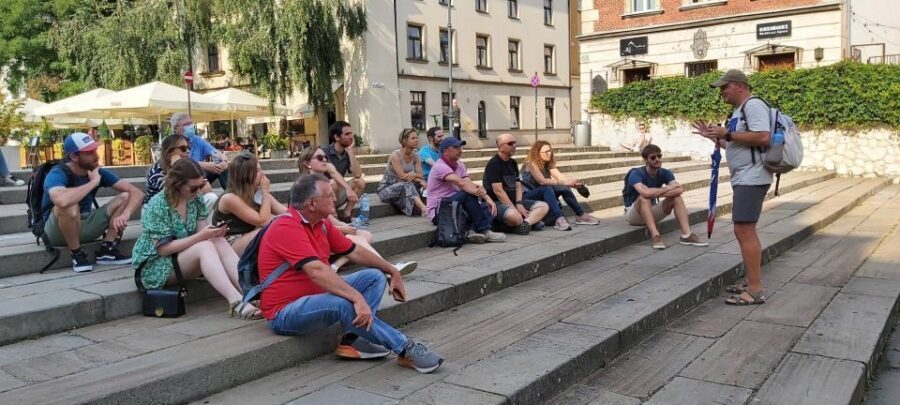
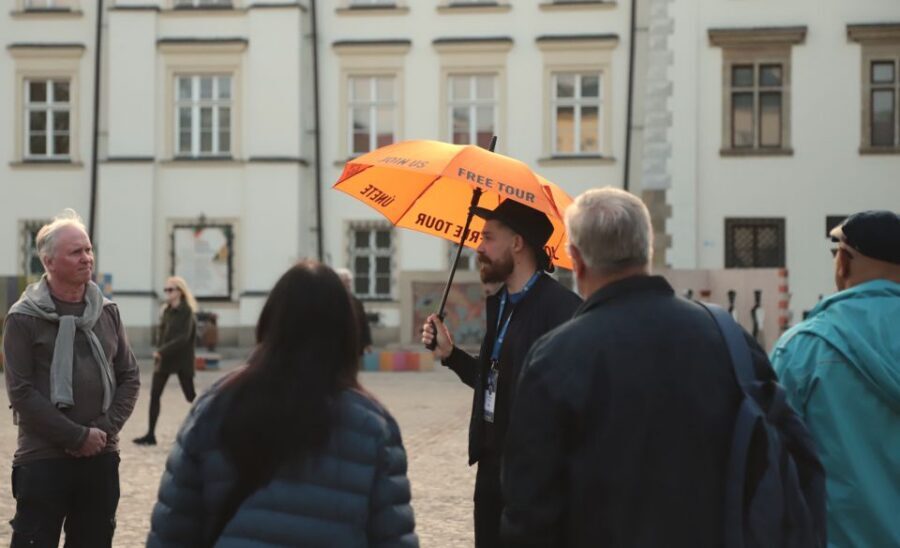
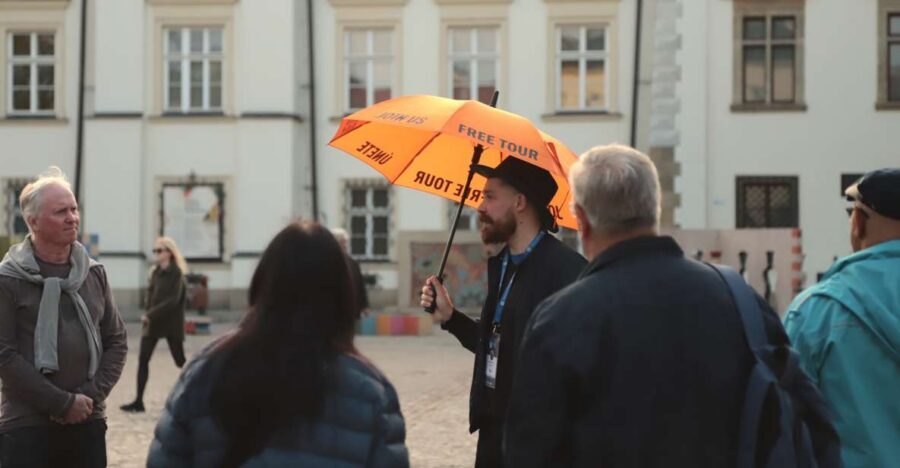
Your morning (or afternoon) begins in front of the Old Synagogue at ul. Szeroka 24. It’s easy to find once you know what you’re looking for: find the guide holding an orange umbrella. That matters more than you’d think, because the tour involves multiple stops in a compact neighborhood and you’ll want to stay with the group.
The tour runs for about 150 minutes. That’s long enough for meaningful context, short enough that you won’t feel trapped in a lecture. Still, it’s not a slow stroll with constant sitting breaks. You’re walking through the streets, pausing at key points, and listening while the guide connects what you see to what happened here.
I also appreciate that the tour is listed as wheelchair accessible. Even with accessibility accommodations, you’ll still want to think about uneven sidewalks and older street layouts in Kazimierz.
Second-oldest Synagogue in Europe: what you’ll notice (and why)
The most symbolic part of the tour starts immediately: the Old Synagogue area, with a focus on its significance as the second oldest synagogue in Europe. Even if you’ve toured other synagogues, this stop works because it’s more than an exterior photo op. The guide uses the building’s importance to explain how Jewish religious life took shape in Krakow over time.
Here’s the practical value: synagogue architecture and layout can look confusing if you don’t have context. A guide can help you connect what you’re seeing to function—how worship, community, and tradition lived in the space. And because this synagogue is old enough to carry deep historical weight, it becomes a natural anchor for the tour’s timeline: from prosperity and tradition, into the rupture of World War II, and then into remembrance.
Take a moment to look slowly at details you might otherwise skip. The tour’s biggest strength is that it helps you read the neighborhood like a map of lived experience. Once you understand the starting point, later stops—especially memorial areas—hit harder because you’ve already built a sense of what existed before the break.
Holocaust memorial and the tone you’re given
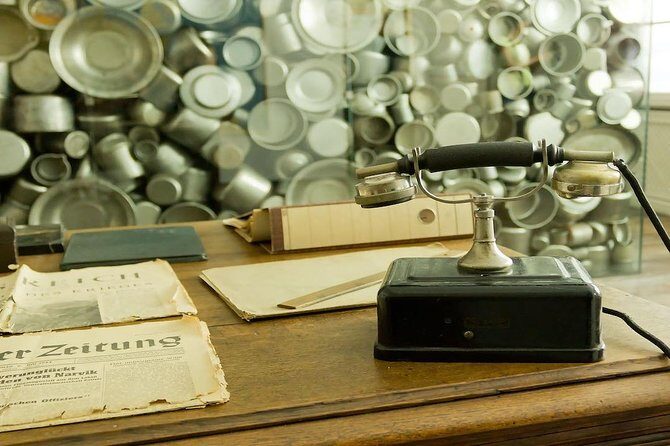
Kazimierz isn’t only about old buildings. It’s also where the city confronts the Holocaust in a direct, sobering way. The tour includes a Holocaust memorial, and the guide’s job is to hold the emotional tone without turning it into a shock show.
This is one reason the tour gets high marks: the storytelling often balances respect with clarity. You get the historical framing needed to understand what you’re seeing, instead of just receiving names and dates. And the guide typically works in a way that keeps the group engaged—people can ask questions, and the explanations stay focused on place and meaning.
A consideration up front: you should treat this as a memorial experience, not an entertainment walking tour. Don’t plan to cram it between late-night activities. Wear shoes you can walk in for the full stretch, and bring a mental buffer for the heavier segments. After the memorial parts, you may feel like you need a minute of quiet before continuing.
Heroes of Ghetto Square: when a location becomes a story
Next comes one of the stops that turns the street into a lesson: Heroes of Ghetto Square. The point here is simple but powerful. A square is easy to treat like background scenery. With the guide’s framing, it becomes a place tied to specific people and events.
This is where the tour does something useful for your understanding: it links named memory to spatial memory. You start to notice how a city remembers. Squares, plaques, and major intersections become cues that the past is not gone—it’s built into the urban layout.
If you’re the type who likes to connect history to real names, this portion is strong. If you’re worried about the topic being too abstract, this stop helps you feel grounded because you’re standing right where the story connects to the city’s physical design.
Jewish cemetery and the quieter side of remembrance
The tour also includes the Jewish cemetery, which changes the mood in a good way. Cemeteries are different from memorial squares. They don’t demand attention in the same loud way. Instead, they create a slower rhythm—more space to reflect.
Even with the guide speaking, the cemetery stop helps you do something important: integrate the story rather than racing through it. You’re not only learning what happened; you’re experiencing how memory is kept in a place built for remembrance.
This section is also a good moment for personal behavior rules. Keep your voice low, watch your steps, and give the space the respect it deserves. If you’re traveling with kids or anyone who finds cemeteries difficult, it can still work, but you may want to manage expectations going in.
Schindler’s List filming spots: why film locations belong on this tour
Then there’s the part many people expect to be entertainment-related: Schindler’s List filming spots. But in this tour, film locations don’t exist as trivia. They act like a bridge between what you’ve seen on screen and what you’re standing in front of.
This matters if you’ve watched the movie. Krakow can feel different when you recognize streets or visual angles from a film. The guide uses that recognition to steer you back to reality—who lived here, what the area meant, and how the neighborhood’s physical layout shaped daily life and later events.
A fair warning: if you’re expecting constant movie trivia, this may feel more history-first than film-first. Still, it’s valuable. When you know the context, the “I’ve seen this before” moment turns into something deeper: you stop treating film as a replacement for history and start treating it as a pointer back to it.
The people and traditions you’ll connect to place
One of the more memorable parts of the tour is how it connects big names and cultural categories to the neighborhood you’re walking through.
You’ll learn about Ashkenazim and Sephardim—useful terms if you want to understand why Jewish communities differed across regions and why traditions weren’t identical everywhere. You’ll also hear about Helena Rubinstein, Roman Polanski, Ludwick Zamenhof, and Maximilian Faktorowicz. The goal isn’t to turn the tour into a biography contest. It’s to show that Jewish Krakow connects to wider European culture and innovation.
I also like that this tour doesn’t ignore the pre-war era. You get a sense of Jewish prosperity, daily life, and community structure before the collapse. That context helps you understand why the later destruction is so devastating: it’s not just loss of people, but loss of a whole social fabric.
Practical tips for a 2.5-hour walking experience
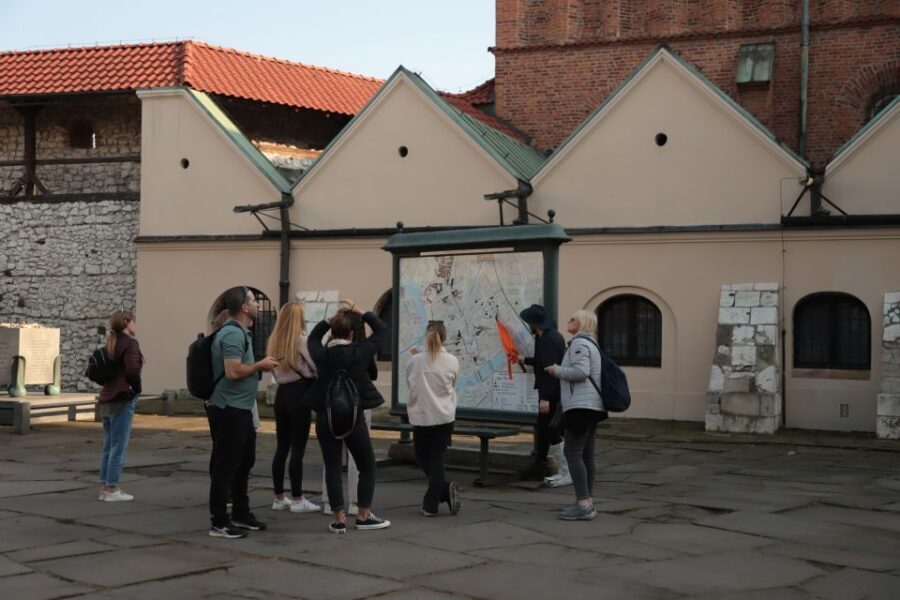
This tour is listed as a 150-minute walking route, and the streets are uneven and compact. That means your success depends on small choices:
- Wear comfortable shoes. You’ll be walking continuously between stops.
- Dress for the weather. In winter, you’ll want layers; in colder months, pause points don’t always mean warm air.
- Bring water if you can, even though food and drinks aren’t included. You’ll likely want something light after.
- Keep your expectations aligned with the topic. There’s no way around the fact that this is Holocaust-related history. A respectful mindset makes the experience better, not worse.
There’s also a behavior rule you should know about before you book: alcohol and drugs aren’t allowed, and party groups aren’t permitted. That’s a good fit for a memorial and history-focused tour.
Finally, if you’re the type who stops to take photos a lot, plan your pace. Some parts may feel tight on time if you wander ahead, because the group is moving through a small area with multiple stops.
Price and value: is $19 worth it?
At $19 per person for about 150 minutes with a local guide, this is strong value if your goal is context. You’re paying for interpretation—someone stitching together buildings, street layout, and major historical events into a story you can actually remember.
Is it a lot of money? No. Is it still worth your attention? Yes—because without a guide, Jewish Quarter sites can blur together. You might see impressive buildings and memorials, but you’d miss why specific spots matter, and you’d miss the human details that make the neighborhood legible.
If you only have a day or two in Krakow, this is one of the best ways to add depth fast. If you have time, I suggest doing a little self-walking afterward while the meaning is fresh.
Should you book this Jewish Quarter and Former Ghetto Tour?
Book it if you want a focused, history-first walk through Kazimierz that connects the pre-war community to the tragedy that followed, without skipping the important memorial parts. It’s a great fit for first-time visitors who want more than a surface-level look—and for anyone who appreciates guides who can explain culture, not just recite dates.
Skip it if you’re not up for Holocaust-related history right now, or if you need a very relaxed pace with lots of sitting. You’ll still be walking for about two and a half hours, and the emotional tone is real.
If you want Krakow to make sense in a deeper way, this is one of the best bets in town.
FAQ
How long is the Jewish Quarter and Former Ghetto Tour?
The tour lasts 150 minutes, about 2.5 hours.
Where does the tour start?
You start in front of the Old Synagogue on ul. Szeroka 24. Look for the guide with an orange umbrella.
Is the tour in English?
Yes. The live tour guide speaks English.
What is included in the price?
The price includes an experienced local tour guide and a 2.5-hour walking tour.
Are food and drinks included?
No. Food and drinks are not included.
Is the tour wheelchair accessible?
Yes, it is listed as wheelchair accessible.
What’s the cancellation and payment flexibility?
You can cancel up to 24 hours in advance for a full refund. There’s also a reserve now & pay later option, with pay nothing today.