REVIEW · KRAKOW
Krakow to Auschwitz Birkenau Guided Tour with Transfer and Ticket
Book on Viator →Operated by Welcome in Cracow · Bookable on Viator
Auschwitz demands care, not guesswork. This day trip gives you door-to-door pickup from your Krakow hotel and a licensed English guide to keep the visit structured and respectful. The big downside is timing: you should expect an early start and a long, walking-heavy day with limited food options.
What I really like is how the experience is set up to reduce friction once you arrive. You get pre-booked admission for both Auschwitz I and Auschwitz II Birkenau, and the group stays small (up to about 30), which helps the museum flow work better.
In This Review
- Quick hits before you go
- Price and Logistics: what you’re paying for (and why it’s fair)
- From Krakow to Auschwitz: the transfer that sets the tone
- Entering Auschwitz I: what the guided route helps you understand
- Auschwitz II Birkenau: the big walk, the open air, and the scale
- Tickets, timing, and crowd management that prevent a headache
- What’s included: the real value of the package
- Lunch reality: plan for snacks or add a lunch box
- Gear and behavior rules: how to avoid problems at the gate
- Communication and drivers: where the trip feels easiest
- Who this tour suits best (and who should think twice)
- Should you book this Auschwitz-Birkenau guided tour from Krakow?
- FAQ
- How long is the tour from Krakow to Auschwitz and Birkenau?
- Is round-trip transport from Krakow included?
- Are tickets included for both Auschwitz I and Auschwitz II Birkenau?
- What language is the tour offered in?
- Is lunch included in the tour price?
- What documents do I need to bring?
- Are large bags or backpacks allowed?
- Is there a dress code?
- Will I go through security before entering the museum?
- Can I cancel for free, and how late can I cancel?
Quick hits before you go
- Door-to-door Krakow transfer (and you’ll get vehicle details the day before)
- English-guided walking route at Auschwitz I and Auschwitz II Birkenau
- Pre-booked tickets so you don’t waste time at the ticket office
- A long open-air section at Birkenau, where weather really matters
- Very strict site rules (no large bags, no disruptive behavior, no flash indoors)
Price and Logistics: what you’re paying for (and why it’s fair)
This tour runs about $35.07 per person for a full day, roughly 7 hours. That price is mostly about three things: transport from Krakow, museum-guided access for both camps, and pre-arranged tickets so you don’t get stuck in queues.
A “cheap ticket” trip often turns into chaos on the ground. Here, the plan is designed to keep you moving between Auschwitz I and Auschwitz II Birkenau without spending your day hunting information, arguing with schedules, or waiting around for entry. In that sense, the cost feels more like paying for coordination and clarity than just paying for transport.
Still, it’s not a casual outing. The day includes significant walking, a security check, and rules that limit where you can stop. If you need a relaxed pace and lots of breaks, this isn’t that kind of day.
You can also read our reviews of more tours and experiences in Krakow

From Krakow to Auschwitz: the transfer that sets the tone
Your morning starts with pickup from a hotel, apartment, or hostel within a defined Krakow area. Because some parts of the city have traffic restrictions, you may be asked to meet at the closest accessible point rather than exactly at your front door—but you’ll be told where that is.
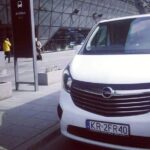
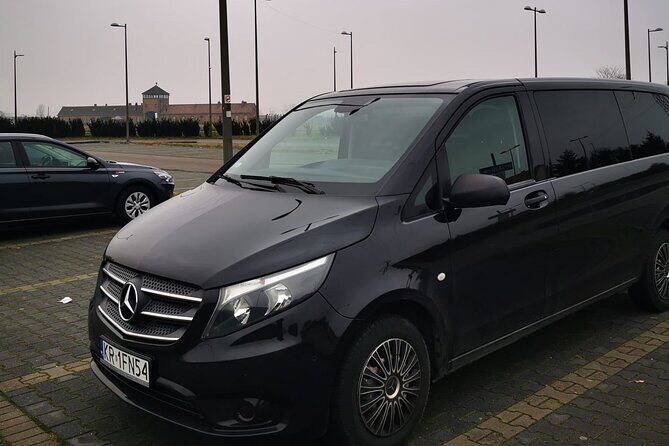
The drive to Auschwitz takes about 1.5 hours. You should also know what to expect ahead of time: the company sends driver information (phone numbers and the vehicle color), usually the day before. Communication is commonly handled via WhatsApp and similar messaging apps, so you’ll want to keep your phone handy.
One small practical point: the company notes they use minibuses and minivans. If you’re prone to motion sickness, tell them beforehand, because the route involves highway driving and a long day.
Entering Auschwitz I: what the guided route helps you understand
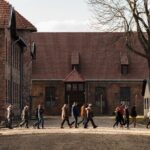
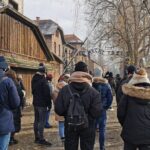
Auschwitz I is the part most people picture first. When you arrive, you meet your guide and enter the museum together. Your guided walk lasts less than about 2 hours, which is a real advantage: Auschwitz is huge, and reading every panel alone can turn into confusion fast.
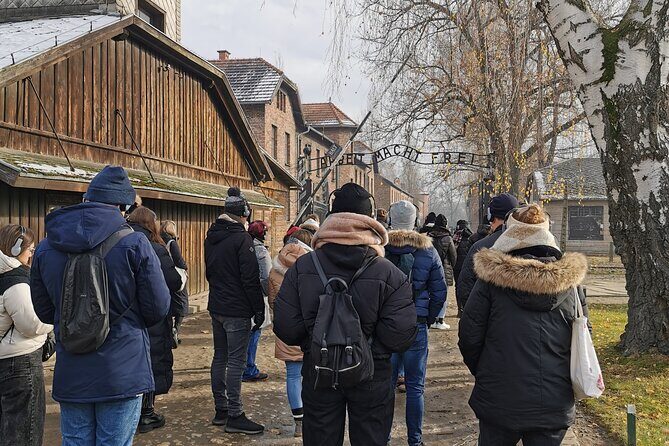
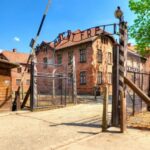
At Auschwitz I, you’ll see major landmarks and exhibits, including the gate Arbeit macht frei, the last surviving gas chamber, and a dense collection of photos and items connected to prisoners. The museum’s approach is not about “tour highlights.” It’s about context, timeline, and what the structures were used for.
Why a guide matters here: the museum route is fixed, and the guide helps you connect what you’re seeing to the broader story without turning it into a blur. You also get the emotional framing that keeps the visit from feeling like random sightseeing. In feedback, guides such as Ava and Joanna are praised for being empathetic and clear, which is exactly what you want in a place this heavy.
A practical reality: this section can still feel like a lot of ground. Wear supportive shoes, and plan to stay present rather than “rushing for photos.”
Auschwitz II Birkenau: the big walk, the open air, and the scale
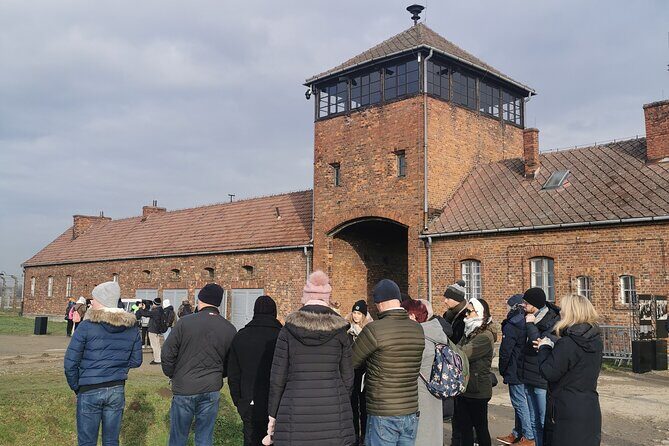
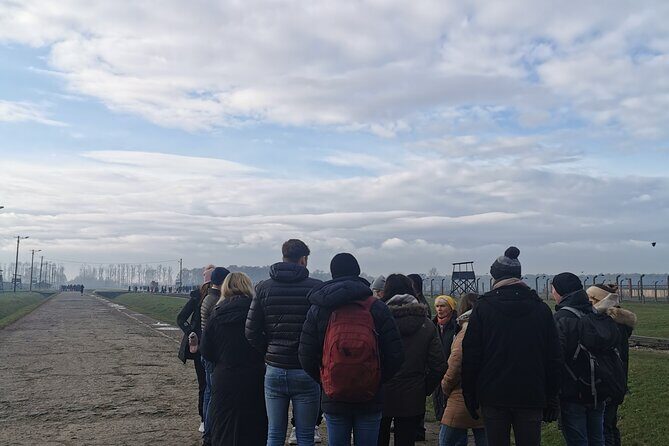
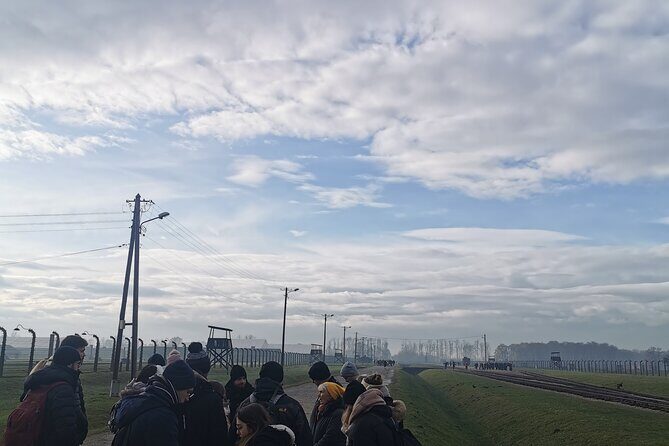
After a break, your driver takes you to Auschwitz II Birkenau. This is where the scale hits hardest. You’ll meet the guide again at the entrance gate, then walk for more than about an hour.
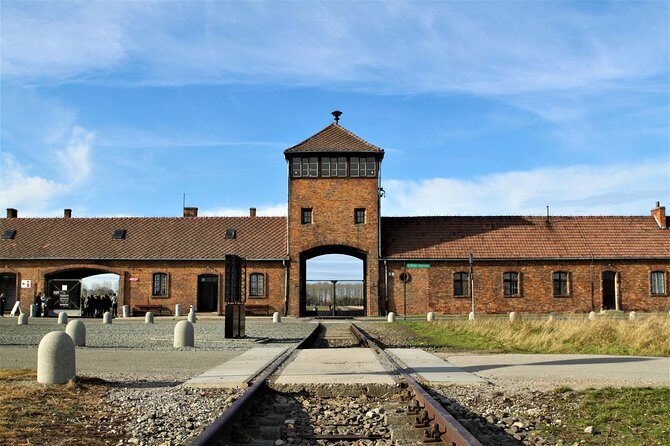
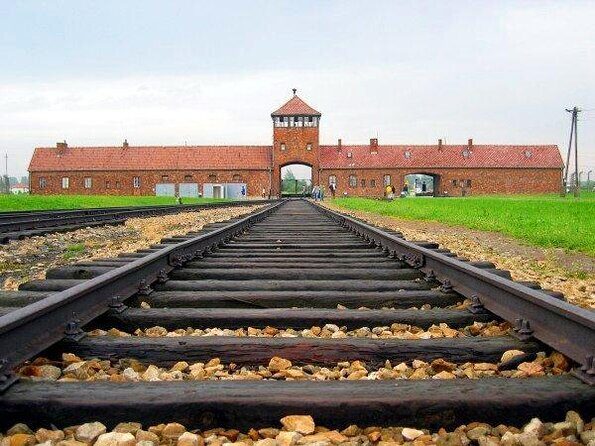
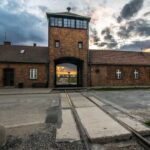
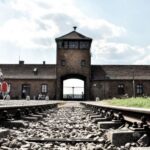
Birkenau is the largest camp built by the Nazis. Your guided time focuses on key areas such as the Death Gate area with the tracks leading into the camp, the unloading ramp where trains with prisoners arrived, and the ruins of gas chambers and crematoria. You’ll also see the monument to victims of the Holocaust and the remaining buildings where prisoners lived.
Here’s why Birkenau affects your day more than Auschwitz I: the company says you’ll spend up to 70% of your time outdoors, so weather matters. You should bring water and dress for the conditions, especially if you’re visiting in colder months or hot sun.
Also, the museum is strict. There’s no time to wander randomly. Your best move is to follow the guide’s pace and stay with the group. You’re not going for a casual stroll; you’re going for understanding.
Tickets, timing, and crowd management that prevent a headache
This tour is built around museum rules and the reality of visitor volume. You’ll have tickets arranged in advance, which means you don’t need to line up at a ticket office.
But don’t assume everything runs exactly on an app clock. Museum entry constraints, limits on how many people can enter at once, and crowd levels can affect pickup timing. The company warns that scheduled pickup times might shift, and they recommend not booking other activities for the day.
The group size helps: it’s typically around 16 to 30, with a maximum of 30 travelers. That’s large enough for logistics, but small enough that you usually still feel guided rather than herded.
One pattern that shows up in feedback: people repeatedly praise sharp pickup times and clear communication. That’s not a small detail. In early mornings, when you’re anxious about missing entry, good coordination makes the whole experience feel calmer.
You can also read our reviews of more guided tours in Krakow
What’s included: the real value of the package
Included in the price:
- Visits to Auschwitz I and Auschwitz II Birkenau
- Licensed English-speaking guide at both camps
- Hotel/apartment/hostel pickup in Krakow and drop-off back in Krakow city centre
- English-speaking driver and an air-conditioned vehicle
- Tickets handled in advance
- All fees and taxes
So what are you actually getting beyond “two camps”?
You’re getting a guided explanation inside a museum with strict routing rules and a day plan that connects both sites without you having to figure out transportation or timing on your own. For many people, that alone is worth paying for.
One detail that can surprise first-timers: some feedback mentions English audio with headphones used for Auschwitz I. The key point for you is that language support is part of the experience, not something you need to manage yourself.
Lunch reality: plan for snacks or add a lunch box
Lunch is not included. Between Auschwitz I and Birkenau, the day doesn’t leave much room for a proper meal break. The company suggests bringing a snack or some food to keep energy up.
If you want something more substantial, you can order lunch boxes through the operator for an additional fee (offered in advance). The day-of options at the parking area are limited, with vending machines for snacks and a restaurant currently under construction.
A good strategy: pack water and a couple of easy snacks anyway, even if you plan to buy a lunch box. You’re outside a lot, you’ll walk, and once you’re inside the museum zones you don’t want to be rationing energy.
Gear and behavior rules: how to avoid problems at the gate
This site is managed like a museum with security and strict conduct rules. Before you go, read these carefully, because they directly affect what you can bring.
- Documents: You must have your passport or identification card on hand. The museum may inspect personal information on entry. Full names are required for the booking as well.
- Bag size: Large bags and backpacks aren’t allowed. The maximum permitted size is 30cm x 20cm x 10cm. You can leave bags in your locked car during the visit.
- Security check: Expect a check similar to airport procedures before entry.
- Dress code: Smart casual is advised.
- On-site rules: No eating, no smoking, and no disruptive behavior.
- Photos: Photography is generally permitted, but flash inside buildings is strictly prohibited.
One more comfort note: the tour involves a lot of walking and the company says it isn’t recommended for people with mobility issues. If that’s you, ask directly about whether the route pace and museum walking time can work.
Communication and drivers: where the trip feels easiest
If you’re looking for a sign this will run smoothly, don’t just look at the camps. Look at the human logistics: pickup, messages, and driver professionalism.
In real-world feedback tied to this type of service, names like Bartek (communication coordination) and drivers Jacob (Cooper), Kuba, Dorota, Michał, Conrad, and others come up again and again. The recurring praise is consistent: punctual pickup, polite handling, clear instructions, and helpful updates.
That matters because Auschwitz day trips can feel stressful even when you’re prepared. When the driver is organized and the messages are clear, you arrive with your mind focused on the experience, not on solving problems.
Who this tour suits best (and who should think twice)
This guided day trip is a strong match if:
- You want structure for both Auschwitz I and Auschwitz II Birkenau
- You prefer an English guide in a fixed museum route
- You want pickup and drop-off so you don’t wrestle with timing between Krakow and the camps
- You value pre-booked tickets to reduce delays
It’s not the best fit if:
- You need a slow pace with frequent breaks
- You struggle with long walking days and lots of outdoor time
- You’re not comfortable with security checks and strict bag rules
- You’re planning other tight appointments the same day (pickup times can shift)
Should you book this Auschwitz-Birkenau guided tour from Krakow?
I’d book it if your goal is a respectful, well-run day that covers both camps with an English-speaking guide and coordinated transport. The value is strongest in three places: pre-booked ticket handling, door-to-door Krakow transfer, and guided navigation through a site where getting lost mentally is easy.
I’d think twice if you’re sensitive to long early starts, motion in a minivan, or you want lots of freedom to linger. This is a guided route built around museum constraints, and that’s exactly why it works for most people.
If you want, tell me your travel month and your tolerance for walking, and I’ll suggest what to wear and what to pack so the day feels manageable.
FAQ
How long is the tour from Krakow to Auschwitz and Birkenau?
The duration is about 7 hours.
Is round-trip transport from Krakow included?
Yes. You get pickup from your hotel/apartment/hostel area and drop-off back in Krakow city centre or at your hotel.
Are tickets included for both Auschwitz I and Auschwitz II Birkenau?
Yes. Entry tickets are booked in advance, and you’re included for Auschwitz I with admission and Auschwitz II Birkenau admission as part of the visit.
What language is the tour offered in?
The tour is offered in English, with licensed English-speaking guides.
Is lunch included in the tour price?
No. Lunch is not included, and you’re advised to bring snacks. You may be able to order lunch boxes for an additional fee.
What documents do I need to bring?
Bring your passport or identification card. Full names are required for the booking, and the museum may verify personal information at entry.
Are large bags or backpacks allowed?
No. The maximum allowed size is 30cm x 20cm x 10cm. Larger items can be left in your locked car during the visit.
Is there a dress code?
Smart casual dress is advised.
Will I go through security before entering the museum?
Yes. Expect a security check similar to airport procedures.
Can I cancel for free, and how late can I cancel?
Free cancellation is available up to 24 hours before the experience’s start time for a full refund. Canceling less than 24 hours before does not receive a refund.