REVIEW · KRAKOW
Krakow: Old Town, Jewish Kazimierz and Ghetto Sightseeing by Electric Golf Cart
Book on Viator →Operated by excursions.city · Bookable on Viator
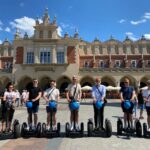
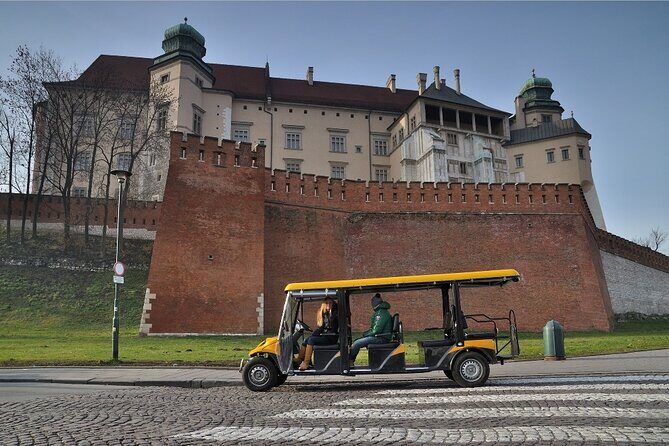
Krakow in two and a half hours works. I like the electric golf cart approach because it helps you cover huge ground without wearing yourself out, and I also like how the route pairs classic landmarks with the Jewish history of Kazimierz in a single loop. The main trade-off is simple: the stops are timed, so if you want long photo sessions or slow cathedral-time at every monument, you’ll feel a bit rushed.
This tour leans on an audio system plus a live guide, and that combo matters in Krakow where streets and squares fill quickly. I’ve seen guides such as Radic, Filip W, Michael, Tom, and Peter praised for being attentive and clear, which turns a short ride into real context instead of just scenery.
Before you go, plan around the cart: there’s limited room, so don’t bring large baggage, and be ready for a little waiting in busy Old Town streets. If you’re traveling with mobility limits, this can still be a smart choice because the cart does the heavy lifting while you choose when to hop out briefly.
In This Review
- Key takeaways before you roll
- Electric golf cart sightseeing in Krakow: fast, low-stress coverage
- Main Market Square and Cloth Hall: the center of Krakow’s public life
- Town Hall Tower steps: when the tour adds a vertical moment
- St. Mary’s Basilica: the art, the sound, and the why-it-matters feeling
- Juliusz Słowacki Theatre and the Barbican: two ways Krakow told stories
- Kazimierz and Szeroka Street: Jewish quarter context without getting lost
- Podgórze and the ghetto story: from St Joseph to Umschlagplatz
- Tadeusz Pankiewicz: the pharmacy stop that connects world events to a life
- How much time do you really get at each site?
- Price and value: why $56.47 can feel fair or tight
- Best time to book: beat crowd congestion with smarter pacing
- Should you book this electric cart tour?
- FAQ
- Is the tour in English?
- How long is the electric golf cart tour?
- How big is the group?
- Do I need to bring large luggage?
- What should I do about walking?
- Where do I meet the tour, and where does it end?
- What’s included in the price?
- Can I cancel for a full refund?
Key takeaways before you roll
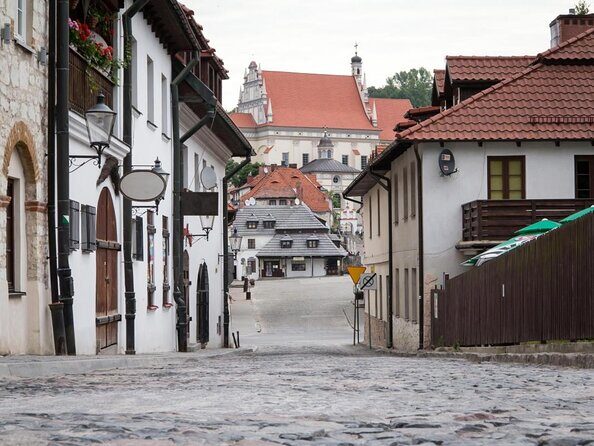
- Electric cart, max 8 people: easier conversations, less chaos than big-bus tours.
- Old Town first, then Kazimierz: you get orientation, then you get meaning.
- St. Mary’s Basilica focus: art and sound details (including the bugle call) make the stop memorable.
- Kazimierz synagogues + Szeroka Street: the tour connects streets to surviving buildings.
- Ghetto-era stops in Podgórze: you see a preserved wall fragment and the Umschlagplatz site.
- Photo time is the main limitation: I’d aim for earlier time slots to avoid the densest crowd crush.
Electric golf cart sightseeing in Krakow: fast, low-stress coverage
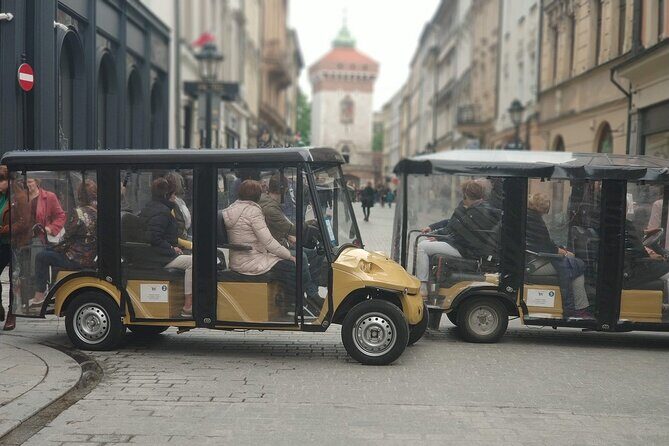
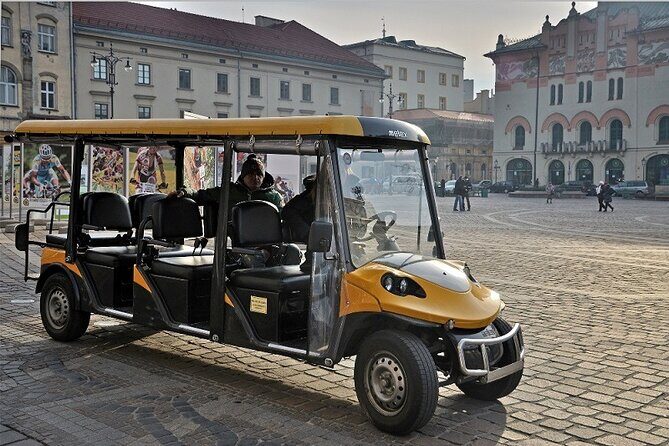
If Krakow is on your list but time is tight, this is the kind of tour that helps you get your bearings fast. The route uses an electric golf buggy, so you’re not weaving across the city on foot for every turn. You trade a little spontaneity for efficiency, and that trade usually pays off when you want both the postcard sights and the heavier historical sites.
The small-group size (maximum 8) is a big deal here. In busy areas like the Main Market Square, you can actually hear your guide’s explanations instead of shouting over the crowd. And because the tour runs on an audio system in English, you get consistent narration even when the street gets noisy.
One practical note: these vehicles are for sitting, and the operator asks you not to bring large baggage. That means you’ll travel lighter than you would on a normal walking day, and you’ll want your camera and water handy rather than packed deep.
You can also read our reviews of more tours and experiences in Krakow.
Main Market Square and Cloth Hall: the center of Krakow’s public life
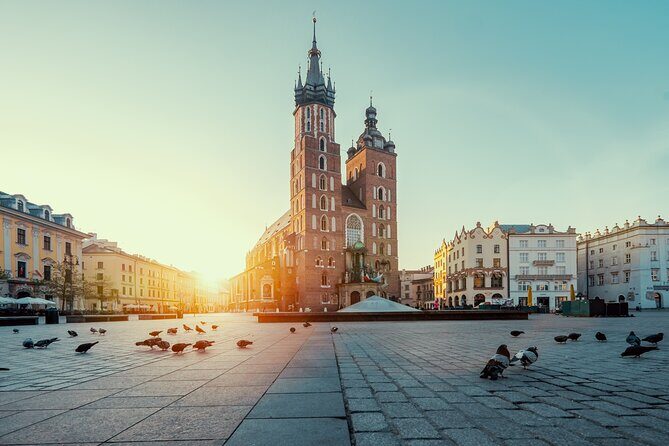
Your loop starts where Krakow likes to gather: the Main Market Square. It’s described as the most important public space in the city, and once you’re standing in the middle of it, you get why. The square is huge for a historic city center, and it visually supports the tour’s theme: Krakow has always been a place where people traded, walked, performed, and argued politics under the same roofs.
Then you move to Sukiennice, the Cloth Hall. Even if you’re not a medieval-architecture nerd, it’s an easy stop to appreciate. This building is one of Krakow’s oldest commercial centers, so it’s not just pretty stone; it’s a physical reminder of how the city funded itself for centuries. From a traveler’s perspective, it also gives you a clear landmark to orient around when you later walk the streets on your own.
What I like: the tour uses these stops to set the timeline and the vibe. You understand the city as a living center, not a museum bubble.
What to watch: the square can be crowded. Even if your cart glides you past key views, you may still have other tour carts parked nearby, which can slightly block sightlines for photos.
Town Hall Tower steps: when the tour adds a vertical moment
One of the tour’s charms is that it doesn’t only stay flat. You’re pointed toward the Town Hall Tower, the only remnant of the original seat of city authorities. The key detail here is the scale: 70 meters tall and reached via 110 stone steps. That’s a perfect “think about it” stop even if you don’t climb.
Why it works on a short tour: you get a sense of power and civic life without needing a full hike or a museum ticket. A tower like this signals control of the city, and it makes the Main Market Square feel more than just scenic. It’s the kind of landmark that anchors your understanding of how Krakow governed itself.
If you’re hoping for a longer break to climb or wander inside more deeply, you’ll need to manage expectations. The tour is timed, and most of your experience here comes from what you can see from street level and how your guide explains the tower’s role.
St. Mary’s Basilica: the art, the sound, and the why-it-matters feeling
St. Mary’s Basilica is the type of stop that deserves more than a drive-by, and this tour does a good job pointing you in the right direction. You’re told what makes it special in one tight package: the high altar by Veit Stoss, the bugle call, and ceiling vault murals by Jan Matejko.
This is the moment where Krakow stops being just “pretty.” The high altar is famous for a reason, and even if you only see it briefly, the guide’s explanation helps you notice details you’d miss if you were rushing on your own. The mention of the bugle call adds another layer: Krakow is not only visual art; it’s also sound and tradition layered into the church space.
Photo reality check: you’ll often get a short window to enter or get close-up views. If you want the best photos, arrive ready—camera settings prepped, phone charged, and your must-see point decided before you step inside. Also, if the building is busy, go for clear angles rather than chasing the perfect shot; you’ll save time and still come away satisfied.
Juliusz Słowacki Theatre and the Barbican: two ways Krakow told stories
After the big civic-and-church moments, the tour shifts toward Krakow’s cultural and defensive identity.
First up is the Juliusz Słowacki Theatre. The building has operated continuously since 1893, and that continuity shows. In a compact tour, it’s useful to include a working venue like this because it reminds you the city’s past isn’t frozen in place. This stop is also one where your guide’s narration can turn a façade into a timeline.
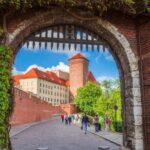
Then comes the Barbican. This is one of Krakow’s fortification “pearls,” described as an exquisite example of medieval military architecture. The standout story here is that it was never captured during a siege and that legend has defenders repelling attackers with a single shot. Whether you treat that as literal history or as a memorable tale, it communicates something important: Krakow’s defenses were built to last, and the city had a stubborn streak.
What I like: these stops diversify your view. Old Town isn’t just squares and churches. Krakow also has culture on the one hand and military engineering on the other.
What to watch: if you arrive at these points when carts are already clustered, you may need to step to the side to get a clean view.
Kazimierz and Szeroka Street: Jewish quarter context without getting lost
This is where the tour earns its second half. Krakow’s Jewish quarter in Kazimierz is not only visually distinct; it’s also layered with meaning. The tour sets you up by framing the area as the hub of Jewish life in Kraków for centuries and by tying specific synagogues and streets to that long story.
You start with the Tempel Synagogue. Two details are highlighted for a reason: its stained glass windows are among the best preserved of their kind in Poland, and it has a non-orthodox character. That combination is a great example of why the tour works for first-timers: it doesn’t just say what a building is. It tells you how it reflects community and belief.
Then you’re guided to Szeroka Street, described as the heart of Jewish Kazimierz. One of the most striking points here is that four synagogues once stood on that street—an arrangement unheard of elsewhere in Europe. That fact is the kind of detail that makes you understand the street as a spiritual and social corridor, not just a pedestrian lane.
The tour also includes two additional synagogue-related stops:
- A stop on Szeroka Street featuring one of the oldest synagogues in Poland preserved in such good condition.
- A stop tied to the smallest of Krakow’s seven synagogues, with more modest decor, and noted as the main site of prayer after renovation completed in April 2016.
Even without going into a deep architectural comparison, these stops help you connect the big idea—Jewish life centered here—to surviving buildings that still shape the neighborhood.
What to watch: because this is the emotional heart of the tour, your guide’s pacing matters. If you’re the type who wants to absorb silently, ask your guide (politely) where you can take a moment on your own. With a short visit, small adjustments can make a big difference.
Podgórze and the ghetto story: from St Joseph to Umschlagplatz
The route shifts from Kazimierz to Podgórze, and the energy changes. You visit St Joseph church, noted for dominating Podgórze Market Square. That “dominating” wording matters, because in a place marked by grief, a church standing large over the square is a visual reminder of how communities were organized in ordinary daily life.
Then you see a small fragment of the original ghetto wall, preserved with a commemorative plaque. This is one of those stops where the physical artifact is short, but the weight is long. The tour keeps it factual and direct: the wall fragment is a trace of what people experienced.
Next is Plac Zgody, historically Concord Square, and during Nazi occupation it was designated Umschlagplatz. The tour explains that this was the place where Jews had to congregate to be deported. Again, this is not a “quick photo, move on” location. Even if you only have minutes, stand still and let the guide’s words land. If you want photos, take them thoughtfully and keep your time respectful.
Tadeusz Pankiewicz: the pharmacy stop that connects world events to a life
One of the more human stops on the route is the mention of Tadeusz Pankiewicz. You’re pointed to the story of his pharmacy and how he made history alongside the business his father started. The tour ties this directly to the cruelty of World War and the way that tragedy affected everyday lives.
In a short cart tour, this kind of story stop does an important job: it prevents the history from becoming only dates and locations. It gives you a specific name, a specific place in the city, and a way to remember the human stakes.
If you’re the kind of traveler who wants to understand without getting overwhelmed, this is a good “breathing point.” It doesn’t erase the horror of the ghetto story, but it adds another layer: survival, choices, and courage within the same city walls.
How much time do you really get at each site?
This tour is built for time-tight visitors, so it’s efficient by design. The key consideration is that most stops are brief. You may get enough time to step in, look around, and snap a few photos, but you’re unlikely to have long, lingering sessions at every single monument.
The most common complaint logic is predictable: crowded Old Town makes visibility harder, and other cart tours can cluster where you want to take pictures. The fix is practical: arrive earlier in the day. Later time slots can mean more foot traffic and more carts sharing narrow street space.
Also, remember the tour format: it’s not purely walking. It’s cart plus short visits, and you’ll likely need to tell your guide if you want a quick entry into something like a church. Keep your request simple and time-aware so you don’t slow the group behind you.
Price and value: why $56.47 can feel fair or tight
At about $56.47 per person for roughly 2 hours 30 minutes, you’re paying for three things: guided storytelling, transport across multiple neighborhoods, and an English audio system to keep the narration steady.
Is it worth it? I think it is if:
- You want both Old Town landmarks and Jewish Kazimierz without building a detailed self-guided plan.
- You’re short on time and want a structured “greatest hits” approach.
- You’d rather move by cart than spend your day fighting hills, distance, and transit timing.
It may feel tight if your top priority is deep, unhurried museum-style time. In those cases, you’ll probably wish you had more minutes per stop—especially for photography. But that’s the nature of a compact tour. You’re choosing coverage over linger-time.
Best time to book: beat crowd congestion with smarter pacing
If you can pick the slot, I’d choose an earlier start. The reason is straightforward: Krakow’s center gets congested, and cart traffic plus pedestrians can block views right when you want to photograph.
Even with a guide who moves well, you can’t control the city. So time becomes your lever. Earlier slots tend to mean:
- clearer sightlines around the Main Market Square area,
- less competition for street angles near popular monuments,
- smoother movement between Old Town and the Jewish quarter.
Should you book this electric cart tour?
I’d book this tour if you fit the target profile: you have limited time, you want strong context for both the city’s icons and the Jewish history of Kazimierz, and you prefer an easy transport rhythm over long walking loops.
Skip it (or plan to do it differently) if you want long entries at multiple churches or you know you’ll be frustrated by brief stop windows. Also, if you’re planning to bring a big bag, take the operator’s warning seriously—these vehicles are for passengers, not luggage storage.
For most first-time visitors, this is a smart way to get oriented fast, learn the main stories in the right neighborhoods, and leave Krakow with a clearer map in your head. Then you can always go back on foot later for the one place you can’t stop thinking about.
FAQ
Is the tour in English?
Yes. The audio is offered in English, and the sightseeing is guided with an audio system.
How long is the electric golf cart tour?
The duration is listed as approximately 2 hours 30 minutes.
How big is the group?
The tour has a maximum of 8 travelers.
Do I need to bring large luggage?
No. The vehicles have limited space, so the tour asks you not to bring large baggage.
What should I do about walking?
Most of the route is done by electric cart. You should expect short stops where you may choose to step in or take photos briefly.
Where do I meet the tour, and where does it end?
The start is Mikołaja Zyblikiewicza 2, 31-029 Kraków, and the end is Mikołaja Kopernika 3, 31-034 Kraków.
What’s included in the price?
Included is sightseeing in Kraków in an eco-vehicle with an audio system.
Can I cancel for a full refund?
Yes. You can cancel up to 24 hours in advance for a full refund. If you cancel less than 24 hours before the start time, the amount paid is not refunded.