REVIEW · KRAKOW
Krakow: Oskar Schindler’s Factory Entry and Guided Tour
Book on GetYourGuide →Operated by Poland Active Krakow · Bookable on GetYourGuide
Krakow gets real fast here. This guided tour through Oskar Schindler’s Enamel Factory uses period photographs, eyewitness accounts, films, and multimedia to show daily life in Nazi-occupied Krakow from 1939 to 1945. I like how the museum focuses on both Poles and Jews, not just the occupiers, so the city feels human instead of one-note. I also like that you get an expert guide to connect the rooms, artifacts, and ethical dilemmas into one clear narrative.
One thing to plan for: the tour can feel crowded and tight when the group is large, and narrow walkways can make it harder to hear or follow details if you’re not close to the guide.
In This Review
- Key Things I’d Prioritize Before You Go
- Oskar Schindler’s Factory: WWII Krakow in One Guided Walk
- Ticket Line Skip and Meeting at Lipowa 4
- Inside the Enamel Factory: Photos, Testimony, and Films
- Schindler’s Office and the Survivor’s Ark of Enamel Pots
- A Theatrical Krakow Walk: Tram Ride, Documentary, and Apartment Life
- Plaszow Camp Artifacts and the Hall of Choices
- Group Size and Narrow Walkways: The One Real-World Drawback
- Price and Value: Is $45 for 1.5 Hours Fair?
- Who This Tour Fits Best (And Who Might Skip It)
- Should You Book This Schindler’s Factory Tour?
- FAQ
- How long is the guided tour at Schindler’s Factory?
- Where do I meet the guide?
- Does the price include the museum entrance?
- Will I be able to skip the ticket line?
- What languages are available for the live guided tour?
- Is there free cancellation?
Key Things I’d Prioritize Before You Go
- Skip the ticket line and go straight into the museum experience you booked
- A guided 1.5-hour format that’s built to keep the story moving without rushing you too hard
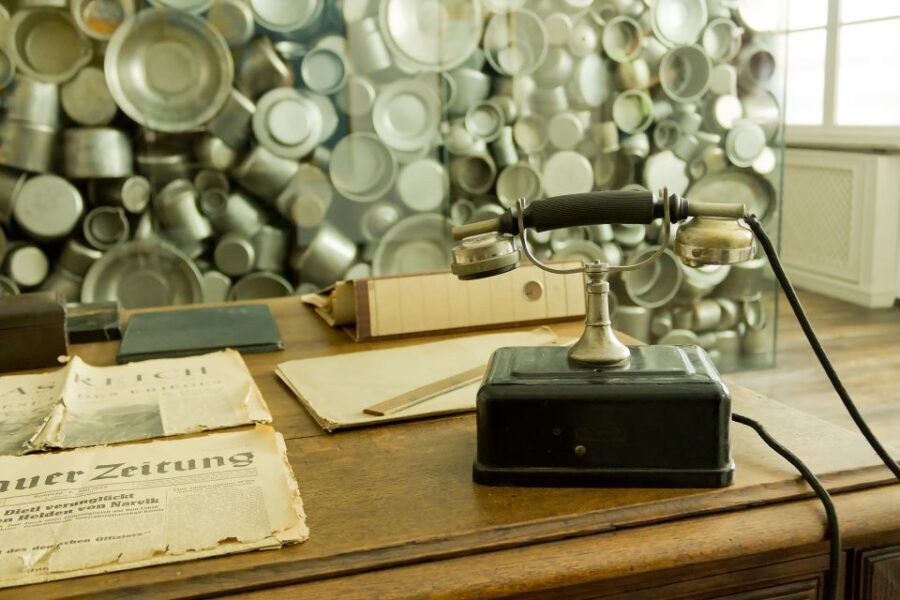
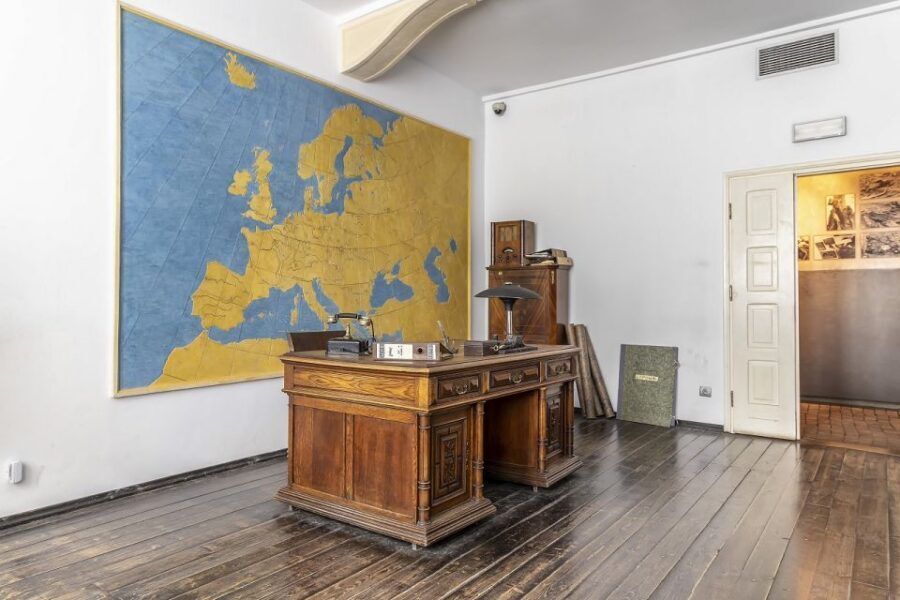
- Schindler’s preserved office inside the administrative building
- Survivor’s Ark, made from thousands of enamel pots produced in the factory
- A recreated slice of Krakow, including a tram ride and a typical Jewish apartment
- The Hall of Choices and its sculptural reminder that war forced impossible decisions
Oskar Schindler’s Factory: WWII Krakow in One Guided Walk
Oskar Schindler’s factory is famous for a reason, but this tour is more useful than name-dropping Spielberg. You’re not just looking at exhibits—you’re following a guided story of how Nazi occupation reshaped Krakow’s centuries-long Polish-Jewish relationship. The museum’s permanent collection is arranged to show what daily life looked like, what people faced, and how the war distorted normal routines into something brutal.
What you’ll find especially meaningful is the way the exhibition treats the city as a place with overlapping lives and responsibilities—Poles, Jews, and the Nazi occupiers all figure into the narrative. That matters because it avoids turning history into a single silhouette. Instead, you get the full moral mess: disruption, coercion, fear, survival, and the everyday struggle to make choices under impossible pressure.
And yes, the setting is the former enamel factory itself. That physical reality helps you understand why objects in the exhibit feel more than symbolic—they’re tied to real work that happened here.
You can also read our reviews of more guided tours in Krakow
Ticket Line Skip and Meeting at Lipowa 4
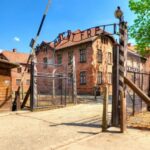
You’ll meet at Lipowa 4, at the front of the main entrance of the museum. The guide holds a sign for excursions.city, which makes the meetup straightforward when you’re standing outside and trying to match faces to names.
This is one of those tours where timing really matters. The experience is only about 1.5 hours, so losing time to ticket lines would quietly steal your best moments. Here, the tour includes entrance fees and helps you skip the ticket line, meaning you start the guided story rather than waiting for it.
If you want to keep your day efficient in Krakow, this works well as a mid-block activity: you can plan it between other stops without it consuming half your afternoon.
Inside the Enamel Factory: Photos, Testimony, and Films
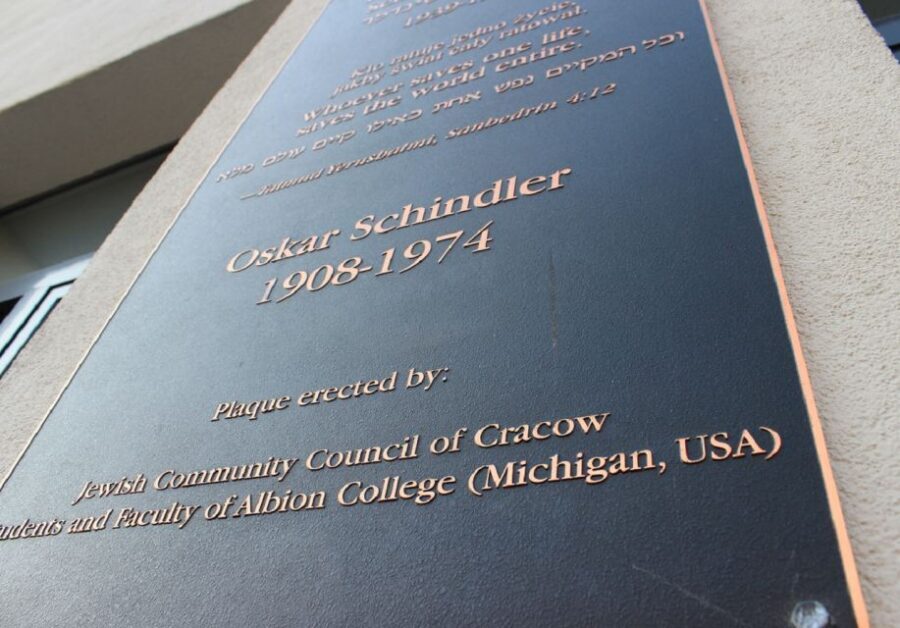
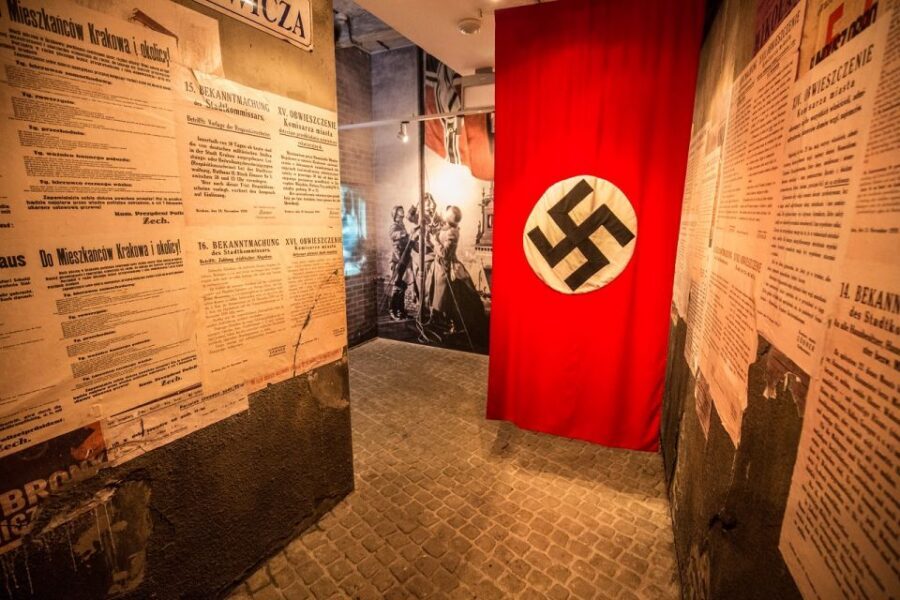
The tour begins in the former factory museum where the guide leads you through the permanent collection. The structure is built around multiple formats—documentary photographs, eyewitness accounts, and films—plus multimedia presentations that tie it together.
That mix is practical. Photos do the immediate work of showing you faces, street scenes, and objects. Eyewitness accounts add context and emotional weight. Films and multimedia help fill in the gaps between rooms so you don’t walk through history like you’re reading separate chapters.
You’ll also see how the exhibition handles the city during 1939–1945. The guide’s job is to connect what you’re seeing to how Krakow’s everyday life changed under occupation. Without that narration, some visitors might focus only on the heaviest moments and miss how the museum also shows quieter forms of daily disruption—what people could still do, what they could no longer do, and how quickly rules could shift.
Schindler’s Office and the Survivor’s Ark of Enamel Pots
One of the biggest standouts is the chance to enter Schindler’s office, preserved within the factory’s administrative building. This kind of detail does something important: it reminds you that war wasn’t only battles and maps. It was paperwork, decisions, and power used through institutions—and those institutions had addresses, rooms, and daily routines.
Then comes one of the most memorable installations in the museum: the Survivor’s Ark, made from thousands of enamel pots similar to the ones produced in the factory. The tour frames this not as a decorative display, but as a symbolic transformation of industrial output into a lifesaving legacy. Even if you already know the basic story, the physical scale tends to hit differently in person.
If you’re the type of traveler who likes to understand how artifacts connect to real labor, this stop will feel especially relevant. The factory made these objects; the exhibition reassigns their meaning after the war.
A Theatrical Krakow Walk: Tram Ride, Documentary, and Apartment Life
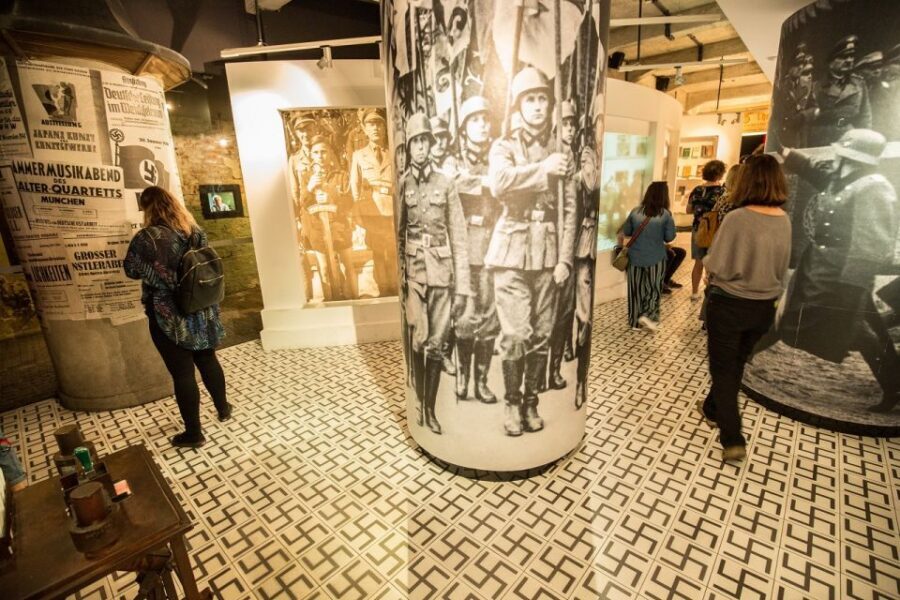
This tour doesn’t keep you inside a single gallery. It moves into a more theatrical recreation of Krakow’s historical city space, and that’s a smart choice for a museum experience. It helps you picture what the city felt like before and during occupation—not just what happened to people, but what their surroundings were like.
A key element is the tram segment: you’ll board a tram and watch a documentary that portrays everyday life in the city. It’s not about spectacle. It’s about atmosphere and pacing—giving your brain a chance to rest from the exhibit walls while still staying on the same historical track.
After that, you’ll visit a typical Jewish apartment. This is where the museum shifts from big events to lived space. You’re not just learning dates; you’re seeing how people organized ordinary life indoors, how rooms held routines, and how occupation invaded private settings. It’s also a reminder that history doesn’t only happen in public squares. It happens at kitchen tables, in bedrooms, and in rooms where people hoped the next day would be survivable.

Plaszow Camp Artifacts and the Hall of Choices
The tour also includes artifacts from the Plazow camp. This part can be emotionally heavy, and the tour presentation is built to connect the objects you see to the bigger system of violence. The aim is clarity: you should leave understanding that camps weren’t abstract ideas. They were machinery that tore apart communities and forced people into cruel arrangements.
Then you’ll walk through the Hall of Choices, a sculptural installation centered on ethical dilemmas people faced during the war. This is the section that sticks with you because it pushes you out of passive observing. The museum asks you to consider what limited choices can look like under extreme pressure—and how moral lines can blur when survival is on the line.
For many visitors, that’s the moment when the tour feels less like “a museum visit” and more like “a question you carry with you.” Even if you came in with prior knowledge, the guided framing helps keep the experience focused on responsibility and consequence, not just tragedy.
Group Size and Narrow Walkways: The One Real-World Drawback
The tour is well structured, but the space is what it is, and museum rooms can get narrow. If your group is larger on the day, you may find it difficult to stay close enough to the guide for every detail. One practical example from experience: during explanation in more confined rooms, it can be hard to follow if you end up farther from the front.
That doesn’t ruin the tour. It does mean you should think about how you like to learn on guided visits. If you’re someone who needs close-up commentary to catch small points, arriving attentive and staying where the guide’s voice is clearest will matter.
Price and Value: Is $45 for 1.5 Hours Fair?
At $45 per person for around 1.5 hours, this is not a budget throw-in. But the value makes sense when you break down what you’re paying for:
- Entrance fees are included, so you’re not layering costs on top.
- You’re getting a professional live guide, with narration designed to connect photographs, films, testimony, and installations.
- The tour is built around multiple types of content, not just a walk-through with minimal commentary.
- The skip-the-line element saves you time you can’t easily buy back later.
If your goal is to see the museum on your own, you might spend less. But if your goal is to understand what you’re looking at—how the story pieces connect, and why each stop matters—this ticket price starts to feel more reasonable. In other words: you’re paying for interpretation, not just access.
Also, the experience averages 4.7 out of 5 based on 30 ratings, which is a decent signal that the guided format lands with people.
Who This Tour Fits Best (And Who Might Skip It)
This tour fits best if you want:
- A guided walkthrough that explains the museum’s narrative rather than treating exhibits like separate stops
- A focus on everyday life in Krakow under Nazi occupation, not only major events
- A chance to see key installations like the Survivor’s Ark and the Hall of Choices while a guide connects them
You might be less happy if:
- You hate crowded spaces and tight museum corridors
- You need to be very close to the guide to follow the explanation at full detail
- You prefer flexible wandering over a set 1.5-hour flow
Should You Book This Schindler’s Factory Tour?
If you’re visiting Krakow and you want the Schindler’s Factory experience with structure, booking this guided tour is an easy yes. You’ll get the entrance included, line time saved, and a guide to connect the museum’s photographs, testimony, films, and installations into one coherent story.
Just go in with the right expectation: the content is serious, the environment can feel tight, and the experience works best when you can pay attention to the guide as you move through rooms.
FAQ
How long is the guided tour at Schindler’s Factory?
The tour lasts about 1.5 hours.
Where do I meet the guide?
Meet at Lipowa 4, at the front of the main entrance of the museum. The guide will be holding a excursions.city sign.
Does the price include the museum entrance?
Yes. Entrance fees are included, along with a professional guide.
Will I be able to skip the ticket line?
Yes. This activity includes skip-the-line entry.
What languages are available for the live guided tour?
The tour is available in English, French, German, Italian, Spanish, and Polish.
Is there free cancellation?
Yes. You can cancel up to 24 hours in advance for a full refund. You can also reserve and pay later.