REVIEW · KRAKOW
From Krakow: Auschwitz Birkenau Tour with Transfer
Book on GetYourGuide →Operated by Best Krakow · Bookable on GetYourGuide
A hard day, planned with care. What makes this trip work is the tight Krakow transfer and the clear Auschwitz-Birkenau brochure route, so you’re not guessing your way around. I like that the schedule builds in real checkpoints instead of a chaotic scramble, and I like that there’s staff support to get you moving the right direction. You’re still choosing how you walk the site at your own pace, which matters on a place this emotionally heavy.
One trade-off: if you pick the self-guided option, you won’t have a live guide inside the camps. If you really want a person to explain every moment in real time, you’ll need to choose the version that includes a professional guide.
Good news: from pickup through drop-off, there’s assistance on hand, and the day is structured so you spend your energy on the memorial—not logistics.
In This Review
- Key Things I’d Pay Attention To
- From Krakow to Auschwitz: how the transfer keeps the day sane
- Pickup points and drop-offs: where you’ll meet the bus
- Ticket access and the brochure-led route: what the self-guided option really means
- Judenrampe: the first on-site segment and how to use it
- Auschwitz I: your 1.5-hour window inside the main camp area
- Auschwitz II-Birkenau: why the shorter time can still feel intense
- How the day’s pacing is managed (and why the memorial sets limits)
- Support on the ground: tour leader help and driver comfort
- Price value: $21 worth of what you’re actually getting
- Who this tour suits best (and who should rethink it)
- Should you book this Auschwitz-Birkenau trip from Krakow?
- FAQ
- How long is the Auschwitz Birkenau tour from Krakow?
- Does this option include a live guide?
- Are entry tickets to Auschwitz I and Auschwitz II included?
- What languages are available for the brochure and host/greeter?
- Where can I be picked up in Krakow?
- What should I bring, and what is not allowed?
- Is there free cancellation?
Key Things I’d Pay Attention To
- Air-conditioned roundtrip transport from Krakow keeps the day from feeling like endless bus stress
- Ticket support so you can collect admission access with help rather than standing around unsure
- A brochure-led path that lets you control your pace instead of getting rushed by a group
- Three focused on-site windows (Judenrampe, Auschwitz I, Auschwitz II-Birkenau) that balance clarity with time pressure
- Tour assistant availability from pickup to drop-off, which is a big deal on a complicated day
- Limited time at Birkenau relative to Auschwitz I, so plan your priorities before you arrive
From Krakow to Auschwitz: how the transfer keeps the day sane
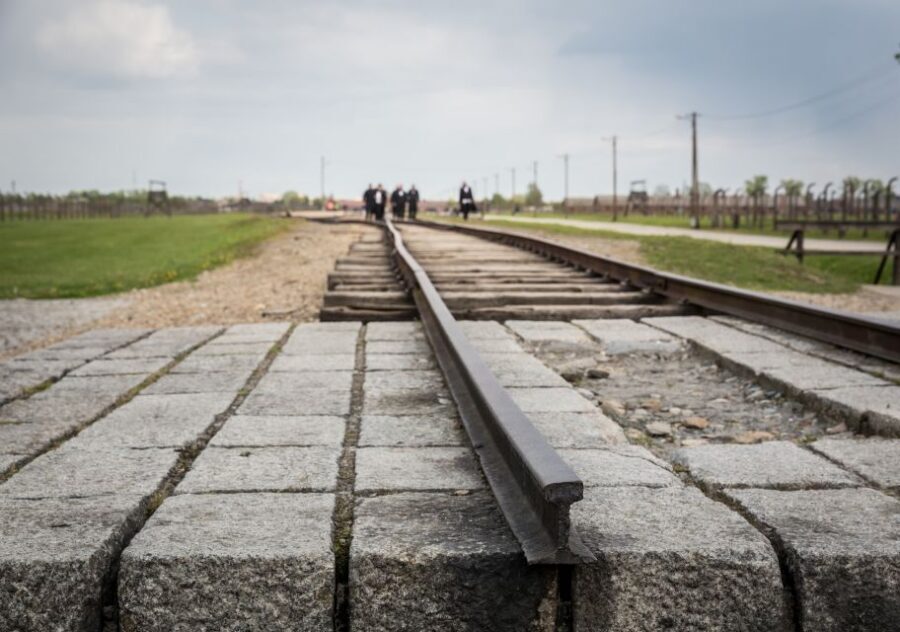
This is a long day by nature. Auschwitz-Birkenau is not a “quick stop” kind of place. The value of this tour format is that it handles the heavy lifting: transport, admission, and the move from site to site.
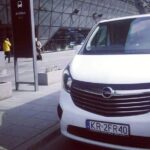
You start in Krakow and ride out by shared, air-conditioned coach. The bus time is about 1.5 hours each direction, so the day has a rhythm you can feel. That matters because it reduces the stress of figuring out how to get there, then how to get between Auschwitz I and Auschwitz II-Birkenau.
Also, the schedule includes a local café break (about 40 minutes). You’re not just hungry and tired on arrival—you’re set up to do the day properly. It’s a small thing that makes a big difference when you’re dealing with hard subject matter.
You can also read our reviews of more tours and experiences in Krakow
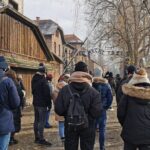
Pickup points and drop-offs: where you’ll meet the bus
Pickup is optional, and the meeting point can vary depending on which option you choose. If you want the convenience of being collected, you can select pickup at either:
- Pawia 18a at the Kiss & Ride lane in front of the Mercure Hotel
- Wielopole 2 at the Kiss & Ride lane
Your drop-off has multiple options too (with stops listed around areas including Wielopole 2, Pawia 18a, Kraków, and Starowiślna 65). Practically, that means you’re not stuck with one “back to the same exact point” outcome. You can usually get closer to where you actually are in Krakow.
Because the departure time is chosen by you (but not guaranteed in every situation), I’d build in a little buffer. Exceptional circumstances can shift the departure earlier or later than the window shown.
Ticket access and the brochure-led route: what the self-guided option really means
There are two ways this experience can run: a self-guided format using a brochure (no live guide) or a version with a professional guide. Either way, you’ll be visiting Auschwitz-Birkenau with admission to both parts of the memorial.
Here’s how the self-guided experience is structured:
- You arrive at the museum and collect your admission ticket with help from your tour leader.
- You follow a brochure route in the language you choose.
- You move at your own pace and path, using the printed guidance.
I like this approach for one reason: it gives you control. In a place like this, you can’t force your emotions into a fixed group pace. The brochure route is essentially your roadmap, so you’re not wandering without direction.
Do note the important limitation: the self-guided option does not include a live guide. So if you want a person to answer questions as you go, or to connect details on the spot, that’s the main thing to consider.
Judenrampe: the first on-site segment and how to use it
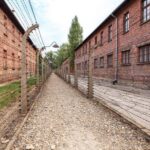
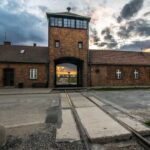
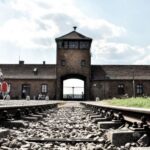
Your day begins inside with a stop at Judenrampe, followed by other major areas. This first segment is self-guided for about 45 minutes. It’s a sensible opening window because it starts you oriented within the memorial.
Why I think this matters: early time sets your “mental map.” If you’re the kind of person who needs structure, the brochure route helps you understand where you are and what you’re looking at before you move deeper into the site.
This part of the experience is also where the day can feel most surreal and immediate. Even with instructions, you’ll likely find yourself slowing down. The route is designed to give you enough time to process without turning the first stop into a long, dragging section.
Auschwitz I: your 1.5-hour window inside the main camp area
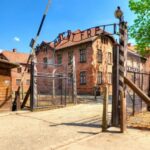
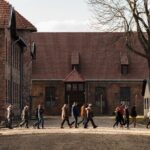
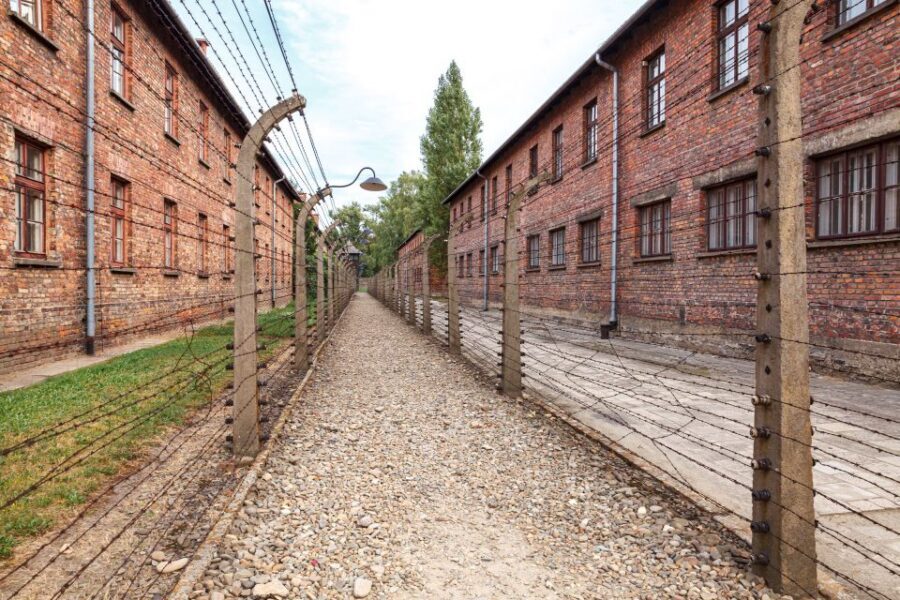
Next is Auschwitz I, self-guided for about 1.5 hours. This is a longer segment than the first stop, which gives you room to read, pause, and retrace your own steps if you need to.
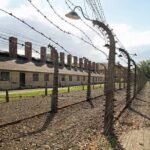
Auschwitz I is described as the largest camp built on Polish soil by the Nazis, and it served as both a concentration camp and an extermination camp. That framing is important because it helps you understand you’re not looking at one narrow piece of history—you’re looking at the core of a system.
The practical challenge is that an hour and a half can go fast once you start reading. That’s why the brochure approach works well. You can pick your rhythm: skim and then stop, or stop early and read more deeply. Either way, you’re not locked into a scripted walking speed.
Auschwitz II-Birkenau: why the shorter time can still feel intense
Then you head to Auschwitz II-Birkenau, the place where mass killings took place. This stop is self-guided for about 40 minutes.
Forty minutes can sound short, but here’s the honest trade-off: Birkenau is a bigger, more emotionally overwhelming space, and you may end up spending extra time in areas that hit hardest. The good thing is that you’re not given a rigid “stay exactly here” instruction. You can follow the brochure and adjust based on what you need in that moment.
In one case, people noted they wished they had a bit more time in Birkenau. That’s a fair consideration when you’re choosing between different tour styles. If you know you’ll want extra reading time and extra pauses here, you might feel the time limit more than you would in Auschwitz I.
Still, 40 minutes is not a rushed free-for-all. It’s a planned window, and you’ll be moving as part of a day that has fixed travel blocks.
How the day’s pacing is managed (and why the memorial sets limits)
The duration should be treated as approximate. The memorial’s visitor service determines pacing and how long you can spend. In other words, your plan has structure, but it isn’t 100% under the operator’s control.
That’s also why the schedule uses timed pieces:
- bus rides between segments
- a café break
- set on-site windows
This keeps you from arriving, panicking, and then losing time to confusion. It also helps the group flow through crowded entry points.
Keep this in mind if you’re the type who likes to build the rest of your day around the assumption that everything will run exactly as printed. On this kind of trip, I plan for variation.
Support on the ground: tour leader help and driver comfort
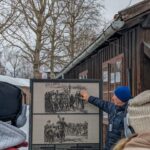
Even with self-guided walking, the support is a real part of the experience. A tour assistant is at your disposal from pickup to drop-off. That’s valuable because it handles the moments where travelers usually get stuck: ticket access, knowing where to go next, and staying on schedule without being pushed.
The driver portion is also part of the comfort. People highlighted coach drivers like Magik as lovely and polite, which fits the overall vibe: this operator tries to keep the ride calm and the handoffs clear. Another theme in the feedback is that guides stay available at each key point.
You might also encounter guides with names like Adrianna/Andrianna, Anges, Daniel, and Simon. These names come up as friendly, helpful, and respectful—exactly what you want for a day that can easily feel too heavy or too confusing.
If you’re choosing between options, this is one reason I’d lean toward a guided or assisted version even if you still want the freedom of self-paced walking. You’re not paying just for transportation; you’re paying for someone to smooth out the sharp edges.
Price value: $21 worth of what you’re actually getting
At around $21 per person, the big question is: what are you paying for?
You’re not paying for a luxury experience. You’re paying for:
- shared roundtrip transportation from Krakow
- entry tickets to Auschwitz I and Auschwitz II-Birkenau
- a brochure in your language with route and detailed description
- assistance throughout the whole trip
So the value isn’t in “extras.” The value is in reducing friction. On a trip that’s emotionally and logistically complex, saving time and confusion is worth money.
One more nuance: entry passes for individual visitors without educators are described as free and provided by the museum under official regulations. But the tour operator is still handling ticket booking in advance. If that advance booking isn’t possible, the tickets are collected individually before the tour with help from the tour leader. In practice, for you, the goal is the same: you don’t want the ticket hassle to eat into your limited on-site time.
Also, note that lunch isn’t included. The café break is built in, so you may grab something there. Pack snacks if you know you prefer that, but the tour does give you an actual break block.
Who this tour suits best (and who should rethink it)
This format fits best if you want:
- comfortable, organized transport
- clear entry handling
- freedom to walk the memorial at your own pace with a brochure route
- support from staff during pickup and drop-off
It’s less ideal if you strongly want a live guide for the entire on-site experience. Since the self-guided option does not include a live guide, you’ll rely on the brochure for interpretation.
The experience is also not suitable for children under certain ages (under 2 through under 5 depending on the category listed), and it isn’t designed for wheelchair users or people with mobility impairments. The restrictions are clear for a reason: camp terrain and access limitations can be tough.
If you’re traveling as a couple, a small group, or solo and you’re comfortable reading the memorial materials at your own pace, this is a practical way to do it from Krakow.
Should you book this Auschwitz-Birkenau trip from Krakow?
I’d book it if you want the day to feel structured: coach transfer, café break, clear on-site segments, and staff help at the points where things often go wrong. For a relatively low price, the inclusion of entry access plus a brochure-led route is strong value.
I’d think twice if the idea of a self-guided walk feels too thin for you. If you need a professional guide to explain what you’re seeing as you go, choose the version that includes that. And if you know Birkenau is where you’ll want extra time for reading and pauses, check whether your selected option’s timing feels right.
One final tip: bring only what you need. Large bags and luggage aren’t allowed, and you’ll want to avoid last-minute stress at the memorial.
If you can handle a heavy historical visit and you like having support without feeling micromanaged, this is a solid, practical way to get from Krakow to Auschwitz-Birkenau with less friction.
FAQ
How long is the Auschwitz Birkenau tour from Krakow?
It runs about 7 to 10 hours total, including roundtrip bus time and the on-site segments. The exact flow is approximate because pacing is also set by the memorial visitor service.
Does this option include a live guide?
The self-guided version does not include a live guide. You may be able to choose an option that includes a professional guide, depending on what you book.
Are entry tickets to Auschwitz I and Auschwitz II included?
Yes. Entry tickets to Auschwitz I and Auschwitz II – Birkenau are included as part of the tour.
What languages are available for the brochure and host/greeter?
Languages listed include Dutch, English, Polish, Italian, Spanish, and German.
Where can I be picked up in Krakow?
Pickup is optional. You can select Pawia 18a (Kiss & Ride lane in front of Mercure Hotel) or Wielopole 2 (Kiss & Ride lane).
What should I bring, and what is not allowed?
Bring a passport or ID card. Luggage or large bags are not allowed.
Is there free cancellation?
Yes. You can cancel up to 24 hours in advance for a full refund.