REVIEW · KRAKOW
Krakow to Auschwitz Birkenau Guided Tour with Ticket and Transfer
Book on Viator →Operated by GR8WAY · Bookable on Viator
That early start shapes everything. This guided transfer to Auschwitz Birkenau is designed to save you from the public-transport shuffle, with a headset so you can actually follow the story. I like how the day is organized into two focused blocks at Auschwitz I and Birkenau, but the pickup window and museum schedule can shift.
What makes this outing especially interesting is the mix of logistics and meaning. You’re looking at a UNESCO World Heritage Site, with a guided narrative that helps you connect what you see in each camp. You’ll also cover a lot in one go, roughly 8 to 12 hours, because the round-trip from Krakow to the memorial site is about 65 km each way.
Before you go, note the pace and the practical rules. This is not the kind of place where you wander at your own speed, and you’ll spend up to 70% of the day outdoors, especially at Birkenau. You’ll need ID, and you’ll want warm clothes ready for an early morning start that can include waiting time.
In This Review
- Key things worth knowing before you commit
- The Krakow-to-Auschwitz “get there without stress” setup
- Auschwitz I with a guide: why the first 2 hours matter
- Birkenau transfers and the one-hour reality check
- Time slots, pickup ranges, and the early-morning shock
- About “skip-the-line” and what you should verify
- Language, names, and the rules that affect entry
- Comfort planning: luggage size, weather, and what you’ll actually eat
- Price and value: when this works, and when it doesn’t
- Who this tour suits best (and who should reconsider)
- Should you book this Auschwitz-Birkenau tour?
- FAQ
- What’s the total duration for this Krakow to Auschwitz Birkenau day trip?
- What’s included with the tour besides the museum tickets?
- Do I need to bring an ID?
- Will the hotel pickup work in Krakow Old Town?
- How much luggage can I bring?
- Can I cancel and get a full refund?
Key things worth knowing before you commit
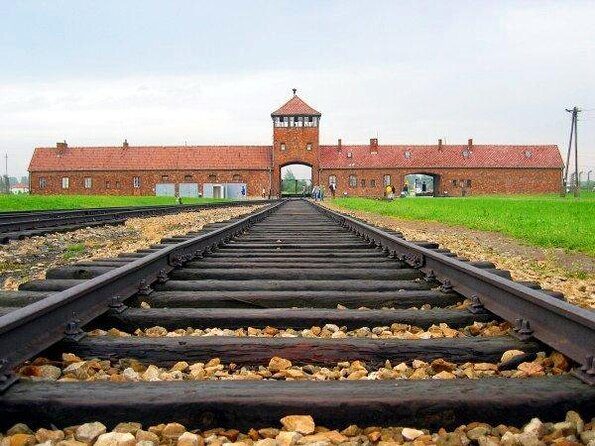
- Hotel pickup plus a real van ride: Shared round-trip transfer by air-conditioned minivan, with hotel pickup/drop-off when your street allows it.
- A two-camp structure: About 2 hours at Auschwitz I and about 1 hour at Birkenau, each with the same guide.
- Headset for clearer narration: Included audio gear helps you hear the guide without craning your neck.
- Outdoor time is the real test: Up to 70% outdoors, with Birkenau being the coldest, most exposed part.
- Your ticket access depends on museum timing: The operator states tickets are included, but the memorial can change visiting times and your day can start very early.
- Know the limits on bags and entry: Baggage is capped at 30x20x10 cm, plus you must provide full names for entry.
The Krakow-to-Auschwitz “get there without stress” setup
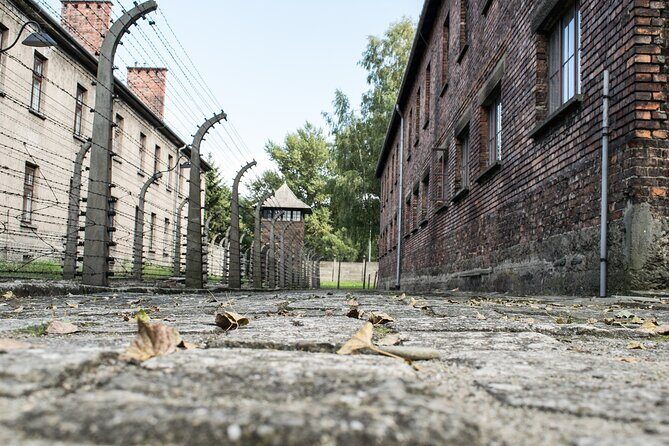
This tour is built for people who want to skip the planning math and just show up. From Krakow, you’re looking at about 1 hour 30 minutes each way, and the day runs long enough that doing this by bus and train can feel like a second job.
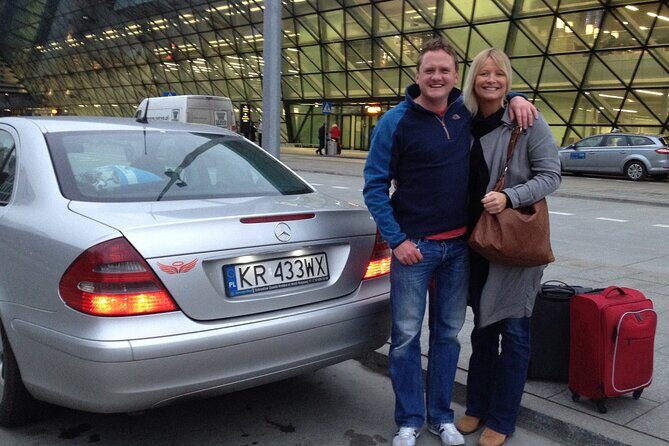
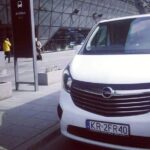
The transport is a shared, air-conditioned vehicle, with hotel pickup and drop-off included. If your hotel sits in Krakow Old Town within traffic-restricted zones, the van may not enter; in that case, you’ll be picked up at the closest possible point. If there’s no pickup info on your booking, the meeting point is Floriana Straszewskiego 14 in Kraków—and the tour ends back at that same area.
A headset is included, which sounds like a small thing until you’re standing outdoors and trying to hear details over wind and foot traffic. Also, the operator caps the group size at 30 travelers. That’s not tiny, but it’s often easier to manage than the big coach crowd.
One more practical note: the tour uses a mobile ticket. That can be convenient, but your best move is to keep your phone charged and your ticket details easy to access, especially on a day that may start in the dark.
You can also read our reviews of more tours and experiences in Krakow

Auschwitz I with a guide: why the first 2 hours matter
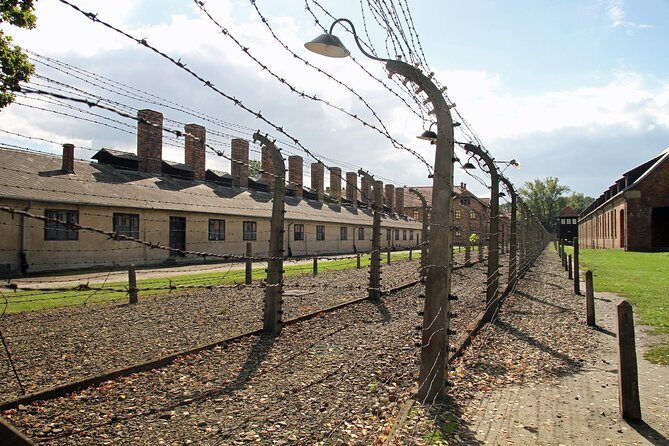
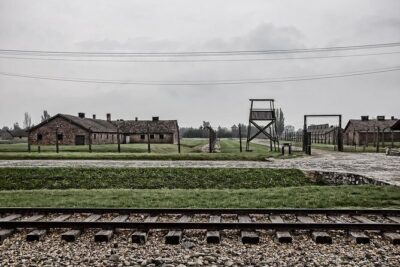
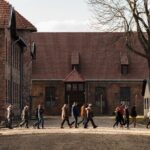
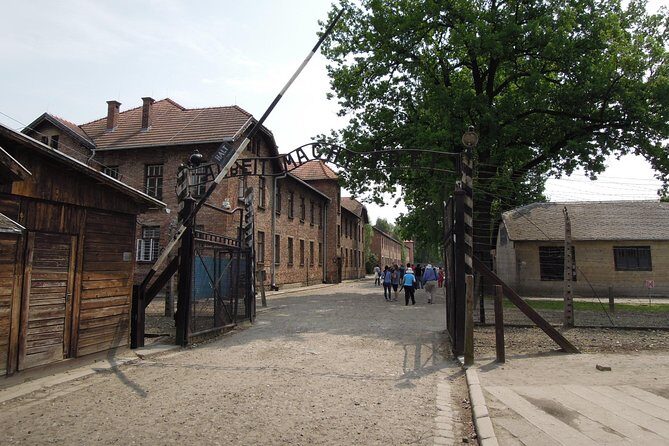
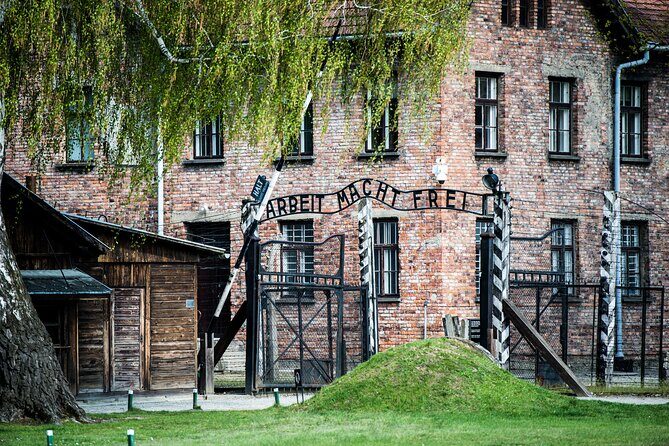
Your first stop is Panstwowe Muzeum Auschwitz-Birkenau, in Camp Auschwitz (Auschwitz I). You’ll spend about 2 hours there with the guide, with an admission ticket included.
This part of the memorial is where structure and documentation really take over. The guided format matters because Auschwitz I is not just “buildings and barbed wire.” It’s a site where you’re meant to connect physical spaces to the administrative and human systems that operated there.
The time allocation also tells you what to expect: this is a guided walkthrough rather than a slow, choose-your-own-adventure museum visit. So if you tend to take 45 minutes per room, plan to let the guide set the rhythm. You can still pause, but the group flow comes first.
Also, remember the museum’s pace isn’t flexible in the way you might hope. Even with tickets included, the day can still involve waiting around opening hours and security steps. The guide portion is where you’ll feel the day click into place, because you’re finally seeing the site through context.
Birkenau transfers and the one-hour reality check
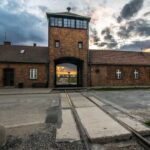
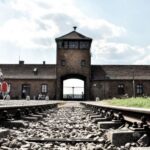
After Auschwitz I, you get a short break—about 10 minutes—then you move by bus to Miejsce Pamięci II Muzeum Auschwitz II-Birkenau (Birkenau, Camp II). The Birkenau section takes about 1 hour with the same guide, and admission is included again.
Birkenau is the camp where distance becomes a lesson. The ground can feel endless, and the open-air setting makes weather a major factor. The operator states you’ll spend up to 70% of your time outdoors, and that Birkenau is where that hits hardest.
Here’s the main tradeoff to understand: you may feel you want more time at Birkenau, because it’s spread out. But the tour format is meant to fit both camps into a single day with transportation, timing, and a guided schedule.
So your best strategy is mental, not physical: go in ready to absorb the big picture quickly. If you’re hoping to photograph everything, you’ll likely feel rushed. If you’re there to understand what you’re seeing, the time block can work well—especially with narration through headphones.
Time slots, pickup ranges, and the early-morning shock
Pickup is offered, but the pickup story is more complicated than the word pickup suggests. The tour provider picks you up from your selected location between 5:30am and 2:30pm depending on museum availability to start the tour. If you choose an early time slot, there can be waiting time of 2 to 4 hours.
The provider says they’ll confirm your final pickup time at least 12 hours before pickup so you can plan to arrive at the meeting point. They also warn that Auschwitz Museum reserves the right to change visiting time, so the pickup time is approximate and may change.
This matters because the memorial timing drives everything. If your pick-up is very early, the day may feel like a long cold stretch before the actual historical content begins. And Birkenau, being so outdoor-heavy, can make “waiting” feel much longer than it sounds on paper.
My practical advice: treat pickup times as a plan, not a promise. Lock in warm clothing, a prepared phone battery, and a calm mindset if the day starts earlier than you’d hoped.
About “skip-the-line” and what you should verify
The tour includes tickets and is advertised as avoiding long lines and waiting time. It also provides mobile tickets and a guided format with headset audio.
Still, no one can control how security lines and museum operations move on the ground. The operator also notes the museum reserves the right to change visiting time. In real life, that can affect when you’re brought to ticket processing and when you enter the guided flow.
So here’s what you should do before you go:
- Confirm what “ticket included” means for your specific entry time—especially whether you’ll have a reserved entry slot that lets you go straight in.
- Make sure you understand whether you’ll be entering with your group immediately after gates open.
- Keep your schedule flexible for early mornings, since the tour can start with long waiting stretches depending on museum availability.
This isn’t about fear; it’s about protecting your day. If you’re someone who hates standing in line for hours—especially in cold conditions—this is exactly where you want clarity ahead of time.
You can also read our reviews of more guided tours in Krakow
Language, names, and the rules that affect entry
Your guide is a core part of the value here. The tour states it’s offered in English and includes a professional guide, plus headset audio so you can follow clearly.
But entry to Auschwitz includes a strict administrative step: you must provide the tour provider with full names of all participants, or you might be denied entry. Every visitor must bring ID to verify. If you’re traveling as a couple or group, it’s worth double-checking the names you submitted match your ID exactly.
If you’re sensitive to language barriers, it’s also worth confirming that your guide will be English-speaking for your exact day and time slot. The tour promises English, but the day’s actual operation can change based on museum scheduling and guide availability.
Also, children must be accompanied by an adult. If you’re traveling with kids, treat the day as a serious historical visit with limited flexibility.
Comfort planning: luggage size, weather, and what you’ll actually eat
Food and drinks aren’t included. That means you need to plan for snacks and hydration on a long day that can start early and end late.
The operator states you’ll spend up to 70% of your time outdoors, so your clothing matters more than you think. Even if Krakow weather looks mild when you leave your hotel, Birkenau can feel brutally exposed.
Luggage is capped at 30x20x10 cm—about the size of an A4 sheet. It’s basically small-bag territory. If your luggage is bigger, you can leave it in the locked bus parked near the museum, and the driver is there to handle it while you’re away.
My tip: bring a small crossbody bag or compact day bag you can keep with you, plus warm layers you’ll actually wear during waiting time. The goal is to avoid rummaging in the cold while the group is already moving.
Price and value: when this works, and when it doesn’t
There’s a big value question with any Auschwitz tour: you’re paying for transportation, organization, and guided interpretation—not just the monuments themselves. One review example mentioned a cost around £90 per person, compared with a guided tour cost of about £25 per person when booking directly through the museum.
That comparison can look alarming, but it doesn’t tell the whole story. The tour you’re considering does offer hotel pickup, a guided structure across both camps, and headset audio, plus round-trip shared transfers. If those services save you from the hassle of figuring out transit timing and entry coordination, the price can make sense.
On the other hand, if your day includes long cold waiting stretches or if the “no waiting” ticket claim doesn’t match what happens for your entry time, then the value shrinks fast. For Auschwitz and Birkenau, comfort is not a luxury—it affects your ability to take in the experience.
So the value fit depends on you:
- If you want minimal planning and you’re good with early starts, this can be a decent convenience package.
- If you need strict timing, hate uncertainty, or don’t handle cold waiting well, you may want a different approach with more controlled entry.
Who this tour suits best (and who should reconsider)
This works best for people who:
- Want to avoid public transport and prefer a hotel pickup option.
- Appreciate guided interpretation across both camps within one long day.
- Are able to handle a pace that is group-driven rather than self-paced.
It may be less ideal if you:
- Struggle with long outdoor waiting periods in cold weather.
- Have mobility or health constraints that make early-morning queues harder to manage.
- Need a tightly predictable schedule and can’t absorb changes if museum timing shifts.
Also, if you’re traveling with someone who needs to eat on a schedule, remember food and drinks aren’t included, so you’ll need your own plan.
Should you book this Auschwitz-Birkenau tour?
Book this if you want a guided, two-camp day with hotel pickup and a low-effort logistics setup from Kraków. The headset, the guided pacing through Auschwitz I and Birkenau, and the organized bus transfer add real convenience.
Skip it—or compare carefully—if “no waiting” is a non-negotiable requirement for you, because the museum’s timing and entry flow can affect the morning start. Before you commit, verify how entry and ticket timing work for your exact time slot, and plan for cold weather and possible waiting.
If you’re going mainly for the historical experience, don’t let the logistics crowd out your preparation. Bring warm clothes, keep your ID and names ready, and go in ready to follow the guide’s pace.
FAQ
What’s the total duration for this Krakow to Auschwitz Birkenau day trip?
The trip is listed as 8 to 12 hours, depending on the schedule and museum availability.
What’s included with the tour besides the museum tickets?
Included are a professional guide, hotel pickup and drop-off, air-conditioned shared transport, round-trip shared transfer, a headset, and admission tickets.
Do I need to bring an ID?
Yes. Every visitor has to bring ID to verify. Without it, security might refuse entry.
Will the hotel pickup work in Krakow Old Town?
It works, but Old Town streets may be traffic restricted. If the van can’t enter your street, you’ll be picked up from the closest possible pickup point.
How much luggage can I bring?
Each traveler is allowed a maximum baggage size of 30x20x10 cm (about A4 size). Larger items can be left in the locked bus parked near the museum.
Can I cancel and get a full refund?
Yes. You can cancel up to 24 hours in advance for a full refund. If you cancel within 24 hours of the experience start time, the amount paid is not refunded.