REVIEW · KRAKOW
Kraków: Schindler’s Factory and Former Ghetto Tour
Book on Viator →Operated by VIP Poland · Bookable on Viator
History hits harder when it’s nearby. This Kraków: Schindler’s Factory and Former Ghetto Tour strings together the most important reminders from the Podgórze area—starting at Plac Bohaterow Getta, continuing to Apteka pod Orłem (the Eagle Pharmacy), and ending at Oskar Schindler’s Enamel Factory, where the museum’s WWII exhibitions help explain what life was like for Kraków’s Jewish and Polish residents under German occupation.
I like that the tour runs with a prerecorded audio route that’s clear and easy to follow, so you can actually process what you’re seeing instead of getting lost in the logistics. I also like the practical side: you travel by a comfortable, eco-friendly electric vehicle, with smooth stops that make it easy to hop out for photos and short visits.
One thing to consider: this is mainly audio-guided, so you shouldn’t expect a live guide standing by to answer deeper questions on the spot.
In This Review
- Key things to know before you go
- Setting up in central Kraków: meeting points and the electric ride
- How the audio-guided format shapes the experience in 2 hours
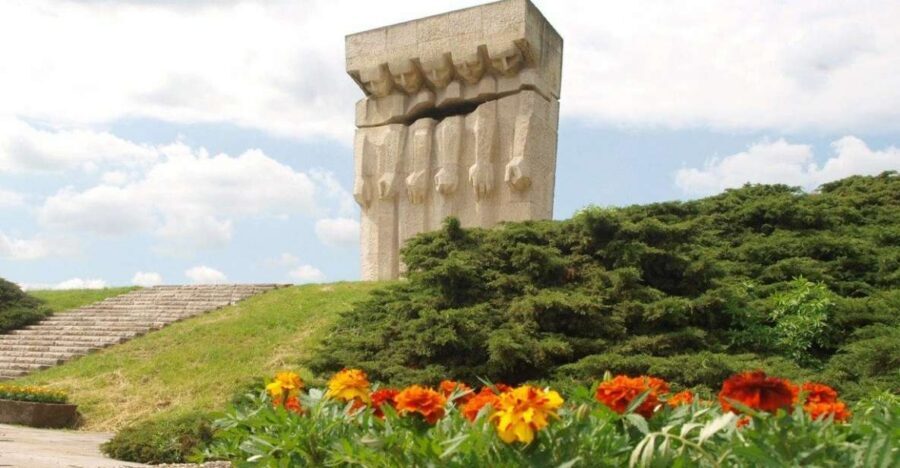
- Stop 1: Plac Bohaterow Getta (Ghetto Heroes Square) and what to focus on
- Stop 2: Apteka pod Orłem (Eagle Pharmacy) and why the site is so important
- The WWII wall remnants: seeing how geography enforced isolation
- Stop 3: Oskar Schindler’s Enamel Factory museum time and what’s inside
- Transportation and pacing: comfort, timing, and photo breaks
- Price and value: is $65 a good deal for this route?
- Who this tour suits best (and who should choose something else)
- Should you book this Schindler’s Factory and Former Ghetto Tour?
- FAQ
- How long is the Kraków Schindler’s Factory and Former Ghetto Tour?
- Do I need to pay admission tickets during the tour?
- Is pickup available?
- What kind of transportation is used?
- Is the tour guided by a person or by audio?
- What happens if the weather is bad?
- What is the cancellation window for a full refund?
Key things to know before you go
- Two short meeting-point options in Kraków’s center, with pickup offered
- Electric car ride that keeps the pace comfortable for a tight 2-hour loop
- Audio you can understand (so you spend less time guessing and more time learning)
- Ghetto Heroes Square and the Eagle Pharmacy as quick, meaningful stops
- Oscar Schindler’s museum time built in (including included admission)
Setting up in central Kraków: meeting points and the electric ride
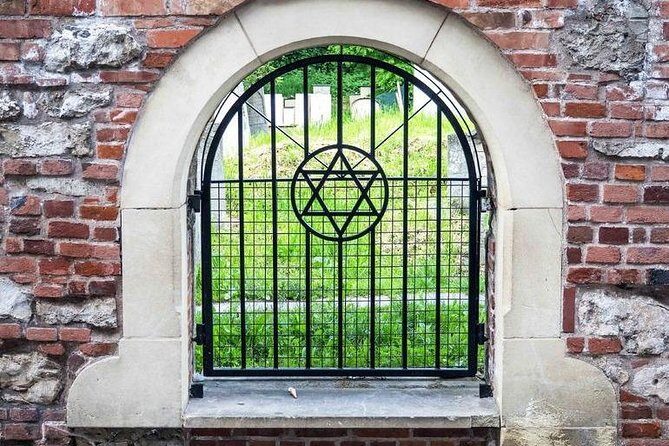
This tour is designed for people who want the big WWII sites in a single outing, without chaining together trams, buses, and long walks. The start is conveniently central: you choose from one of two meeting points in Kraków, and pickup is offered. Once you’re collected, you head out through the Podgórze district.
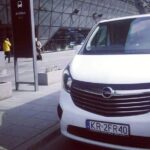
The vehicle matters more than it sounds. You’ll ride in a comfortable electric car/buggy (described as eco-friendly and easy to get on and off), which helps because your visits are time-boxed. You’re not stuck spending your whole day commuting; you can spend your energy on the sites themselves.
Group size also feels manageable. The tour notes a maximum of 100 travelers, which usually means you’re not totally cramped, though it’s still a good idea to move promptly when you’re told to gather again.
You can also read our reviews of more tours and experiences in Krakow.
How the audio-guided format shapes the experience in 2 hours
This isn’t a “walk for hours with a lecturer” kind of tour. The format is simple: you get an audio route that explains what you’re seeing as you move from spot to spot. The audio approach is built for clarity—easy to hear, with enough structure that you can keep track of the story.
That works well for two reasons. First, the former ghetto sites can feel emotionally heavy, and it helps to have someone (even through audio) guiding what to notice. Second, your time at each place is limited, so you want the information to land quickly and stay organized.
The drawback is just as straightforward: if you want follow-up answers—why something was built a certain way, or who exactly a named person was—you may not find someone available to answer on the spot. The driver may be helpful with logistics, but the learning experience is primarily handled by the prerecorded audio.
Stop 1: Plac Bohaterow Getta (Ghetto Heroes Square) and what to focus on
You begin at Plac Bohaterow Getta, known for the Heroes of the Ghetto square. Your visit here is short—about 15 minutes—and the admission ticket is free.
In a quick stop like this, I suggest you keep your expectations focused. You’re not going to get a full museum explanation in 15 minutes. Instead, treat it as orientation: a moment to understand the space and the scale of what happened here. This is where the tour frames the tragic reality of repression in the ghetto and the shock of living under occupation.
If you enjoy taking photos, this is also where the visual “anchors” come in handy. When you move on later to the pharmacy and the museum, you’ll remember what the square looked like and what the audio told you in that first setting. That connection makes the rest of the tour hit harder, not less.
Practical tip: dress for standing and walking. Even if the stop is brief, you’ll want a good position for photos and to listen without constantly moving.
Stop 2: Apteka pod Orłem (Eagle Pharmacy) and why the site is so important
Next comes Apteka pod Orłem, the Eagle Pharmacy. You’ll have about 30 minutes here, and admission is included.
This stop is powerful because it’s not just about a location—it’s about function, daily life, and control. The Eagle Pharmacy is presented as a key point in the story of the former ghetto, and the audio highlights the importance of the pharmacy in that context. You’ll walk among remnants tied to the repressed conditions people faced, and the stop is designed to connect that “ordinary place” feel with the extraordinary cruelty of occupation.
What I find helpful for your mindset: don’t rush. Thirty minutes is enough time to read what’s there, listen to the audio, and take in the contrast between the idea of a pharmacy and the reality of the ghetto system.
Also, since admission is included, you don’t have to think about buying tickets or managing separate entry times. That alone is a small value win when you’re trying to keep the day simple.
The WWII wall remnants: seeing how geography enforced isolation
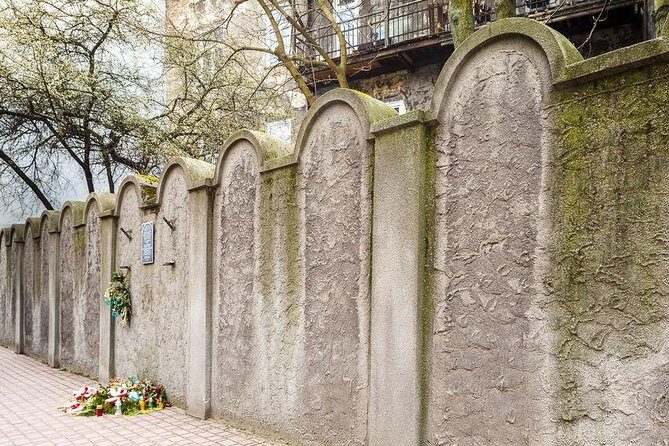
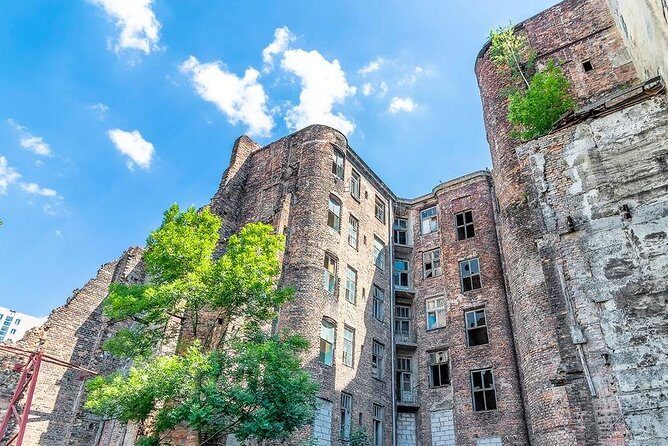
A highlight of the overall route is seeing remnants of the WWII wall that once surrounded the ghetto. You might not get a long, in-depth “walls lecture” experience here, but that’s exactly why it’s memorable.
Walls work as a visual lesson. Even without deep explanation, you can grasp the idea of barriers: where movement was allowed, where it wasn’t, and how everyday life was reshaped by confinement. When a tour includes this kind of reminder, it helps the museum exhibition feel less abstract later on.
So think of the wall remnants as the bridge between outdoor remembrance and indoor history. The outdoor stops set the stage; the museum gives you the why behind the details.
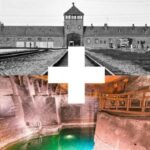
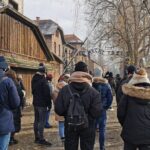
Stop 3: Oskar Schindler’s Enamel Factory museum time and what’s inside
Your final major stop is Oskar Schindler’s Enamel Factory, with about 1 hour 15 minutes on site. Admission is included.
This museum experience is described as primarily focused on Kraków and its inhabitants—both Polish and Jewish—during World War Two. It also frames the story through the perspective of Nazi Germans, the occupiers who arrived on 6 September 1939 and brutally disrupted Kraków’s centuries-long Polish-Jewish relations.
That combination matters. Many WWII exhibits focus on a single angle—either the persecution or the heroes—without fully showing how occupation fractured whole communities. Here, the exhibition connects large-world events with everyday life and individual personal dramas. That helps you understand that history wasn’t just a headline; it was people navigating fear, uncertainty, and survival day to day.
One review point to keep in mind: the museum experience may not feel equally focused on Schindler himself. If you were hoping for lots of biographical detail about Oskar Schindler—like early life, education, and a step-by-step biography—you might find the emphasis leans more toward Kraków’s broader wartime story. That doesn’t make the museum less moving, but it can change what you leave caring about most.
How to make the museum time work for you: keep an eye on the story flow rather than trying to read every label. In 75 minutes, you’ll get the best result by picking a few themes to follow—community life, occupation changes, and the human scale of decisions—and letting the rest support those themes.
Transportation and pacing: comfort, timing, and photo breaks
The itinerary is designed to keep you moving without feeling rushed. You get short visits—15 minutes, then 30 minutes, then 1 hour 15 minutes—so you’re never stuck waiting around for long stretches.
The electric car ride is also a real quality-of-life upgrade in Kraków. It’s easy to pop out for a photo, then hop back in without feeling like you’ve exhausted your feet before you reach the museum. That matters because WWII sites often require stillness and attention. You don’t want fatigue to steal your focus.
The audio format also supports pacing. As you travel, you’re not just sitting. The audio guides you, which helps the stops feel connected instead of separate snapshots.
Price and value: is $65 a good deal for this route?
At $65 for about two hours, the value depends on what you’re trying to accomplish in Kraków.
Here’s the practical math: admission is included for Apteka pod Orłem and Oskar Schindler’s Enamel Factory, while the first stop at Plac Bohaterow Getta is free. So you’re mostly paying for the guided structure, transportation, audio content, and the access to the main museum.
If you’re comparing this to DIY travel, the biggest cost you’re avoiding is decision fatigue. The route strings the key Podgórze landmarks together with time-managed stops. You also avoid juggling multiple ticket purchases during a tight day.
It’s a good pick if you want a single outing that covers the core sites without turning your schedule into a puzzle. It’s less ideal if you only care about one location—like just the museum—or if you strongly prefer a live, Q&A-style guide.
Given the included admissions and the efficient time window, I’d call it a fair value for most visitors who want meaningful WWII context in a compact visit.
Who this tour suits best (and who should choose something else)
This experience fits best if you:
- Want the former ghetto sites in Podgórze plus Schindler’s museum in one outing
- Like audio explanations that guide your attention
- Prefer comfortable transport and short, structured stops
- Have limited time and want the major highlights covered
You might choose differently if you:
- Want a lot of biographical detail about Oskar Schindler specifically
- Need a live person to answer questions as you go
- Dislike audio-guided formats and would rather self-guide at your own pace (though self-guiding is partly built in at stops)
Should you book this Schindler’s Factory and Former Ghetto Tour?
I think you should book it if your goal is clarity and efficiency. In about two hours, you’ll see the key reminders in Podgórze—Heroes of the Ghetto, the Eagle Pharmacy, and the Schindler’s Factory museum—with admissions handled where it counts. The electric ride keeps it easy to manage, and the audio structure helps you take in a lot without feeling scattered.
I’d skip or reconsider if you’re mainly after one deep dive on Schindler’s personal biography or you strongly prefer a live docent for questions. In that case, you may want a different format that matches that learning style.
If you’re okay with audio guidance and want a high-impact overview, this tour is a solid use of time in Kraków.
FAQ
How long is the Kraków Schindler’s Factory and Former Ghetto Tour?
It’s approximately 2 hours.
Do I need to pay admission tickets during the tour?
Admission for the Eagle Pharmacy and Oskar Schindler’s Enamel Factory is included. The visit at Plac Bohaterow Getta is free.
Is pickup available?
Yes, pickup is offered. You can also choose from 2 meeting points in Kraków’s center.
What kind of transportation is used?
You travel in a comfortable, eco-friendly electric car/buggy that’s easy to get on and off for photo stops.
Is the tour guided by a person or by audio?
It’s an audio-guided tour through the Podgórze district, using prerecorded audio.
What happens if the weather is bad?
This experience requires good weather. If it’s canceled due to poor weather, you’ll be offered a different date or a full refund.
What is the cancellation window for a full refund?
Free cancellation is available up to 24 hours in advance for a full refund. If you cancel less than 24 hours before, the amount paid isn’t refunded.