REVIEW · KRAKOW
Krakow: Schindler’s Factory and Jewish Ghetto Guided Tour
Book on GetYourGuide →Operated by Thousand Miles Cracow Adventure Company · Bookable on GetYourGuide
History hits hard in Krakow. This 3-hour guided combo connects Schindler’s Factory with the streets of Podgórze so the story doesn’t stay behind museum glass. You start at Schindler’s Enamel Factory, learn how Oscar Schindler’s factory tied into wartime survival, then you walk through the area where Jewish life was forced into an impossible reality during Nazi occupation.
I especially like the way the museum tour brings daily factory life into focus. It’s not just names and dates. You also get the bridge to the wider story, including what events inspired Schindler’s List. A big plus is the second half: the Podgórze walking tour, where you can see part of the ghetto wall and the setting that still shapes how this history feels today.
The main drawback to keep in mind: the museum portion can be a tight squeeze in some groups, since corridors inside can be narrow and the pacing can feel a bit “move along.” If you’re the type who likes to linger over every exhibit, plan to do that elsewhere afterward.
In This Review
- Key things that make this tour worth your time
- Krakow in three hours: Schindler’s Factory to Podgórze
- Meeting at Schindler Factory: how to start smoothly
- Schindler’s Enamel Factory: what you actually get from the guided museum
- How Oscar Schindler and the factory story connect to Spielberg
- Podgórze walking tour: the ghetto wall, remaining structures, and street-level meaning
- Heroes’ Square and the 68 Empty Chairs memorial stop
- Group size, languages, and how the tour keeps you moving
- Price and value: what $58 buys you in Krakow
- Who should book this tour, and who might want to think twice
- Should you book the Schindler’s Factory and Jewish Ghetto guided tour?
- FAQ
- How long is the tour?
- Where do I meet the guide?
- Is entry to Schindler’s Factory included?
- What’s included besides the factory visit?
- What languages are available?
- Do I need ID to enter Schindler’s Factory Museum?
- Is food included in the price?
Key things that make this tour worth your time
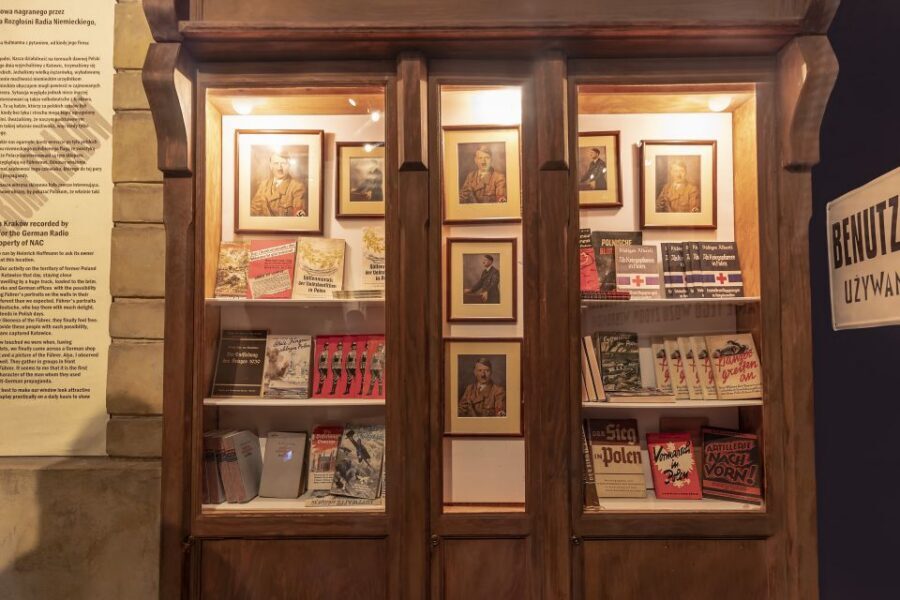
- Schindler’s Factory, guided and contextual: Entry plus a live tour of the factory story, not just self-guided browsing.
- Oscar Schindler’s wartime role in plain language: what he did, why it mattered, and how the factory intersected with Jewish workers.
- Podgórze street walk in the real setting: ghetto wall sections, remaining structures, and the lived-in geography of the area.
- Heroes’ Square and the 68 Empty Chairs memorial: a focused stop with meaning, not a quick photo break.
- Well-paced split with a short break: factory time, a pause, then the walking portion.
Krakow in three hours: Schindler’s Factory to Podgórze
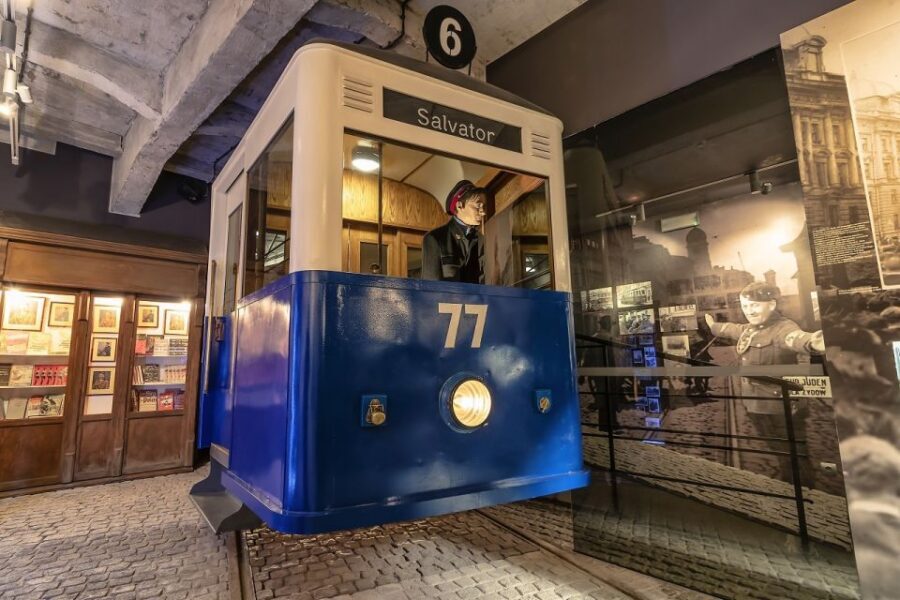
This tour is built like a story with two big chapters. First comes the Schindler’s Enamel Factory Museum, where you learn how a German entrepreneur’s actions intersected with forced Jewish labor and wartime danger. Then comes Podgórze, the neighborhood tied to the Krakow ghetto experience, where you walk the streets and see physical remnants like a portion of the wall.
The pacing matters here. You get guided time in the museum—where it’s easy to miss the point if you’re on your own—and then you get the outdoor walking portion, where the guide helps you connect what you just learned to the geography. It’s a smart way to keep the facts grounded in place.
And yes, the guide’s job is emotionally heavy. Names of guides I’ve seen attached to this experience include Ela, Christopher, Helena, and Joanna. Different people, same goal: explain what happened, how people lived day to day, and why this story ended up shaping pop culture through Schindler’s List.
You can also read our reviews of more guided tours in Krakow
Meeting at Schindler Factory: how to start smoothly
Your meeting point is straightforward: look for a guide holding an excursions.city sign at the entrance to the Schindler Factory Museum. It’s the kind of detail that saves you stress, especially if you’re arriving near a scheduled museum entry time.
Timing is slightly fluid. The tour is listed as about 3 hours, and start times are approximate because Schindler’s Factory Museum scheduling can shift. You can choose your preferred time, but the exact start isn’t guaranteed. That matters most if you’re also juggling dinner reservations or another timed Krakow stop.
Practical tip: bring an ID with you. The museum uses personalized tickets, so you must supply full names for all participants when reserving and bring a passport or ID for entry to Schindler’s Factory Museum. If you forget, entry may be denied.
Schindler’s Enamel Factory: what you actually get from the guided museum
Schindler’s Factory is more than a building with exhibits. It’s where the story of industrial survival and human risk overlaps in a way that’s hard to grasp from photos. With a live guide, the museum tour turns the displays into a timeline you can follow.
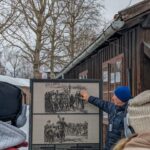
You start by stepping into the space tied to Oscar Schindler’s factory. From there, the guide explains the factory’s wartime role and why it became a point of protection for Jewish workers. You’ll also hear about daily life during the war, not just the end result. That day-to-day detail is what helps the history feel real instead of distant.
The factory tour is typically around 1.5 hours, and many departures include a short pause afterward before you start the walking portion. That break can be useful. Museums are intense, and your brain needs a moment before switching to street-level history.
One caution: some people find the museum corridors narrow, especially if the group is larger. If that’s your style of concern, accept that you might not see every single display at a relaxed pace during the guided portion. You can always circle back after the tour on your own if you want extra time.
How Oscar Schindler and the factory story connect to Spielberg
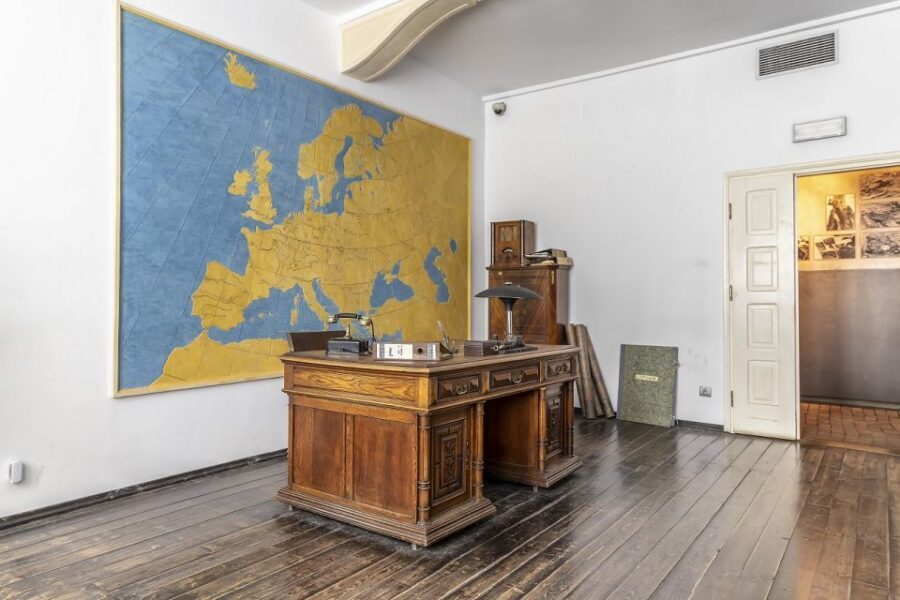
This tour doesn’t treat Schindler’s List like a standalone movie fact. Instead, it uses the museum visit to explain the real events behind what Spielberg later dramatized. That means you’re not just watching a story from the outside. You’re learning what elements were inspired by wartime reality, and why Oscar Schindler’s actions became central to that narrative.
The guide’s role here is crucial. Without explanation, it can be easy to understand the general idea and still miss the specifics of how people survived or how the factory functioned under occupation. With a live guide, you can ask what something means, and you’ll get the context tied directly to the exhibits you’re seeing.
If you care about how history becomes film, this is where you’ll feel the value most. You’ll walk away knowing the difference between cinematic storytelling and the wartime facts the story drew from—at least in the ways the tour chooses to frame it.
Podgórze walking tour: the ghetto wall, remaining structures, and street-level meaning
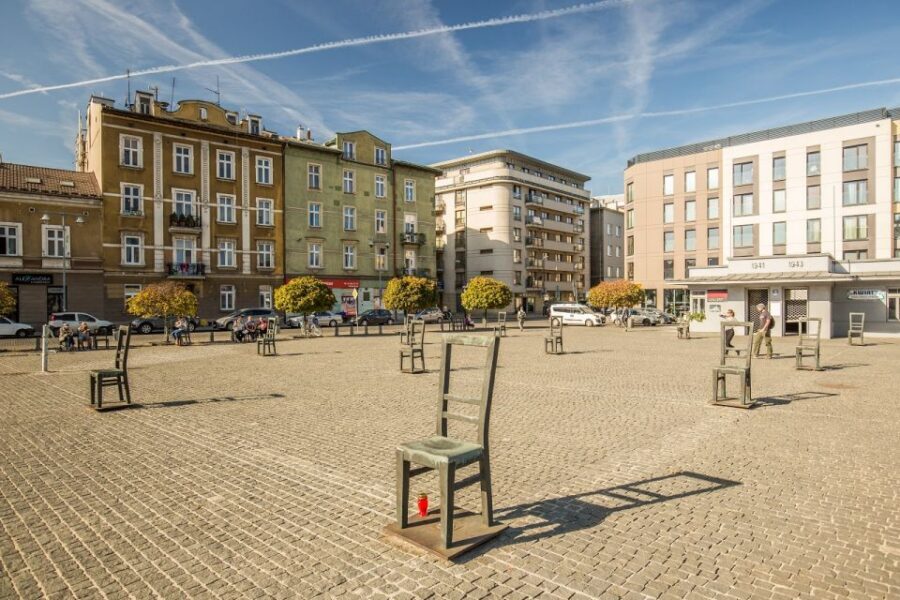
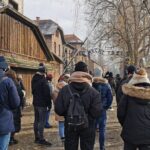
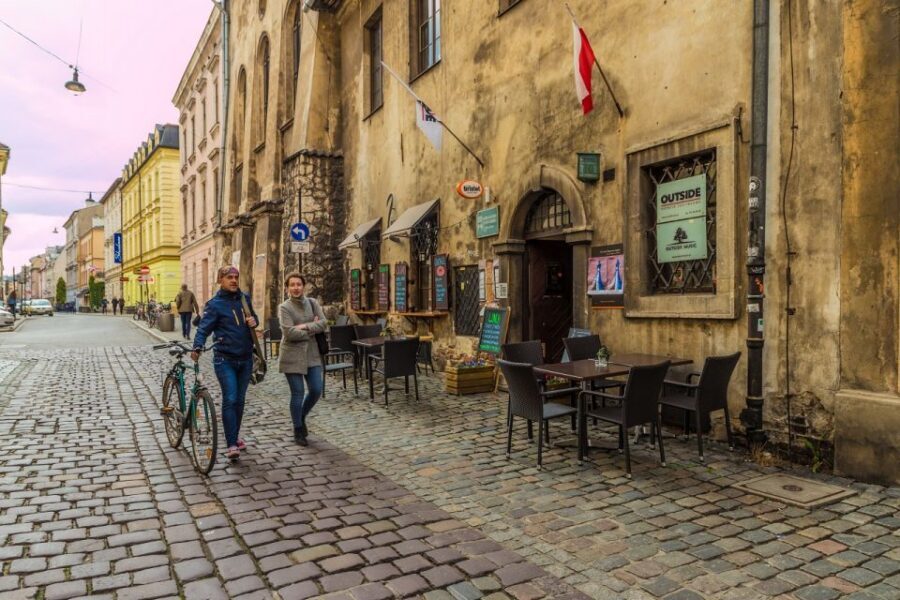
After the museum, you shift to Podgórze. This is where the history becomes physical. The guide takes you through key parts of the area and explains Nazi occupation in Krakow, with a focus on Jewish life and the forced circumstances that followed.
You’ll see part of the undestroyed wall around the ghetto, plus houses where displaced Jews lived. Those are the kinds of details that stick with you because they’re hard to “museum-ize.” Your eyes adjust quickly to the shapes of the street and the feeling of the place.
The tour also includes time at a specific location tied to everyday survival: the pharmacy Under the Eagle. The guide explains how this pharmacy played a pivotal role in the lives of many Jewish people. That stop matters because it shifts the story from large-scale events to the small, repeated challenges of daily living.
One timing consideration: if you book a later slot in winter, you might start the walking portion in low light or darkness. In December, it was already dark by the time the ghetto walk began, making it harder to see some highlighted points. That doesn’t reduce the importance of the sites, but it can change how easy it is to follow the route and absorb details. If you can, choose an earlier departure time in the day when available.
Heroes’ Square and the 68 Empty Chairs memorial stop
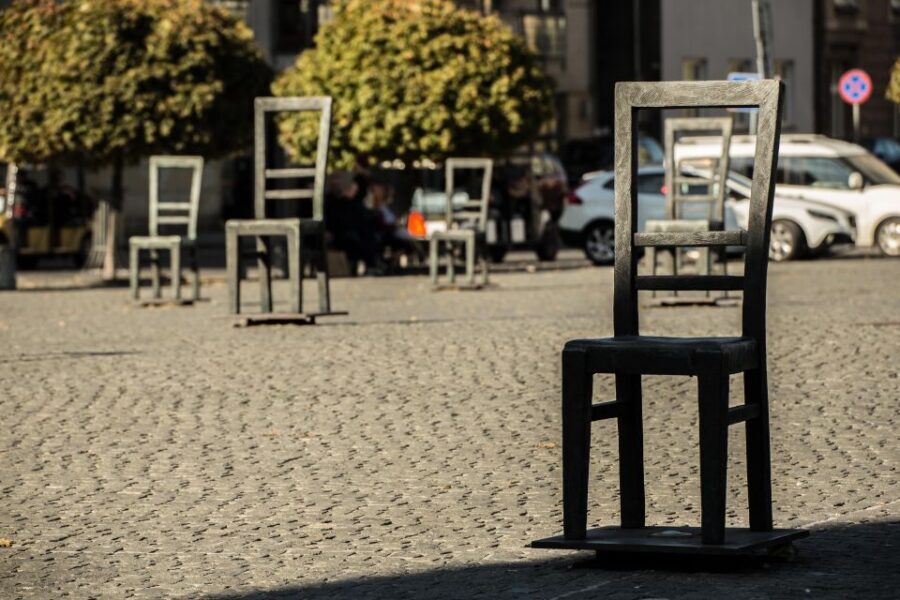
The tour’s final set piece is Heroes’ Square and the 68 Empty Chairs memorial. This stop is not just for photos. The guide connects the memorial’s design to what it represents, so you understand why the empty chairs matter and what they’re asking you to remember.
This kind of memorial can hit differently depending on your emotional “readiness” after the factory portion. The best part of having it inside a guided schedule is that you’re prepared. The museum sets context, and the walking tour places you in the geography. Then the memorial turns the story into an explicit act of remembrance.
If you prefer quieter moments, give yourself a few seconds before you move on. Sit with it—then keep going. The value of the guided stop is that you’ll know what to pay attention to while you’re standing there.
Group size, languages, and how the tour keeps you moving
You get a live guide in one of these languages: French, Spanish, English, German, Italian. That language coverage is a big deal because it shapes how easily you can absorb heavy material. When the guide can explain in your language, the facts land faster and you’re less likely to miss the meaning in the details.
About group logistics: museum corridors can feel tight in larger groups. You may find you don’t always have time to stare at everything in the museum because you’re moving with the group. The walking portion is often easier to manage. It’s outdoors, and the guide can pace the route while still stopping at the right points.
There’s one more practical note from real-world experience: audio devices used inside the museum may not always work perfectly. Some people end up abandoning them and relying on the guide’s voice. It’s not the end of the world if that happens, but it’s good to know you’re not trapped if the tech acts up.
Bottom line: this tour works best if you’re comfortable with a structured pace. If you love slow wandering, plan a little extra time after the tour to revisit what grabbed you most.
Price and value: what $58 buys you in Krakow
At $58 per person for about 3 hours, you’re paying for a guided story with both entry and interpretation. The included parts are what make the price feel fair:
- Entry to Schindler’s Factory and a guided tour of the factory
- A live guide for the walking portion in Podgórze
- Skip-the-ticket-line convenience (so you lose less time at the museum entrance)
If you tried to piece this together on your own—museum entry plus arranging a meaningful ghetto-area walking route—you’d spend time figuring it out. Here, the guide does the linking between stops, which is the hard part.
It’s also a good “first pass” tour. The sites are emotionally demanding and historically dense. Having someone explain the connections while you’re physically there keeps you from getting lost in the sheer amount of material.
Who should book this tour, and who might want to think twice
This experience fits best if you want history with structure. If you like a guide who can explain why specific places matter—like the factory’s link to Oscar Schindler and the memorials in the ghetto area—this tour is a strong match.
It also suits you if you’re doing Krakow on a tight schedule. In about 3 hours, you cover a major museum anchor and the key outdoor neighborhood sites connected to the Krakow ghetto story.
You might want a different format if you’re someone who hates group pacing. Tight museum corridors and a larger group can feel rushed. Also, if you’re sensitive to low-light walking in winter, pick an earlier time slot when possible so the Podgórze route is easier to see.
Should you book the Schindler’s Factory and Jewish Ghetto guided tour?
Yes—if you want your visit to make sense in real time. The best reason to book is simple: Schindler’s Factory and Podgórze are connected, but they’re also easy to misunderstand if you just show up and read labels. A live guide gives you the “why” and the “how,” and that’s what turns a set of stops into one coherent experience.
If you choose this tour, pick your departure time thoughtfully. Earlier is better when it’s cold, dark, or both. Bring your passport or ID, and make sure the full names on your reservation match your documents. Then show up ready to learn and to reflect.
This isn’t entertainment. It’s guided remembrance. Done with care, it’s one of the most meaningful ways to understand Krakow during World War II.
FAQ
How long is the tour?
The tour runs for about 3 hours.
Where do I meet the guide?
Meet the guide at the entrance of the Schindler Factory Museum. Look for a guide holding an excursions.city sign.
Is entry to Schindler’s Factory included?
Yes. Entry to Schindler’s Factory and a guided tour inside are included.
What’s included besides the factory visit?
You’ll also get a guided walking tour of Podgórze, including stops at key memorials and sites like the 68 Empty Chairs and the pharmacy Under the Eagle.
What languages are available?
The live guide is available in French, Spanish, English, German, and Italian.
Do I need ID to enter Schindler’s Factory Museum?
Yes. You must provide full names when reserving and bring a passport or ID for entry. Without it, entry may be denied.
Is food included in the price?
No. Food and drinks are not included.