REVIEW · KRAKOW
Krakow’s Essential Tour of the Old Town and Wawel Castle
Book on Viator →Operated by Krakow Explorers · Bookable on Viator
A city story clicks fast here.
This tour strings together Krakow’s Old Town icons and Wawel Castle into one easy walk, with a guide doing the navigation so you can focus on the details. You’ll hear why St. Mary’s Basilica has unequal towers and why a trumpeter plays a tune from the tower every hour, plus context that ties everyday landmarks to Krakow’s past and World War II.
I really like two things: the story-driven guide (examples include Bart, Slavek/Slav, and Chris/Krzysztof) who keeps facts moving with humor and clear pacing, and the donation-style model that lets you pay a small booking fee and then tip or donate what feels fair. The main thing to plan for is that several stops involve separate admission tickets, so your total trip cost may rise if you want to go inside everything.
In This Review
- Key highlights you’ll feel immediately
- Getting Oriented: Rynek Główny to Wawel in About 2.5 Hours
- St. Mary’s Basilica: Unequal Towers and the Hourly Trumpeter
- Rynek Główny Central Square: Europe’s Biggest Medieval Square Feeling Alive
- Theatre, Barbican, and a 15th-Century Martial-Arts Focus
- The 500-Year-Old Entrance: Entering Medieval Krakow on Purpose
- Cloth Hall (Sukiennice) Secrets: Medieval Shopping Above, Stories Beneath
- Town Hall Tower and Why Only Part Remains
- Jagiellonian University and Collegium Novum: Krakow Through WWII
- Bishop’s Palace: Pope John Paul II’s Window and Communism History (Free Stop)
- Wawel Cathedral: Coronations, Burials, and the Royal Residence Side
- Price and Value: A $3 Booking Fee, Then Pay What You Want
- Pace, Comfort, and Who This Tour Suits Best
- Should You Book Krakow’s Old Town and Wawel Tour?
- FAQ
- Is the tour price just $3?
- How long is the tour?
- What’s included in the tour?
- Are museum and monument entrance fees included?
- Where do I meet the group?
- Where does the tour end?
- What group size should I expect?
- Can I bring a service animal?
- What’s the cancellation policy?
- Will I get confirmation right away?
Key highlights you’ll feel immediately
- Hourly trumpeter tradition at St. Mary’s Basilica and the reason for those unequal towers
- Rynek Główny Central Square plus how the Cloth Hall (Sukiennice) shaped medieval trade
- Jagiellonian University and Collegium Novum framed through WWII-era events
- Bishop’s Palace and Pope John Paul II’s window linked to Poland under communism (this stop is free)
- Wawel Cathedral as Poland’s coronation and burial center, plus a second look at the royal residence side
Getting Oriented: Rynek Główny to Wawel in About 2.5 Hours
This is an excellent “first Krakow day” style tour because it’s built to get your bearings quickly. You start at Rynek Główny 4 and the tour ends at Wawel, roughly 10 minutes from the Main Market Square, so it feels like you’re moving from one historic center to another instead of wandering in circles.
The timing is also sensible for a lot of key sights: about 2 hours 30 minutes total, with short stops designed to keep energy up. The group size stays capped at 30, which tends to make it easier for a guide to answer questions and keep everyone together.
You’ll use a mobile ticket, which is convenient in a city where paper tickets can easily get lost in bags and pockets. And yes, it includes sanitizers, a small comfort that matters when you’re touching railings, doors, and steps all day.
You can also read our reviews of more tours and experiences in Krakow.
St. Mary’s Basilica: Unequal Towers and the Hourly Trumpeter
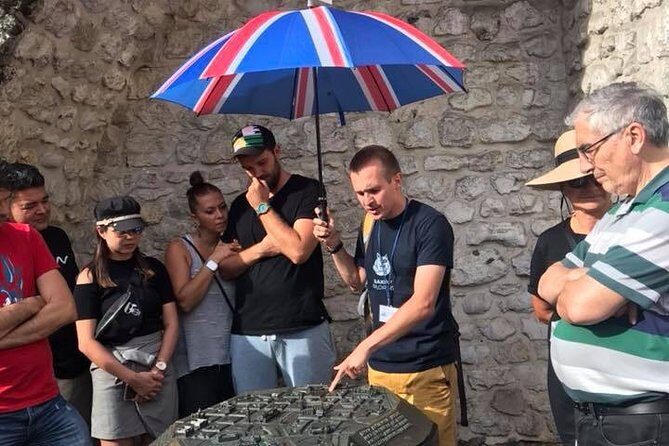
The tour begins at St. Mary’s Basilica, with about 15 minutes here. This stop is more than a quick photo moment. You’ll learn why the basilica is known for unequal towers, and you’ll get the explanation behind the hourly trumpeter tradition tied to the tower.
What makes this start work is that the guide uses the building’s odd details to teach you how Krakow thinks about time, public life, and symbolism. Once you understand that, the rest of the Old Town starts to make more sense.
One practical note: the itinerary time is short, so if you want to maximize the interior side of the visit, keep your expectations tight. Also, admission isn’t included for this stop.
Rynek Główny Central Square: Europe’s Biggest Medieval Square Feeling Alive
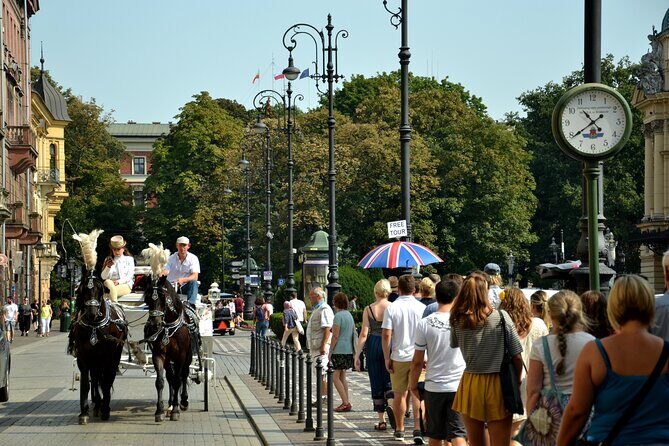
Next is Rynek Główny Central Square for about 30 minutes. This is the big medieval centerpiece of Krakow, and the guide uses it like a classroom without making it feel like homework.
You’ll look at major attractions that anchor the square’s layout, and you’ll get the kind of context that helps you read what you’re seeing: why the square matters, how it functions historically, and how power and trade left their marks in stone.
This is where I think the tour scores best for people who struggle with “where do I go next?” energy. With someone navigating and explaining, the square stops being a wide open space and starts feeling like a map.
Admission is also not included here, but that’s rarely an issue for simply standing in the square and understanding the big-picture story.
Theatre, Barbican, and a 15th-Century Martial-Arts Focus
Then the route pivots in a smart way. You’ll stop by Slowacki Theatre for about 10 minutes. The guide shares how it was possible that the theatre wasn’t built in Poland and why, for local people, certain priorities mattered more than basic needs like clean water. It’s a quick stop, but the point is strong: culture and survival were always tangled together.
After that, there’s another 10-minute stop at the Barbican / Museum of Krakow area. Here, the guide points out a 15th-century martial arts–related masterpiece. The exact object or display detail can vary by how museums are set up, but the theme is consistent: Krakow’s past included more than art and architecture—it also included defense, skill, and physical craft.
Two things to watch at these stops:
- The stops are brief, so you’ll get meaning more than you’ll get a long museum browse.
- Museum entrance fees aren’t included, so you decide on the spot how far you want to go inside.
The 500-Year-Old Entrance: Entering Medieval Krakow on Purpose
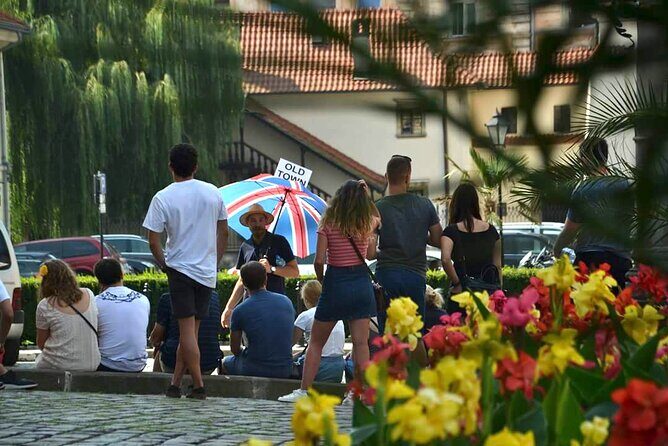
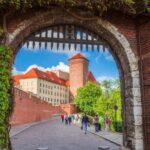
There’s a stop described as going through a main entrance to medieval Krakow that’s about 500 years old. Even without the formal name listed here, the idea is clear: you’re walking in a way that makes the Old Town feel like a layered time capsule.
This kind of stop works because it gives your feet a narrative. Instead of thinking of “Old Town” as a label, you feel the transition from one era’s boundary into another.
If you’re someone who likes history that you can physically step through, this is a good moment to slow down and look up and around.

Cloth Hall (Sukiennice) Secrets: Medieval Shopping Above, Stories Beneath
Next comes Sukiennice (Cloth Hall) for about 10 minutes. This is one of those places where the guide helps you see beyond the surface. You’ll learn about its role as a medieval “shopping mall,” and you’ll hear about secrets connected to what’s underneath.
For me, the value here is interpretive. You’re not just looking at a pretty facade—you’re learning how commerce and civic pride were built into one central structure.
Again, the itinerary marks admission as not included for this stop. If you’re the type who wants to go inside every historic building you touch, this is one place you’ll likely consider adding more time on your own later.
Town Hall Tower and Why Only Part Remains
The tour then goes to the Museum of Krakow Town Hall Tower, with about 10 minutes. The focus here is the story of why only a smaller portion of the Town Hall remains—and what that place was famous for back in time.
This type of stop is quietly satisfying because it turns ruins into evidence. You start thinking, not just what survived, but why something changed. It also helps you understand Krakow as a living city shaped by damage, repairs, and shifting political eras.
Admission is not included. Still, the guided context alone can make the outdoor/visible elements more meaningful.
Jagiellonian University and Collegium Novum: Krakow Through WWII
Now you hit the school-and-war portion of the tour. It’s about how Krakow’s institutions kept functioning while the world changed.
First is Jagiellonian University (Collegium Iuridicum) for about 10 minutes. The guide explains that it’s among the most prestigious universities in Poland and one of the oldest in the world. You’ll also get a sense of how deep education and power are connected in this city.
Then comes Collegium Novum for about 10 minutes. The guide tells a WWII story tied to a professor in the beginning of the war and whether Krakow was destroyed or not. Even in a short stop, the message lands: Krakow wasn’t only a backdrop—it was a decision point for people trying to keep going.
These are not “quick landmark for the selfie” stops. They’re short, but they connect the city’s buildings to real choices and real consequences.
Admission isn’t included here either, so don’t assume you’ll be able to enter everything unless you’re staying flexible.
Bishop’s Palace: Pope John Paul II’s Window and Communism History (Free Stop)
One of the best practical moments on this tour is Bishop’s Palace, which is marked as free and lasts about 15 minutes. Here you’ll see the most famous window in the world and hear dramatic history of Poland during communism.
In the guide’s storytelling, this becomes very personal and very specific, especially with the reference to Pope John Paul II’s window. You come away understanding that a small architectural feature can carry huge public meaning, and that public faith and politics often intersect in Krakow in visible ways.
This is a stop that helps you slow down. Even if your legs are tired from walking, the story gives you a reason to stay put and listen.
Wawel Cathedral: Coronations, Burials, and the Royal Residence Side
Finally, you reach Wawel Cathedral—first for about 15 minutes, then again for about 10 minutes. The tour clearly treats Wawel as more than one attraction because it has two different story angles.
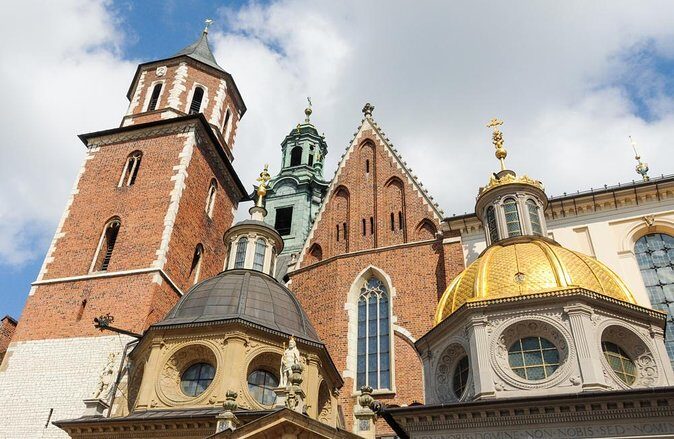
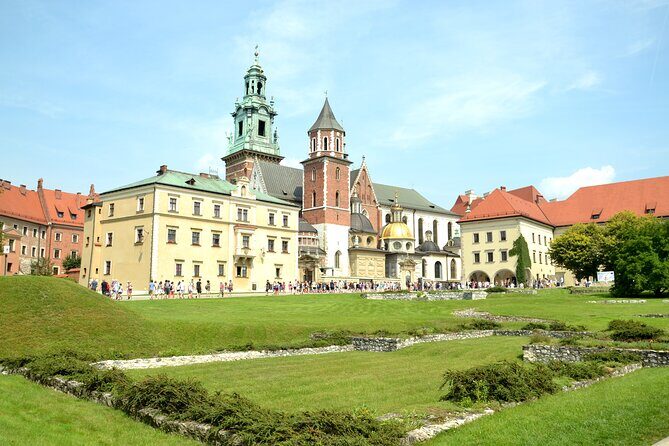
On the first pass, you’ll learn about Wawel Cathedral as Poland’s national pantheon: the place of coronations and burials of Polish rulers. This is the kind of place where the guide helps you connect symbolism to the physical space. You’ll understand why rulers were buried here, and why ceremonies mattered so much.
On the second pass, you shift from “why it matters” to “how it works.” You’ll hear about where Polish rulers used to live, plus why one part of the castle differs from the rest, and you’ll get other details that put the complex layout into context.
Admission tickets aren’t included for both Wawel Cathedral segments as noted in the itinerary. That means you can choose what to do based on what you care about most: guided understanding from the outside/accessible areas, or adding extra paid time inside later.
Price and Value: A $3 Booking Fee, Then Pay What You Want
The headline price can look suspiciously low: $3 as a booking fee, and then the tour is donation-based—pay as much you want. The key to judging value here is not the starting number; it’s what you get for that small fee and how transparent the pay model is.
You’re paying for a licensed tour guide plus a guided route that covers a dense cluster of major stops: Old Town icons and Wawel in one sweep. This is the exact kind of tour where paying more for fewer stops usually feels wasteful. Here, you’re buying direction, context, and time-saving.
Also, several major stops involve separate admissions. So even if you spend a bit extra later, you’ll often still feel ahead because you’ll know where to invest your time and where you can skip deeper paid entry.
With a reported 4.9 rating and 98% recommended based on 340 people, it’s clear this format consistently works for people who want an organized first look at Krakow.
Pace, Comfort, and Who This Tour Suits Best
This is a walking tour with multiple short stops. That’s great if you like steady movement and quick story beats. If you want long sit-down time inside museums, this may feel fast.
The good news: each segment is time-boxed, so you don’t get stuck for an hour at a single spot. The guide also keeps groups together in a way that typically helps when you’re tired or unsure.
I think this tour fits best if you:
- Want a strong overview to build a mental map fast
- Like history tied to specific buildings, not just general lectures
- Prefer a guide who uses humor and clear storytelling (the guide style coming up again and again with names like Bart, Slav, Slavek, and Chris/Krzysztof)
- Are okay with paying separate admissions at certain stops
For families or mixed-age groups, it’s often a workable length because it lasts about 2.5 hours, and the route is structured.
Should You Book Krakow’s Old Town and Wawel Tour?
Book it if you want your first Krakow day to feel purposeful. This route hits the core visuals—Rynek Główny, Cloth Hall, university buildings, Bishop’s Palace, and Wawel Cathedral—while the guide connects them to big themes like public life and WWII. The donation model can also work well if you’re the type who prefers paying based on how much you actually value the experience.
Skip or adjust expectations if you know you want lots of museum time. Since many admissions are not included, you may need to add paid entry later to get the full interior experience.
If you’re ready to trade aimless walking for guided clarity, this one is a strong choice.
FAQ
Is the tour price just $3?
The price shown includes a $3 booking fee. The tour itself is based on donations, meaning you pay what you want.
How long is the tour?
It runs about 2 hours 30 minutes.
What’s included in the tour?
You get a licensed tour guide and sanitizers. The tour uses a mobile ticket.
Are museum and monument entrance fees included?
No. Admission tickets are not included for several stops. Bishop’s Palace is free.
Where do I meet the group?
The meeting point is Rynek Główny 4, Kraków.
Where does the tour end?
It ends at Wawel Royal Castle–State Art Collection (Wawel 5, Kraków), about 10 minutes from Main Market Square.
What group size should I expect?
The tour has a maximum of 30 travelers.
Can I bring a service animal?
Yes. Service animals are allowed.
What’s the cancellation policy?
You can cancel for a full refund up to 24 hours before the experience starts. If you cancel within 24 hours of the start time, the amount you paid is not refunded.
Will I get confirmation right away?
You receive confirmation at booking time, unless you book within 1 hour of travel, in which case confirmation comes as soon as possible based on availability.