REVIEW · KRAKOW
The best view of Krakow from Golf Cars
Book on Viator →Operated by Michal Urban · Bookable on Viator
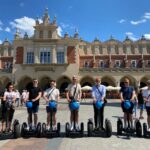
Krakow feels more personal from an electric golf cart. This small-group tour takes you through Old Town and into Kazimierz, including spots that big buses usually miss. I like that the ride is calm and the stops are short, so you actually see a lot without feeling rushed.
Two things I especially like: first, the group stays tiny (max seven), which makes it easier to ask questions and move at a human pace. Second, the audio guide in 26 languages lines up with the landmarks, and the driver adds extra context while you’re gliding between sights. One drawback to keep in mind: a small number of bad experiences show up around carts not arriving, so I’d treat this as something you should confirm and be ready to check in for right at the meeting point.
In This Review
- Key points before you ride
- Why electric golf carts are great for Krakow views
- The 2-hour flow: meeting point, pace, and how it feels
- Old Town highlights: the 1498 gateway, Grunwald Monument, and the park ring
- Wawel viewpoints: Dragon legend, Bernardine churches, and the UNESCO castle area
- Church on the Rock and the Kazimierz transition
- Kazimierz by footbridge and square: Wolnica, Father Bernatek, and Corpus Christi
- Jewish Krakow stops: synagogues, Szeroka Street, and ghetto memorial points
- Tempel area and the story behind the buildings
- Szeroka Street: the neighborhood spine
- Remuh Synagogue and continued religious life
- Plac Bohaterów Getta: Kraków Ghetto reminders
- Photos on the move and what your guide actually helps with
- When this tour beats a big bus (and when it doesn’t)
- Price and value for a group up to 7
- Weather and comfort: covers for cold or rainy days
- Should you book the best golf-cart Krakow views?
- FAQ
- How long is the Krakow golf cart sightseeing tour?
- What does the tour cost, and is it per person?
- Where does the tour start and end?
- Does it include an audio guide and in what languages?
- Are food and drinks included?
- What happens if the weather is bad?
Key points before you ride
- Max seven people means more time looking and less time waiting
- Audio guide in 26 languages helps you understand what you’re seeing at each stop
- Off-bus access gets you into areas that feel more like real neighborhoods
- Wawel Hill and Kazimierz are both covered in one smooth 2-hour loop
- Some synagogue/museum entries aren’t included, so a few stops may require extra ticketing
- Short photo stops keep the pace moving, which is great if you hate long museum waits
Why electric golf carts are great for Krakow views
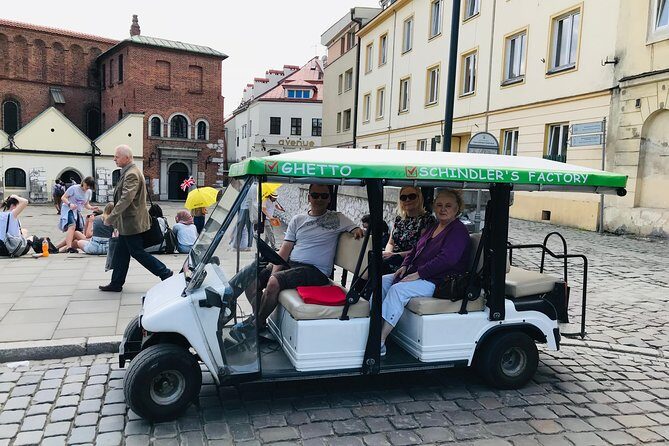
Krakow is full of viewpoints, but getting from place to place on foot can be slower than you expect—especially if you’re mixing cobblestones, hills, and the classic “let’s see one more street” mindset. The electric golf cart solves that. You get the best of both worlds: you’re close enough to see details, yet you’re not stuck doing long stretches of walking.
The route also makes sense for first-timers. You start in an area close to the historic core, then you move outward and back again, which helps you build a mental map fast. And because it’s electric and meant for city driving, you’re not stuck behind the slow churn of larger tour buses.
You can also read our reviews of more tours and experiences in Krakow.
The 2-hour flow: meeting point, pace, and how it feels
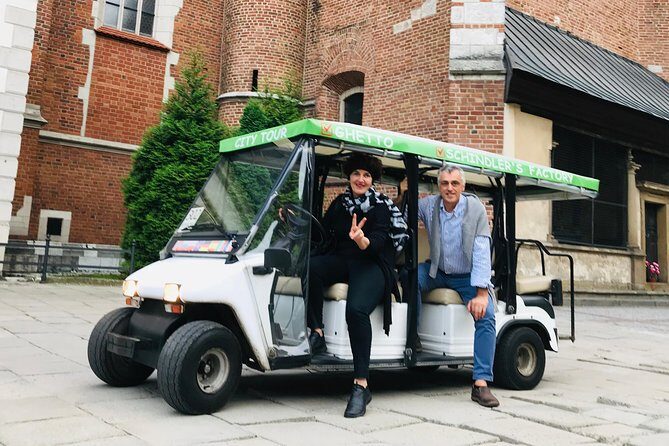
The tour starts at plac Jana Matejki 2 and ends back there. It runs about two hours, which is the sweet spot for a “see the big stuff” visit without turning your whole day into logistics.
You’ll ride in an English-guided setup—there’s an English-speaking driver plus an audio system you can use in your language (up to 26 languages). The experience is built around brief stops so you can get photos, read the key points, and then move on before the group stretches thin.
This pacing is ideal if:
- you want a fast overview on day one,
- you don’t love sitting on a bus for hours,
- you’re comfortable doing short walks between picture spots.
Old Town highlights: the 1498 gateway, Grunwald Monument, and the park ring
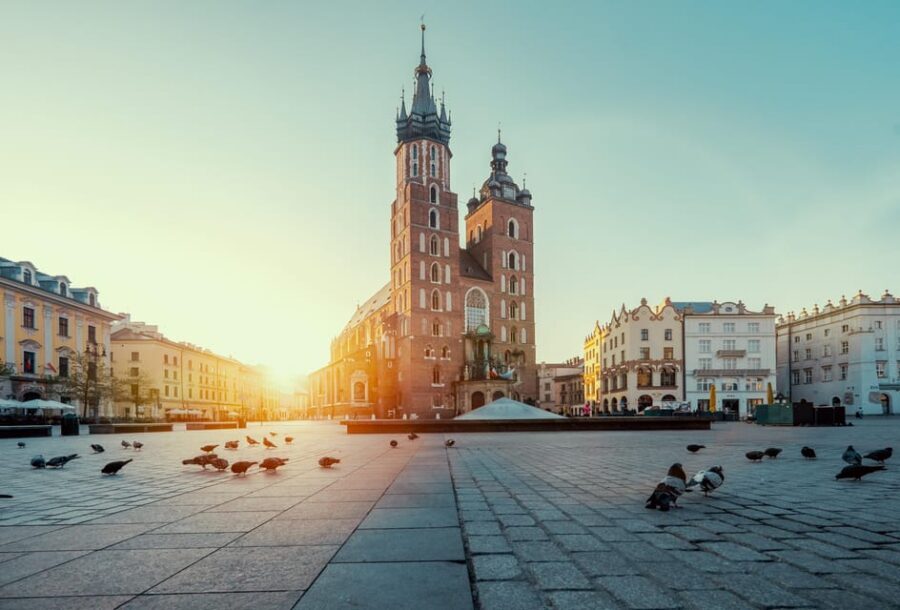
You begin with a historic gateway that dates to about 1498, a threshold that frames the Old Town approach. Even without a deep museum pass, gateways like this help you understand Krakow’s layered layout: where the city once funnelled arrivals, and where it still guides your eyes today.
Next up is the Grunwald Monument. This isn’t just a statue you pass—it’s a symbol tied to Polish national pride and the shared history between Poland and Lithuania. The Battle of Grunwald is one of those historical reference points that comes up again and again in Polish storytelling, so it’s smart to see it early rather than hearing it later with no visual anchor.
Then you skirt one of Krakow’s largest parks. It circles the Old Town, and it’s tied to the old city walls that used to stand until the early 1800s. What I like here is how the landscape becomes a clue: you’re looking at an open green space that also used to be defensive architecture. That’s the kind of “wow, that explains things” moment that a normal walking-only route won’t always deliver.
Wawel viewpoints: Dragon legend, Bernardine churches, and the UNESCO castle area
If your goal is the best view of Krakow from golf cars, this is the segment that delivers. You head toward Wawel Hill, the heart of the city’s royal story and folklore.
You’ll pause at the Monument of the Wawel Dragon. It’s famous in Polish legend, with the idea that the dragon’s lair was in a cave at the foot of Wawel Hill on the Vistula River. The stop is short, but it’s the perfect primer for how Krakow mixes history with story.
Right near the hill, you visit the Bernardine Church, including the later Baroque elements that shaped the current look. The key value of this stop isn’t only the architecture—it’s that you see how different centuries stack up in one area. Krakow doesn’t feel like one uniform style; it feels like a timeline.
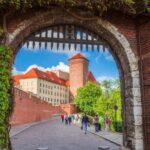
Then you get the Wawel Castle area, which is now a major art museum complex. It’s also designated as a UNESCO World Heritage site (as part of the Historic Centre of Krakow). Even if you don’t go inside, the external setting is a big reason Wawel anchors the city’s identity.
Church on the Rock and the Kazimierz transition
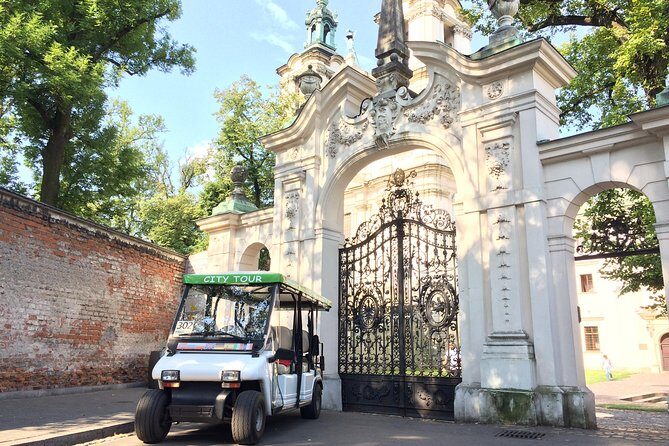
Moving from the royal hill area toward Kazimierz changes the mood. That shift is one of the biggest reasons this tour works. You’re not just collecting monuments—you’re moving between city worlds.
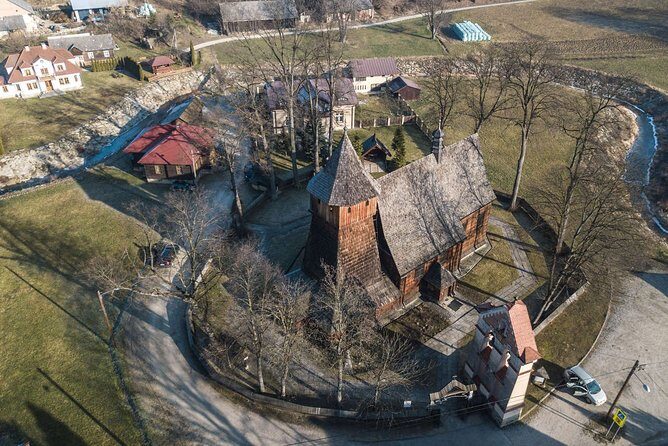
You stop at Church on the Rock (Kościół na Skałce). This is tied to King Casimir III and a long story of religious community there. A Gothic shrine goes back to the 1400s, and later Baroque decor (1733 to 1751) shaped much of what people recognize today. The stop is brief, but it’s one of those places that helps you understand why Krakow is so often described through its sacred spaces.
Then the route slips into Kazimierz, where you start seeing the neighborhood rhythm: squares, old market areas, and streets that feel like they belong to a different chapter of the city.
Kazimierz by footbridge and square: Wolnica, Father Bernatek, and Corpus Christi
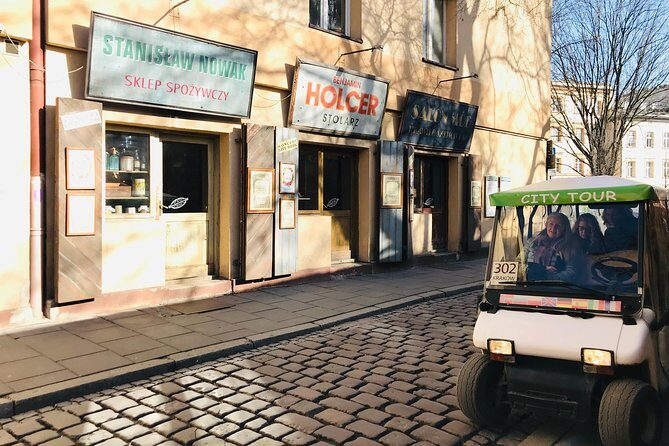
You’ll pass through Wolnica Square, part of the historic market area in Kazimierz. This is where the tour helps you connect daily city life with the bigger historical picture. Market squares weren’t just scenery—they were where communities met, traded, and absorbed politics and culture over time.
A standout here is the Father Bernatek Footbridge, straddling the Wisła River and linking Kazimierz with Podgorze. It’s a quick stop, but it does something important: it shows you that this city’s neighborhoods are divided and connected by water, and that crossing a river is often crossing into a different story.
You also visit Corpus Christi Church (Kościół Bożego Ciała), founded by King Casimir III the Great in 1335. The interior blends Polish Gothic and Polish Baroque, so it’s a reminder that churches in Krakow often aren’t frozen in one style. If you like architecture that mixes eras, this stop is worth your attention—even if you only have a few minutes.
Jewish Krakow stops: synagogues, Szeroka Street, and ghetto memorial points
Kazimierz is where the tour turns into something more thoughtful than a standard sightseeing loop. You’ll spend time in the Jewish quarter, including streets and landmarks connected to centuries of community life and, later, tragedy during the Nazi occupation.
The route includes multiple synagogue-area stops. Some of these entries are not included, so you may need to budget extra if you want to go inside. The good news is that even the exterior stops are informative, and the audio system helps you make sense of what you’re looking at.
Tempel area and the story behind the buildings
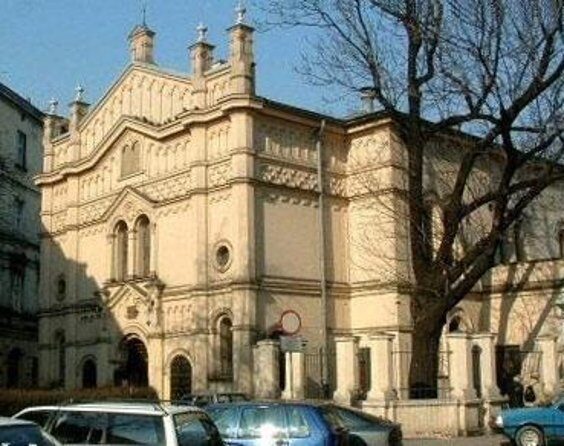
One stop centers on the Tempel Synagogue area, known as the Progressive Synagogue (built in the 1860s). The surrounding historical notes matter here: earlier synagogue structures in the area trace back to earlier foundations, including one devastated during the German occupation. Even without an extended visit inside, it’s a powerful reminder that this area’s religious life was layered and repeatedly interrupted.
You also get context tied to the Jewish city period (late 1500s through the mid-1800s) and features like the Okrąglak market hall (roofed, built in 1899 to 1900). Those details give you something to look for when you’re walking around afterward.
Szeroka Street: the neighborhood spine
At Szeroka Street, you’re in the heart of the former Jewish district. It’s the kind of street where the architecture and street layout tell you more than any single sign. This is also a section where the tour’s short stops make sense—you can absorb a lot without forcing long downtime.
Remuh Synagogue and continued religious life
There’s another major synagogue stop at Remuh Synagogue, tied to Jewish sacred art and religious life from the mid-1500s. Like some other synagogue entries, admission may not be included, but the stop is structured so you can still connect it to the wider story of this neighborhood.
Plac Bohaterów Getta: Kraków Ghetto reminders
Later, you reach Plac Bohaterów Getta, tied directly to the Kraków Ghetto. This is one of the most historically serious parts of the tour. You’ll hear about how it was one of five major metropolitan Jewish ghettos created by Nazi Germany.
The stop also points you to specific remaining elements:
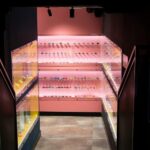
- the only pharmacy in the Kraków ghetto, which has a small museum setting,
- a fragment of the ghetto wall on Lwowska Street,
- and context about where the entry gate was located along Limanowskiego Street (during 1941 to 1943).
This is where the tour’s audio system matters. Without the spoken context, it would be harder to connect the physical markers to the full historical story.
Photos on the move and what your guide actually helps with
One practical included perk: you get photos during the tour. It’s not the same as doing your own slow photo walk, but it saves time later when you want a few polished shots from key viewpoints.
I also appreciate that the driver isn’t only focused on driving. On at least some departures, guides such as Mikhal have been noted for clear English explanations and friendly, calm pacing. Another strong theme is good voice-over support, including different language tracks (Dutch has shown up as an option). In other words, you’re not stuck with dead time between stops.
When this tour beats a big bus (and when it doesn’t)
This golf-cart format shines when:
- you want more neighborhood texture than a classic bus loop,
- you’re traveling with a mixed group (some people like photos, some like story),
- you want a quick orientation that still touches the big historical areas.
It may feel less ideal if:
- you’re hoping for long, deep museum time,
- you want a nonstop ride with almost no walking,
- you plan to enter every synagogue or museum and you dislike paying extra on top.
Because some synagogue and museum admissions aren’t included, I’d treat those stops as “decide on the spot.” The audio guide will help you judge what you want to prioritize.
Price and value for a group up to 7
The price is listed as $103.03 per group, up to seven people, which is important. This isn’t per person, so it can work out very reasonably if you’re traveling with family or friends.
For value, I look at three things:
- you get two hours of guided route + audio support,
- you cover multiple major areas (Old Town and Kazimierz),
- and you’re transported in a way that can reach more direct city viewpoints than a big bus.
If you’re traveling solo, the cost per person will be higher in practice than if you split the group fare. But if you’re pairing this with your plan to explore on foot afterward, the “get oriented fast” value is real.
Weather and comfort: covers for cold or rainy days
Krakow weather can change fast. The good news: these carts come with special covers, and the tour can run on cold or rainy days. That makes this a strong backup when you’re planning outdoor-walk days and the forecast looks shaky.
Should you book the best golf-cart Krakow views?
Yes—if you want an efficient, small-group way to connect Old Town, Wawel Hill viewpoints, and Kazimierz into one coherent experience. The tiny size (max seven), the audio system in many languages, and the short stops that don’t kill your energy are exactly what I’d recommend for most first-time visits.
I’d also be smart about one thing: a small number of people report carts not showing up as expected. That doesn’t mean you should assume the worst, but it does mean you should arrive on time at plac Jana Matejki 2 and be ready to check in right away rather than drifting.
If you’re the type who likes history with visuals—and you want to see Krakow from a perspective you can’t get by bus—this tour is a solid choice.
FAQ
How long is the Krakow golf cart sightseeing tour?
It lasts about 2 hours.
What does the tour cost, and is it per person?
The price is listed as $103.03 per group for up to 7 people.
Where does the tour start and end?
It starts at plac Jana Matejki 2, Kraków, Poland, and ends back at the meeting point.
Does it include an audio guide and in what languages?
Yes. You get an audio guide system in 26 languages, and there is an English-speaking driver.
Are food and drinks included?
No. Food and drinks aren’t included.
What happens if the weather is bad?
This experience requires good weather. If it’s canceled due to poor weather, you’ll be offered a different date or a full refund.