REVIEW · KRAKOW
Wawel Hill Tour with Audio Guide
Book on GetYourGuide →Operated by Poland Tours · Bookable on GetYourGuide
Wawel Hill is pure Krakow theater. This $6, 2-hour walk connects Poland’s royal legends to real, specific stops—the Cathedral, the courtyards, and the Dragon’s den. I love the audio guide format because the narration keeps you moving and focused on what you’re actually seeing, without waiting for a group to catch up. I also like that you pick up the kit at the tourist information on Bracka 15 with headphones and a map, so you don’t spend time guessing your route. One possible drawback: it’s audio-only. If you expected a live guide talking to you the whole time, the self-directed device style may feel a little off.
You’ll start on Kanonicza Street, climb to Wawel Hill via Herbowa Gate, and follow the story as it points out key buildings. The narration explains how the hill served as the royal residence from the 11th century, where family members were both crowned and buried. It ends at the Dragon’s den, one of the most memorable corners of the whole complex, and you’ll get a much clearer picture of the site even if you don’t buy entry for paid interior areas.
In This Review
- Key things to know before you go
- Why Wawel Hill feels important before you even enter
- The 2-hour route: Bracka 15 pickup to Herbowa Gate
- From Kanonicza to the Cathedral: the royal story you can see
- Main Courtyard and Arcaded Courtyard: reading architecture like a map
- The Dragon’s den finale: history with a payoff you can point to
- Price and value: paying $6 for meaning (not just access)
- Practical tips: how to make the audio guide work for you
- Should you book the Wawel Hill Tour with Audio Guide?
- FAQ
- How long is the Wawel Hill Tour with Audio Guide?
- Where is the meeting point?
- What is included in the tour price?
- Are entrance tickets to Wawel Castle included?
- What languages are available for the audio guide?
- Is the tour wheelchair accessible?
- Is a private group option available?
- Is free cancellation available?
Key things to know before you go
- Audio guide, not a live docent: you control the pace while the story comes through headphones
- Herbowa Gate is your “start the real site” moment: it frames the climb into the Wawel complex
- Cathedral + courtyards in 2 hours: you get the big architectural hits without needing ticketing for everything
- Multiple languages are supported: German, Polish, Italian, English, Spanish, French, Russian
- Dragon’s den is the finale: a bold stop that turns history into something you can point to
- Paid castle interiors are extra: your tour includes the walk and explanation, but not all ticketed parts
Why Wawel Hill feels important before you even enter
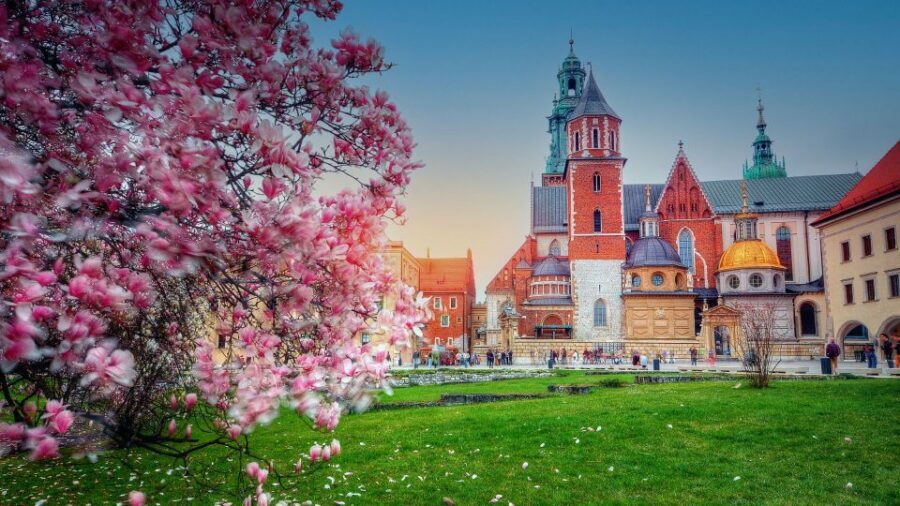
Wawel Hill isn’t just a scenic hill in Krakow. It’s the symbolic center of Polish royal life. For centuries, it was home to kings and queens, and from the 11th century onward it functioned as a monarch’s residence. That’s not a trivia line. It changes how you read the buildings around you.
When you visit the Cathedral and the courtyards, you’re not looking at random old stones. You’re looking at spaces tied to major life events: coronations and burials. The tour is built around that idea—each stop reinforces the other stops, like chapters in a single story. The audio guide helps you connect what you see with what happened here, so the experience lands faster than if you wander on your own.
Another reason it works so well is pace. It’s 2 hours, not a half-day ordeal. You still get a thoughtful route up the hill, but you can keep your energy for Krakow after you’re done. And at $6, it’s one of the easier ways to get meaning out of a major destination without paying “all-day tour” prices.
You can also read our reviews of more guided tours in Krakow

The 2-hour route: Bracka 15 pickup to Herbowa Gate
Your tour begins at the tourist information at Bracka 15. That matters more than it sounds. Starting at a known point helps you move quickly, especially in a historic center where signage can be fine one block and confusing the next.
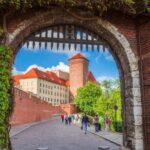
From there, you head to Kanonicza Street, and then you walk up to Wawel Hill via Herbowa Gate. Herbowa Gate is your threshold moment. It’s where the city street feel drops away and you’re clearly in “the complex” zone. The audio guide uses that transition to set context, so you’re not guessing why the buildings ahead look so official.
Here’s what you should expect during the walk: the narration gives background on key structures you pass or approach, so the climb feels purposeful. That’s one of the biggest strengths of an audio format when it’s done well. You’re not just moving uphill. You’re learning while you go.
Also, be aware of the self-guided nature. The experience is designed for you to follow the audio and stroll between points. That’s great if you like autonomy. It’s less great if you want nonstop interaction with a person. One review experience pointed out that the description can feel misleading if you expected a live guide, so I’d treat it as a walk-with-audio device, not a traditional group tour.
Practical upside: you don’t need to manage complicated public transport during the tour. You’re mostly walking a set route.
From Kanonicza to the Cathedral: the royal story you can see
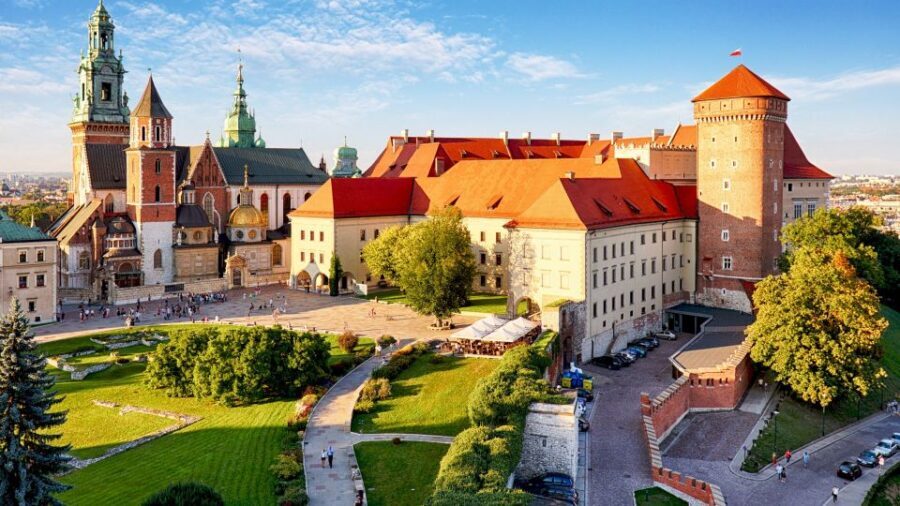
The tour’s first major “destination stop” is the Cathedral. This is the heart of Wawel Hill’s royal meaning. The narration frames why this place mattered: Wawel served as the royal residence from the 11th century, and it’s tied to events like coronations and royal burials. Even if you only spend the time you can in 2 hours, the audio helps you understand why the Cathedral belongs at the top of every must-see list.
What I like about using the Cathedral as a core stop is that it gives you a landmark you can build the rest of your visit around. When you later look at courtyards and arcades, you’ll often feel like you’re seeing the “supporting cast” for the main event happening in the Cathedral.
A good tip: go in with comfortable expectations. The Cathedral is a serious, historically loaded place. The best approach is calm attention—look at forms, spaces, and details, then let the audio connect those visuals to the royal story. If your plan is to rush through photos only, the audio won’t get you as much value.
One more thing: entrance to some paid areas of the broader complex is not included. The tour focuses on what you can do as part of the guided walk. So if you want to step into specific paid interiors, you may need separate tickets later. The upside is that you can still grasp the major themes without buying everything.
Main Courtyard and Arcaded Courtyard: reading architecture like a map
After the Cathedral, the route moves to the main courtyard and then the arcaded courtyard. These are the spaces where the Royal Castle complex starts to feel lived-in, even if you’re viewing it from the outside or along common areas. Courtyards are “breathing rooms” for buildings like this. They show scale, rhythm, and how movement worked around the palace.
The audio guide is especially useful here because courtyards can look similar if you’re not sure what to look for. With the narration, you get pointed explanations while you’re standing in the exact spot. That’s where audio shines. It turns architecture into a guided experience, even without a live person in your ear.
The arcaded courtyard is a great example. Arcades (series of arches and walkways) create repeating patterns. Those patterns can feel decorative until someone explains how they shape flow and space. Once you hear the story, you can start noticing how the arches frame views and slow your pace in a good way.
This section also helps you understand the full set of what Wawel Hill includes: the Royal Castle, the Cathedral, the Crown Treasury and Armory, the Dragon’s den, and the surrounding courtyards. You’re not doing a long museum marathon, but you’re getting a working overview of the complex’s parts. That’s valuable because most people visit Wawel for one highlight—like the Cathedral—and then feel slightly lost when they look at everything else. This tour’s structure keeps you oriented.
The Dragon’s den finale: history with a payoff you can point to
Every major site has one stop that people remember. At Wawel Hill, that’s the Dragon’s den. The tour leads you there at the end, and it’s a smart ending choice. The story focus shifts from royal ceremony to something more immediate and memorable.
Why it works: it gives your brain a concrete anchor. After courtyards and sacred spaces, you get a physical point where the entire visit feels more like a complete journey rather than a set of unrelated views. Even if you don’t know the story ahead of time, the audio and the setting make it easy to connect the Dragon’s den to the wider cultural role Wawel has played.
Also, timing matters. If you’re short on time in Krakow, ending at a high-recognition stop helps you feel like the tour delivered something you can carry home. You can still continue exploring the hill afterward, but you’ve already reached one of the most “final”-feeling locations on the route.
Remember: some parts of the broader Royal Castle complex are paid. The Dragon’s den area and the courtyards are the core walk-focused experience here. If you want to go inside ticketed spaces like areas tied to the Crown Treasury and Armory, plan for that as an optional add-on.
You can also read our reviews of more tours and experiences in Krakow


Price and value: paying $6 for meaning (not just access)
Let’s talk value honestly. At $6 per person for a 2-hour audio walk with headphones and an audio guide plus a map, you’re paying for structure. That structure is the product. You’re not paying for a staff member’s live narration. You’re paying for the route, the timing, and the explanations delivered when you need them.
That’s why the price-to-time ratio is strong:
- You get a guided route up the hill with major stops covered
- You get context for why those stops matter (kingship, coronations, burials)
- You don’t need extra transport during the experience
- You can use it in many languages, which is rare at this price
The big “gotcha” is the one you should plan around: entrance tickets to paid parts of Wawel Castle are not included. So the $6 price is excellent for the walk-and-understand portion, but you might spend more later if you decide you want paid interior access.
In other words: this isn’t a “buy one ticket and do everything” offer. It’s an efficient way to understand Wawel Hill so that any additional tickets you choose feel smarter.
Practical tips: how to make the audio guide work for you
This tour is easiest if you treat it like a walking route with story checkpoints.
1) Wear comfortable shoes
You’re walking up the hill and moving between courtyards. Don’t go in with stiff dress shoes. Bring shoes you can stand and stroll in.
2) Bring water and plan for photos
The basics are listed for a reason: water and a camera help you enjoy the experience without feeling rushed.
3) Choose your audio language before you start
The audio guide supports German, Polish, Italian, English, Spanish, French, Russian. Pick the language you understand best. Clear comprehension is where audio tours really pay off.
4) Expect self-paced walking
This is one of those tours where your attention matters more than group coordination. Since it’s audio-only, you’ll get the most out of it by staying present at each stop instead of treating it like background noise.
5) If you need mobility support, you’re covered
The tour is listed as wheelchair accessible. If you’re using a wheelchair, I’d plan to move steadily and avoid long pauses in tight areas since you’ll be following the route between points.
6) Consider a private group if you want more control
Private group availability is noted. If you’re traveling with friends or family and want the flexibility of a smaller setup, that option can help.
And one last practical note: you can keep plans flexible thanks to free cancellation up to 24 hours in advance and a reserve-now, pay-later option. That’s handy if Krakow is still forming in your head.
Should you book the Wawel Hill Tour with Audio Guide?
I’d book it if you want a low-cost, well-structured way to understand Wawel Hill in about 2 hours. The Cathedral, the courtyards, and the Dragon’s den give you a strong overview of what makes this place meaningful to Poland. And the audio guide format is a good match if you like moving at your own speed while still getting guided context.
I’d skip it—or at least go in with the right expectations—if you’re looking for a live guide experience. Because it’s audio-only, the “device and walk yourself” style can feel mismatched if you wanted a person to answer questions on the spot.
If you’re the type of traveler who likes landmarks, clear explanations, and a route that keeps you oriented, this one is a solid value.
FAQ
How long is the Wawel Hill Tour with Audio Guide?
It lasts 2 hours.
Where is the meeting point?
Meet at the Tourist Information center on Bracka 15.
What is included in the tour price?
It includes audio headphones, the audio guide, and a map.
Are entrance tickets to Wawel Castle included?
No. Entrance tickets to paid parts of Wawel Castle are not included.
What languages are available for the audio guide?
The audio guide is available in German, Polish, Italian, English, Spanish, French, and Russian.
Is the tour wheelchair accessible?
Yes, the tour is listed as wheelchair accessible.
Is a private group option available?
Yes, private group availability is noted.
Is free cancellation available?
Yes. You can cancel up to 24 hours in advance for a full refund.