REVIEW · KRAKOW
WOMAI Cracow – Into the darkness experience
Book on Viator →Operated by WOMAI · Bookable on Viator
Darkness in Krakow makes sense fast. WOMAI’s Into the Darkness is built around one simple idea: what happens when you can’t use your sight? You follow a blind guide through a dark space designed to sharpen your other senses and teach you how daily life can feel when everything looks the same.
I especially like the human setup. The experience is led by a blind guide who gives you structure, answers your questions, and helps you understand what you are feeling rather than leaving you to guess.
One big caution: if you have severe claustrophobia, this may be a tough hour. Being in darkness can also feel emotionally crowded, even if the space is well managed.
In This Review
- Key highlights at a glance
- Into the Darkness in Krakow: what the experience is really testing
- Your hour in total dark: what to expect during the session
- The blind guide moment: why the instruction feels different here
- Doing everyday tasks without sight: the lesson you feel in your body
- Braille at the end: the part that sticks after the dark hour
- Who should book this in Krakow (and who should skip it)
- Price and value: is $17.33 worth an hour of darkness?
- Practical tips so the hour goes smoothly
- Booking and timing: simple rules to remember
- Should you book WOMAI Into the Darkness in Krakow?
- FAQ
- How long is the WOMAI Into the Darkness experience?
- Where is this experience located?
- How much does it cost?
- What language is the tour offered in?
- Do I need to print a ticket?
- Is the experience near public transportation?
- What kind of physical readiness do I need?
- Is it recommended if I have hearing problems?
- Is it suitable if I have severe claustrophobia?
- Can I cancel for a refund?
Key highlights at a glance
- A blind guide leads the whole session so you learn what to notice, not just what to fear
- Total darkness for about an hour makes the lesson feel immediate and practical
- Daily tasks in the dark show how much sight normally does for you
- Questions + braille basics at the end give you something to take home
- English mobile ticket makes it easy to fit into a Krakow day
Into the Darkness in Krakow: what the experience is really testing
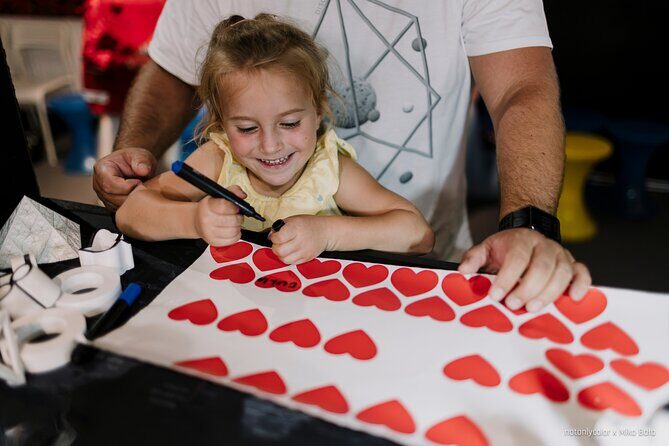
WOMAI’s Into the Darkness in Krakow is not a haunted-house trick. It is closer to a skill lesson, delivered through darkness. The premise is straightforward: you experience a set of everyday situations while your vision is taken away. That forces your brain to rely on sound, touch, smell, and even small cues you might normally ignore.
For me, the most valuable part is that the guide is blind. That matters because you are not just “being watched in a dark room.” You are learning from someone who lives with the same sensory reality every day. The guide’s role is practical: guiding you safely, letting you feel your way, and then connecting your reactions to real-world accessibility.
This is also why the emotional impact tends to land quickly. In darkness, you often lose the comfort blanket of knowing what is in front of you. Some people describe feeling completely alone when they cannot sense people or objects ahead. That reaction is part of the point. It is a real-world reminder of how much we assume about our surroundings.
You can also read our reviews of more tours and experiences in Krakow.

Your hour in total dark: what to expect during the session
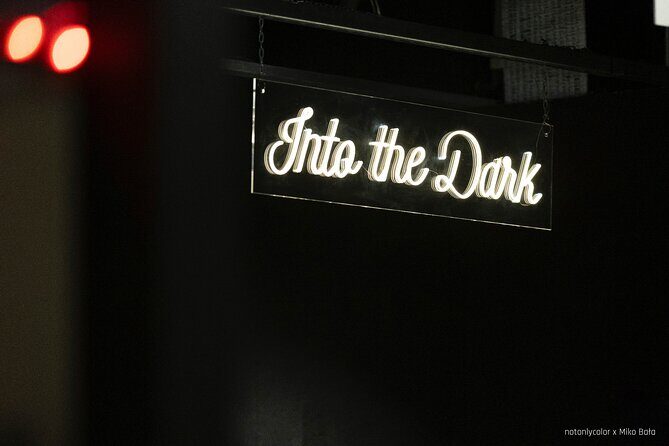
Plan on about one hour total. That includes getting oriented, moving through the dark experience, and ending with a short Q&A and learning moment. The tour is offered in English, and you’ll use a mobile ticket on arrival, which is handy in a city where you might already be juggling transit, meals, and walking.
The flow is simple:
- You start with a brief introduction so you understand how the session will work.
- You move into total darkness and do guided tasks.
- You wrap up with time to ask questions and learn basics related to braille.
The darkness is not just “low light.” It is intentionally dark enough that your usual visual navigation stops working. That is what makes the other senses kick in. You start noticing details you would normally ignore—like how sound carries, how footsteps feel, and how your hands become your GPS.
Even though it is guided, you will likely experience moments where you feel uncertain. That is normal. The guide is there to help you keep moving and stay safe, but you still need to go slowly and stay present.
The blind guide moment: why the instruction feels different here
In many tours, the guide tells you what to see. Here, the guide helps you learn how to sense without sight. That changes the whole tone. The guide can’t rely on the usual visual pointing and demonstration, so instruction comes through other channels: verbal cues, careful guidance, and reassurance when you feel stuck.
One of the best-reviewed parts of the experience is the chance to ask questions and get honest explanations. People report that they feel taught, not lectured. And at the end, you get a practical primer on braille—how it works and what it means day to day. That matters because you leave with more than a memory. You leave with a small tool for understanding.
The guide’s friendliness also matters. In darkness, fear is easy. A calm, supportive guide helps you keep your head. You do not need to be fearless; you need to be guided.
Doing everyday tasks without sight: the lesson you feel in your body
The core of Into the Darkness is basic life practice in a new condition. You navigate situations that resemble daily routines, but in complete dark. The point is not to trick you into failure—it is to show how much you rely on sight for orientation, timing, and confidence.
In darkness, you often learn fast that:
- Your hands work slower at first, then get smarter
- Your ears pick up patterns you normally filter out
- Your brain keeps looking for visuals that are not coming
People also describe a strong moment of appreciation when they realize how a blind or partially sighted person may feel during everyday tasks. That appreciation is not abstract. It hits because you feel the same confusion, just for a short time.
If you like experiences that change your perspective through action (not just explanation), this is one of those. You are not only learning facts. You are learning feelings—and then getting the context to understand them.
Braille at the end: the part that sticks after the dark hour
A standout detail from feedback is that the session ends with braille teaching. That is a smart design choice. Darkness can be emotionally heavy if it ends abruptly. But when you finish with questions and a concrete introduction to braille, the hour gets a clearer purpose.
Braille is also a bridge between experience and understanding. If you spent an hour in a world without sight, you can walk out curious. How do blind people read? How do they find information? How do they build routines when visuals are unavailable?
The braille basics at the end help answer some of those questions right away. Even if you remember only a few points, you’ll still feel the connection between what you struggled with in darkness and how braille solves a real problem.



Who should book this in Krakow (and who should skip it)
This experience can be powerful, but it is not for everyone.
You should consider booking if:
- You’re curious about accessibility and want a hands-on perspective
- You can follow instructions and move at a moderate physical fitness level
- You’re comfortable with guided group movement for about an hour
- You want something genuinely different from standard sightseeing
You should think twice if you have:
- Hearing problems (the experience is not recommended for people with hearing problems)
- Significant mobility disabilities (not recommended)
- Severe claustrophobia (not recommended)
The claustrophobia warning is not small. Even when the environment is controlled, darkness can increase the feeling of closeness. If you know you react strongly to that, I’d skip this one and choose a more open format.
Also note the pace. This is not a sit-down lecture. You will be moving and doing tasks, so bring a calm, patient mindset.
Price and value: is $17.33 worth an hour of darkness?
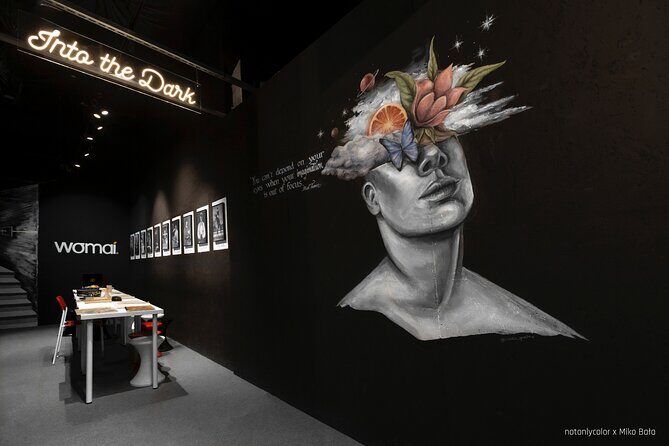
At $17.33 per person for about one hour, this price lands in the range of a “worth it” experience—especially in a city where you might spend similar money on things that mostly entertain you.
Here’s why the value can feel real:
- You get guided instruction from a blind guide, not just a passive activity
- The format creates a direct, memorable perspective shift
- You leave with additional learning at the end, including braille basics
- It is offered in English, so it is not locked behind language barriers
The cost also works because the experience is short. You’re buying a focused hour, not a half-day commitment. If you want to add meaning to a Krakow day without exhausting yourself, this is a strong candidate.
And with a 5/5 rating and 363 reviews showing strong recommendations, you’re not just hoping it works. The feedback volume suggests it reliably delivers the core promise.
Practical tips so the hour goes smoothly
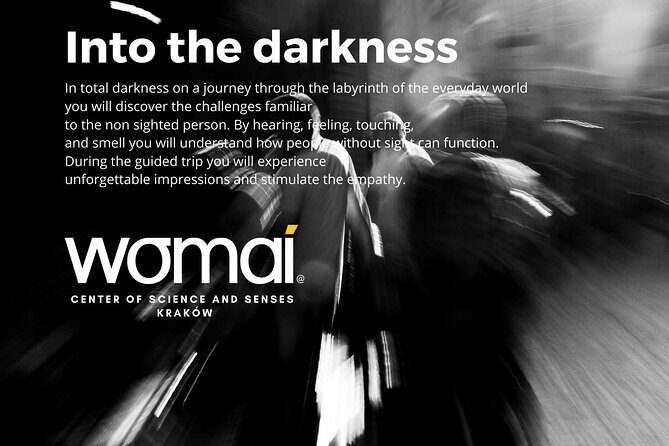
You’ll get the most from Into the Darkness if you treat it like a guided practice session, not a performance.
- Arrive rested and patient. You’re switching into a new way of sensing, which is mentally active.
- Be ready to go slowly. Darkness rewards calm movement more than speed.
- Plan your sense of humor. A little awkwardness is normal when your usual tools are offline.
- Ask questions at the end. That braille and explanation time is part of the value, so don’t let it pass.
- Wear comfortable clothes and shoes. The experience includes guided movement and everyday-task simulations.
Also, location matters. It is described as near public transportation, so it is easier to slot into your day without complicated detours.
Booking and timing: simple rules to remember
You’ll get a confirmation at the time of booking unless you book within 3 hours of travel. In that case, confirmation comes as soon as possible, subject to availability.
The cancellation terms are forgiving: free cancellation up to 24 hours in advance for a full refund. If you cancel later than that, you won’t get a refund. And if a minimum number of travelers isn’t met, the tour may be canceled, with an alternative date or full refund offered.
Finally, this is offered in English and uses a mobile ticket. That is helpful if you want to keep your trip logistics light.
Should you book WOMAI Into the Darkness in Krakow?
I’d book it if you want more than sightseeing and you like experiences that teach through doing. This is one of the rare tours where the “wow” comes from empathy you can actually feel, then explain. The blind guide leadership, the daily tasks in total dark, and the braille basics at the end combine into an hour that stays with you.
But if you have severe claustrophobia, hearing limitations, or mobility restrictions, skip it. The experience is designed around sensory deprivation, and those constraints are there for a reason.
If you’re able to participate comfortably, this is a high-value stop in Krakow. At roughly $17 for about an hour, it’s not just reasonable—it’s one of those experiences that gives you a new way to understand the world before you even finish your coffee afterward.
FAQ
How long is the WOMAI Into the Darkness experience?
It lasts about 1 hour.
Where is this experience located?
It takes place in Krakow, Poland.
How much does it cost?
The price is $17.33 per person.
What language is the tour offered in?
The experience is offered in English.
Do I need to print a ticket?
No. It uses a mobile ticket.
Is the experience near public transportation?
Yes, it is described as being near public transportation.
What kind of physical readiness do I need?
Travelers should have moderate physical fitness.
Is it recommended if I have hearing problems?
No. It is not recommended for people with hearing problems.
Is it suitable if I have severe claustrophobia?
No. It is not recommended for people with severe claustrophobia.
Can I cancel for a refund?
Yes. You can cancel up to 24 hours in advance for a full refund.