REVIEW · OSWIECIM
Auschwitz-Birkenau Museum: Fast-Track Entry Pass
Book on Viator →Operated by ComFort Tours Cracow · Bookable on Viator
Auschwitz demands your full attention. This fast-track pass pairs skip-the-line entry with a guided visit that moves through both Auschwitz I and Auschwitz II-Birkenau, with an explanation of what you’re seeing. I especially like that you get included headsets (so you can actually follow the guide) and that the tour covers specific, heavy topics like Rudolf Hess’s 1947 execution site. One thing to keep in mind: the meeting point and last-minute coordination can get chaotic, so you’ll want to arrive early and stay alert.
You’re looking at about four hours total, with a shuttle break between the two sites. The walking is real, and you’ll spend time standing while the guide explains details that can be hard to process.
For $32, the value is mainly in the included tickets, headsets, and guide—but the experience depends on timing and communication on the day. In short: this is a strong option if you’re prepared, but it’s not the kind of tour where you want a relaxed start.
In This Review
- Quick Hits Before You Go
- Auschwitz-Birkenau Fast-Track Pass: What You’re Actually Buying for $32
- Finding the Meeting Point on Więźniów Oświęcimia 20 Without Losing 30 Minutes
- Stop 1: Auschwitz I Guided Tour, Photos, Prisoner Belongings, and Rudolf Hess (Yes, It’s Mentioned for a Reason)
- The Short Break in Oświęcim: A 30-Minute Reset Before Birkenau
- Stop 2: Auschwitz II-Birkenau Ruins, Crematoria, Gas Chambers, and the Railway Platform
- Headsets, Group Size, and What Changes Between a Great Day and a Messy One
- Price and Logistics: Fast-Track vs Real Lines
- Who This Tour Fits Best (and Who Might Want a Different Format)
- Should You Book This Auschwitz-Birkenau Fast-Track Tour?
- FAQ
- What’s included in the Auschwitz-Birkenau fast-track tour?
- How long is the tour?
- Where does the tour start?
- Do I need to arrange transport between Auschwitz I and Auschwitz II-Birkenau?
- Is this tour in English?
- What’s the maximum group size?
- How early can I start?
- Is the tour physically demanding?
- What’s the cancellation policy?
Quick Hits Before You Go
- Fast-track entry + included tickets helps you get through the initial friction faster.
- Headsets/voice receiver included make the guide’s narration far easier to understand.
- Auschwitz I details first, including the Auschwitz complex history and Rudolf Hess’s 1947 execution.
- Birkenau ruins second, with the railway platform, crematoria ruins, and gas chambers discussed in context.
- Museum shuttle between sites plus a short break in Oświęcim for a toilet or quick bite.
- Groups up to 30 keeps things manageable, but the start can still feel hectic if you’re late finding staff.
Auschwitz-Birkenau Fast-Track Pass: What You’re Actually Buying for $32
This tour is built around one goal: getting you into Auschwitz-Birkenau with less waiting, while also giving you a guided structure so the place doesn’t feel like random rooms and signs.
At around $32, you’re paying for more than admission. Your ticket includes entry to both Auschwitz I and Auschwitz II-Birkenau as part of the guided route, and you also get a headset/voice receiver so you’re not relying on hearing over crowds and outdoor noise. The practical value here is time and clarity. Auschwitz is not a place where you want to be constantly asking people what you’re looking at.
There’s also a clear plan: you start at Auschwitz I, then you transfer to Birkenau after a short pause in Oświęcim. The itinerary is about two hours for the first site, then roughly 1.5 hours for the second, with transfer time and a break built in. That pacing matters because it reduces the stress of figuring out transport and timing yourself.
The catch is that the day still depends on coordination at the start. Some people have had smooth experiences; others ran into confusing meeting handoffs, missing staff, or language mismatches. You can’t control that, but you can control how early you arrive and how prepared you are with the right meeting location.
You can also read our reviews of more museum experiences in Oswiecim

Finding the Meeting Point on Więźniów Oświęcimia 20 Without Losing 30 Minutes
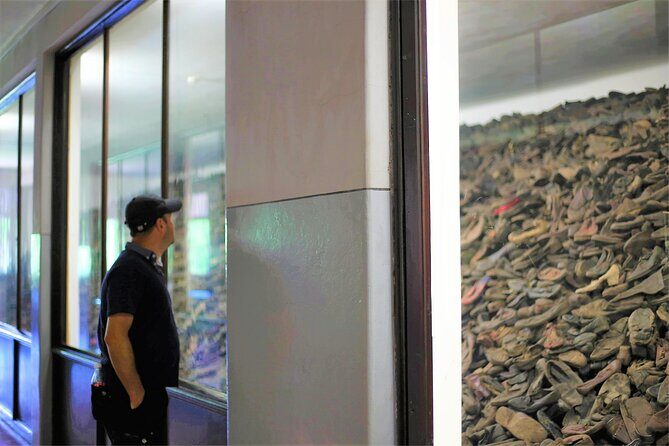
Your tour starts at Miejsce Pamięci i Muzeum Auschwitz I at Więźniów Oświęcimia 20, 32-603 Oświęcim, Poland. This is a real landmark area, but it can still feel stressful because you’re arriving alongside other groups, and you’re looking for a specific operator and guide.
Here’s the practical approach I recommend. Show up early enough that you’re not rushing. Even if the tour is labeled fast-track, the security and entry process still has friction. Add in the fact that communication can be inconsistent—some tour-goers reported last-minute texts about meeting time, and others described difficulty locating staff.
Once you find your group, don’t just walk in right away. Ask for your headset and verify it works before the tour begins. One of the best review takeaways was that the headset system can work really well. The worst case described was a microphone that was unclear or malfunctioning. Either way, you’ll be glad you tested early rather than after you’ve already missed key details.
Also, the tour is set for smaller groups (maximum 30 travelers). That’s good for attention, but it means you can’t assume there will be a huge, obvious crowd all holding the same marker. If you’re traveling with anyone, pick a plan: meet staff first, then group together, then move as one unit.
Stop 1: Auschwitz I Guided Tour, Photos, Prisoner Belongings, and Rudolf Hess (Yes, It’s Mentioned for a Reason)
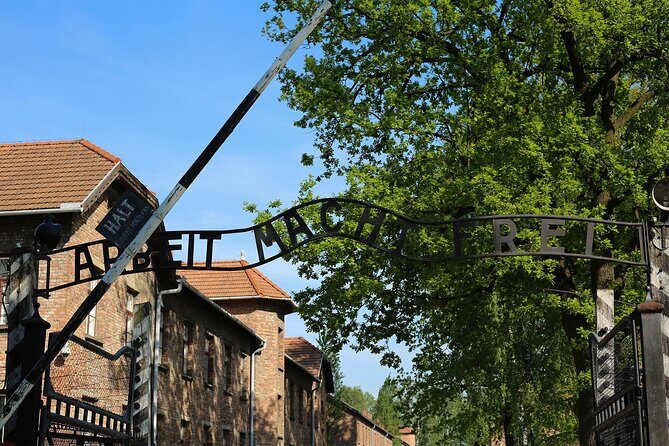
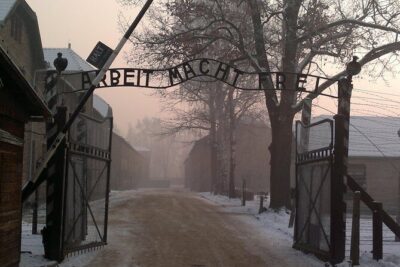
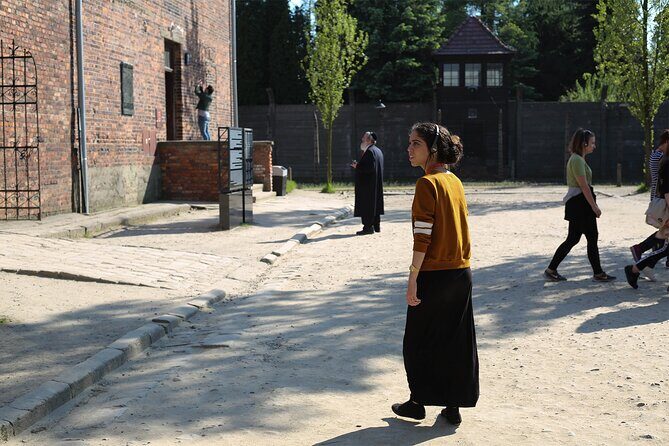
Auschwitz I is the former main camp and administrative headquarters. This is where the tour’s tone gets established: the machinery, the record-keeping, the organization of terror.
In this part of the visit, you’ll see exhibits tied to individual victims, including countless photographs and prisoners’ belongings. That matters because it moves you away from thinking of history as only dates and numbers. The guide also points out key events connected to the camp’s command structure—including the spot where Rudolf Hess, later executed as a war criminal in 1947, was executed.
A good guide here can make the difference between seeing artifacts and understanding their purpose. One strong review noted a translator with extreme knowledge and a clear, explanatory approach. That’s exactly what you want in Auschwitz I: not just narration, but guidance that connects what you see to what happened.
You’ll likely feel an urge to speed through Auschwitz I because it’s emotionally heavy. Resist that. This is the part where your brain needs time to attach meaning. If you rush, Birkenau can start to feel like the second half is only repeating what you already knew. When you give Auschwitz I a little more attention, Birkenau lands with more weight.
Time-wise, expect about 2 hours at Auschwitz I. You’ll also have more time at the start than some self-guided visits because the guide is actively directing you.
The Short Break in Oświęcim: A 30-Minute Reset Before Birkenau
Between the two sites, you get a quick transition. The schedule includes a short break—around 30 minutes—for a toilet stop or a bite to eat in Oświęcim.
This pause is useful because Birkenau can be long and emotionally draining. If you’re going to be uncomfortable anyway, you might as well be uncomfortable with a functioning body. Grab water if you can, use the restroom, and take a moment to regroup before heading back out.
Then you transfer by the museum shuttle bus from the first site to the second part at Birkenau. One review highlighted that a shuttle was organized, and you should take that as a positive sign. Even so, plan like a realist: you may still have waiting time before boarding, depending on how groups arrive.
This section is also where you’ll get reoriented. You’re going from an administrative/museum-focused first camp to an outdoor ruin field that feels larger and more exposed. A minute to breathe and reset is not a luxury here—it helps you pay attention at the next stop.
Stop 2: Auschwitz II-Birkenau Ruins, Crematoria, Gas Chambers, and the Railway Platform
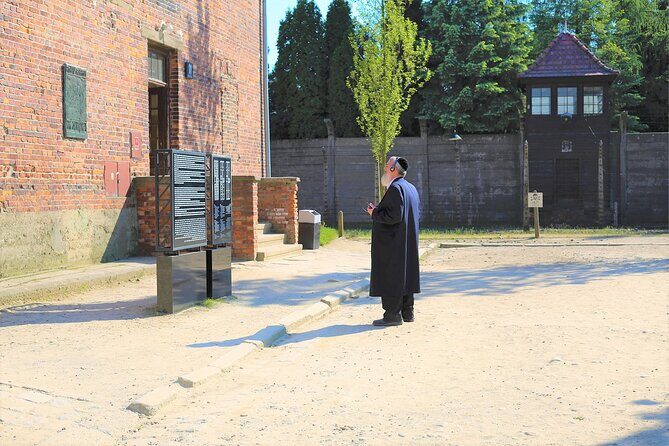
Birkenau is the concentration camp site (Auschwitz II). This is where many visitors expect the biggest shock, and the tour is designed to address that expectation with structure and explanation.
You’ll see the ruins of crematoria and the gas chambers, plus the railway platform. You’ll also hear context about World War II and the Holocaust, aimed at giving you a deeper understanding of what these structures represent beyond the obvious facts.
The guide’s job here is delicate: to help you look at ruins without turning them into a confusing maze. A strong tour in Birkenau explains how the space functioned and what the history means—without turning it into a performance. When things go wrong (like unclear audio), it’s not just annoying; it changes what you absorb.
One reason the included headset system is such a big deal: Birkenau is outdoor and exposed. If your audio is weak, you’ll miss critical points. If you test the headset at the start and keep it on, you’ll do better.
Plan on about 1 hour 30 minutes at Birkenau. That sounds short, but with guidance and the sheer emotional weight of the location, it’s about right for a 4-hour total tour. If you try to extend it yourself, you can turn the day into a marathon. If you want deeper time, you may prefer an additional self-guided visit afterward.




Headsets, Group Size, and What Changes Between a Great Day and a Messy One
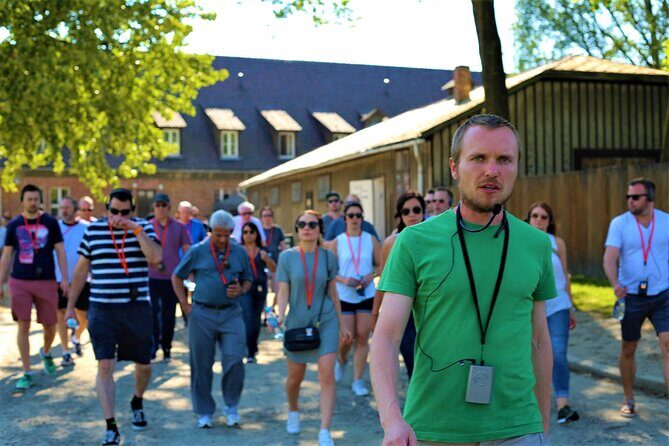
The inclusion list is simple: headset/voice receiver, entrance tickets, and an English-speaking guide. The group maximum is 30 travelers.
In practice, that headset/voice receiver can be one of the best parts of this tour. One review described how well it worked, which is exactly what you want at Auschwitz—clear audio, no guessing, less strain.
The flip side is that a few experiences described problems with communication and equipment (muffled guide voice, scratching microphone). I can’t guarantee your audio will be perfect, but you can improve your odds by doing three things:
- Confirm you have a working headset at the start of the tour.
- Stay close enough to hear if someone has to move to make room.
- Don’t hesitate to ask for a swap if the sound is broken.
Language is another variable. Your ticket is described as English with an English-speaking guide, but one account claimed the tour turned into a different language experience and that the group didn’t get the English guide they expected. That doesn’t mean it will happen to you. It does mean you should check your voucher details before arrival and verify with staff if anything looks off.
As for the guide, at least one strong review referenced Olek, with praise for organization and punctual start. That’s encouraging. When you get a good guide, Auschwitz stops feeling like a list of stops and becomes a connected story of what happened.
Price and Logistics: Fast-Track vs Real Lines
This is where you should think like a planner. “Fast-track” helps, but it doesn’t erase security checks, entry rules, or crowd flow. One negative experience described a long queue even after booking a fast-track time, plus an issue where a group had to wait much longer than expected.
So, what’s the practical takeaway? Treat fast-track as reduced waiting risk, not a guarantee. You’ll still want an early arrival buffer, and you’ll still want to be patient if the start is slower than your schedule shows.
Also note what’s included and not included. You’re not paying extra for the admission tickets—they are included. Headsets are included. A guide is included. But transport is listed as not included, even though the itinerary includes a shuttle between Auschwitz I and Birkenau during the tour. This is one of those confusing details you’ll want to interpret sensibly:
- Your day includes an internal shuttle between the two sites.
- Getting to the meeting point on your own isn’t part of the package.
At around $32, you’re getting a packaged route rather than paying for a private car or luxury comfort. And that’s fine at Auschwitz, because comfort doesn’t change the meaning of what you see. It does change how long you can stand and how tired you feel afterward—so pack accordingly.
Bring layers. You’ll likely move between indoor/museum settings and outdoor ruins. Wear shoes that can handle lots of walking. It’s a moderate physical fitness experience, and you should plan for standing time.
Who This Tour Fits Best (and Who Might Want a Different Format)
This tour is ideal if you want:
- A structured, guided route across both Auschwitz sites.
- Included tickets and headsets to reduce hassle and improve understanding.
- A small group size (up to 30) with a guide who can keep things coherent.
It might not be your best choice if you:
- Need absolute certainty on language and timing and can’t handle coordination hiccups.
- Are sensitive to unclear audio and don’t like group pace.
- Are hoping for lots of free time to wander without explanation.
That said, even with occasional logistics glitches, the core experience is the kind you come for. Auschwitz-Birkenau is preserved as a reminder of crimes committed against humanity. The guided approach is valuable because it helps you interpret what you’re looking at instead of treating it as a checklist.
If you want a calmer experience, you may still prefer a quieter, smaller group format or a tour with clearer start-window communication. If you want a straightforward, packaged day that handles entry and transitions for you, this is a workable option—especially if you plan to arrive early.
Should You Book This Auschwitz-Birkenau Fast-Track Tour?
I’d book this if you’re ready to treat logistics as a potential weak spot and you’re mainly here for the guided experience across Auschwitz I and Auschwitz II-Birkenau. The inclusion of tickets and headsets makes the price feel fair, and the itinerary covers the key sites most people need: Auschwitz I with its major historical context, then Birkenau with the ruins, crematoria, gas chambers, and railway platform.
I’d skip or choose carefully if you rely on perfect English audio and exact timing down to the minute. Some day-of problems have been reported: meeting-point confusion, late changes to meeting time, and occasional language mismatches. Those are not rare enough to ignore, but they’re also not universal.
If you do book, your best move is simple: arrive early at Więźniów Oświęcimia 20, confirm your headset early, and be ready for the guide to keep the group moving.
FAQ
What’s included in the Auschwitz-Birkenau fast-track tour?
The package includes entrance tickets, a headset/voice receiver, and an English-speaking guide.
How long is the tour?
The tour is listed at about 4 hours total, with time split between Auschwitz I and Auschwitz II-Birkenau.
Where does the tour start?
The meeting point is Miejsce Pamięci i Muzeum Auschwitz I, Więźniów Oświęcimia 20, 32-603 Oświęcim, Poland. The tour ends back at the meeting point.
Do I need to arrange transport between Auschwitz I and Auschwitz II-Birkenau?
The itinerary includes a transfer by museum shuttle bus from Auschwitz I to Birkenau, plus a short break in Oświęcim. Transport to the meeting point is not included.
Is this tour in English?
The included description lists an English-speaking guide. Your confirmation at booking should reflect what you will receive, so it’s worth checking your details.
What’s the maximum group size?
The tour has a maximum of 30 travelers.
How early can I start?
The opening hours listed run from 9:00 AM to 10:00 AM (Monday through Sunday), and the activity is scheduled within that timeframe.
Is the tour physically demanding?
It asks for a moderate physical fitness level, which usually means you should be comfortable with walking and standing for explanations.
What’s the cancellation policy?
You can cancel for a full refund if you cancel at least 24 hours before the experience’s start time. If you cancel less than 24 hours before, the amount paid isn’t refunded.