REVIEW · OSWIECIM
Auschwitz-Birkenau – Skip the Line Tickets
Book on Viator →Operated by Time4Poland · Bookable on Viator
History hits hard here. This prebooked visit is interesting because it gets you into Auschwitz-Birkenau with skip-the-line entry and keeps you in sync with a licensed local guide through headsets. You’ll also start with a local host who meets you at the beginning so you can focus on the experience instead of guessing the first steps.
What I like most is how the time is structured: about 1.5–2 hours at Auschwitz and roughly 60–75 minutes at Birkenau, all wrapped into an overall visit of about 3.5 hours (with the tour running close to 4 hours). My only caution is pacing and communication: this is a serious site with strict movement and crowd flow, and some headsets have been reported as problematic or the group can feel rushed, depending on the guide and conditions.
In This Review
- Key Things to Know Before You Go
- Skip-The-Line Entry and the Reality of Getting Oriented Fast
- Your Meeting Points: Where Things Start (and End)
- Auschwitz I With a Licensed Guide: Why the “Guided” Part Changes Everything
- Birkenau: Shorter Time, Bigger Emotional Weight
- Headsets, Group Flow, and the Pace That Comes With a World-Famous Site
- What the Tour Gets You For the Price (and What It Doesn’t)
- Guides You Might Hear About: What Good Looks Like
- Tips That Actually Help on This Day
- Should You Book This Auschwitz-Birkenau Skip-the-Line Tour?
- FAQ
- How long is the Auschwitz-Birkenau skip-the-line tour?
- How is the time split between Auschwitz and Birkenau?
- Does this tour include admission tickets?
- Are skip-the-line entry tickets included?
- What’s included in the price besides the guide?
- Is transportation included?
- Where do I meet the group?
- Where do tickets get redeemed?
- How big is the group?
- Are service animals allowed?
- Can I cancel for a full refund?
Key Things to Know Before You Go

- Skip-the-line entry saves you from losing precious minutes to queues at Auschwitz-Birkenau
- Headsets included help you hear the guide clearly in a group setting
- Small groups (max 30) keep you from being swallowed by a huge crowd
- Time split is built in: about 1.5–2 hours at Auschwitz, then 60–75 minutes at Birkenau
- Meeting point support: a local host brings you to the official guide and helps you plan your visit
- Not a transport tour: you’re responsible for getting to the meeting point
Skip-The-Line Entry and the Reality of Getting Oriented Fast
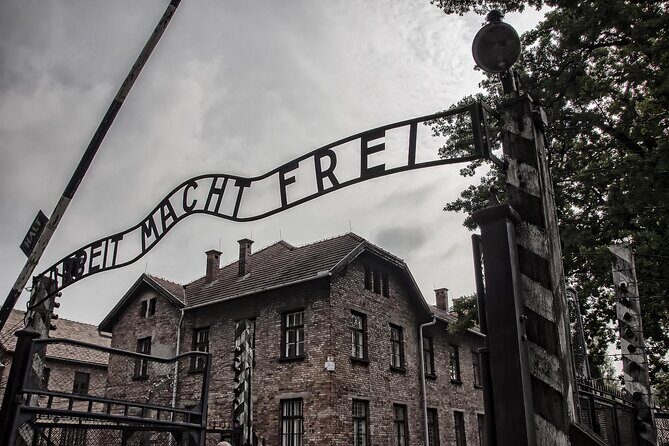
Auschwitz-Birkenau is not the kind of place where you want to spend your energy figuring things out. This tour is set up to help you start properly—you meet at Męczeństwa Narodów 14, 32-600 Brzezinka, Poland, then you’re guided to the official tour flow.
The skip-the-line part matters more than it sounds. At this site, you’ll often see long lines and slow moving checkpoints. When your visit is only a few hours, cutting the delay turns into better use of time with your guide, not just an earlier arrival.
Also, the group size is capped at 30 travelers. That can still feel like a lot in tight spaces, but it’s far more manageable than being packed in with hundreds of people where you can’t hear or move.
You can also read our reviews of more tours and experiences in Oswiecim



Your Meeting Points: Where Things Start (and End)
The tour starts at Męczeństwa Narodów 14, 32-600 Brzezinka and ends back at the same meeting point. That’s helpful because you don’t have to worry about arranging pickup after the visit.
There’s also a ticket redemption point listed at Memorial and Museum Auschwitz-Birkenau, Więźniów Oświęcimia 55, 32-600 Oświęcim, Poland. In practice, this usually means your tour team handles the official entry process so you can spend your mental energy where it belongs: inside the memorial.
Practical note: the tour is near public transportation, but transportation is not included. So you’ll want to plan your route to the start point ahead of time. If you’re driving, give yourself extra buffer time for roads and local traffic.
Auschwitz I With a Licensed Guide: Why the “Guided” Part Changes Everything
Your first main stop is the Panstwowe Muzeum Auschwitz-Birkenau (Auschwitz I). Expect an official guided walk through the core areas with commentary and historical context.
Here’s why I think guided makes a real difference at Auschwitz I:
- You’re looking at physical remnants and displays that can be hard to interpret without context. A guide helps you understand what you’re seeing and why it matters.
- There’s a big difference between reading labels and making sense of the story in order. With a guided circuit, you can follow the narrative instead of bouncing around.
- In places like this, you might notice details, but not know what questions to ask. A good guide does that work for you.
Time-wise, this part is about 1.5–2 hours. That’s a useful amount: long enough to absorb key areas, but not so long that you feel like you’re being rushed out. In some cases, visitors have felt the pace was quick, especially if the guide movement was faster than the group could comfortably match. If you want a slower rhythm, you may want to be ready to pause and take in smaller moments yourself when possible.
You’ll also be navigating crowds. Headsets help here. Even if you’re close enough to hear, the site has constant ambient noise. Headsets make a real, practical difference—just be aware that some participants have reported occasional headset issues like static.
Birkenau: Shorter Time, Bigger Emotional Weight
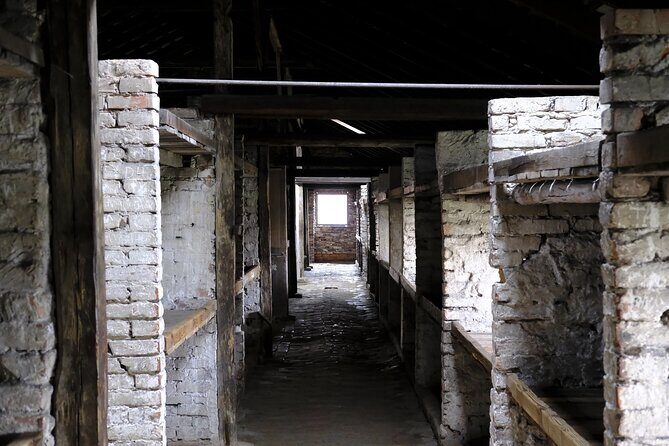
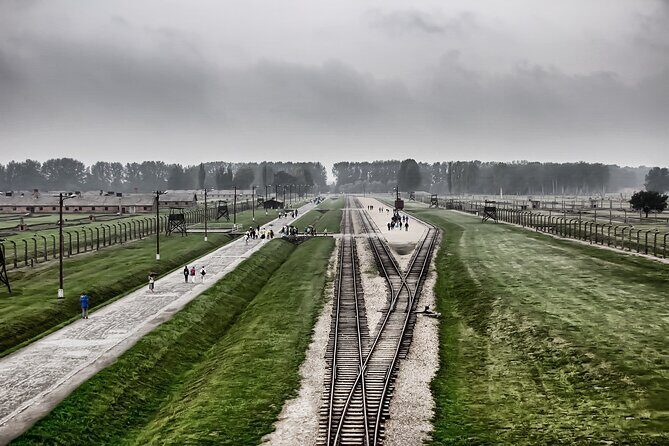
Then you move to Auschwitz II – Birkenau, where the visit is typically 60–75 minutes. That shorter block can feel surprisingly intense because Birkenau is vast, open, and visually overwhelming in a different way than Auschwitz I.
The value of staying guided here is that the guide can point out what’s important to notice—how to read the layout and how events connect across the site. Without that context, you can end up walking a lot but processing less.
Birkenau also brings more walking. The tour is listed as requiring a moderate physical fitness level, so wear shoes you trust. Uneven ground and long stretches on foot are common in this kind of memorial setting.
The time window is tight by design. This is one of those tours where you can’t count on unlimited time at every corner. If you’re the kind of person who wants to read every caption slowly, consider how you’ll balance that urge with the group’s flow. With this structure, the tour works best if you’re open to letting the guide set the pace and then doing your own extra processing during the moments you can.
Headsets, Group Flow, and the Pace That Comes With a World-Famous Site
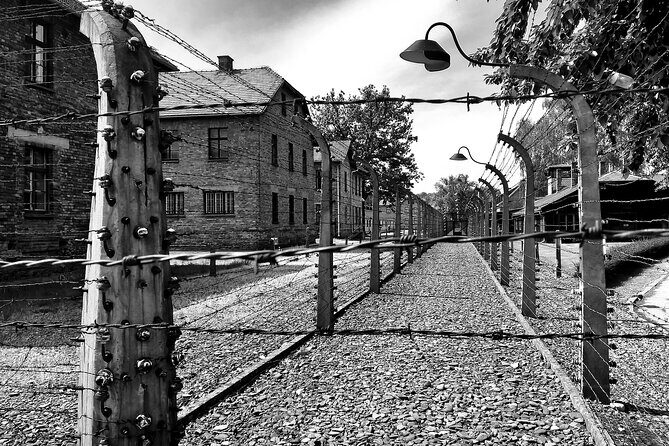
A few practical items make this tour feel smoother than a DIY visit.
First: headsets are included. They’re meant to keep you hearing the guide clearly, even when you’re not standing shoulder-to-shoulder.
Second: group size is limited to 30 travelers. This matters because Auschwitz-Birkenau doesn’t have the luxury of slow movement. It has strict space, and your group has to fit into the official rhythm of the site.
Third: there’s a built-in pace. The full tour is listed at about 4 hours (approx.), with the guided portion around 3.5 hours. That’s a realistic target for a first visit—enough time to experience both Auschwitz I and Birkenau without turning the day into a half-life of standing in lines.
That said, pacing can still vary. Some people have said the guide moved quickly or didn’t leave as much time to read. Others have said the guide was professional and paced well. The pattern is simple: this tour is usually at its best when your guide is strong and your group can keep up without getting stretched thin.



What the Tour Gets You For the Price (and What It Doesn’t)
The price is $48.15 per person, and it’s typically booked about 23 days in advance on average. Is that good value? For Auschwitz-Birkenau, value isn’t just the cost—it’s what you’re saving and what you’re buying with that cost.
You’re paying for:
- Skip-the-line entry (time savings you can’t DIY with your mood intact)
- A licensed local guide (context and interpretation, not just movement)
- Headsets (so you’re not guessing what you missed)
You’re not paying for:
- Transportation to the meeting point
- Anything like meals or drinks (nothing is listed as included here)
So the value equation is: if you want guided structure and fewer delays, this price can feel fair. If you already have a very strong historical plan and you prefer to read everything at your own speed, you might ask whether you’d rather spend time alone and hire a private guide later. For many first-timers, though, the trade-off is worth it.
Also remember: this is a place with strict rules and high demand. Prebooking reduces friction. That alone can be worth a lot when your day is limited.
Guides You Might Hear About: What Good Looks Like
From experience, the quality of the guide can shape your entire day.
In the notes I’ve seen, certain names come up when people are happy—Halina and Magdalene. The praise often centers on things like clear explanations, answering questions, and keeping the group moving at a thoughtful pace.
On the other hand, I’ve also seen reports of guides being hard to understand due to headset/static issues, and of groups feeling rushed. That doesn’t mean the tour is always like that. It means your enjoyment depends on the match between you, the guide’s delivery, and the day’s conditions.
If you’re someone who gets overwhelmed by speed or big group energy, you might want to arrive with the mindset that you’re there to listen first, then reflect after.
Tips That Actually Help on This Day
Keep these small things in mind. They make a difference in a place like this.
- Bring your passport or ID. Some visitors emphasize this as an important must-have.
- Wear comfortable walking shoes. Birkenau especially can involve longer stretches on foot.
- Dress for weather and be ready for lingering outdoors. The memorial areas can be exposed.
- If you depend on clear audio, treat the headsets as essential. When you’re given one, make sure it works right away and ask for a fix if you notice static.
And one more mindset tip: don’t treat Auschwitz-Birkenau like a museum you scan. Even with the best guide, it’s heavy. Give yourself a little permission to feel what you’re seeing, then take mental notes afterward when you’re back on firmer ground.
Should You Book This Auschwitz-Birkenau Skip-the-Line Tour?
Yes, I’d lean toward booking this tour if:
- It’s your first time at Auschwitz-Birkenau and you want context you can’t easily piece together on your own.
- You’d rather pay for skip-the-line entry than spend your limited hours stuck waiting.
- You like guided structure, especially with headsets to keep you oriented.
I’d think twice if:
- You’re very sensitive to pacing and already know you need long caption-by-caption time.
- You’re worried about hearing quality and you’d struggle with a group experience where audio gear is shared.
- You have tight timing and no buffer for getting to the meeting point, since transportation isn’t included.
If you do book, go in prepared: expect seriousness, respect the pace the site demands, and focus on taking in the story in order rather than trying to catch every detail at once.
FAQ
How long is the Auschwitz-Birkenau skip-the-line tour?
The tour is listed at about 4 hours total (approx.), with around 3.5 hours of guided time.
How is the time split between Auschwitz and Birkenau?
You’ll spend about 1.5–2 hours at Auschwitz (Auschwitz I) and about 60–75 minutes at Birkenau (Auschwitz II).
Does this tour include admission tickets?
Yes. Admission is included in the tour.
Are skip-the-line entry tickets included?
Yes. Skip-the-line entry is part of the tour to help you avoid long queues.
What’s included in the price besides the guide?
A licensed local guide and headsets are included.
Is transportation included?
No. Transportation is not included.
Where do I meet the group?
The start meeting point is Męczeństwa Narodów 14, 32-600 Brzezinka, Poland and the tour ends back at the same meeting point.
Where do tickets get redeemed?
Ticket redemption is listed at Memorial and Museum Auschwitz-Birkenau, Więźniów Oświęcimia 55, 32-600 Oświęcim, Poland.
How big is the group?
The maximum group size is 30 travelers.
Are service animals allowed?
Yes, service animals are allowed.
Can I cancel for a full refund?
Yes. You can cancel up to 24 hours in advance for a full refund (cut-off is based on local time).