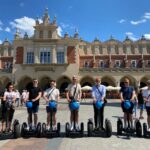
Krakow has stories you miss on autopilot. This private 3-hour walk hits the big hits like Wawel Castle and St. Mary’s Basilica, then steers you into quieter streets and stranger sights you would not find alone, like Lost Souls Alley and a shop that once served as a pharmacy. I really like the private pace and the way the guide connects landmarks to everyday local culture. One drawback: each major stop is brief, so if you want long interior time at Wawel or extra museum hours, you’ll need a second visit.
The guides can make or break a tour, and this one seems to land well. Names like Janina and Tomasz come up in past experiences for clear explanations and for answering questions without rushing you. I also like that you’re not just standing and pointing; you get a mix of architecture, street details, and a couple of atmospheric pauses for real Krakow flavor.
A quick planning note: the schedule includes museum-adjacent stops, and one caution flag from past guests was that on Mondays, some museum times can be hit-or-miss. If you’re traveling midweek, you’ll probably feel calmer. Either way, bring moderate walking stamina and comfy shoes.
In This Review
- Key things I’d plan around before you go
- A private 3-hour Krakow walk that blends icons with everyday streets
- Starting at plac Jana Matejki: where the route starts and why it helps
- Obwarzanka and Lost Souls Alley: the quick tradition stops that set the tone
- Old Town core: St. Mary’s Basilica, Cloth Hall, and the Main Square feel
- Wawel Royal Castle in short form: what you can learn fast
- The Vistula break and a surprising stop near the river
- The old pharmacy-bookshop connection and the Japanese Art & Technology stop
- ICE Krakow Congress Center: the alternative bar pause
- Podgórze streets: art schools, Bednarski Park, and St. Joseph’s Church
- Kazimierz’s Corpus Christi Basilica and the Forum Przestrzenie stop
- How the included drink and extra food moments can shape your day
- Why private guides matter more than you think in Krakow
- Price and value: what $64 really buys on this route
- Who should book this tour
- Should you book this private Krakow highlights and lesser-seen districts tour?
- FAQ
- How long is the Krakow private tour?
- Is this tour private or shared with other people?
- What’s included in the price?
- What are the tour’s start and end points?
- Is hotel pickup included?
- Do I need to bring a ticket or can I use a mobile ticket?
- What kind of walking is involved?
- Can I cancel for a full refund?
Key things I’d plan around before you go
- Private tour (just you and your guide): You can ask questions and adjust the pace without a crowd pushing you along.
- Two Krakow “eras” in one route: Old Town icons plus Podgórze and Kazimierz stops, so the city feels bigger than one square.
- Free entry stops on the route: Many listed sights are ticket-free for this experience, which helps the value.
- A real food and drink moment included: You get 1 local drink or tasting to bridge the sightseeing with something edible.
- A short, efficient Wawel visit: Enough time to get the meaning and the views, not enough for a full deep dive inside.
- Industrial and alternative Krakow stops: ICE Krakow Congress Center and Forum Przestrzenie add modern texture beyond the postcard core.
A private 3-hour Krakow walk that blends icons with everyday streets
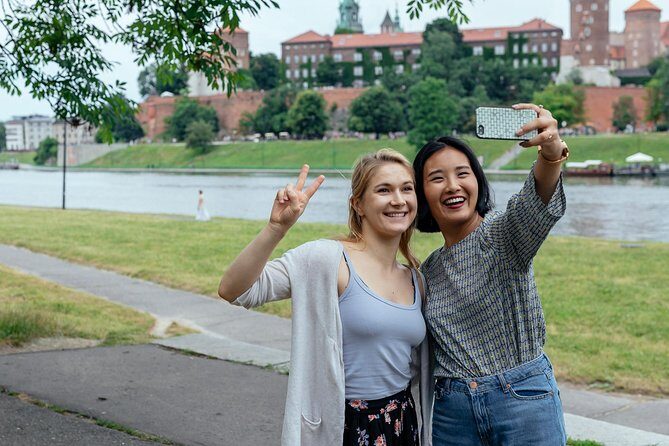
For $64, you’re buying two things: time-savings for the major sights and a guided route through the parts that usually get skipped. The best value here is the structure. You start with the city’s loudest names, then the guide quietly shifts you toward the “how locals actually move” Krakow.
The format is refreshingly simple: a local guide, transportation included, and a 3-hour window that moves at a comfortable touring rhythm. You won’t feel stuck in a line for hours, and because it’s private, you’re not trapped with a herd of strangers deciding how fast the group moves.
This is also a good first-or-second-day tour. If you’re new to Krakow, you’ll leave with a mental map. If you’ve already walked the center, the route helps you see what sits just outside the obvious tourist path.
You can also read our reviews of more tours and experiences in Krakow.
Starting at plac Jana Matejki: where the route starts and why it helps
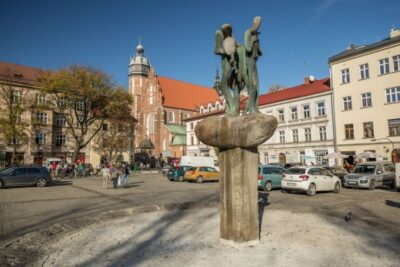
The tour meets at plac Jana Matejki 30 in Kraków. That location puts you right in the Old Town gravity well, so you don’t spend your first minutes commuting across the city just to begin.
It also ends back at the meeting point. That sounds small, but it matters. After 3 hours, you won’t be figuring out your return plan while your feet are already negotiating for mercy.
Because it’s near public transportation, you also have an easy escape hatch. If you want to extend the day after the tour ends, you’re set up to keep moving without a complicated logistics puzzle.
Obwarzanka and Lost Souls Alley: the quick tradition stops that set the tone
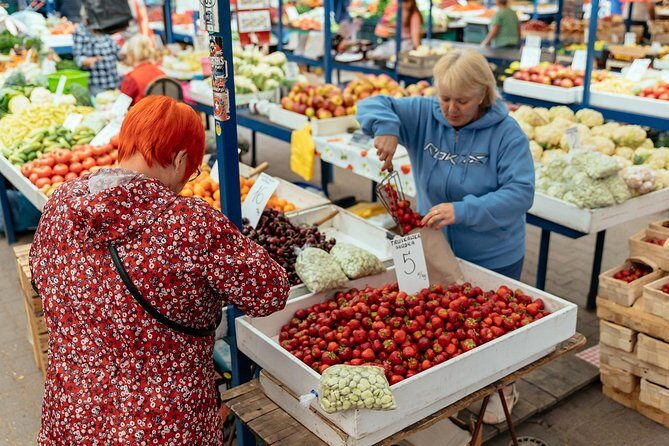
Your first stop is Zywe Muzeum Obwarzanka, with a free admission ticket. This is the kind of place that doesn’t just show you an object; it gives you the story behind Krakow’s famous ring bread (obwarzanka). It’s a smart opener because it tunes your brain to everyday local tradition instead of only royal and church dates.
Then you’re on to Lost Souls Alley. This is a short pass-by moment, but it’s exactly the kind of street detail a guide is good at. Even when you’re only walking through for a few minutes, you get a sense of the city’s older, narrower spaces—those tight passageways where Krakow feels human-scale.
These early stops matter because they set expectations. You’ll start noticing details later: how neighborhoods connect, where the city compresses, and how small streets hold big stories.
Old Town core: St. Mary’s Basilica, Cloth Hall, and the Main Square feel
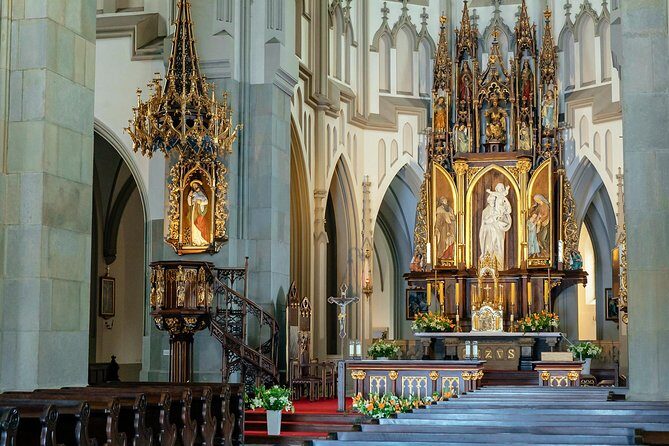
From there, you step into the Main Square area for St. Mary’s Basilica. You’ll get a rebuilt cathedral in Gothic style and a focused look at why it belongs in every Krakow plan. Expect this to be a quick orientation stop rather than a long deep-structure tour.
Next is Sukiennice, the Cloth Hall. This is one of those places where the architecture does some of the storytelling for you. It’s a UNESCO-listed icon and, historically, it was a center of international trade. That means the guide can talk about Krakow not just as a monument city, but as a crossroads city.
The time at each big landmark is about 15 minutes. That’s a benefit if your goal is coverage plus context, not a full-day museum plan. If your priority is lingering inside churches or doing photo marathons, plan to pair this tour with extra time later.
Wawel Royal Castle in short form: what you can learn fast
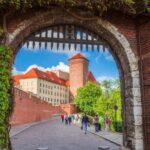
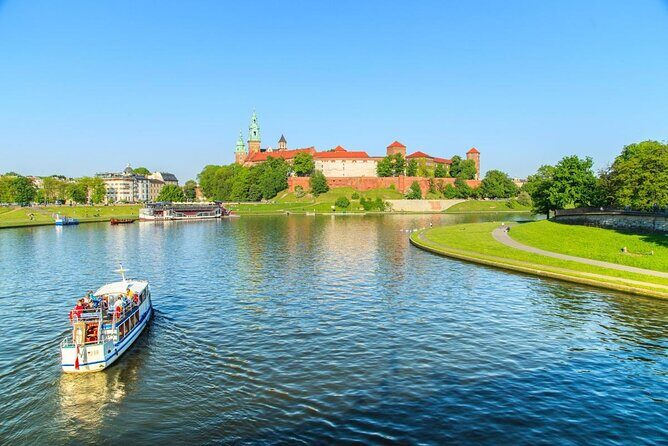
Wawel Royal Castle is the headline attraction in this route, and the tour gives it a solid chunk of attention—about 30 minutes the first time you see it. You’ll be treated to the “1000 years old” scale and the reality that it served as a royal residence for nearly five centuries.
Here’s the practical truth: 30 minutes is not enough for a complete visit if you’re planning to tour every room and museum setting. But it is enough to get the big picture—why Wawel mattered, where power sat, and how the castle shapes the entire skyline.
Also notice what a guide can do in the time you have. Instead of wandering randomly around viewpoints, you’re guided toward the angles that make sense and the facts that stick. Then you move on while the energy is still high.
The Vistula break and a surprising stop near the river
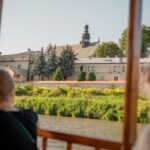
Your next shift is toward the Vistula, the river passing the city. A stop like this is more than a photo opportunity. River-adjacent pauses change how the city feels. Old Town can feel dense; the river reminds you Krakow is also about flow, travel, and trade routes.
It’s also a mental breather. Even on a short tour, squeezing in a moment of open space helps you enjoy the next streets instead of being stuck in sightseeing fatigue.
If you’re someone who likes to understand city geography, you’ll appreciate this stop. It makes the later neighborhood changes (Podgórze and Kazimierz) easier to mentally place.
The old pharmacy-bookshop connection and the Japanese Art & Technology stop
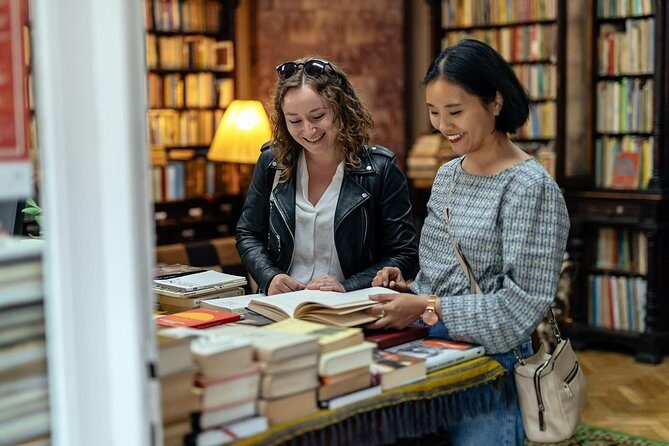
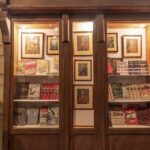
One of the more intriguing parts of the route is the area around the Museum of Japanese Art and Technology. It’s a pass-by moment, but it’s paired with an extra atmospheric detail: an old bookshop that used to function as a pharmacy in the previous century.
This kind of stop is valuable because it teaches you how to read buildings. Krakow isn’t only stones from one era. It’s layers. A shop becomes something else, a business changes hands, and the city keeps going.
Even if you don’t go inside for long, the guide’s framing helps you spot why a building might feel unusual or why a place looks like it belongs to a different time. That’s the real win on this tour: context fast enough to use again later on your own.
ICE Krakow Congress Center: the alternative bar pause
After the more traditional sights, the route shifts gears toward ICE Krakow Congress Center area. You’ll stop for about 15 minutes at an alternative bar that’s described as a hipster paradise, and you’ll take a break rather than just “walk through something.”
This is one of the smartest logistics choices on a packed route. Your feet and brain both need downtime, and a short drink stop keeps you from turning the tour into constant motion.
This is also where you get 1 local drink or tasting included. Since it’s bundled into the tour, you’re not hunting around for a place right at the moment you’re ready to crash. It keeps the pacing smooth.
Podgórze streets: art schools, Bednarski Park, and St. Joseph’s Church
The tour moves into Podgórze, and it does it with purpose. You’ll pass Krakowskie Szkoly Artystyczne, then head toward Bednarski Park. Those 10–15 minute windows are a chance to see a different side of Krakow: less postcard center, more working city.
Bednarski Park is also mentioned as somewhere you can visit later. That’s a good sign. It means the tour gives you a taste of the space without consuming your entire schedule. If you enjoy gardens and quiet stretches, you’ll know where to return.
The end of the Podgórze section is the Church of St. Joseph and Podgórski Square. The guide ties it to Podgórze being a heart of the city until it became part of Cracow in 1915. That one fact helps the neighborhood click. Suddenly it’s not just “some area you passed.” It’s a historical story about annexation and identity.
Kazimierz’s Corpus Christi Basilica and the Forum Przestrzenie stop
Then you move into Kazimierz, one of Krakow’s most famous districts for its atmosphere. You’ll visit Corpus Christi Basilica, a Gothic church founded by King Casimir III the Great in 1335. That specific date is the kind of anchor a guide should give you, because it helps you remember what you saw.
After that, the tour takes you to Forum Przestrzenie. This is a laid-back venue with a raw industrial feel, and it serves burgers with live music. Again, this is not about a museum lecture. It’s about modern Krakow culture in a physical space you can actually feel.
This pairing works well because you’re not only consuming history. You’re also seeing what people do now, and how food and music fit into the city’s daily rhythm.
How the included drink and extra food moments can shape your day
The experience includes 1 local drink or tasting. That’s a real value add, because it covers the moment you’re likely to want to sit down and restart your energy level.
Some guides also go beyond the standard tasting and point out food spots worth your time. For example, Janina has been praised for stopping at a small pierogi restaurant that people felt was a highlight on its own. You can treat that as reassurance: the guide isn’t only reciting facts, they’re paying attention to how to feed you while you’re out.
If you’re picky about food, you can still manage this. Ask what’s included, take the tasting, and decide on your own later whether you want a full meal in Kazimierz or the Old Town.
Why private guides matter more than you think in Krakow
Krakow rewards attention. The difference between a quick walk and a meaningful walk is often one thing: a guide who knows what to point out and when to explain it.
Tomasz is noted for taking people around Old Town and explaining details in a way that met expectations and even went past them. Maya is also mentioned for a long walking experience split into sessions, with a flexible, encouraging vibe. That points to a theme: the best guides here don’t just follow a script. They manage the energy and the questions.
So your job as a traveler is easy: bring your curiosity. Ask why a street is called what it’s called. Ask how a neighborhood changed. If you want one or two photo spots, ask for them early. Private format means you’re not waiting for the group to catch up.
Price and value: what $64 really buys on this route
$64 for roughly 3 hours is a solid deal when you factor in what’s included. You’re not only paying for a guide and a walking route. Transportation is included, and you’re also getting a local drink or tasting.
On top of that, many stops list free admission for this experience. When a tour covers the practical entry costs, you end up spending less out-of-pocket and you can keep your budget focused on meals and optional add-ons.
If your plan is: first-day Krakow coverage plus a few neighborhoods, this price makes sense. If your plan is: only to do interiors and stand around in museums for hours, then this kind of route might feel short. It’s built for context and direction, not for day-long ticket collecting.
Who should book this tour
This private tour is a good match if you:
- Want Krakow highlights without feeling trapped in a big group
- Like offbeat street details, not just major landmarks
- Prefer a guide to explain the why behind what you see
- Have limited time and want a route that reaches beyond the obvious center
It’s also a nice choice if you’re traveling solo or as a couple, because you get the guide attention without paying for a large group situation.
If you’re someone who needs long museum time, treat this as a first orientation plan and then add your own deeper visits afterward. The tour gives you names, directions, and story anchors so your extra time is better spent.
Should you book this private Krakow highlights and lesser-seen districts tour?
I’d book it if you want a balanced Krakow day: castles and churches plus the quieter passages and modern neighborhoods that make the city feel real. The private format, the included drink, and the fact that many stops are quick and ticket-light add up to a tour that respects your time.
Skip it only if your top priority is deep interior time at each major attraction or if you know you’ll need very long pauses. This route moves. It’s designed for smart coverage with a guide’s help, not for an all-day museum marathon.
If you do book, do one simple thing: wear comfortable shoes and come ready with questions. The guide’s job is to connect the dots. Yours is to ask for the dots you care about most.
FAQ
How long is the Krakow private tour?
It lasts about 3 hours.
Is this tour private or shared with other people?
It’s private. Only you and your local guide participate.
What’s included in the price?
The tour includes a local guide, transportation, and 1 local drink or tasting.
What are the tour’s start and end points?
It starts at plac Jana Matejki 30, 31-156 Kraków, Poland and ends back at the meeting point.
Is hotel pickup included?
No, hotel pick-up and drop-off are not included.
Do I need to bring a ticket or can I use a mobile ticket?
A mobile ticket is used.
What kind of walking is involved?
The tour is suitable for travelers with moderate physical fitness level.
Can I cancel for a full refund?
Yes. You can cancel up to 24 hours in advance for a full refund.