REVIEW · KRAKOW
Krakow: Jewish Ghetto Walking Tour
Book on GetYourGuide →Operated by excursions.city · Bookable on GetYourGuide
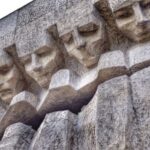
That wall still does something to you.
This Kraków Jewish Ghetto walking tour turns a quiet neighborhood into a clear WWII story you can follow block by block. I love two things most: the way the guide makes the route make sense, and the mix of memorial stops with human-scale stories, including the Under the Eagle Pharmacy account tied to Tadeusz Pankiewicz. One thing to consider is the topic is heavy, and the walk is in all weather, so dress for cold or rain.
Expect a licensed guide leading you through Podgórze, where the ghetto was formed, then toward the few surviving pieces of the boundary wall. You’ll stop at Ghetto Heroes Square with its chair memorial, and you’ll hear how daily life, deportations, and survival unfolded under Nazi occupation.
Guides matter a lot on this kind of tour, and the vibe here is consistently respectful. I’ve heard French/English/other-language groups can be led well, and I’ve also seen mentions of guides such as Olga, Joanna, Aga, Ewa, Helen, and Phil being both warm and careful with the subject, with some tours using headsets so you can hear better in the street noise. If you want something light and breezy, this is not it.
In This Review
- Key things you should notice on this tour
- Walking the Podgórze streets where the ghetto began
- The ghetto wall remains: what it means to see the boundary
- Ghetto Heroes Square and the chair memorial that does the talking
- Under the Eagle Pharmacy: bravery at street level
- How the guide ties everything together in one hour
- Price and value: what you get for about $11
- Languages, group size, and where meeting points can vary
- Weather and comfort: plan like a local
- Who should book this Jewish Ghetto walk
- Should you book Kraków: Jewish Ghetto Walking Tour?
- FAQ
- Where does the tour start?
- How long is the tour?
- How much does it cost?
- What will I see during the walk?
- Is food included?
- Which languages are available?
- Is the tour offered in multiple languages at once?
- Does the tour run in bad weather?
- Can I join if I arrive late?
- Is there an option for a private group?
Key things you should notice on this tour
- Podgórze as the starting point: you begin where the ghetto took shape, not just at a museum entrance.
- Original wall remains: you see what is left of the barrier that enclosed over 15,000 people in a few city blocks.
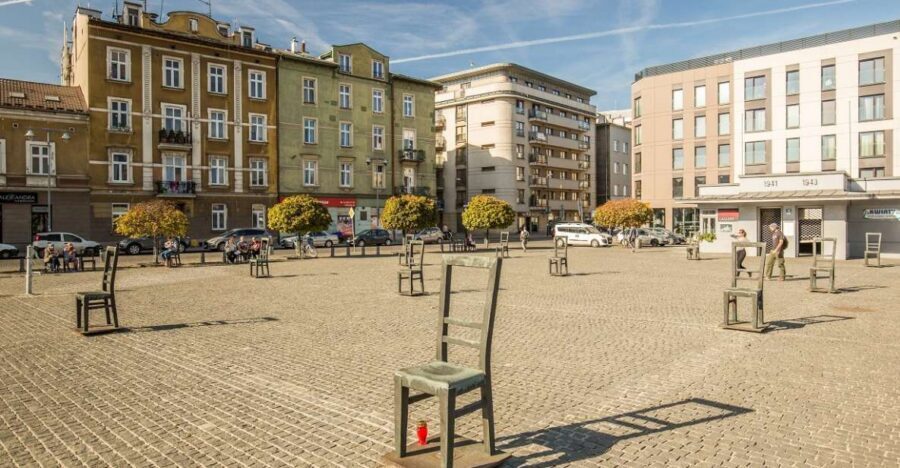
- Ghetto Heroes Square and empty chairs: the memorial uses dozens of metal chairs to symbolize lives lost.
- Under the Eagle Pharmacy story: you hear about help offered by Tadeusz Pankiewicz and his staff.
- Street-layout context: the guide connects what you see on the ground with what life meant behind the walls.
Walking the Podgórze streets where the ghetto began
Your tour starts in Podgórze, the district that became the site of the Kraków Ghetto during World War II. The point is not to stare at plaques and move on. It’s to learn how the city looked when people were trapped inside it, and how fear and hope could exist side by side in the same cramped streets.
As you walk, the guide helps you picture daily life in the ghetto: what kinds of hardship people faced, what routines looked like, and what it meant to survive day to day. In reviews, guides are praised for making the story feel personal without turning it into drama, and that matters here. WWII history is easy to treat like a worksheet. This tour tries to help you treat it like lived reality.
The pace is built for a one-hour format. People who did this right after other Kraków sites often say it works well as a focused follow-up, because it fills in what a “ghetto experience” meant day to day, not only the end result.
You can also read our reviews of more walking tours in Krakow
The ghetto wall remains: what it means to see the boundary
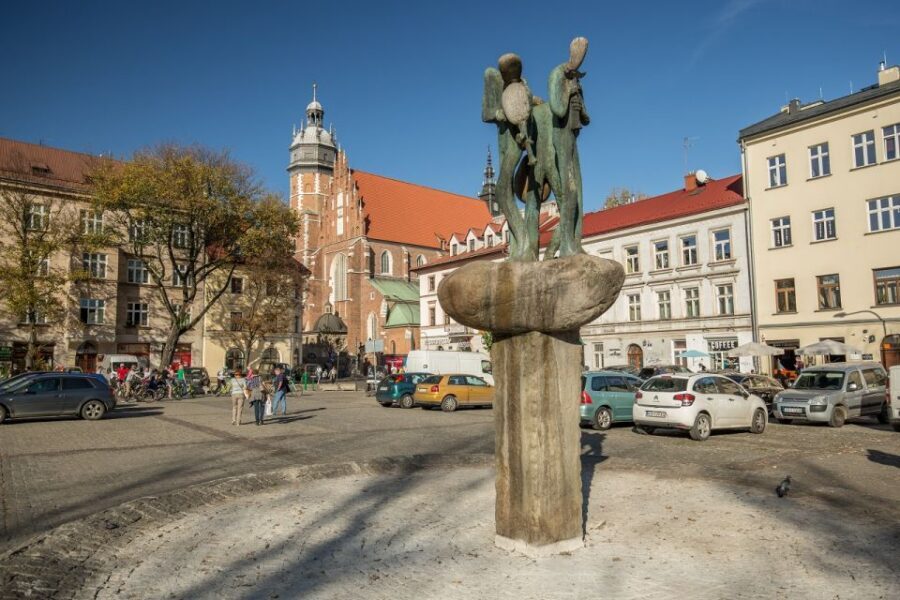
One of the most important stops is the remains of the original Ghetto Wall. It’s one of the few surviving fragments that once enclosed more than 15,000 people within a small area. Seeing even partial wall sections changes the whole story. It gives you scale. It forces your brain to stop imagining and start measuring.
What I like about this part is the way the guide uses the wall not as a scary backdrop, but as a teaching tool. You learn how the wall shaped movement, access to help, daily risks, and the constant sense of confinement. It also makes later stops hit harder, because the memorial objects in Ghetto Heroes Square feel tied to a real physical perimeter.
A practical note: this is a walking tour, so you’ll want comfortable shoes. Some reviews also describe the terrain as mostly flat and not a huge distance, but your exact route and pace depend on your guide and the group.
Ghetto Heroes Square and the chair memorial that does the talking
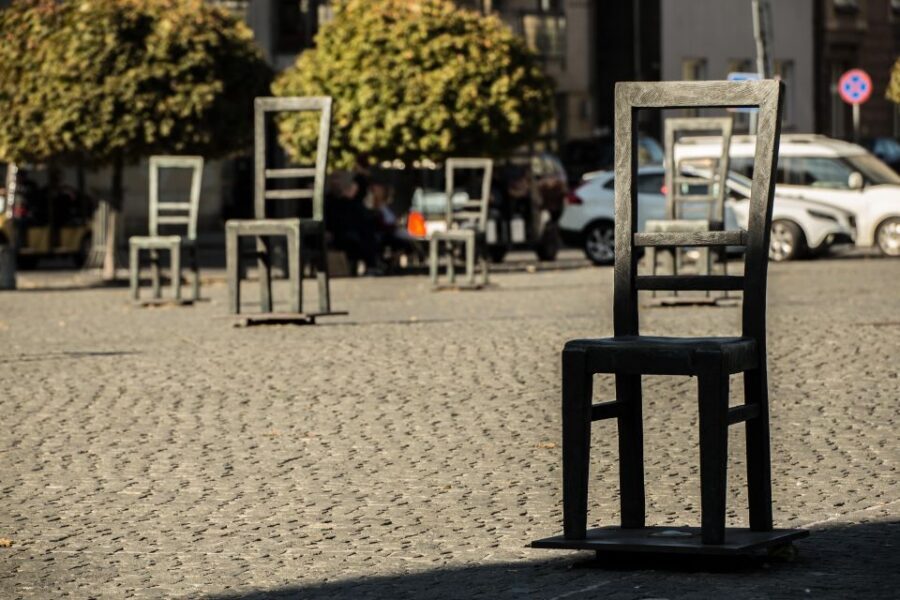
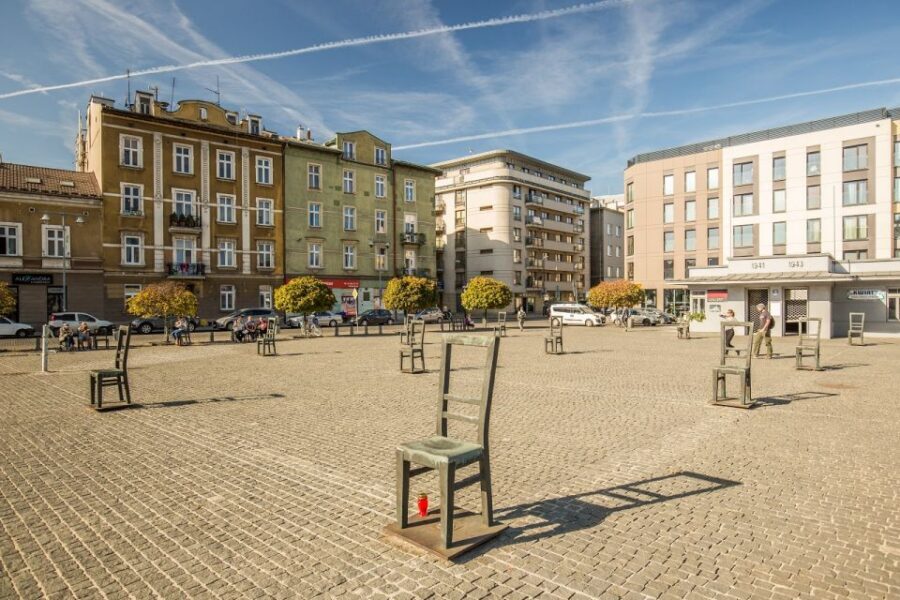
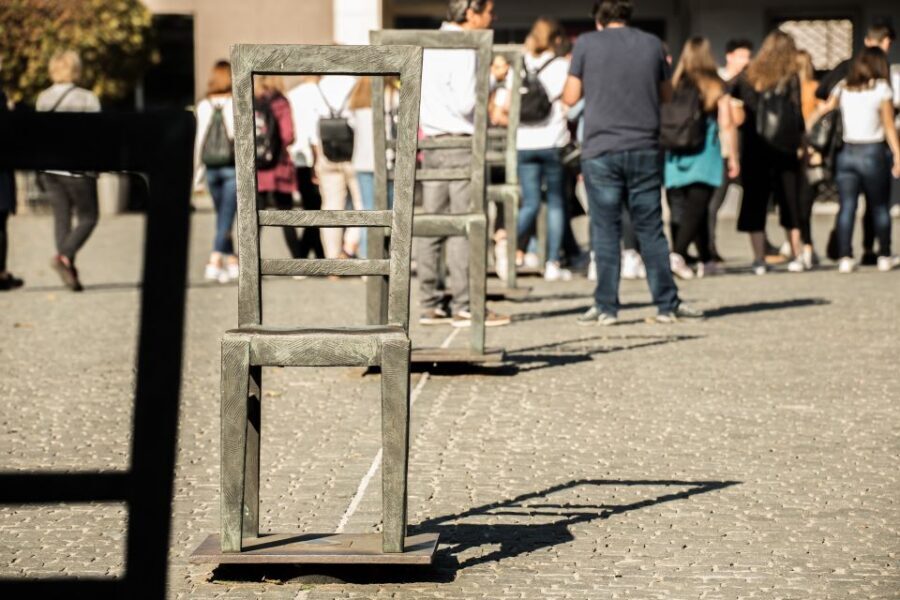
Then you reach Ghetto Heroes Square, described as the heart of the ghetto. Historically, it was a gathering place connected to deportations to concentration camps. Today, it functions as a memorial that doesn’t need extra explanation.
The centerpiece is the Chair Memorial: dozens of empty metal chairs, each one representing lives lost during the Holocaust. You don’t get a neat script-and-smile photo moment here. Instead, you get a moment to stand still and absorb what absence looks like when the symbol is built from objects you’d recognize in everyday life.
I appreciate that this stop balances emotion with understanding. The guide doesn’t treat the square like a stand-alone sculpture park. The story keeps reconnecting the chairs to what people faced: fear, separation, and the reality that “ordinary streets” could become funnels to catastrophe.
Under the Eagle Pharmacy: bravery at street level
Across from the square is the historic Under the Eagle Pharmacy, linked to the story of help offered by Tadeusz Pankiewicz and his staff. This part of the tour is especially compelling because it adds an essential counterweight to the worst events you’ll hear.
You’ll learn how medicines and shelter were provided through extraordinary courage. It’s not just a heroic legend—it’s a reminder that people made choices even when the stakes were deadly. In multiple reviews, guides are praised for telling these stories with sensitivity and compassion, and for answering questions without rushing.
One thing to keep in mind: the pharmacy may not always be open for viewing inside. A review noted that on at least one visit, it was closed, so guests couldn’t see as much of the museum space. Even if you can’t go inside, the narrative and memorial context still matter, and the guide should be able to keep the focus on what happened there.
How the guide ties everything together in one hour
This is a 1-hour walking tour, which means the guide has to be sharp: start with context, hit key sites, then make sense of the route while keeping the pace humane. Many reviews mention a pace that feels just right, and several people highlight how guides used headsets/ear mics so everyone could hear.
You’ll also learn how the tour connects the ghetto experience to broader realities of Nazi occupation in Poland, including how survival and cruelty played out over time. Some guides are specifically praised for linking past events with the present, urging listeners to think about what learning from history should change in everyday life. I find that approach works best when it stays grounded, and the guides here seem to do that.
Also, you’re not just hearing dates. The tour’s structure is built around places that still show the bones of the story: boundary remnants, memorial square design, and the pharmacy site.
Price and value: what you get for about $11
At $11 per person for an expert-guided, emotionally intense 1-hour route, this is strong value—especially in Kraków, where many history experiences cost far more. You’re paying for three things: access to a licensed guide, a tight route through key WWII ghetto sites, and the context that turns street corners into meaning.
You’re not paying for meals. Food and drink aren’t included, so plan to eat before or after. If you’re stacking this day with Schindler’s Factory and other WWII stops, it’s usually smart to treat this as your “daily life and survival” chapter that complements the larger, darker timeline elsewhere.
If you’re wondering whether it’s worth doing even if you’ve already read about Auschwitz, the practical answer is yes. This tour focuses on what life looked like inside the ghetto—daily hardship, deportations, and endurance—so it fills a different gap than the big-name camp visits.
Languages, group size, and where meeting points can vary
The tour runs with live guides in one language per group, so choose your preferred language when booking. Available languages include French, German, Italian, English, Spanish, Russian, Portuguese, Swedish, Slovak.
Meeting points may vary depending on the option booked, so you’ll want to double-check the exact location tied to your reservation. In some departures, people report meeting near Schindler’s Factory, which can be helpful because it gives you instant continuity between Kraków’s WWII storylines.
If you prefer a more private pace, there’s a private group available. That can be a good fit if you want more time for questions or if you’re traveling with friends or family who want to stay together.
Weather and comfort: plan like a local
This tour goes ahead in all weather, rain or shine. That’s great because it means you can count on it when your schedule is tight. It also means you should dress like you expect to stand and walk outside for an hour.
One review mentioned waiting in very cold conditions and being invited to sit inside briefly before starting, which tells me the operators understand how uncomfortable winter can be. Still, don’t rely on that. Bring warm layers, and don’t forget gloves and a hat if the forecast is ugly.
Who should book this Jewish Ghetto walk
I’d book this if you want a concentrated, guided way to understand the ghetto experience in Kraków without spending an entire day in transit between sites. It’s a good match for history lovers who want street-level context: how buildings, boundaries, and memorial spaces relate to the lived experience.
It’s also a good choice if you’ve already done larger WWII sites and want to round out your understanding with a focus on daily life and survival. People who did Schindler’s Factory first often say the sequence works well, because it gives you the broader WWII backdrop before you focus on ghetto life.
This may not be ideal if you’re looking for a light afternoon or if you want lots of time inside museums. The Under the Eagle Pharmacy may not always be open inside, and the whole format is designed as a short walk.
Should you book Kraków: Jewish Ghetto Walking Tour?
I think it’s a yes for most visitors to Kraków who care about WWII history and want a guided, respectful route that doesn’t waste your time. The price is low for what you get, and the stops are exactly the kind that matter: wall remains, Ghetto Heroes Square, and the Under the Eagle Pharmacy story tied to Tadeusz Pankiewicz.
Book it if you want clarity, a steady pace, and a guide who treats the subject with care—people often praise guides like Olga, Joanna, Aga, Ewa, Helen, and Phil for being informative and compassionate in the way they tell the story. Skip it only if you’re not emotionally ready for heavy history, or if you’re traveling with mobility issues that make walking in cold or rain difficult.
If you go, arrive on time. The tour is short, so you’ll feel every minute.
FAQ
Where does the tour start?
The meeting point may vary depending on the option booked, but the tour begins in Podgórze, the district that became the ghetto area during WWII.
How long is the tour?
The duration is 1 hour.
How much does it cost?
The price is $11 per person.
What will I see during the walk?
You’ll visit the remains of the Ghetto Wall, Ghetto Heroes Square with the Chair Memorial, and the area connected to Under the Eagle Pharmacy. You’ll also learn about daily life, deportations, and survival.
Is food included?
No. Food and drink aren’t included.
Which languages are available?
The live guide is available in French, German, Italian, English, Spanish, Russian, Portuguese, Swedish, Slovak.
Is the tour offered in multiple languages at once?
Group tours are only in one language, and you choose your preferred language when booking.
Does the tour run in bad weather?
Yes. The tour goes ahead in all weather, rain or shine.
Can I join if I arrive late?
Latecomers may not be able to join once the group has departed, and tickets cannot be refunded.
Is there an option for a private group?
Yes. Private group options are available.