REVIEW · KRAKOW
Krakow: Frédéric Chopin Classical Music Candlelight Concert
Book on GetYourGuide →Operated by Discover Cracow · Bookable on GetYourGuide
Krakow gets very poetic after dark. This Chopin candlelight concert brings Fryderyk Chopin to life in a 17th-century hall inside the Bernardine Monastery, a place that’s usually closed to the public. I love the close-up feel of hearing piano details in such an intimate setting, and I also like the smart structure: a short intro to Chopin’s life and works, then the music in two focused halves.
One thing to think about first: the concert is about an hour, and seating is not assigned—so if you want the best view of the stage, arrive early and be ready to settle in.
Rare access to a normally closed monastery hall
A short Chopin intro, then two performance parts
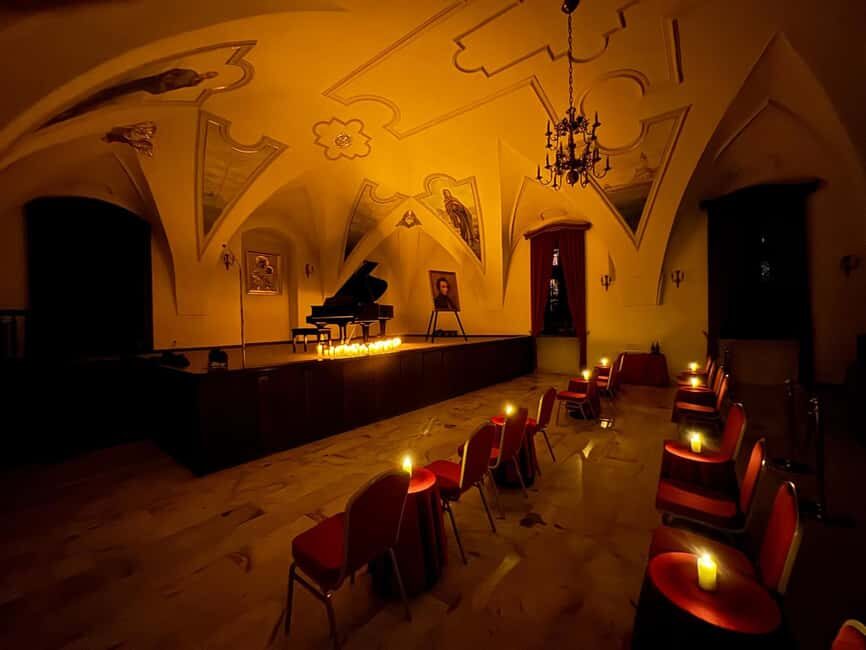
Candlelight atmosphere with reflective surfaces
Classic Chopin program with big favorites and quieter gems
Prosecco included for a simple, easy evening add-on
In This Review
- What Makes This Chopin Candlelight Concert Feel Special in Krakow
- Inside the Bernardine Monastery Hall: The Venue You Can’t Just Visit
- The Concert Flow: Welcome, Chopin Context, Then Two Performance Blocks
- Arrival and seating (no assigned seats)
- Part one: the first set of Chopin pieces
- Intermission (short break)
- Part two: deeper emotional range and technical precision
- The Chopin Program: What You’ll Hear (and Why These Pieces Work)
- The Pianists and the Quality Factor: Why the Reviews Point One Direction
- The Drink and the Comfort Details That Make It Easy to Enjoy
- Who This Concert Is Best For (and Who Should Skip It)
- How to Plan Your Evening Around It in Krakow
- Value for Money: Is $20 a Smart Spend Here?
- Should You Book the Krakow Chopin Candlelight Concert?
- FAQ
- How long is the Chopin candlelight concert?
- Where does the concert take place?
- What’s included in the ticket price?
- Are seats assigned?
- Is this concert suitable for children?
- Is free cancellation available?
What Makes This Chopin Candlelight Concert Feel Special in Krakow
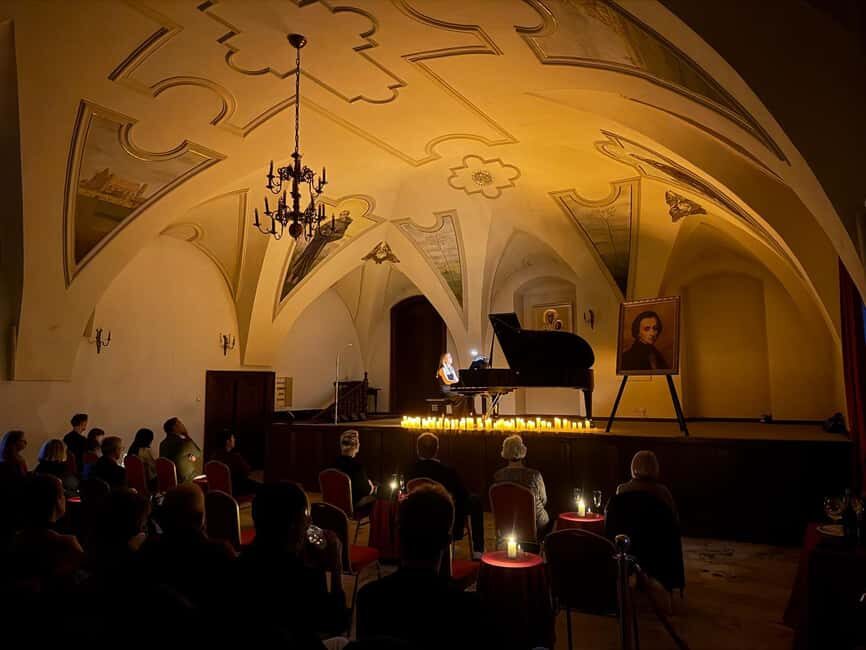
This isn’t the kind of concert you treat like background music. It’s the kind you pay attention to. In Krakow’s Old Town, the Bernardine Monastery setting turns Chopin into a more personal experience—less like a formal recital in a big theater, more like a night of art right where the room itself helps tell the story.
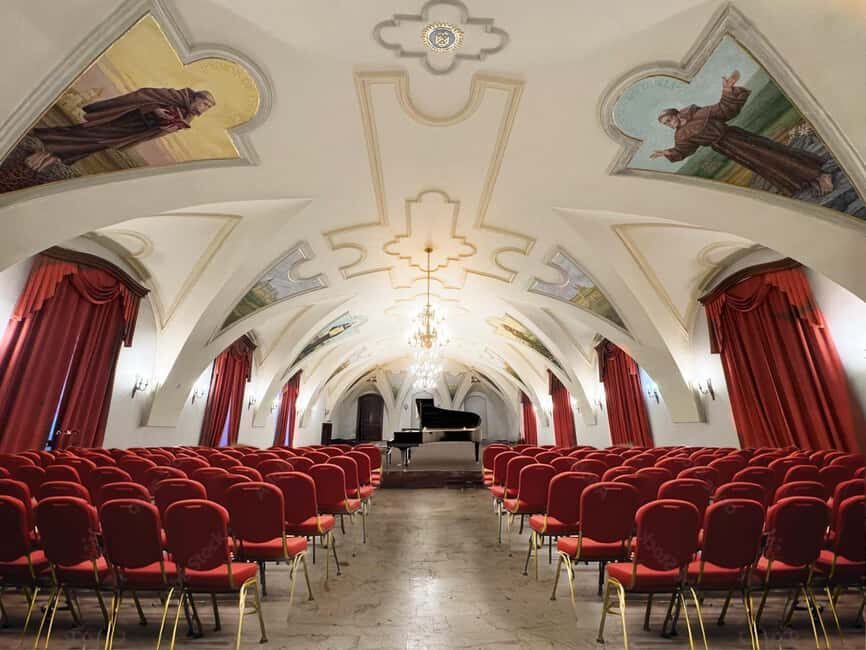
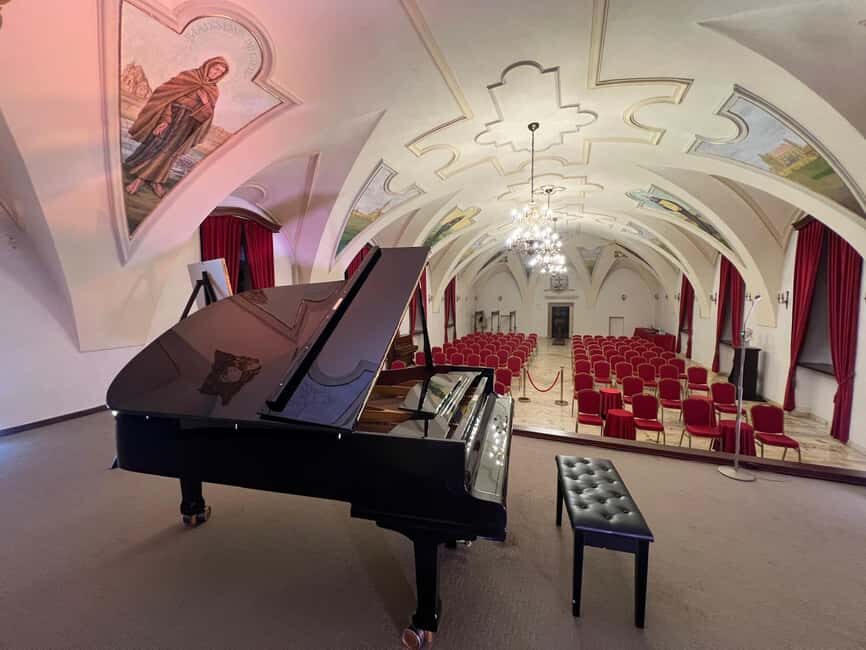
The venue matters. This 17th-century hall sits at the foot of Wawel Castle, and the concert setup leans into mood: candles and reflective surfaces create that soft glow that makes the whole evening feel cohesive. You’re not just watching a pianist; you’re sitting in a space designed to heighten what you hear.
I also like the event pacing. You start with a warm welcome and an introduction to Chopin’s life and works. That’s useful if Chopin is new to you, and it’s still enjoyable if you already have favorites—because it gives the music sharper context before the first notes land.
The final reason I think this works: the pianists are presented as award-winning and connected to prestigious international competitions. In plain terms, you’re not gambling on a random keyboard player. You’re showing up for high-level piano work, in a room that makes it feel even more immediate.
Inside the Bernardine Monastery Hall: The Venue You Can’t Just Visit
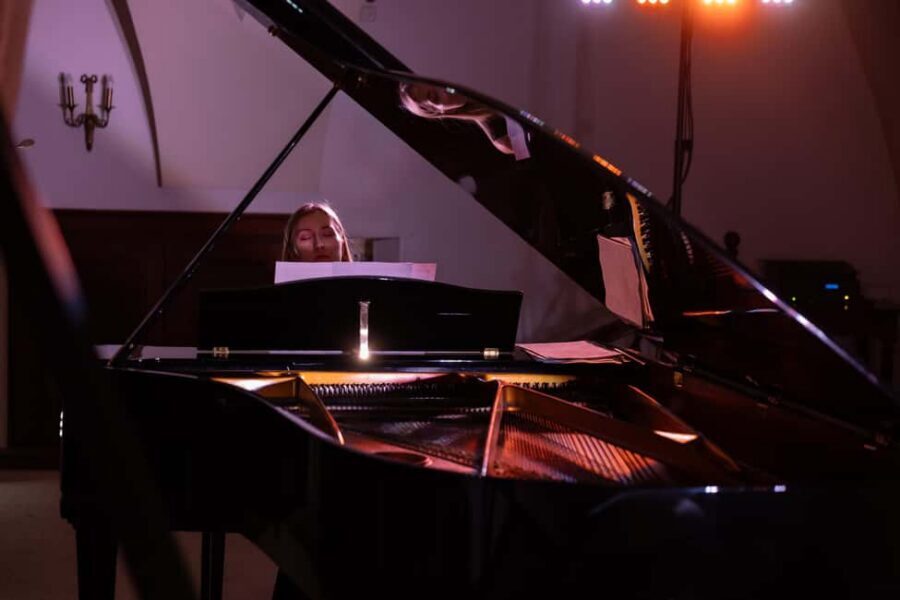
The Bernardine Monastery is the big draw. The hall used for this concert is normally closed to visitors, so your ticket includes access to a setting that most people in Krakow will never see from the inside.
Here’s what that changes for you as a spectator:
- You feel like you’re in on something. Not in a secret-agent way—more like a special cultural access moment.
- The room supports the sound in a way that suits a piano recital. Chopin’s phrasing and quiet textures make sense in a smaller, focused space.
- Candlelight gives a visual rhythm. Even if you’re concentrating purely on sound, the mood keeps you present.
The key location detail is that you’ll be near Wawel Castle, which helps you feel grounded in Krakow’s geography. You’re not heading to some distant suburb and hoping you found the right building. You’re in the Old Town area where the city’s historic core is right around you.
You can also read our reviews of more tours and experiences in Krakow

The Concert Flow: Welcome, Chopin Context, Then Two Performance Blocks
You should expect a straightforward rhythm designed for attention. Even though your total time is about 1 hour, it’s organized so the music doesn’t feel rushed and the intro doesn’t drag.
Arrival and seating (no assigned seats)
Plan to arrive about 15 minutes early. Seats aren’t assigned, so this is your only real chance to choose where you sit. If you care about sightlines—especially in a candlelit hall—arriving early pays off.
Also note a practical point from the experience format: this is not described as a standard theater with ushers ushering you to numbered seats. Think more like settling in for a close-up recital in a historic room.
Part one: the first set of Chopin pieces
The evening starts with a host who welcomes you and offers an introduction to Chopin’s life and works. This is the moment where you learn what you’re about to hear—not every detail, just enough to guide your listening.
Then you get the pianist’s first performance. The program includes pieces that can swing from elegant to emotionally charged, and Part One sets that range early.
Intermission (short break)
There’s a short intermission. Even if it’s brief, it gives you a minute to reset—especially since candlelight events can make you forget time. Use it to look around the hall and take in the atmosphere before the second half.



Part two: deeper emotional range and technical precision
The second part continues with the same focus on expression and technique. Chopin is all about nuance—timing, dynamics, and how a phrase “breathes.” A good pianist doesn’t just play the notes; they shape them so you feel the lines.
A small heads-up based on the program length: the event is listed as 1 hour, and a few people noted the timing felt shorter than they expected. So if you’re planning a tight evening schedule, give yourself some buffer.
The Chopin Program: What You’ll Hear (and Why These Pieces Work)

You’ll get a themed mix of well-known favorites and pieces that reveal Chopin’s quieter side. The exact repertoire and artist can change, but this list is a strong indication of the sound-world you’ll experience:
- Polonaise in A Major, Op. 40 No. 1
This one tends to sound grand and formal, like a confident walk-in piece. In a historic hall, it lands with extra weight.
- Fantaisie-Impromptu in C-sharp Minor, Op. 66
Fast, dramatic, and full of controlled intensity. It’s the kind of piece that shows a pianist’s precision without losing emotion.
- Waltz in E-flat Major (Grande Valse Brillante)
Elegant and flowing, great for hearing how the pianist connects notes across phrases.
- Waltz in B Minor, Op. 64 No. 2
Moodier. Expect more tension and a slightly darker color.
- Waltz in D-flat Major, Op. 64 No. 1 (Minute Waltz)
Quick and sparkling, but still musical—not just speed for speed’s sake.
- Nocturne in C-sharp Minor, No. 20 (posthumous)
A late-night feeling. This is where many people start noticing the “why” behind Chopin—how he makes silence and softness feel meaningful.
- Prelude in E Minor, Op. 28 No. 4
Short, but intense. The best performances make it feel like a complete story.
- Prelude in D-flat Major, Op. 28 No. 15 (Raindrop)
That famous repetitive texture becomes a kind of pulse, and you’ll likely hear it more clearly in an intimate hall.
- Prelude in C Minor, Op. 28 No. 20
Dramatic and weighty—often a strong closer in recital-style programming.
If you’re new to Chopin, this selection is smart. You’re not thrown into only slow, complex pieces. You’ll get recognizable forms—polonaise, waltz, nocturne, prelude—so you can quickly follow what changes between pieces: rhythm, mood, and tempo.
If you’re a fan, this list also makes sense because it mixes big showpieces with moments that highlight phrasing and touch.
The Pianists and the Quality Factor: Why the Reviews Point One Direction
The event is presented as featuring award-winning pianists, and the feedback you see around the performance quality is consistent: the piano work gets praised as outstanding, passionate, and high caliber.
What that means for your experience:
- You’re likely to hear crisp articulation, not muddy sound.
- Chopin’s softer passages should still carry emotion, not vanish.
- The interpretation should feel thoughtful—especially in pieces like nocturnes and preludes where subtle control is everything.
You’ll also notice a theme in the praise: people don’t just like the pianist; they like how the pianist understands Chopin. That distinction matters. A strong Chopin performance feels like it knows where the music is heading, even when it’s quiet.
In other words, you’re paying for a real recital standard, not a casual sing-along of classical themes.
The Drink and the Comfort Details That Make It Easy to Enjoy
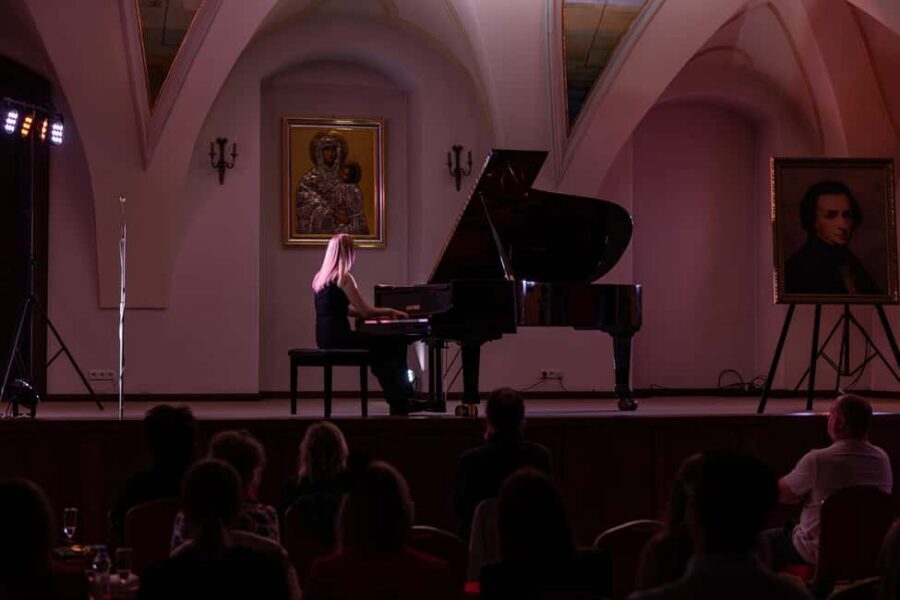
Prosecco is included. That’s a simple perk, and it fits the candlelight concept well—no complicated drink program, just a small upgrade to your evening.
Just keep your expectations realistic. One or two people noted drink confusion (like not getting what they thought they’d receive). If that’s a dealbreaker for you, the fix is simple: be polite and ask early if anything isn’t clear, before you settle in for the first piece.
Also, this is designed for listening, so don’t treat it like a casual party. The venue rules make that clear: no baby strollers, no vaping, no alcohol or drugs. Nudity isn’t allowed either.
And for comfort and safety, there are clear suitability limits:
- Not suitable for children under 10
- Not suitable for wheelchair users
- Not suitable for people with epilepsy
- Not suitable for people over 309 lbs / 140 kg
- Not suitable for hearing-impaired people
If any of those apply to you, check alternatives in Krakow—don’t force it.
Who This Concert Is Best For (and Who Should Skip It)
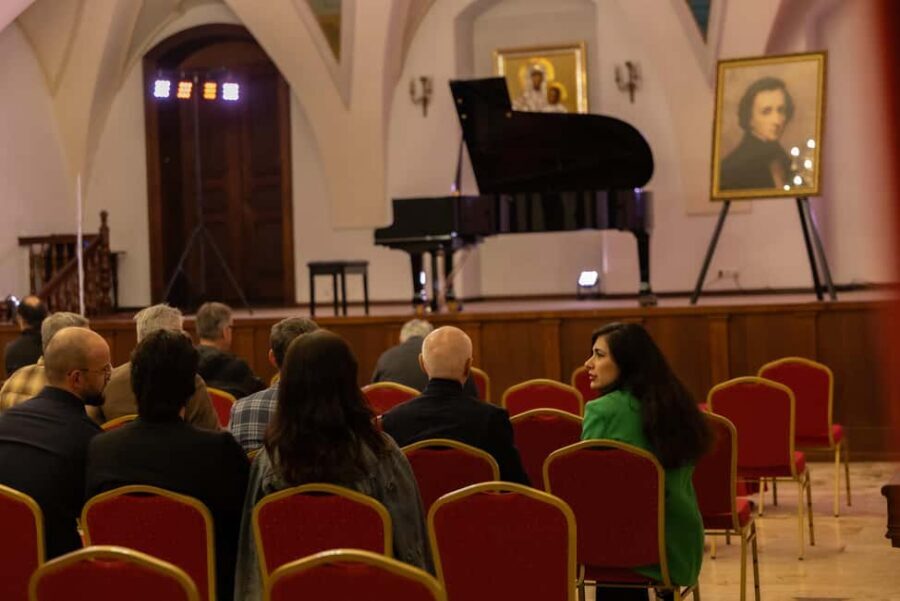
This is a great pick if you want a high-quality cultural experience that feels personal and not overly long. It’s also a good choice if you’re balancing Krakow sightseeing with something that’s “worth an evening” without demanding hours of your time.
You’ll likely enjoy this most if you:
- Love classical music and want a recital in a truly special room
- Want Chopin in a format that includes a brief life-and-works introduction
- Appreciate atmosphere—candles, historic architecture, and a smaller audience setup
- Prefer a short event that fits into a busy Krakow itinerary
I’d suggest skipping it if you:
- Need wheelchair access (the venue is not suitable)
- Want a longer concert experience (it’s listed at about an hour)
- Rely heavily on hearing support tools (the event isn’t suitable for hearing-impaired people, as stated)
How to Plan Your Evening Around It in Krakow
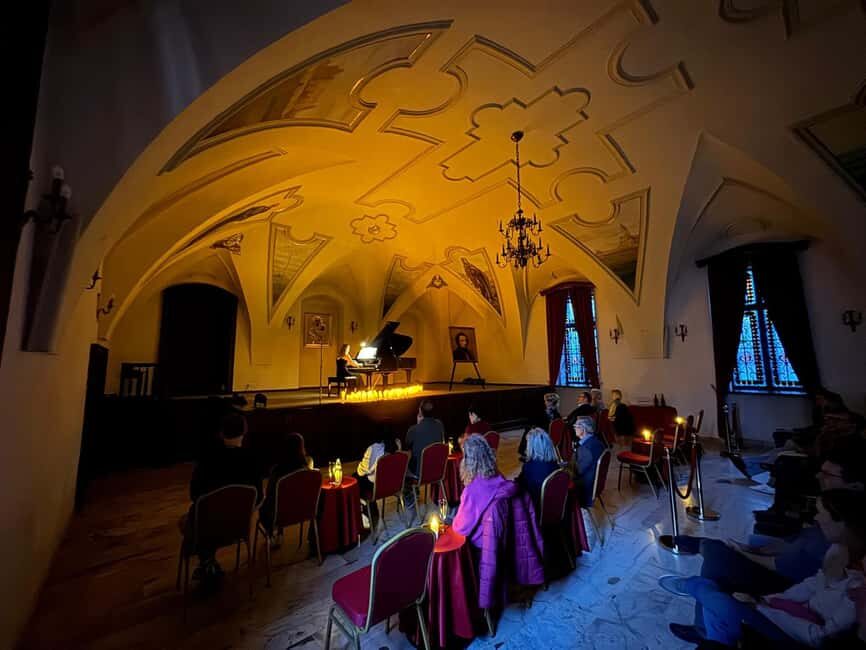
This is one of those activities that works best when you give it space. Arrive early, take a moment to breathe in the monastery hall, and then let the music do its job.
Because the venue is at the foot of Wawel Castle, you can pair it with a pre-concert walk around Krakow’s Old Town streets. Keep your schedule flexible enough that you don’t feel rushed while you’re finding the meeting point.
Also, because seating isn’t assigned, treat that 15-minute early arrival as part of the experience. You’re not just being on time—you’re choosing your view.
If you’re thinking about food, remember that food isn’t included. Plan a meal either before or after, not in the middle of the concert.
Value for Money: Is $20 a Smart Spend Here?
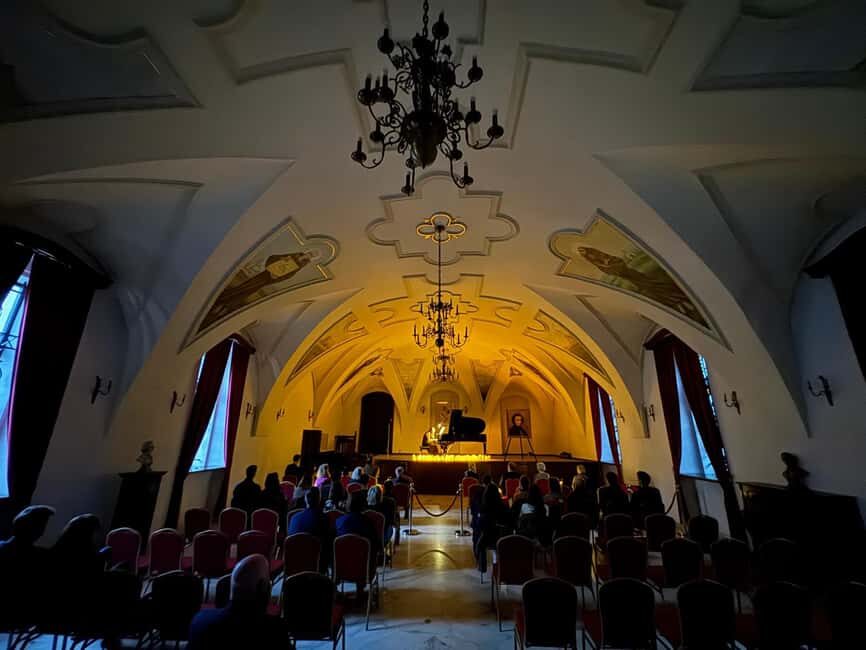
At $20 per person, the value is mostly about what’s included and how rare the setting is.
You’re getting:
- A live classical concert
- Access to a beautiful venue that’s normally closed to the public
- Prosecco
- A short welcome and Chopin context to make the music easier to follow
That combination is hard to replicate. In many cities, you’d pay similar amounts for a standard recital in a public venue where you’re just buying the ticket to sit in a seat. Here, you’re buying access to a specific historic setting—at Wawel Castle’s doorstep—and that changes the “why” of the evening.
So if you like music and you also like authentic access to places, this price feels fair. If you only want a casual background listen, you might not get as much value out of the atmosphere and the program focus.
Should You Book the Krakow Chopin Candlelight Concert?
I think you should book this if you want a memorable, short classical evening in a rare setting. The biggest reasons are simple: the venue is normally closed to visitors, the atmosphere is built for listening, and the program is classic Chopin in a way that’s accessible without watering it down.
Book it if:
- You’re in Krakow for a few days and want one cultural night that doesn’t eat your whole schedule
- You care about quality piano performance
- You like candlelight-style events and historic interiors
Skip or rethink it if:
- You need wheelchair access or hearing support
- You dislike concerts that run about an hour
- You prefer big venues with assigned seating
If you fit the audience profile, this is one of those Krakow experiences that gives you more than just a concert—it gives you a place, a mood, and a focused hour with Chopin that you’ll remember.
FAQ
How long is the Chopin candlelight concert?
The concert lasts about 1 hour (starting times vary, so check availability).
Where does the concert take place?
It takes place in the Bernardine Monastery, at the foot of Wawel Castle, in a historic 17th-century hall.
What’s included in the ticket price?
Your ticket includes the concert, access to the venue (normally closed to visitors), and prosecco.
Are seats assigned?
No. Seats are not assigned, so you should arrive about 15 minutes early if you want a good spot.
Is this concert suitable for children?
It is not suitable for children under 10.
Is free cancellation available?
Yes, you can cancel up to 24 hours in advance for a full refund.