REVIEW · KRAKOW
Krakow: City Sightseeing Tour by Shared or Private Golf Cart
Book on GetYourGuide →Operated by AiWTravel Aneta Czopek · Bookable on GetYourGuide
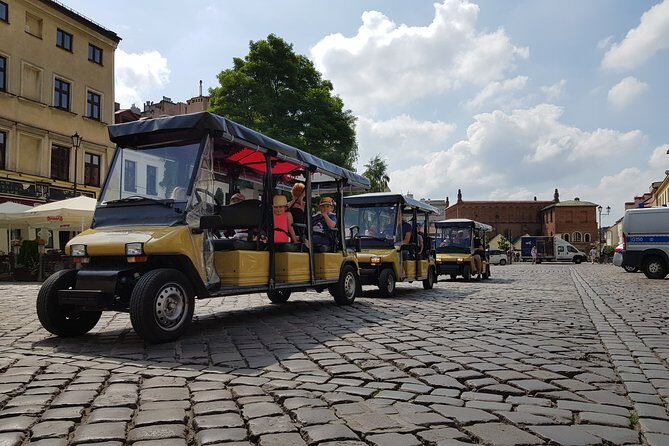
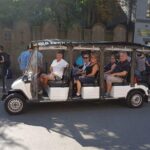
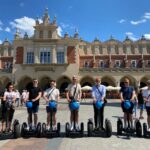
Krakow in 90 minutes sounds impossible. And yet the electric golf cart format makes it feel doable, with a smooth loop from the medieval center toward Kazimierz and the historic Jewish sites. I like how the route is built for seeing a lot without burning your legs on steep cobblestones.
I also like the mix of modes: a live guide in Polish or English plus an audio guide in a huge range of languages, so you can keep up even when you’re busy looking around. One thing to consider: the tour is focused on sights from the cart, so if you want lots of time inside buildings, this may feel like a “see and learn” experience rather than a long, stop-and-stay visit.
In This Review
- Key highlights worth planning for
- Electric golf carts: the fast way to orient yourself
- Planty Park to the medieval core: seeing Krakow’s layout
- Skałka Church and St. Catherine: quick stops, clear wayfinding
- Wolnica Square and Jewish Kazimierz: learning the neighborhood story
- The synagogue run: Tempel, Kupa, Isaac and more
- Ciemna Street, old shops, and the feeling of a lived-in quarter
- Entering the story of the former ghetto area
- Tadeusz Pankiewicz’s pharmacy and Schindler’s connection
- Church of St. Joseph: closing the loop
- The guides: live storytelling and the value of hearing it in English or Polish
- Meeting point hiccups: how to protect your time
- Price and value: what $55 buys you in 90 minutes
- Skip the ticket line: why it can matter
- Who this tour suits best (and who might want something else)
- Should you book this Krakow golf cart tour?
- FAQ
- How long is the Krakow city sightseeing tour by golf cart?
- What is the price per person?
- Is there a live guide during the tour?
- Is an audio guide included?
- What languages are available for the audio guide?
- Is the tour accessible for wheelchair users?
- How big is the group?
- Do I need hotel pickup or drop-off?
- Are large bags or luggage allowed?
Key highlights worth planning for
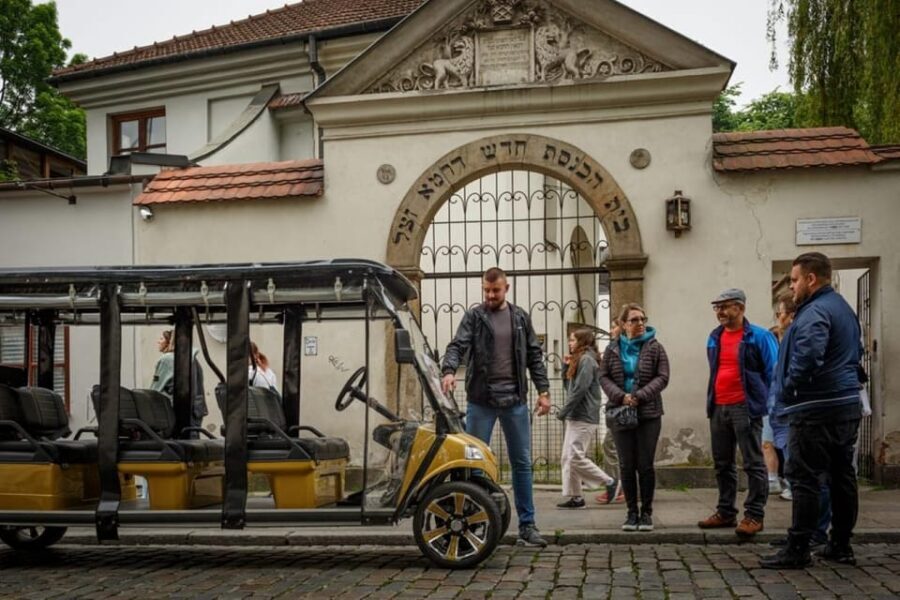
- Small group size (up to 10) means the guide can actually answer your questions
- 24+ places packed into 1.5 hours, including Kazimierz and the former ghetto area
- Live guide in English/Polish, plus an audio guide with many language options
- Electric golf cart sightseeing: easier on your feet than a full walking day
- A strong focus on Jewish history across Kazimierz and Podgórze
Electric golf carts: the fast way to orient yourself
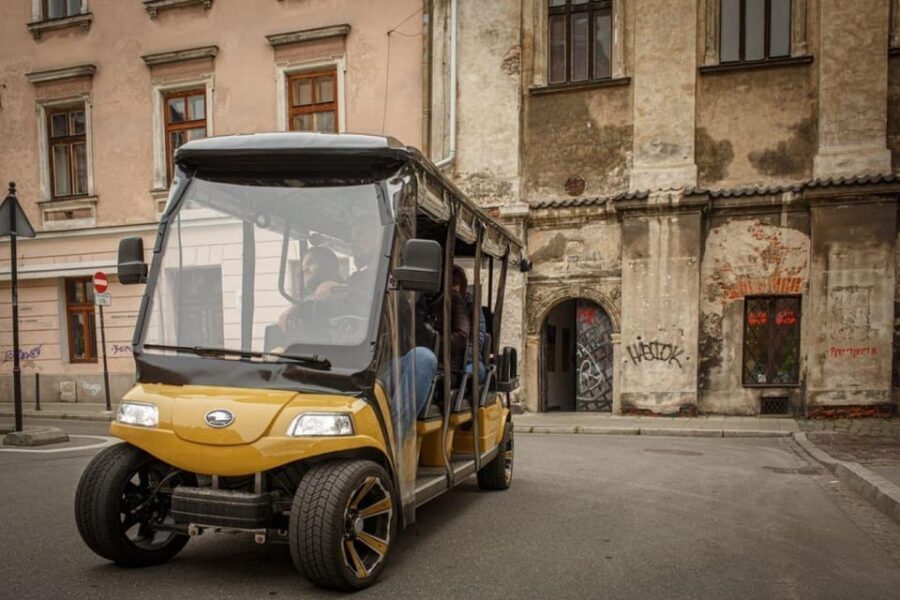
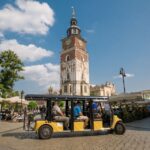
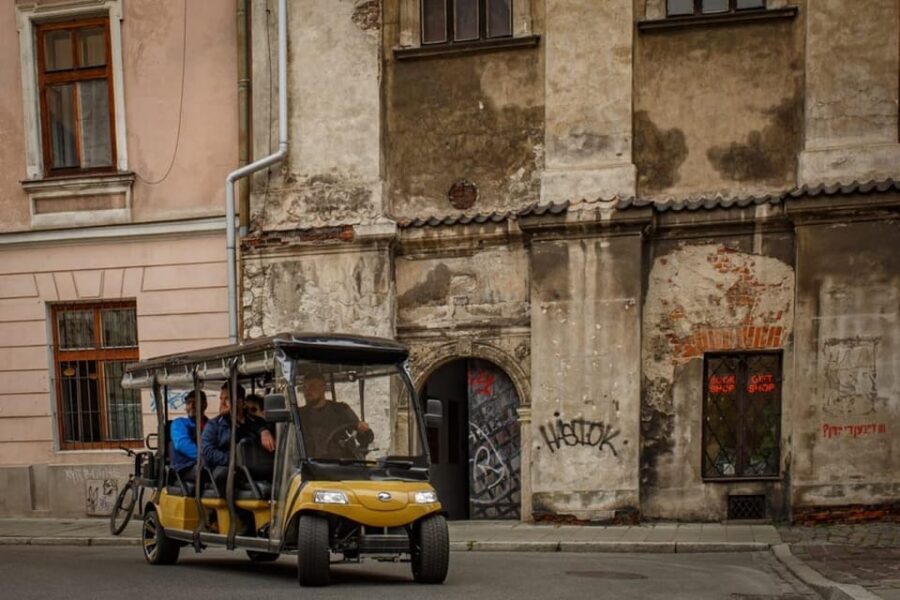
This tour’s whole pitch is practical: you get a city overview without spending the day on foot. You’re learning while riding, so the medieval streets and river-adjacent neighborhoods don’t stay “pretty scenery.” They become a map you can use later when you explore on your own.
The timing helps. At about 1.5 hours, you’ll get enough context to understand what you’re seeing, but not so much that you feel stuffed by the end. If you’re in Krakow for a short stay, this is the kind of first-day tour that can save you hours of guesswork.
The trade-off is simple: you’re not stopping for long interior visits at each stop. You’ll get a guided look at landmarks along the way—great for orientation, less ideal if you’re hoping for extended time in museums or sanctuaries.
You can also read our reviews of more city tours in Krakow
Planty Park to the medieval core: seeing Krakow’s layout
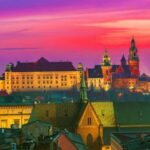
Most cart tours need a strong “opening chapter,” and this one starts with Planty Park. It’s a smart way to begin because it gives you a sense of how the old city transitions into the neighborhoods that came later. Even if you’re not getting out often, the geography starts to click.
From there, you’re pulled into the tour’s main storyline: history of Krakow and the medieval city streets that shaped daily life. The cart is helpful here. The roads you’d normally walk past quickly become a guided route, with the guide pointing out what matters and why.
You’ll also pass key religious landmarks early on, including Skałka Church and the Church of St. Catherine. These stops work like anchors. They help you connect the visual identity of Krakow—church towers, facades, street rhythm—to the bigger narrative you’re hearing.
Skałka Church and St. Catherine: quick stops, clear wayfinding
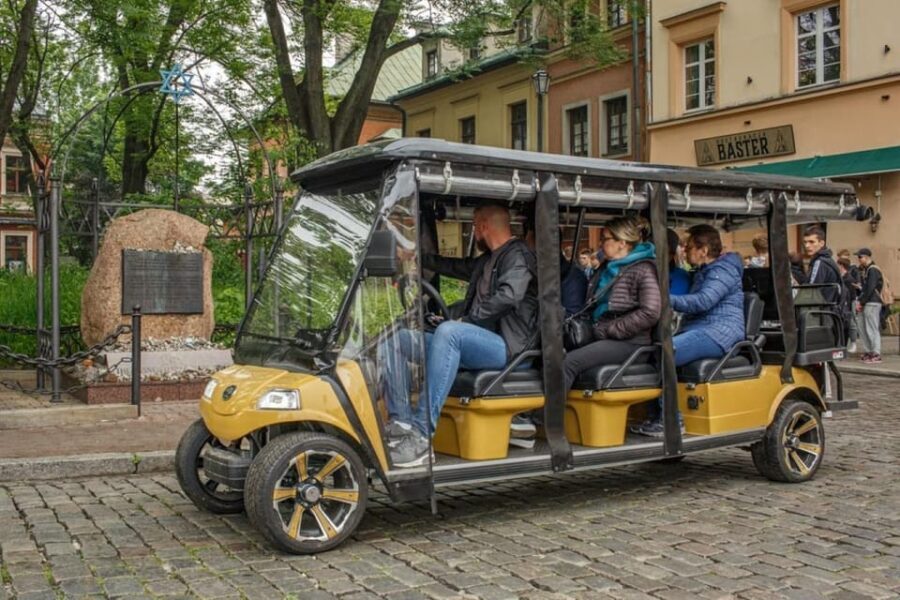
I like how these church stops function in the tour. They’re not just “look at that.” They’re used as reference points so you can later recognize the area without checking your phone every two minutes.
This is especially useful if you want to return to the Jewish-quarter streets afterward. When you’ve already seen these landmarks from the road, you’ll remember where the cart was when you’re later walking through the same zones at your own pace.
There’s a small consideration: carts move, and sound carries differently in narrow streets. If you’re sensitive to noise or you want every detail, sit where you can hear the guide clearly and keep your phone audio off so it doesn’t compete.
Wolnica Square and Jewish Kazimierz: learning the neighborhood story
Once you move into Kazimierz, the tone shifts from general medieval history to the specific geography of Jewish life in Krakow. A key early stop here is Wolnica Square, often described in relation to the Jewish city hall setting. It gives the neighborhood a civic feeling, not only a religious one.
You’ll also encounter Church of Corpus Christi as part of the broader context. Again, the tour uses these landmarks to show how communities and eras overlap in the same city space. It’s one of those “you had to see it” lessons: different faiths, different institutions, and different time periods stacked into the same urban fabric.
The guide’s job in this phase is to connect names you might otherwise miss to the places they represent. That’s valuable if your goal is understanding, not just taking photos.
The synagogue run: Tempel, Kupa, Isaac and more
A major draw of this tour is the synagogue focus. You’ll pass a sequence of sites connected to the Jewish Quarter, including Tempel Synagogue, Kupa Synagogue, and Isaac Synagogue.
What I like about this part is the way the names help you organize what you’re seeing. Instead of one big blur of old buildings, each stop is treated like a clue. Even from the cart, you start to notice differences in exterior form and street placement.
Other synagogue-related stops include the Old Synagogue, Remuh Synagogue and old cemetery, and additional stops such as Family House of Helena Rubinstein. You’re also shown old Jewish shops, which is a subtle but important reminder: this wasn’t only ceremonial space. It was commerce, daily life, and neighborhood routines.
One more point: the tour includes a Memorial Stone of the Nissembaum Family Foundation. If you’re the kind of traveler who appreciates quiet, specific remembrance, this is the kind of detail that often gets skipped on big city highlight tours.
You can also read our reviews of more private tours in Krakow



Ciemna Street, old shops, and the feeling of a lived-in quarter
Two of the most evocative stops are Ciemna Street and the areas tied to Old Jewish Shops. Even if you’re not walking those streets in depth, the guide’s commentary turns the area into something more personal than a landmark checklist.
These stops make the neighborhood feel like it had rhythm. You can picture people moving between homes, schools, markets, and worship spaces. That matters because it gives you a stronger mental image when you’re later browsing independently.
The practical thing to keep in mind: the ride is still a ride. If you love photography, bring an actual plan for where you’ll shoot from (front/side views can matter), but don’t expect time for elaborate setups at every stop.
Entering the story of the former ghetto area
A key part of the tour moves into what’s described as Podgórze and the former Krakow ghetto territory. Here you’ll visit stops tied to the ghetto narrative, including Ghetto Heroes Square, the Ghetto Wall, and Life in Ghetto.
This section is heavier in tone, and that’s where the guide’s pacing matters. I found it’s best when you treat this part like learning, not like speed-running trauma. Take a breath when you need to, and let the story land.
You’ll also pass the Former Ghetto area as a guided segment, with the tour framing it as a historical lesson rather than a spectacle. Stops like these can be emotionally intense, especially if you’re sensitive to Holocaust history.
If you want to match your energy, I’d do this early in your trip day. You’ll absorb more when you’re not already tired from a long walking schedule.
Tadeusz Pankiewicz’s pharmacy and Schindler’s connection
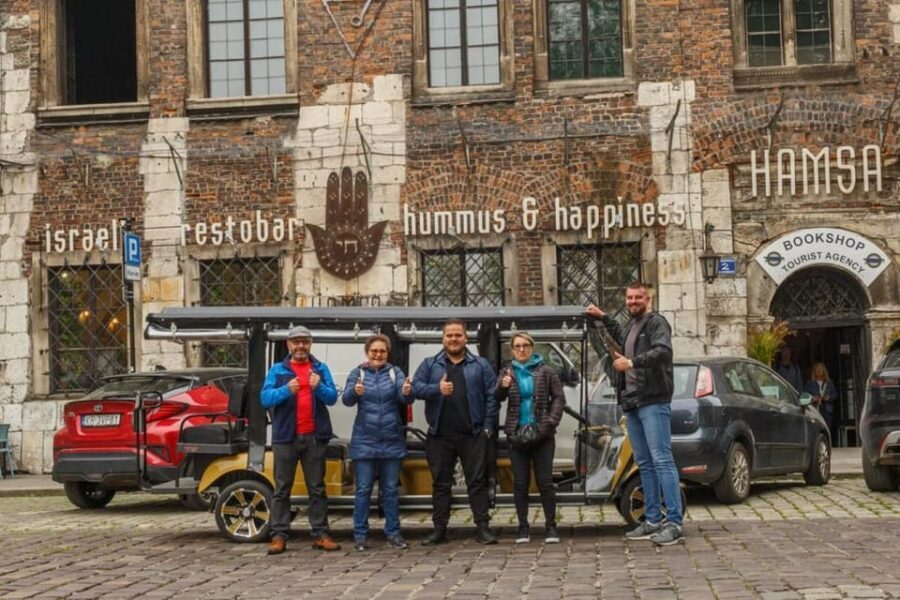
In the middle-to-late phase of the route, the tour highlights specific names that many visitors look for in Krakow’s WWII story. One is Pharmacy under the Eagle, described as the Residence of Tadeusz Pankiewicz.
Another is Oskar Schindler’s and the tour’s related history segment. Even if you’ve heard the name before, having it placed into the street-level setting helps it feel real. It’s not just a biography; it becomes a part of the neighborhood geography you’ve been seeing from the cart.
This is also where the tour’s “many places in 1.5 hours” strategy pays off. You get multiple anchors—different streets and different memories—without needing to juggle separate tickets and schedules across town.
Church of St. Joseph: closing the loop
The final listed stop is Church of St. Joseph. It works as a closing point because it brings the tour’s route back toward a “Krakow today” feeling after the ghetto-focused segments.
When a tour ends this way, it gives you a mental release. You still carry the history with you, but you’re not stuck in the heaviest theme with nowhere to go next.
Also, a well-structured ending helps you transition into independent exploration. If you like to wander after tours, you’ll likely feel you know the direction of travel better than before.
The guides: live storytelling and the value of hearing it in English or Polish
The tour runs with a live tour guide in Polish or English. In practice, this is one of the biggest quality factors for a cart tour. You’re moving, so the guide needs to explain clearly and keep momentum without turning everything into a lecture.
One standout from real experiences: a guide named Oliwia (also seen as Olivia) was praised for making the district and ghetto history feel interesting and well explained. Another note was that some guides are friendly but not overly talkative, with room to answer questions.
You’ll also get an audio guide included in many languages, such as English, French, German, Spanish, Russian, Hebrew, Arabic, Chinese, Japanese, Korean, Polish, and more. That’s helpful when you’re spread out on the cart or if you prefer to double-check what you’re hearing.
Practical advice: choose your seat so you can hear the live guide best. In an outdoor setting, wind and street acoustics can make some sections harder to catch.
Meeting point hiccups: how to protect your time
One caution I’d take seriously: if there’s confusion at the meeting point, it can lead to delays. I’ve seen this kind of situation happen when staff can’t quickly match people to their booking list, even when guests are on time.
So do the simple, boring thing that prevents stress: arrive early, make sure you know exactly which operator name you booked with, and keep your phone ready to contact them if needed. If you’re traveling with anyone who gets anxious waiting, plan for a calm buffer.
Good news: when things run smoothly, the tour format is efficient and easy. Most people leave with a clear mental map and a sense of the main districts stitched together.
Price and value: what $55 buys you in 90 minutes
At around $55 per person, this is positioned as a mid-range sightseeing value. What you’re paying for is not only the guide talk. You’re paying for the golf cart transportation, a driver, and an audio guide you can use alongside the live narration.
The price also includes a “see more with less strain” payoff. If you’re doing a lot of walking elsewhere in Krakow, saving your legs for major sites can be worth it on its own. And because it’s only 1.5 hours, you can slot it into a day without feeling like it steals your entire afternoon.
One cost-related detail: hotel pickup and drop-off isn’t included. That means you’ll want to be near the meeting area (or be ready to get there on your own). If you’re farther out, budget time for getting to the start.
Also, this tour is marked as wheelchair accessible and doesn’t allow luggage or large bags. If you’re traveling with a big backpack, plan to pack lighter for the cart.
Skip the ticket line: why it can matter
The tour is listed as offering skip the ticket line. In real life, this can be a time-saver on a day when other attractions have timed entry or queues.
That said, because this is a short ride-based tour, the biggest time win usually comes from not having to plan multiple separate stops with separate schedules. The cart route itself compresses the “where do I go next” problem into one organized flow.
If your priority is speed and orientation, this format matches that goal.
Who this tour suits best (and who might want something else)
This is a good fit if you:
- want an easy-on-your-feet way to understand Krakow’s layout
- like history and want it explained as a street-level story
- have limited time and want to connect Old Town with Kazimierz and the former ghetto area
- prefer small-group attention (limited to 10 participants)
It may be less ideal if you:
- want long, inside-the-building experiences at every stop
- expect the cart tour to replace a full museum day
- travel with luggage or large bags (you won’t be able to bring those)
Should you book this Krakow golf cart tour?
Yes, if you want a fast, structured way to get your bearings and learn the big stories without wearing yourself out. I’d especially recommend it as an early trip activity, before you start wandering on your own through Kazimierz and around the ghetto memorial spaces.
Hold off or consider an alternative if your dream day is long interior time and deep, slow stops. This is built for seeing and understanding from the street, with live narration and helpful audio support.
If you book, do yourself a favor: show up early to the meeting point, bring a headset-free mindset for clearer listening, and treat the ghetto-related segment with respect and breathing room. When it runs smoothly, you end the ride feeling like Krakow finally has a map in your head.
FAQ
How long is the Krakow city sightseeing tour by golf cart?
The tour lasts about 1.5 hours.
What is the price per person?
The price is listed as $55 per person.
Is there a live guide during the tour?
Yes. A live tour guide is included, speaking Polish and English.
Is an audio guide included?
Yes. An audio guide is included, with multiple language options.
What languages are available for the audio guide?
The audio guide languages listed include Arabic, Chinese, Croatian, Czech, Danish, Dutch, English, French, Finnish, German, Greek, Hebrew, Italian, Japanese, Norwegian, Polish, Romanian, Russian, Serbian, Slovak, Spanish, Turkish, Ukrainian, Hungarian, Lithuanian, Portuguese, Korean, Swedish, Latvian, and Lettish.
Is the tour accessible for wheelchair users?
Yes. The tour is listed as wheelchair accessible.
How big is the group?
The group is described as small, limited to 10 participants.
Do I need hotel pickup or drop-off?
No. Hotel pickup and drop-off are not included.
Are large bags or luggage allowed?
No. Luggage or large bags are not allowed.