REVIEW · KRAKOW
Krakow Jewish District Private Tour. Kazimierz and Jewish Ghetto
Book on Viator →Operated by Krzysztof Blaszczyk Hussar Travel · Bookable on Viator
History moves at street level here. This private walk through Kazimierz and the Krakow Jewish Ghetto is built around real places, from active synagogue landmarks to the fragments and memorials tied to the wartime ghetto. You’ll get a licensed local guide speaking English, plus pickup offered, so you can focus on the walking and the stories instead of logistics.
I especially like how the tour gives close-up context at multiple named stops, not just broad overviews. The route threads together Szeroka Street and a cluster of synagogues and community sites, so you see how one neighborhood held religious life and community identity side by side. The main drawback to consider is pacing: several stops are short explanations and many are viewed from outside, so if you’re craving lots of indoor time, you may want to add extra sightseeing afterward.
In This Review
- Key highlights and what makes them worth your time
- A private Kazimierz walk with a licensed English guide
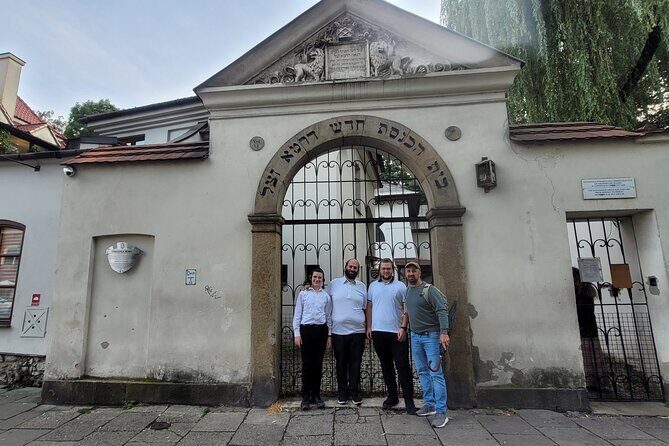
- Wolf Popper Synagogue: a quiet start that sets the tone
- Szeroka Street: the longest stretch for a reason
- The synagogue cluster around Plac Nowy: learning to read names
- Mrs. Dresner courtyard and stairs: where Schindler’s List meets memory
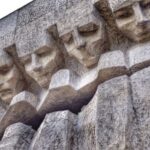
- Ghetto wall fragment and Ghetto Heroes Square: seeing remnants and remembering
- Timing and pace: 2.5 hours that stays manageable
- Price and value: is $96.11 per person fair?
- Who should book this tour?
- Should you book this Krakow Jewish District Private Tour?
- FAQ
- How long is the Krakow Jewish District private tour?
- What does the tour cost?
- Is pickup offered?
- What language is the tour provided in?
- Is it a private tour?
- Are tickets or admissions included?
- What stops are included on the route?
- Is mobile ticketing used?
- Can I cancel for a full refund?
- Are comfortable shoes recommended and is the tour accessible?
Key highlights and what makes them worth your time
- Wolf Popper Synagogue gets you oriented with an early explanation and free admission listed for that stop
- Szeroka Street is a long, comfortable walking stretch through the oldest part of the Jewish Quarter
- Plac Nowy acts like a simple wayfinding pause while you transition between key synagogue landmarks
- Schindler’s List movie site at Mrs. Dresner courtyard and stairs adds a strong emotional anchor to WWII-era history
- Ghetto wall fragment and Ghetto Heroes Square bring the story from the streets to the places that remember
A private Kazimierz walk with a licensed English guide
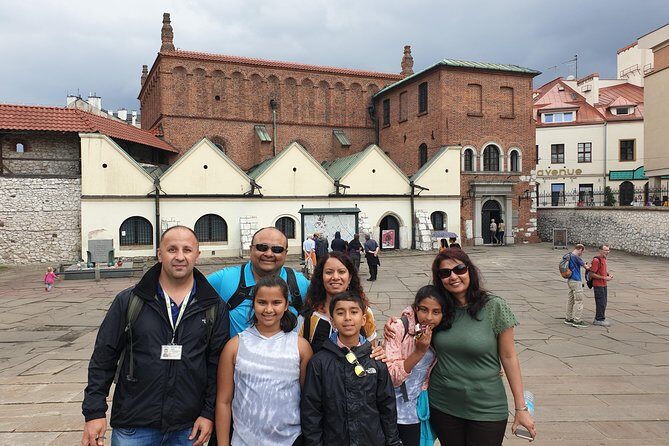
This is a true private format: it’s just your group, with a licensed local guide doing the heavy lifting. That matters in a neighborhood like Kazimierz, where names, eras, and institutions can blur together fast. With a private guide, you can ask quick questions and get straight answers instead of feeling rushed by a larger group schedule.
I also like that the tour is set up as a walking route that stays focused. You’re not trying to cover half the city; you’re concentrating on the Jewish Quarter and the ghetto area, one meaningful stop at a time. Pickup offered is a practical bonus, especially if you want to start smoothly and avoid hunting for the meeting point.
English is provided, and you’ll receive a mobile ticket. That’s useful when you’re bouncing between multiple visits in Krakow and don’t want to juggle paper confirmations. Most people can participate, and service animals are allowed, which is a comfort factor for many travelers. Comfortable shoes are strongly advised—this route is built for feet, not elevators and waiting rooms.
You can also read our reviews of more private tours in Krakow


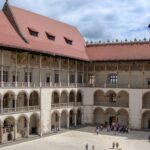
Wolf Popper Synagogue: a quiet start that sets the tone
The tour kicks off at the Wolf Popper Synagogue, with about 10 minutes of explanation and free admission listed. Starting here works because it gives you a baseline before you move into streets and exterior views. You learn what to notice, so later names and buildings don’t feel like random labels.
You’ll likely come away with a better sense of how Krakow’s Jewish community shaped daily life and how buildings functioned as more than just architecture. Even if you’re not the type who reads every plaque, the guide’s framing tends to make the buildings feel like they belong to people—rather than just dates on stone.
One practical consideration: since this part is early and focused, be ready to pay attention right away. If you’re the kind of traveler who needs time to wake up, consider grabbing a coffee before you start.
Szeroka Street: the longest stretch for a reason
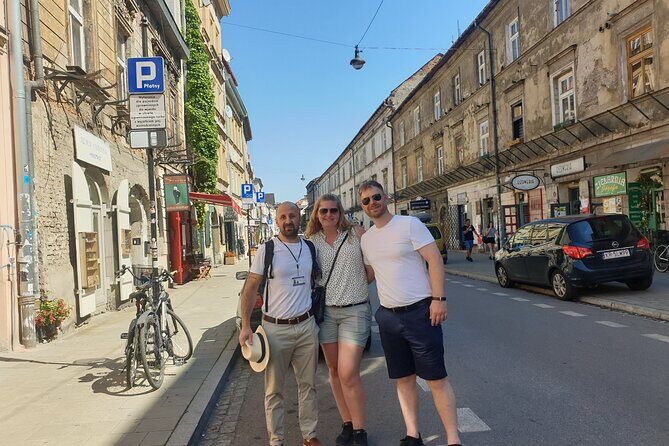
Next is Szeroka Street, scheduled for about 45 minutes and described as the oldest part of Krakow’s Jewish Quarter. This is where the tour shifts from “here’s a landmark” to “here’s the fabric of the neighborhood.” A longer walking segment helps because you’re able to absorb spacing, street character, and the way the area connects.
I like this kind of timing. It’s not a quick photo stop where you race through and forget half of what you saw. Instead, you get time for the guide to stitch details together while you’re moving, so the story sticks.
In feedback, people also appreciated seeing the back streets and appreciating what still exists—even when parts of the neighborhood may feel changed over time. If you happen to be in town during a Jewish holiday, you might find some places have limited hours or are closed. That won’t erase what you’ll learn, but it can affect what you can pop into. The walking and exterior viewing still do the job.
If you want a low-key break, there’s a cafe stop suggestion that came up in feedback—Hera is mentioned as a nice option. It’s not the same as a guided component, but it’s the kind of nearby place that makes a walking tour feel easy.
The synagogue cluster around Plac Nowy: learning to read names
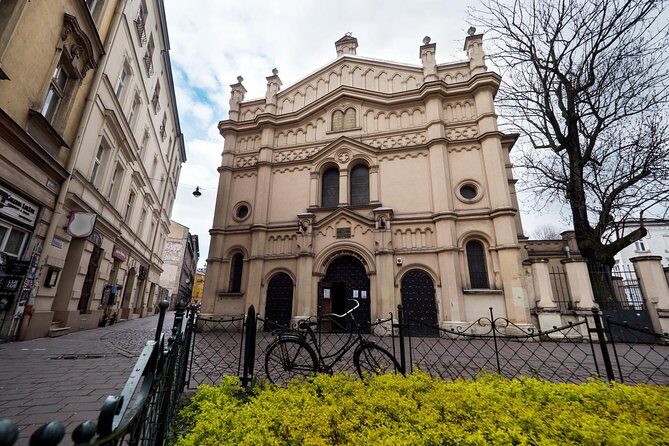
After Szeroka Street, the route moves through a sequence of synagogue and community stops—often from outside—with short explanation blocks. You’ll spend time at places like the Remuh Synagogue (from outside), the Old Synagogue (from outside), and the Jewish Community Center, along with multiple “from outside” synagogue stops tied to different centuries and traditions.
This is the part where the tour earns its keep. When you see a cluster of synagogues and institutions close together, you start noticing how communities adapt and how religious life evolves in a single neighborhood. Even without going inside every site, the guide’s explanations help you connect the building names to the bigger story.
Plac Nowy is included as a stop, which is smart. It’s a natural pause in the route, and it helps you reset your bearings while you transition between landmarks. Then you’ll continue to exterior viewpoints at locations such as the Reformed Synagogue and the Izaak Synagogue (from outside), plus a 16th-century synagogue stop.
What you should watch for (and what a good guide will point out) is how the names and time periods create a timeline in your head. A street full of buildings can look like a photo collage, but the guided order turns it into a map of community identity across time.
Mrs. Dresner courtyard and stairs: where Schindler’s List meets memory
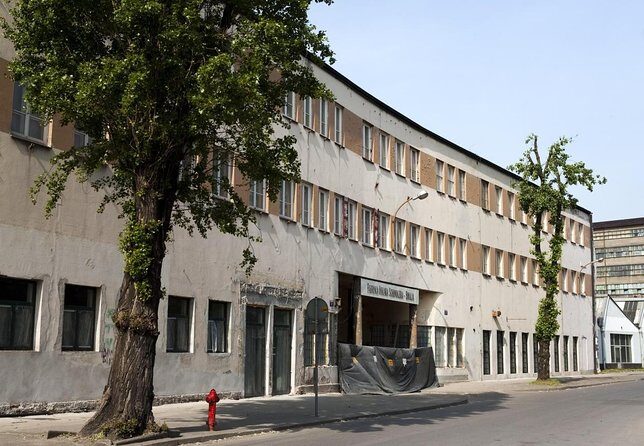
One of the most discussed moments on this route is the stop at Mrs. Dresner courtyard and stairs, tied to the Schindler’s List movie site. The tour gives about 10 minutes of explanation here, and that time matters. This isn’t a “quick look and move on” stop. The location carries emotional weight, and the guide’s pacing is usually part of why the stop lands.
I think this is where the tour’s value becomes more than sightseeing. You’re not only learning what happened; you’re seeing a place that got turned into a cinematic reminder. That can make the WWII context feel sharper and more immediate, especially if you’re the kind of history traveler who wants to understand how stories relate to real spaces.
A practical note: expect to spend some time standing or looking carefully, even if you aren’t going inside. Dress for walking, and don’t plan to rush this segment. If you’re doing another tour that same day, give yourself mental space here so you don’t feel overloaded.
Ghetto wall fragment and Ghetto Heroes Square: seeing remnants and remembering
The final stretch centers on the Ghetto Wall Fragment and then Ghetto Heroes Square. The wall fragment stop is about 10 minutes, and the square is about 20 minutes. This sequence works because it moves from the physical evidence of confinement to the public memory built afterward.
A wall fragment can feel small at first glance, but guided time helps you understand why even fragments matter. They’re one of the few kinds of evidence that don’t depend on imagination. You can look, locate the space mentally, and grasp scale better than you would from a map alone.
Then Ghetto Heroes Square adds a different kind of meaning—more reflective and memorial. The extra time there helps because it gives you breathing room. If you want to ask questions or take a slower look, this is often the moment where you’ll appreciate that the tour is private and not forced into a fast group rhythm.
Timing and pace: 2.5 hours that stays manageable
The tour runs about 2 hours 30 minutes, which is a sweet spot for Krakow. Long enough to learn and connect the dots, short enough to fit into a packed travel day.
You’ll be walking through parts of the Jewish Quarter and moving between sites that are clustered enough for an efficient route. Still, there’s a real amount of step count involved. Comfortable shoes aren’t just a suggestion; they’ll save you later.
The itinerary also balances longer walking with shorter “explanation windows.” Some stops are 10–15 minutes and many are from outside, so you’re not stuck in one place for too long. That’s good for most travelers, including those who like to move at a steady pace without feeling like they’re stuck in a museum line.
One more pacing detail that’s worth knowing: the guide doesn’t have to force you to keep going at full speed. In feedback, people valued that the guide didn’t pressure them beyond what they wanted, especially when they were already doing another walking tour earlier in the day. If you like to stop for photos, ask extra questions, or simply pause to absorb a darker topic, a private tour tends to make that easier.
Price and value: is $96.11 per person fair?
At $96.11 per person for a private, licensed English guide over roughly 2.5 hours, the value comes from focus. You’re paying for time with a guide who can connect synagogue names, neighborhood geography, and wartime context into a coherent walk—without you needing to stitch it together from multiple sources.
This price also compares better than many people expect if you’re traveling as a pair or small group, since pickup offered and the private format remove much of the friction that can ruin a day. Plus, some locations list free admission (and several stops are from outside), so you’re not building your budget around entrance fees you can’t control.
Is it a deal? If you care about Jewish history and want the story told in a way that matches the streets, yes. If your interest is only light and you’d rather do the area on your own, you might decide to spend that money on other Krakow experiences. But for a first-time visit to Kazimierz and the ghetto area, the guide-driven route is what turns it from “sights” into “understanding.”
Who should book this tour?
Book this if you’re a history enthusiast who wants a guided walking route through Kazimierz and the ghetto area. It’s especially good if you like learning in order—synagogue to street to memorial spots—because the route is designed like a progression, not a scattershot list.
You’ll also appreciate it if you want private attention. The format gives your group space to ask questions and set your pace, which matters when the material includes WWII-era themes that can feel heavy.
Consider an alternative or add-on if you prefer long indoor visits. Several key stops are explicitly described as from outside, so you won’t get the same depth as a tour that focuses mainly on museums or indoor exhibits. In that case, you might book this for the street-level story and then add another activity that gives you more time inside specific sites.
Should you book this Krakow Jewish District Private Tour?
Yes, if you want a well-paced, private walk that connects Kazimierz’s religious landmarks with the physical remnants of the Krakow Jewish Ghetto. The route is built for learning, and the stop order helps you build a clear mental timeline without turning it into a rushed checklist.
I’d book it if:
- You’re traveling with a small group and want personalized English guiding
- You care about WWII context and want it handled thoughtfully in real places
- You want a manageable 2.5-hour route that still feels substantial
You might pass or pair it with extra time if:
- You mostly want deep indoor access
- You’re only casually interested and want to spend your time elsewhere
FAQ
How long is the Krakow Jewish District private tour?
It lasts about 2 hours 30 minutes.
What does the tour cost?
The price is $96.11 per person.
Is pickup offered?
Yes, pickup is offered.
What language is the tour provided in?
The tour is offered in English.
Is it a private tour?
Yes. It’s a private tour/activity, and only your group will participate.
Are tickets or admissions included?
Admission ticket is listed as free for some stops, and several other stops are from outside with explanations.
What stops are included on the route?
The tour includes Wolf Popper Synagogue, Szeroka Street, Remuh Synagogue (outside), Old Synagogue (outside), Jewish Community Center, Plac Nowy, several other synagogue exteriors, Mrs. Dresner courtyard and stairs (Schindler’s List movie site), a Ghetto Wall Fragment, and Ghetto Heroes Square.
Is mobile ticketing used?
Yes, a mobile ticket is included.
Can I cancel for a full refund?
Yes. Free cancellation is available, and you can cancel up to 24 hours in advance for a full refund.
Are comfortable shoes recommended and is the tour accessible?
Comfortable shoes are recommended, and service animals are allowed. The tour states that most travelers can participate and that it’s near public transportation.