REVIEW · KRAKOW
Krakow: Jewish Ghetto Guided Walking Tour
Book on GetYourGuide →Operated by INTERCRAC Ltd. · Bookable on GetYourGuide
This walk hits close to the places where fear became daily life. You’ll trace Kraków’s WWII Jewish Ghetto in Podgórze with a licensed guide, starting near Schindler’s Factory and moving through the key locations that explain confinement, survival, and resistance. It’s not a long tour, but the stops are chosen to make the story feel human and specific.
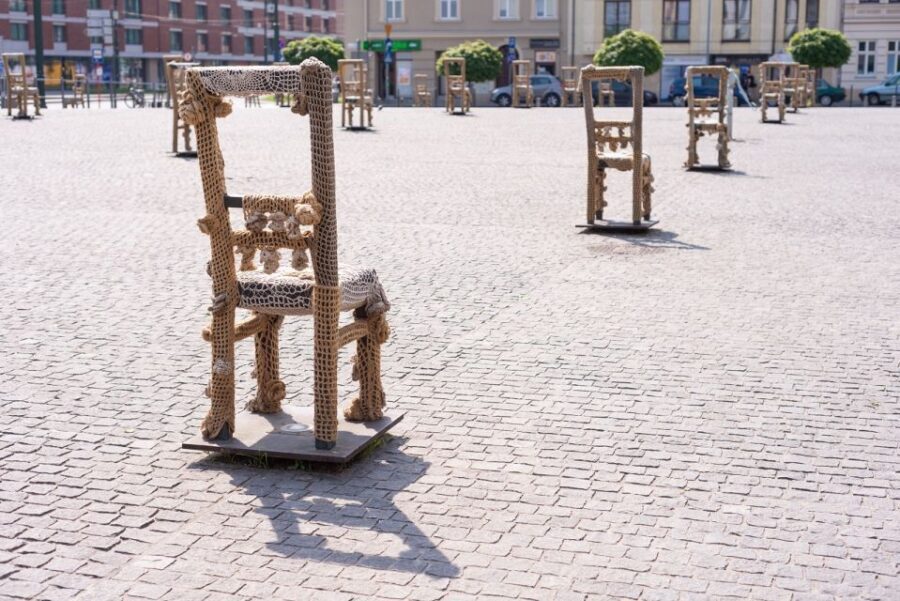
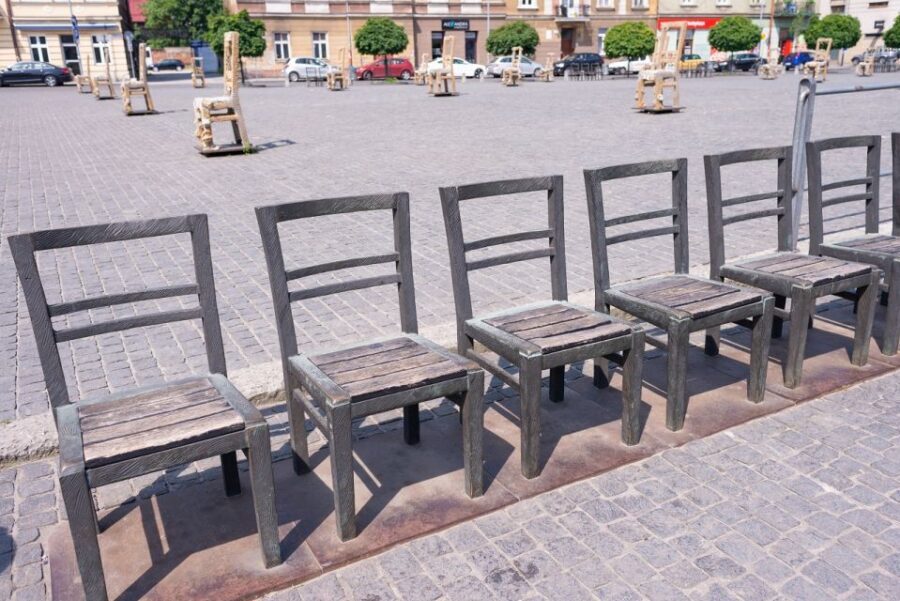
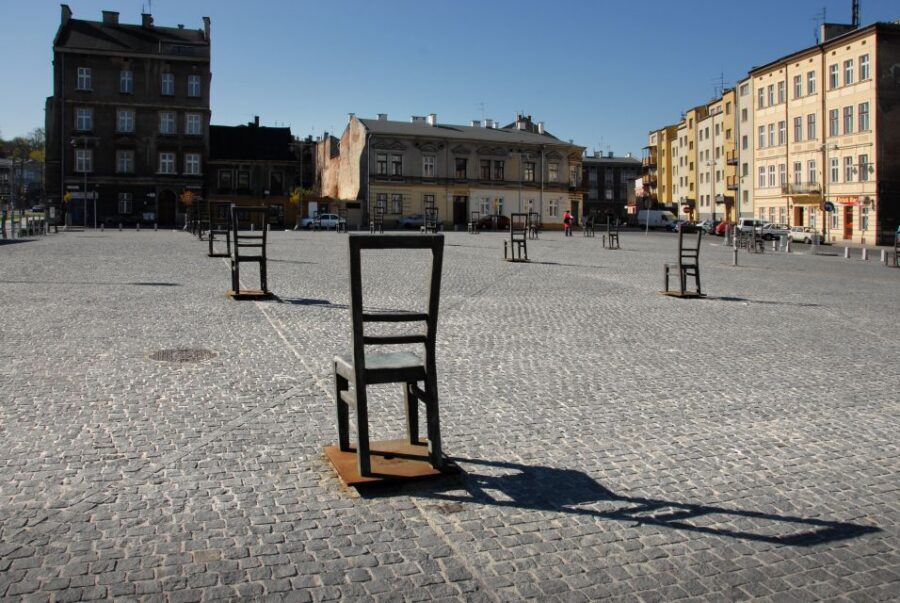
I like two things a lot. First, you’ll see physical remnants like surviving fragments of the former Ghetto Wall, so the boundaries aren’t just words on a page. Second, you get strong context at Ghetto Heroes Square with its memorial of empty metal chairs, plus the resistance story at Under the Eagle Pharmacy.
One drawback: with only 1 hour, you’ll cover a tight route. If you want to linger and read every plaque for a long time, you’ll feel a bit rushed.
In This Review
- Key highlights you’ll care about
- Entering Podgórze With the Right Context
- Meeting at Schindler’s Factory and Getting Oriented Fast
- Tracing the Ghetto Wall Remnants on Foot
- Ghetto Heroes Square and the Empty Chair Memorial
- Under the Eagle Pharmacy: Resistance Where People Needed Help
- How This Tour Explains Daily Life Without Feeling Like a Lecture
- Languages and Pace: What Makes the Tour Work Well
- Price and Value: Why $15 Can Make Sense Here
- Weather: When You Should Check the Forecast
- Who Should Book This Tour (And Who Might Prefer More Time)
- A Practical Way to Plan Your Kraków Day
- Should You Book the Kraków Jewish Ghetto Guided Walking Tour?
- FAQ
- How long is the Kraków Jewish Ghetto Guided Walking Tour?
- Where does the tour start?
- What will I see during the tour?
- Is the tour focused only on memorials?
- How much does it cost?
- Are entrance fees included?
- What languages are available?
- Does the tour run in bad weather?
- What if I arrive late?
- Can I cancel for a refund?
Key highlights you’ll care about
- Ghetto Wall fragments that show how confinement shaped real streets
- Ghetto Heroes Square and the empty-chair memorial for lost lives
- Under the Eagle Pharmacy and stories of Tadeusz Pankiewicz’s aid and resistance
- A guided, licensed walkthrough that turns ordinary buildings into wartime witnesses
- A short, focused route that prioritizes meaning over miles
- Clear narration in multiple languages, including English, French, Spanish, Italian, and German
Entering Podgórze With the Right Context
Kraków’s Jewish Ghetto story is often told in museums and big exhibits. This tour takes a different approach: it uses the actual streets and surviving spots in Podgórze so you can understand how the Nazi occupation reshaped everyday life. You’ll hear how industry, forced labor, and routine became tangled together in this district, not as an abstract concept but as something tied to where people actually worked and lived.
The guide’s job here isn’t just to point. It’s to give you perspective—how ordinary places became places of fear, courage, and survival. That matters because it changes how you look at buildings. Instead of seeing stone and windows, you start seeing decisions, threats, and the constant pressure of what could happen next.
If you’re doing Kraków for the first time, this is a good way to get oriented about WWII-era Kraków beyond just names and dates.
You can also read our reviews of more walking tours in Krakow

Meeting at Schindler’s Factory and Getting Oriented Fast
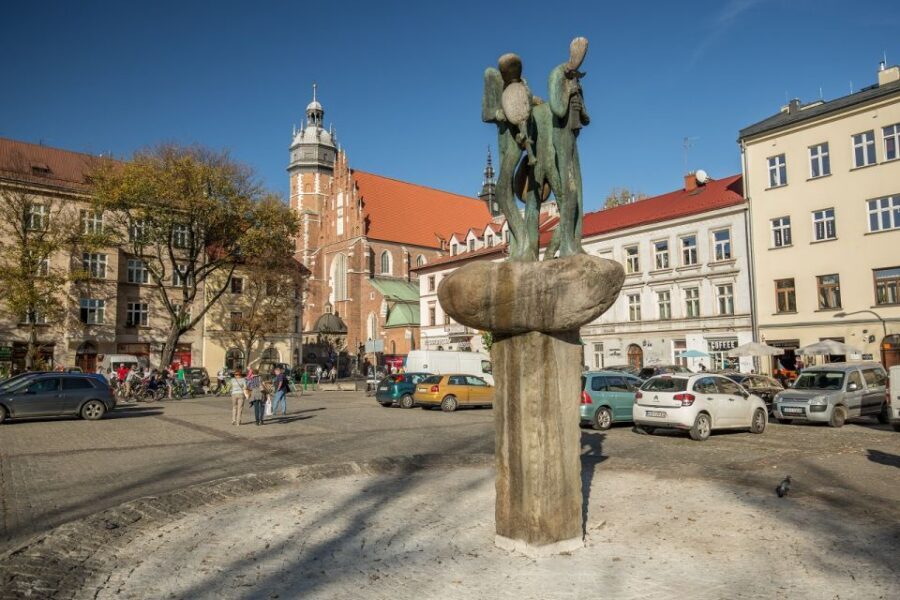
The tour begins in the area of Schindler’s Factory, a smart starting point because it immediately places you within the broader story of Nazi occupation. The meeting location is clear: stand at the main entrance to the Schindler’s Factory Museum on the right-hand side, and look for the excursions.city sign held by your guide.
You’ll start with historical context about the occupation and how this part of Kraków changed during the war. That opening usually helps you connect later stops—like the ghetto wall remnants and memorial square—into one coherent route, rather than treating them as separate photo stops.
Practical tip: arrive about 10 minutes early. Once the group leaves, you can’t join late, and refunds aren’t available. This tour stays tight by design, so showing up on time keeps the pace—and the meaning—intact.
Tracing the Ghetto Wall Remnants on Foot
After the opening context, the walk moves toward what’s left of the former Ghetto Wall. Seeing surviving fragments is one of the most powerful parts of this experience because it turns a boundary into something you can literally stand beside. You get a tangible sense of separation—how a line on a map became a lived limit.
You’ll also learn why these boundary structures mattered day after day. Under occupation, walls weren’t just architecture. They helped control where people could go, who could pass, and what ordinary movement became impossible. The guide’s narration connects the physical setting to the lived reality—fear, restriction, and the constant effort to stay alive.
Possible drawback here: because the tour is short, you may not spend as long as you want at every wall fragment or street corner. If you’re the type who likes slow walking and extra time for reading, keep your expectations aligned: the goal is to understand the route, not to do a self-guided marathon.
Ghetto Heroes Square and the Empty Chair Memorial
Next comes Ghetto Heroes Square, described and experienced as the former center of the Kraków Ghetto. This is a key stop because the square links the geography of the ghetto with what happened to people there, including deportations.
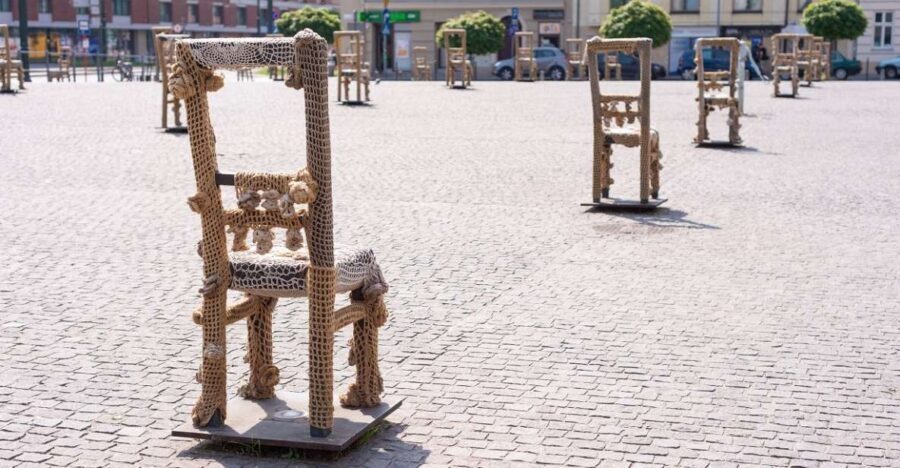
Today, the most striking element is the memorial: empty metal chairs. The symbolism is simple and hard to ignore. You’re not looking at a dramatic battle scene. You’re looking at absence—people who are gone, represented by seats that can’t be filled. It’s the kind of memorial that makes you slow down without trying.
As you stand there, your guide’s narration helps connect the memorial to the human scale of loss. The chairs aren’t only for emotion; they also prompt understanding. How could normal life exist near something that systematic? Why did deportations happen when they did? What did survival look like when the threat was always present?
If you want a quick litmus test: this is the stop where the tour stops feeling like facts and starts feeling like moral weight. It’s also one of the reasons this tour earns a strong reputation overall.
Under the Eagle Pharmacy: Resistance Where People Needed Help
Across the square, the route leads to the Under the Eagle Pharmacy, a location tied to Tadeusz Pankiewicz and his staff. This is where the tour shifts into resistance and moral choice, not just the mechanics of confinement.
Your guide explains how assistance and courage happened in ways that weren’t always loud. The stories focus on people who gave vital help to ghetto residents—support that could mean the difference between immediate danger and a chance to endure. You’ll also hear how compassion operated under extreme risk, and how survival wasn’t only about luck or endurance. It was also about other people making choices, even when the cost could be deadly.
This part tends to be highly memorable because it answers a question many visitors carry with them: what did resistance look like day to day? Here, it’s not just sabotage or battle imagery. It’s help in a real-world setting, in a place you can still locate in Kraków today.
You can also read our reviews of more guided tours in Krakow
How This Tour Explains Daily Life Without Feeling Like a Lecture
A lot of WWII tours fall into two extremes: either they’re too broad to feel personal, or they overload you with details. This one-hour format aims for clarity with lived experience. That means you’ll move through preserved wartime streets and buildings while your guide interprets what you’re seeing.
You can expect the narrative to connect three themes:
- Occupation and forced labor, showing how the district functioned under Nazi control
- The shape of confinement, using the wall remnants and street context
- Survival and resistance, through the square and Under the Eagle Pharmacy
I also like that this doesn’t treat the ghetto like a separate world floating in time. The guide ties the story back to industry and everyday life—how ordinary places became scenes where people had to make choices under pressure.
One more practical note: guides usually speak clearly enough that you can follow at a reasonable pace. In past tours, visitors highlighted that the guide explained things at a speed people could understand and took time to answer questions. So if you’re the type who thinks better by asking, bring your questions.
Languages and Pace: What Makes the Tour Work Well
This tour runs with live guides in German, Italian, French, Spanish, and English. That matters because a WWII story needs precision. Small language mistakes can flatten meaning, and you don’t want that.
In reviews tied to this experience, guides like Elena and Renata were praised for being friendly and for offering clear explanations. One highlight was that the guide’s speaking pace made the information easy to follow, and questions were answered. So while you can’t control the exact guide, you can feel confident that the format supports comprehension.
If you’re sensitive to long walks or heavy standing, plan for a straight hour outdoors. The route includes stops, but it’s still a walk. Wear shoes you trust. Even if you’re not thinking about “comfort,” cold pavement and uneven city surfaces can quietly ruin your focus.
Price and Value: Why $15 Can Make Sense Here
At $15 per person for a 1-hour licensed walking tour, the value comes from the guide doing the interpretation work. You’re not paying for transportation or for a long list of paid attractions. Instead, your money supports a structured route through key ghetto-era locations, with context you’ll miss if you stroll independently.
Also, this tour includes the most important ingredient for this topic: a licensed expert guide. With a subject like this, the difference between “seeing sights” and “understanding what you’re seeing” is huge. Even without entrance fees to specific sites, the storytelling connects the locations into one timeline.
What’s not included: any entrance fees to attractions. The good news is that many of the tour’s most meaningful points—like the wall fragments and the square—are experienced in place, outdoors and on the street.
So for value: if you want a guided, respectful introduction to the Podgórze ghetto sites in a single hour, this pricing is reasonable.
Weather: When You Should Check the Forecast
The tour takes place in all weather conditions. That’s normal for Kraków walking tours, but it affects how enjoyable—and how focused—you’ll stay.
If it’s rainy, you’ll likely want:
- shoes with grip (you’ll be walking and stopping)
- a light waterproof layer
- a bag that can handle mist and puddles
If it’s very cold, bring a hat or gloves. The point isn’t comfort at all costs. The point is keeping your body steady enough that you can listen.
Who Should Book This Tour (And Who Might Prefer More Time)
This tour is best for you if:
- you want a short, guided introduction to Kraków’s WWII Jewish Ghetto in Podgórze
- you like learning on foot and connecting history to real street spaces
- you care about memorial meaning and not just general sightseeing
You might want something longer (or a follow-up visit) if:
- you prefer long stops at memorials
- you want lots of reading time at every plaque
- you’re someone who needs more breathing room after heavy topics
But if you’re balancing a packed Kraków itinerary, this one-hour format is a strong way to cover the essentials while keeping your day moving.
A Practical Way to Plan Your Kraków Day
Because the tour starts near Schindler’s Factory, it fits naturally into a day that also includes other nearby WWII-era sights. If you’re building your route, consider doing this walking tour when you’re fresh enough to really take in the meaning of the wall fragments and the memorial square.
Then, after the tour, you can use your newfound context to explore nearby places with better understanding. The tour doesn’t ask you to be an expert. It gives you enough structure that other Kraków stops feel more connected.
Should You Book the Kraków Jewish Ghetto Guided Walking Tour?
I’d book it if you want a focused, guided walk through the places that actually shaped the ghetto experience—especially if you value the combo of visible wall remnants, the emotional power of Ghetto Heroes Square, and the resistance story at Under the Eagle Pharmacy.
The biggest reason to choose this one over DIY is the interpretation. Sites alone don’t always explain what you’re seeing. A licensed guide does. And the tour’s tight timing means you won’t spend half a day on logistics; you’ll spend that time on understanding.
If you hate tight schedules or you need long, quiet reading breaks, just know the tour is designed to stay moving for one hour. Bring comfortable shoes, arrive on time, pick the language you understand best, and you’ll get a powerful overview that stays with you long after you leave Podgórze.
FAQ
How long is the Kraków Jewish Ghetto Guided Walking Tour?
The tour lasts 1 hour.
Where does the tour start?
Meet your guide in front of the main entrance to the Schindler’s Factory Museum, on the right-hand side, with an excursions.city sign.
What will I see during the tour?
You’ll see remnants of the former Ghetto Wall, visit Ghetto Heroes Square and its memorial with empty metal chairs, and learn about resistance at Under the Eagle Pharmacy.
Is the tour focused only on memorials?
No. It also includes preserved wartime streets and buildings, with explanation of daily life, forced labor, and survival during WWII.
How much does it cost?
The price is $15 per person.
Are entrance fees included?
No. Entrance fees to attractions are not included.
What languages are available?
The live guide is available in German, Italian, French, Spanish, and English.
Does the tour run in bad weather?
Yes, the tour takes place as planned in all weather conditions, so you should dress accordingly and wear suitable footwear.
What if I arrive late?
Please arrive about 10 minutes before the tour begins. Once the group has departed, latecomers can’t join and tickets can’t be refunded.
Can I cancel for a refund?
Yes. You can cancel up to 24 hours in advance for a full refund.