REVIEW · KRAKOW
Krakow: Plaszow Concentration Camp Guided Walking Tour
Book on Viator →Operated by excursions.city · Bookable on Viator
Płaszów hits fast, and the details matter. This guided walk connects Kraków’s ghetto departure point to what survives of the Płaszów camp—Grey House ruins, the roll-call area, cemetery traces, and major memorials—so you get more than dates.
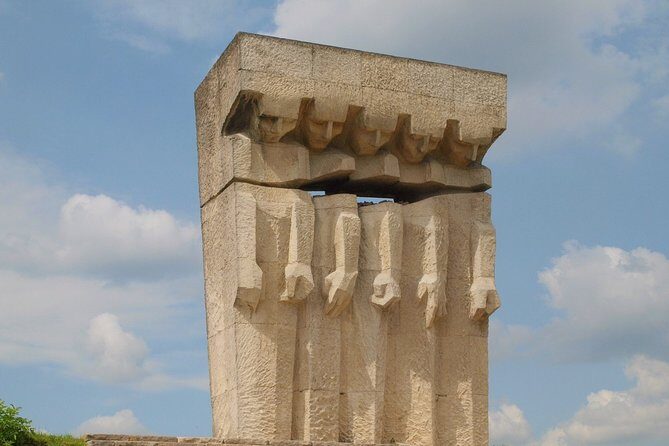
What I like most is how the tour keeps history grounded in specific places, including the Monument of Torn-Out Hearts and the route where fragments of gravestones were used as paving. A second win: the guide ties in Oskar Schindler in a way that helps the story feel human, not just factual. One consideration is that it is a heavy subject and it involves real walking across uneven memorial ground, so you’ll want a moderate fitness level and comfortable shoes.
Kraków is often a quick-hit city break, but this tour gives you a focused, 2-hour length that doesn’t feel rushed. Guides on this experience have included Bartholomew, Barbara, and Phil, and the feedback consistently notes careful pacing and strong question-handling. The main drawback? Because it’s structured as one guided group route, late arrivals can’t join once the group departs, and you’ll need to plan to be there early.
In This Review
- Key highlights you’ll feel in real time
- Why Płaszów matters: from ghetto transports to a brutal camp system
- Ghetto Heroes Square: Plac Zgody and the ghetto’s logistics
- Moving from the ghetto story to Płaszów camp
- The walking route that uses what survives: Grey House, roll-call square, and cemetery traces
- Schindler’s story on the same ground: permits, Brünnlitz, and saved lives
- How long, how hard, and what to expect from the route
- Price and value: why $30.04 can be a bargain here
- Who should book this tour
- FAQ
- FAQ
- How much does the Krakow: Plaszow Concentration Camp Guided Walking Tour cost?
- How long is the tour?
- Is the tour offered in English?
- Are admission tickets included for the stops?
- Where does the tour start?
- Where does the tour end?
- How many people are in a group?
- What fitness level do I need?
- What’s the meeting time rule for joining the tour?
- Is free cancellation available?
- Should you book this Płaszów guided walking tour?
Key highlights you’ll feel in real time
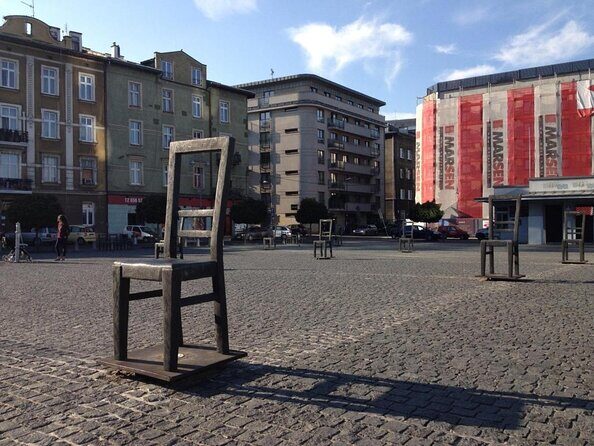
- Ghetto Heroes Square first: Plac Zgody as the ghetto’s control, registry, and transport-departure point
- Płaszów in context: forced labor on Jewish cemetery grounds, later a penal-labor section for Poles, then a concentration and transit camp role
- What survives is what you walk: Grey House, pre-burial hall ruins, roll-call square, and traces of Jewish cemeteries
- Memorial anchors: including the Monument of Torn-Out Hearts so the meaning lands, not just the layout
- The Schindler thread: work permits through Plaszów and transfers to Brünnlitz to save over a thousand lives
- Small group size: up to 25 people, in one language (English is offered)
Why Płaszów matters: from ghetto transports to a brutal camp system
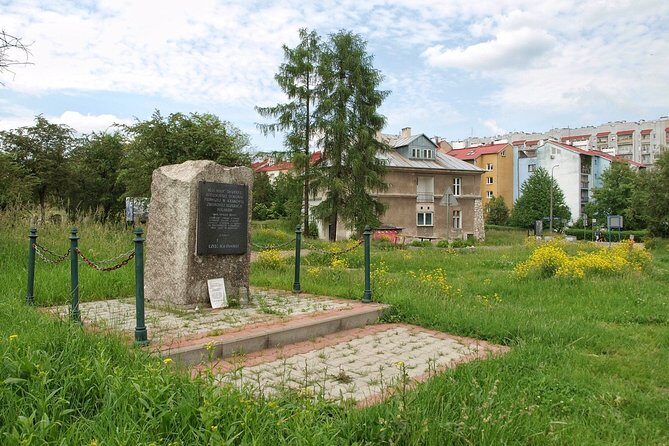
Płaszów Concentration Camp isn’t just a sad spot on a map. It’s a place where the Nazi system moved people through an organized chain—registration, selection, forced labor, punishment, and onward transport. The camp began in October 1942 on the grounds of two Jewish cemeteries in Kraków. It started as forced labor for Jews brought from the liquidated Kraków ghetto, then later included a penal-labor section for Poles. By January 1944 it was redesignated a concentration camp, and later that same year it also became a transit camp for Hungarian Jews on the way to Auschwitz.
What helps on this tour is that the guide doesn’t treat those changes like trivia. You’ll see how the camp’s physical pieces correspond to the different phases of the camp’s purpose—living areas, a hospital, administrative spaces, and industrial sections. That is where a guided walk earns its keep: the ground is fragmentary today, but the guide helps you “read” what’s left.
Also, the camp’s scale is hard to hold in your head: more than 35,000 people were imprisoned, and around 6,000 were murdered. The tour places memorials and mass graves within that framework, so you understand what you’re looking at and why it’s remembered.
You can also read our reviews of more walking tours in Krakow
Ghetto Heroes Square: Plac Zgody and the ghetto’s logistics
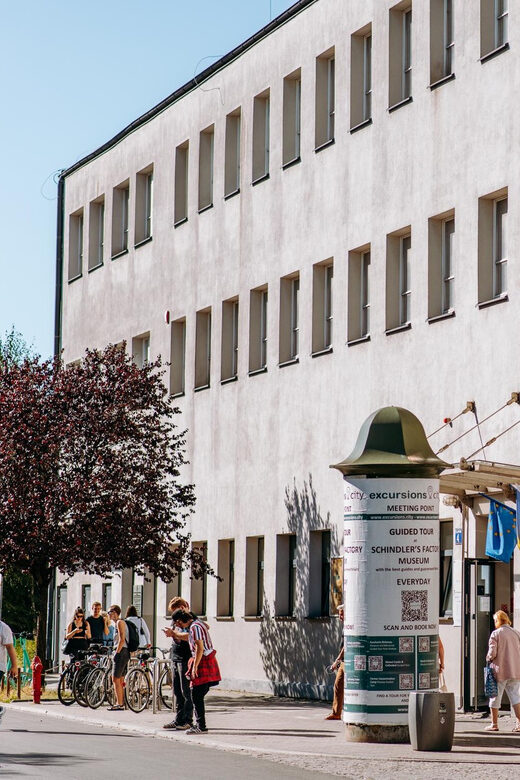
You start at Apteka pod Orłem, near Plac Bohaterów Getta 18. The first stop is Square of Ghettos Heroes, known then as Plac Zgody. This square matters because it was the ghetto’s logistical heart—where control and registration happened, and where transports departed.
The tour gives you a short, focused entry here (about 15 minutes). That’s smart. You don’t start with the camp ruins; you start with the mechanism that made those ruins possible. You’ll hear how the square operated as a structured hub, not a random gathering point. After the war, the area was renamed Ghetto Heroes Square in remembrance, which gives the stop a built-in contrast: the same ground later becomes part of a public act of memory.
If you’re the type who likes “why this place, right now,” this first stop scratches that itch fast. It also makes what comes next feel more connected. Once you understand where the transports were set in motion, Płaszów stops being only an enclosed camp story and becomes part of a larger system.
Moving from the ghetto story to Płaszów camp
After the square, the tour centers on Płaszów Concentration Camp. Expect around an hour for this big context and introduction phase. Here’s the key point you’ll get: Płaszów evolved. It wasn’t a static thing with one job.
It began on cemetery grounds, with forced labor for Jews coming from the liquidated Kraków ghetto. Later, the camp added a penal-labor section for Poles. Then it changed again—redesignated as a concentration camp in January 1944, and later acting as a transit camp for Hungarian Jews headed onward to Auschwitz.
The guided approach is valuable because the site today doesn’t present itself like a well-preserved museum. Much has changed. So instead of expecting you to memorize a layout from the start, the guide builds your understanding step by step.
One thing I’d watch for as you move through this portion: the tour is emotionally intense. The history is presented as factual and place-based, but the subject matter is harrowing by nature. If you’re visiting as a way to get closure or to confront difficult chapters, plan a little breathing room afterwards for the drive back or your next meal stop.
The walking route that uses what survives: Grey House, roll-call square, and cemetery traces
The tour’s third stop is still within Płaszów, but it’s where the walk becomes more “site-reading.” About 45 minutes are spent piecing the camp together from what survives.
You’ll cover key anchors such as:
- the Grey House
- the ruins of the pre-burial hall
- traces of the Jewish cemeteries
- the roll-call square
- paths where fragments of gravestones were once used to pave roads
This is the part where a good guide makes a real difference. When you’re standing on memorial ground, it’s easy to feel lost. Here, the guide helps you map meaning onto visible remnants and documented layout. That turns scattered features into a coherent picture: living, hospital, administrative, and industrial sections become understandable because you’re told what to look for and how each area functioned.
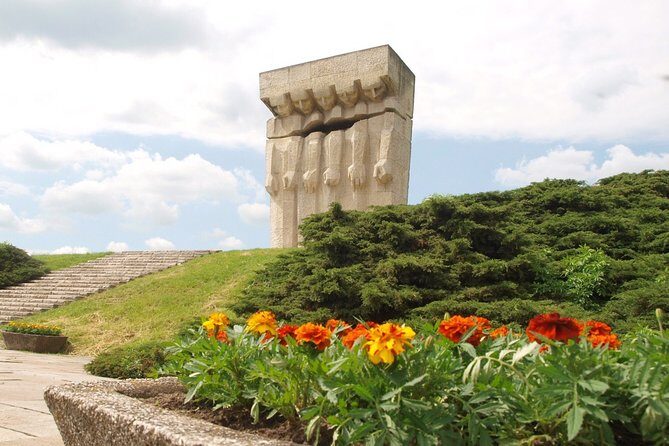
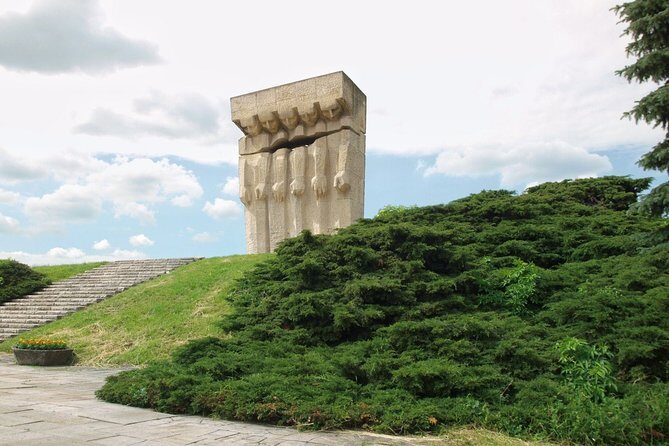
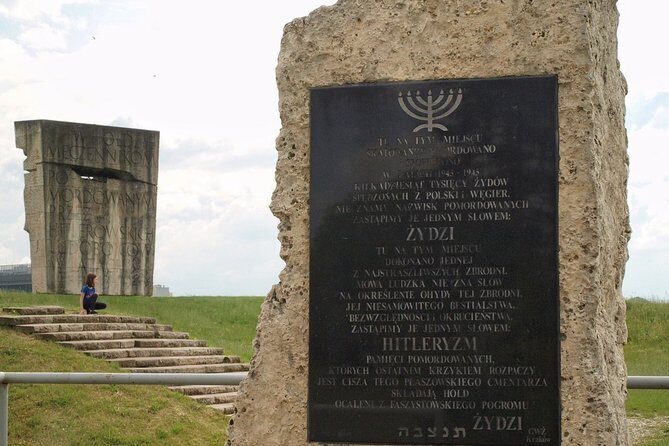
One of the strongest emotional anchors you’ll reach is the Monument of Torn-Out Hearts. It’s not just a photo stop. The guide’s job is to connect the memorial back to what the camp’s organization did to people, and how the camp’s violence became physical and permanent.
A useful practical note from feedback: wear comfortable shoes. This isn’t a “shuffle along the sidewalk” type of tour. It’s a guided walking experience on uneven memorial paths, and you’ll want your feet ready for it.
Schindler’s story on the same ground: permits, Brünnlitz, and saved lives
A major thread on this tour is Oskar Schindler, because his actions are tightly linked to how Plaszów functioned for Jewish prisoners on paper. The guide explains how Schindler’s enamelware enterprise sought work permits for Jewish prisoners registered through Plaszów. In other words, he used the system’s paperwork to protect people from further transports.
Then the story moves forward: Schindler later organized the prisoners’ transfer to his wartime plant in Brünnlitz. The result, as given on the tour, is that he saved over a thousand lives. The tour doesn’t treat Schindler as a separate “inspiration” story floating above the camp. It places him inside the camp’s documentary reality—registration, permitting, and the risk of deportation.
If you’ve seen Schindler’s List, you’ll likely appreciate how the guide uses the film connection as a starting point, then grounds it in the places and structures that exist now. That blend is valuable. A movie can make history feel specific, but only a guided walk can make it feel spatial and real.
You can also read our reviews of more guided tours in Krakow
How long, how hard, and what to expect from the route
The tour runs about 2 hours total. It’s designed as a compact, guided sequence: square to camp intro to deeper memorial route. You’re not expected to spend a half day wandering on your own.
The physical side is moderate, but don’t treat that as a guarantee of easy footing. You’ll be on foot through memorial areas and paths, so if your legs get tired quickly, bring that up in advance when you book or simply plan extra rest after.
Also plan for a strong morning or afternoon timing choice, not a “jump straight into another event right after” plan. The subject matter is intense, and your brain will want time to process.
Group size is capped at 25. That matters because smaller groups tend to let you ask questions without losing your place in the story. In the feedback, guides who took their time and answered questions well were repeatedly praised, including Bartholomew, Barbara, and Phil.
Price and value: why $30.04 can be a bargain here
At $30.04 per person for about 2 hours, this tour is priced for what you’re getting: an expert-guided, place-based explanation of a complex site. You’re also getting mobile ticket convenience, and the experience language is English (and each group tour runs in one language).
One big value lever: admission tickets are free for the stops listed. That means the cost is primarily paying for interpretation and the guided route, not park fees or museum ticketing. So you’re not forced to “double pay” just to see what the tour is actually about.
Compared with generic sightseeing walks, this is more like buying a structured lens. Instead of walking past memorials and hoping you connect the dots, you’ll have a guide doing the connecting for you—at the exact points where your questions will likely spike: where deportations started, how Płaszów operated, and how Schindler’s actions fit.
Who should book this tour
Book it if you want:
- a guided walking explanation of Płaszów’s history and physical features
- a structured narrative that starts at Kraków’s ghetto transport logistics
- the Schindler thread tied directly into Plaszów’s paperwork and permitting
Think twice if:
- you prefer light, upbeat sightseeing and don’t handle difficult subject matter well
- you’re looking for a “mostly sitting” experience. This is walking-focused, and the site is memorial terrain
For most people, this tour hits the sweet spot: it’s long enough to feel meaningful, short enough to keep you from overloading in one day, and guided enough that you don’t end up only photographing plaques.
FAQ
FAQ
How much does the Krakow: Plaszow Concentration Camp Guided Walking Tour cost?
The price is $30.04 per person.
How long is the tour?
It’s approximately 2 hours.
Is the tour offered in English?
Yes. The experience is offered in English, and group tours run in one language.
Are admission tickets included for the stops?
The stops listed include admission tickets that are free.
Where does the tour start?
The start point is Apteka pod Orłem, Plac Bohaterów Getta 18, 33-332 Kraków, Poland.
Where does the tour end?
The end point is Henryka Kamieńskiego 57, 30-644 Kraków, Poland, near a bus stop on Kamienskiego street.
How many people are in a group?
The tour has a maximum of 25 travelers.
What fitness level do I need?
The tour asks for a moderate physical fitness level.
What’s the meeting time rule for joining the tour?
You should arrive 10 minutes before the tour begins. Once the group has departed, latecomers won’t be able to join, and tickets can’t be refunded.
Is free cancellation available?
Yes. You can cancel up to 24 hours in advance for a full refund.
Should you book this Płaszów guided walking tour?
If you want a connected, guided way to understand Płaszów—from deportation logistics at Ghetto Heroes Square to the camp’s surviving memorial features—this is a strong choice. The free admission at the stops, the small group size, and the clear Schindler thread make the $30.04 feel like paying for meaning, not just movement.
Book it if you can handle the subject matter and you’re ready to do real walking. Skip it if you’re hoping for an easy stroll or a light day out in Kraków.